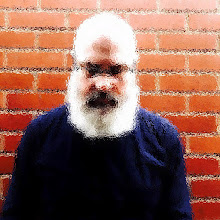
Kenny Everett
 Kenny Everett born 25 December 1944 (d. 1995)
Kenny Everett - born Maurice Cole in Crosby, Merseyside, Liverpool - was a popular British radio DJ and television entertainer.
After a a successful career on radio In 1978, London's Thames Television offered him a new venture, which became the very successful and ground-breaking Kenny Everett Video Show. This was a vehicle for Everett's characters and sketches interspersed with the latest pop hits, either performed by the artists themselves, or as backing tracks to dance routines by the supposedly risqué (for the time) dance troupe Hot Gossip.
In the pre-MTV era, this mixture of pop bands and comic sketches was a new format for television. It was so successful that pop and TV stars queued up to make cameo appearances, including Rod Stewart; Billy Connolly; Kate Bush; Cliff Richard; Freddie Mercury; Terry Wogan; and Suzi Quatro, to name just a few.
These shows were also unusual in that there was no studio audience or laughter track. The only reaction sounds were those of the writers, staff and crew at Thames' Teddington Studios in South West London. Everett would often ad lib and deviate from the script; his bloopers were sometimes left in the final cut and on several occasions he would pull the camera around the studio revealing the crew not quite sure what was going to happen next. There were also the stories of Captain Kremmen, a science fiction hero voiced by Everett and originally developed for his Capital Radio shows, who travelled the galaxy battling fictional alien menaces, along with his assistant Dr Gitfinger and his voluptuous sidekick Carla. In the first three series these segments were animations created by the Cosgrove-Hall partnership (responsible for the successful children's cartoon series Dangermouse, among many others). In the fourth series ('Video Cassette') Kremmen was featured as live action, with Anna Dawson playing Carla, the segments were comedy shorts, rather than the erstwhile stories.
 Other characters included ageing biker Sid Snot (remembered by fans for unsuccessfully attempting to flip cigarettes into his mouth - at one point Everett managed to catch one in his mouth, to the amusement of the studio crew); Marcel Wave, a lecherous Frenchman played by Everett wearing an absurdly false latex chin; and Angry of Mayfair, a middle-class City gent complaining of the risqué content of the show, banging the camera with his umbrella, only to then be revealed as actually wearing women's underwear.
Everett's interest in (then primitive) video processing technology and electronic effects showed itself in such features as the appearances of a bobbing 'alien' entirely composed of a distorted video image of his own head ('Hello. I'm Spod, from Planet Thfnnnn. And this is all I do... Pathetic, isn't it?').
The series ran for four seasons on ITV, and was a big ratings hit, being required viewing for any teenager of the time. The last episode ended on a rather sour note (after Everett had locked horns with Thames management over his show and its scheduling) with Everett giving a rather restrained farewell speech as the set and scenery was being stripped down by the crew. The final shot before the closing credits was Everett himself being picked up and placed inside an oversized garbage can.
In 1981, Everett fell out with Thames regarding the management of his show, including the scheduling of the programme against the BBC's Top of the Pops on Thursday evenings. TOTP was a ratings powerhouse at the time, and was effectively unbeatable in the days of three channel television in the UK. The BBC offered Everett a contract for a live audience sketch format comedy programme, and this partnership came to fruition at Christmas 1981, with a one-off special, followed by five series.
 There were legal concerns when Thames attempted to block the transfer of Everett's characters to the BBC, claiming them as their copyright. This led to the creation of new characters such as the spooneristically named Cupid Stunt an American B-movie actress with pneumatic breasts (Everett made no attempt to cover his beard) who told (usually to a rapt cardboard cut-out of Michael Parkinson) lurid and incredible tales of life on set with Burt Reynolds and other male stars of the era.
 It has been alledged that Cupid was originally to have been named Mary Hing but this was vetoed by the BBC as too obvious. It remains unconfirmed as to how Cupid Stunt was then approved. Announcers were often encouraged to simply refer to her as Cupid, to prevent the possibility of mispronunciation. A new punk character known as Gizzard Puke was developed, as Thames were trying to prevent Sid Snot from moving to the BBC. In the event, Thames' action failed, and all the characters from the Video Show were released for use. Inept TV handyman Reg Prescott became another firm viewers' favourite, as each week he managed graphically and bloodily to injure himself with tools whilst attempting to demonstrate DIY tips.
Brazilian-born Cleo Rocos, a glamorously curvaceous co-star, featured heavily in all of the BBC series and became one of Everett's closest friends. She was often portrayed wearing little more than frilly underwear and high heels, and her figure was used to great comic effect.
Some fans feel that the move to the more traditional BBC watered down the anarchic spirit of his previous work. The corporation assumed much tighter control over both content and production, and it is felt that this removed some of the spontaneity which had become a hallmark of the Thames series. However, the series performed equally well in the ratings, and the characters and their catchphrases endure 20 years later.
 By the late 1980s, although still successful on the radio, the TV show format had run its course, and Everett's personal life was becoming increasingly complicated. He had married the singer Lee 'Lady Lee' Middleton (Billy Fury's former girlfriend) in 1966; but by 1979 they had separated, and Everett came out as gay. He launched himself into the London gay club scene, and could often be seen in London club Heaven (then a very popular clubbing destination) on Saturday nights. He was an active campaigner for gay rights. He seemed never to fully come to terms with his sexuality however, and he suffered bouts of severe depression.
By the 1990s Everett's health was declining. He died of an AIDS-related illness on April 4, 1995, at the age of 50.
Labels: Comedians, Death from HIV/Aids, DJs, Radio, Television
posted by Peter Jacobs at 12:01 am




0 Comments:
Post a Comment
<< Home