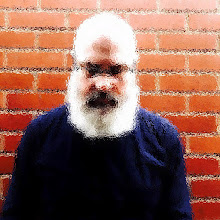
Manuel Puig
 Manuel Puig born 28 December 1932 (d. 1990)
Manuel Puig was an Argentinian author. Among his best known novels are La traición de Rita Hayworth (1968) (Betrayed by Rita Hayworth), Boquitas pintadas (1973) (Heartbreak Tango), and El beso de la mujer araña (1976) (Kiss of the Spider Woman), which was made into a film by the Argentine-Brazilian Director, Héctor Babenco, and in 1993 into a Broadway musical.
Puig was born in General Villegas, an isolated town in Buenos Aires Province, Argentina, on December 28, 1932. As a child, bored by the provincialism of his surroundings, the young Puig would go to the local moviehouse five nights a week to be entertained by the glamour of Hollywood movies.
After completing his elementary education, Puig was sent to boarding school in Buenos Aires. In 1950, he entered the University of Buenos Aires, first studying philosophy then architecture, but never obtained a degree.
In 1956, he was awarded a scholarship to study film at the Centro Sperimentale di Cinematografia and from 1956 to 1962 he moved back and forth between Rome, London, and Argentina, attempting, unsuccessfully, to get his film career off the ground.
 In 1963, abandoning hope of a career in cinema, he moved to New York City where he began to work on his first novel, La traición de Rita Hayworth. The novel was published in Argentina in 1968 but not after first running into censorship problems as a result of the portrayal of the protagonist Toto as effeminate and sexually ambivalent.
In 1969, the prestigious French publisher Gallimard issued the French translation of La traición de Rita Hayworth, and in June of that year the work was selected by Le Monde as one of the best novels of 1968-1969. After this recognition, Puig became one of the most admired and popular authors in Latin America.
 Although Puig also published plays and film scripts, he is most recognised in Latin-American letters today for the innovative techniques of his novels. The Argentine writer can perhaps be classified as one of Latin America's first post-modern authors. He is responsible for breaking through to a post-modern, unpretentious literary space where so-called low-brow culture - Hollywood movie stars, soap opera, popular radio serials - is considered as valid an indicator of personal and collective truths as high-brow art.
In 1973, while living in Greenwich Village, Puig began to write his fourth novel, the story of two cellmates in a Buenos Aires prison during Argentina's military dictatorship of the 1970s. Luis Alberto Molina, an aging homosexual convicted of 'corrupting minors', is a modern-day Scheherazade who recounts and recreates filmed stories to seduce a young Marxist political activist, Valentín Arregui Paz.
The novel is the now classic El beso de la mujer araña (Kiss of the Spider Woman), which was made into a commercially successful Hollywood film in 1985, and has also been adapted for the stage, both as a drama (in Spanish and in English) and as a Tony Award-winning musical.
Although homosexual themes and motifs are suggested in a number of Puig's novels, in El beso de la mujer araña explicit homosexual desire is central to the fiction.
When it first appeared, the open portrayal of homosexuality in El beso de la mujer araña was unsettling for many members of the Hispanic literary establishment who found it difficult to accept an openly gay novel. Yet, though it was considered a flop with intellectuals and critics, the novel, nonetheless, gained popularity and eventually became a best-seller.
By portraying the gay Molina as sympathetically complex, Puig counteracted the Hispanic world's intolerance toward homosexuality.
When Manuel Puig died in 1990 at the age of fifty-seven, the New York Times obituary reported that he had suffered cardiac arrest following a routine gall bladder operation. What was most puzzling, however, was that the obituary mentioned Puig's two 'sons', thus making him appear to have been heterosexual. Stories have since surfaced erroneously indicating that Puig's death may have been AIDS-related and his real cause of death covered up.
Labels: Novelists
posted by Peter Jacobs at 12:01 am




2 Comments:
Hello!
Maybe the blogg http://manuelpuig.blogspot.com will interest you!“
I posted there some interviews Manuel Puig made during 1968 and 1992. He was simply a GENIUS!
Those interviews are parts of the multimedia-biography: Manuel Puig: Una aproximación biográfica" more info: http://manuelpuig.com
ah! by the way!
lots of saludos
Gerd
Manuel Puig was one of my closest friends, and I have saved our correspondence over the 16 years we knew each other. After Manuel moved to Brazil in the 80s, he got into the habit of staying with me, in the East Village, across the street from Theater 80 Saints Marks (then a retro movie theater) whenever he had to come back to Manhattan for professional reasons. He turned down invitations from various professional sources to stay in hotels like The Plaza, all expenses paid, for this option, because he enjoyed the intimacy of relaxing with a close friend. Manuel's last visit was approximately 3 weeks before his death. At the time, he was worried about the bouts of nausea he was experiencing, but they disappeared in NY, greatly relieving him. He decided that it was probably a question of the water he'd been drinking where he lived. At the time, we also talked about the threat of HIV, and he confided in me that, with great relief, he had received a negative result when he tested for the disease. I should also mention that Manuel had been suffering from blood pressure problems that made his heart somewhat fragile. He died in a Mexican hospital, not of any HIV related disease, as is falsely claimed, but very shortly after a successful gallbladder operation, in very similar circumstances to the way Andy Warhol had died post-surgery. As it turned out, gallbladder problems had been the reason for the nausea Manuel had been experiencing. Obviously, his weak heart gave way during the recovery period. After Manuel's death, there was a ridiculous obituary in the NY Times, saying he had two sons. These "sons" were actually approximately 12 to 13 years younger than Manuel. They were part of his bevy of younger friends/proteges (as was I), whom he always referred to comically and affectionately as his "daughters." When the NY Times refused to correct the misinformation, I called one of them in Mexico and told him that he wasn't exactly helping the cause of gay liberation by closeting an out gay writer with the label of "father." The particular "daughter" who had communicated this fantasy to the editor of the Obituary section of the NY Times pooh-poohed my concerns and went so far as to say,"Didn't Rita Hayworth (meaning: Manuel) also have an adopted daughter? Aren't you she? You see, we two down here are his real daughters and we know what Rita (Manuel) would have wanted us to do." I can tell you beyond a doubt that (1) Manuel did not die of HIV-related causes and (2) he was not the father of two sons. None of this is particularly defamatory, but I believe that it hinges on the matter of correcting the public record. If you'd like to discover more about Manuel and my friendship with him, an essay on it appears in my collection "Sex and Isolation" (U. of Wisconsin Press).--Bruce Benderson
Post a Comment
<< Home