Simon Raven
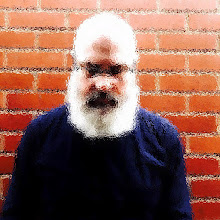
 Simon Raven born 28 December 1927 (d. 2001)
Simon Arthur Noël Raven was a novelist, journalist and dramatist. His obituary in The Guardian noted that, 'he combined elements of Flashman, Waugh's Captain Grimes and the Earl of Rochester.'
He attended first Cordwalles preparatory school and then Charterhouse, from which he was expelled for 'the usual thing' (having sex with one of the other schoolboys). It is said that the stress of expelling Raven turned headmaster Robert Birley's hair grey. After national service in the Parachute Regiment, during which he was sent as an officer cadet to Bangalore and commissioned, Raven arrived, in 1948, to read English at King's College, Cambridge.
Raven was undiscriminating in his sexual tastes, and Cambridge offered these more scope than Charterhouse had done: one disgruntled Newnham girl was overheard saying, 'I’m not going to bed with Simon ever again. One day it’s Boris, then a choral scholar, then it’s me, then it’s back to Boris again. No!' Raven was a promiscuous bisexual who on balance favoured young men over women. In 1951, he married Susan Kilner, a fellow undergraduate who was expecting his child; afterwards, he studiously avoided her, and they were divorced in 1957. In one well-known incident he received a wire from his estranged wife reading 'Wife and baby starving send money soonest,' and sent the reply: 'Sorry no money suggest eat baby.'
After failing to submit a single word of his fellowship thesis, he withdrew from King's, and, desperate to flee 'the pram in the hall', successfully applied for a regular army commission. He spent three years in the King's Own Shropshire Light Infantry (KSLI) in Germany and Kenya, where he set up a brothel for his men, and was sent home to be training officer at Shrewsbury.
Alas, officers in the KSLI were expected to represent the regiment at local race meetings - a prescription to go bankrupt, which, within a year, Simon did. The regiment cared more for its good name than for army regulations, and he was quietly allowed to resign rather than face a court-martial for conduct unbecoming.
His major work was a series of ten novels under the umbrella title Alms for Oblivion. The novels cover the period 1945 to 1973 and centre on a group of upper and upper middle class characters. They can be considered a novel sequence, if a somewhat loosely structured one.
 The early novels are robust satires of the English upper set of the mid 1950s, but the later tend to a more detached and philosophical tone. The later novels become more concerned with the occult and supernatural, and include strange happenings, though this was a feature of Raven's work early in his career (for example the early novel Doctors Wear Scarlet, (1960) which features Balkan vampires, and was once cited as one of the thirteen best supernatural horror novels). The best known and of most gay interest in the sequence is Fielding Gray (1967). His vaguely autobiographical first novel The Feathers of Death (1959) is also worth reading.
He followed the Alms sequence with the seven-volume series The First-Born of Egypt, but by then he was bored and exhausted of ideas.
As a screenwriter, Raven received screen credit for writing additional dialogue for the James Bond film On Her Majesty's Secret Service. He was also responsible for a 22-episode adaptation for the BBC of all six Palliser novels by Anthony Trollope, first broadcast in 1974. And he also wrote Edward and Mrs Simpson, an acclaimed and Emmy-winning 7 episode drama for ITV, first broadcast in 1978, and Nancy Mitford's Love in a Cold Climate in 1980
He always considered himself a second class writer motivated more by money than art and there is some truth in that.
Raven lived out his final years at Sutton's Hospital almshouses, a charitable foundation. He died of a stroke, aged 73
Who was Simon Raven? by Brooke Allen
Simon Raven - Obituary in The Guardian
Labels: Bisexuals, Novelists, Screenwriters, Television, Writers
posted by Peter Jacobs at 12:01 am




0 Comments:
Post a Comment
<< Home