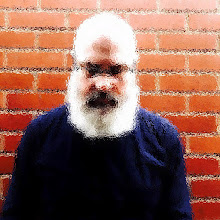
George Melly
 George Melly born 17 August 1926 (d. 2007)
Alan George Heywood Melly was an English jazz and blues singer and writer. From 1965–1973 he was a film and television critic for The Observer. He also lectured on art history, with an emphasis on Surrealism.
He was born in Liverpool and was educated at Stowe school, where he discovered his interest in modern art, jazz and blues and started coming to terms with his sexuality. This period of his life is described in Scouse Mouse, a volume of his autobiography.
He joined the Royal Navy at the end of the Second World War because, as he quipped to the recruiting officer, the uniforms were 'so much nicer'. As he related in his autobiography, Rum, Bum and Concertina, he was crestfallen to discover that he would not be sent to a ship and was thus denied the 'bell-bottom' uniform he desired. Instead he received desk duty and wore the other Navy uniform, described as 'the dreaded fore-and-aft'. Later, however, he did see ship duty. He never saw active combat, but was almost court-martialled for distributing anarchist literature.
After the war Melly found work in a London surrealist gallery, working with E L T Mesens and eventually drifted into the world of jazz music, finding work with Mick Mulligan's Magnolia Jazz Band. This was a time when jazz was very popular in Britain - a time known as the trad-boom.
He retired from jazz in the early 1960s when he became a film critic for The Observer. He also became the writer on the Daily Mail's satirical newspaper strip Flook, illustrated by Trog. He was also scriptwriter on the 1967 satirical film Smashing Time. This period of his life is described in Owning Up.
He returned to jazz in the early 1970s with John Chilton's Feetwarmers, a partnership that only ended in 2003. He later sang with Digby Fairweather's band. He released three albums in the 1970s including Nuts in 1972 and Son of Nuts the next year. He wrote a light column – Mellymobile – in Punch magazine describing their tours.
 He was an Honorary Associate of the National Secular Society and a Distinguished Supporter of the British Humanist Association. He was also a member of the Max Miller Appreciation Society and on 1 May 2005 joined Roy Hudd, Sir Norman Wisdom and others in unveiling a statue of Miller in Brighton.
His singing style, particularly for the blues, was strongly influenced by his idol, the American Blues singer Bessie Smith. While many British musicians of the time treated jazz and blues with almost religious solemnity, Melly rejoiced in their more bawdy side, and this was reflected in his choice of songs and exuberant stage performances. He recorded a track called 'Old Codger' with The Stranglers in 1978 especially written for him by the band.
Technically, Melly was bisexual, but moved from strictly homosexual relationships in his teens and twenties to largely heterosexual relationships from his thirties onwards. He married twice and had a child from each marriage. He married his second wife, Diana, in 1963. Their son, Tom, was born two days after the wedding. In 2005, Diana published an autobiography of their life and (open) marriage together. In an incident that others might have considered hugely embarrassing, Diana and George participated in a televised celebrity couples quiz in the 1970s. Asked separately what made them decide to marry, Diana announced 'I was pregnant!' and George, in his turn, merely said, 'The less said about that, the better.' At the time this was considered scandalous.
 He was still active in music, journalism, and lecturing on Surrealism and other aspects of modern art until his death, despite worsening health problems such as vascular dementia, incipient emphysema and lung cancer.
In addition to age-related health problems, Melly suffered from environmental hearing loss due to long-term exposure to on-stage sound systems, and his hearing in both ears became increasingly poor. On Sunday 10 June 2007, George Melly made an appearance, announced as his last ever performance, at the 100 Club in London. This was on the occasion of a fund-raising event to benefit the charity supporting his carers.
He died at his London home of lung cancer aged 80 on 5 July 2007
Labels: Art Critics, Bisexuals, Death from cancer, Jazz, Singers, Writers
posted by Peter Jacobs at 12:01 am
1 comments