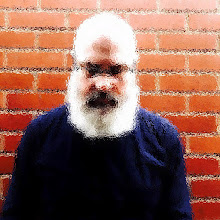
Stefan George
 Stefan George born 12 July 1868 (d. 1933)
Stefan George was a German poet and translator.
George was born in Bingen, Rhineland-Palatinate. His writing first became of note in the 1890s. George founded an important literary magazine called Blätter für die Kunst, around which a literary circle came to gather.
George's poetry was categorised by an aristocratic and remote ethos; his verse was formal in style, lyrical in tone, and often arcane in language, being influenced by Greek classical forms, in revolt against the realist trend in German literature at the time. Believing that the purpose of poetry was distance from the world - he was a strong advocate of art for art's sake, and was influenced by Nietzsche — George's writing had many ties with the French Symbolist movement. He was in contact with many of its representatives, including Stéphane Mallarmé and Paul Verlaine.
George's homosexuality is an open secret in the scholarship about him; that is, it is a commonplace that almost no one will admit. George, however, is as responsible for this closetedness as anyone since he strove in his work to create a private space that would be accessible only to those 'like-minded' individuals who possessed the code.
Therefore, his poems allow themselves to be easily construed as 'metaphorical' or 'platonic', even if they most immediately appear to be about burning gay passion. George accomplishes this effect by addressing a genderless 'you' in his poems and by personifying such terms as 'love,' 'soul,' and 'heart'.
George was an important bridge between the 19th century and German modernism, even though he was a harsh critic of the then modern era. He experimented with various poetic metres, punctuation, obscure allusions and typography.
George's best remembered collection of poetry was entitled Algabal; the title is a reference to the Roman emperor Elagabalus. George was also an important translator; he translated Dante, Shakespeare and Baudelaire into German.
George was thought of by his contemporaries as a prophet and a priest, while he thought of himself as a messiah of a new kingdom that would be led by intellectual or artistic elites, bonded by their faithfulness to a strong leader. His poetry emphasised self-sacrifice, heroism and power, and he thus gained popularity among National Socialist circles. A group of writers that congregated around him were known as the Georgekreis (George circle). Although many National Socialists claimed George as an important influence, George himself was aloof from such associations and did not get involved in politics. In the midst of National Socialism's rise to power, he left Germany and immigrated to Switzerland, where he died.
Critics considered his work to be proto-fascist, though many of the leading members of the German Resistance to the Nazis were drawn from among his followers, notably the Stauffenberg brothers who were introduced to George by the poet and scholar Albrecht von Blumenthal.
Out of the Georgekreis arose Hugo von Hofmannsthal, one of Austria's most important literary modernists (who broke from George's influence), and also several members of the July 20 Plot to assassinate Hitler, including Claus von Stauffenberg himself.
George is also said to have had an influence on Franz Kafka.
George's poetry was a major influence on the music of the Second Viennese School of composers, particularly during their Expressionist period. Arnold Schoenberg set George's poetry in such works as his String Quartet No. 2 Op. 10 of 1908 and The Book of the Hanging Gardens Op. 15 of 1909, while his student Anton Webern made use of George's verse in his early choral work Entflieht auf leichten Kähnen Op. 2 as well as in two sets of songs, Opp. 3 and 4 of 1909, and in several posthumously published vocal works from the same period.
Labels: Germans, Poets, Translators
posted by Peter Jacobs at 12:01 am
0 comments