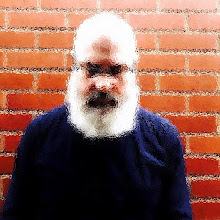
Paul Cadmus
born 17 December 1904 (d. 1999)
Paul Cadmus was an American artist. He is best known for his paintings and drawings of nude male figures. His works combined elements of eroticism and social critique to produce a style often called magic realism.
Born in New York City into a family of commercial artists, Cadmus studied at the National Academy of Design and the Arts Students League. He lived in Europe from 1931 to 1933, where he travelled with artist
Jared French and where he produced his first mature canvases.
In the 1930s, Cadmus became the centre of a circle of gay men who were prominent within the arts in New York City. This circle included his brother-in-law,
Lincoln Kirstein, who helped found the American School of Ballet, and the photographer
George Platt Lynes, for whom Cadmus frequently modelled.
In the early 1930s, Cadmus worked for the Public Works of Art Project, which was later incorporated into the WPA. This experience was to help shape his style for the rest of his long career. Nearly illustrative, his paintings remained linked to a realist style found in many WPA works of the 1930s.
In the 1930s, Cadmus used charicature, satire, and innuendo to veil the homoeroticism of his subjects, which radically pushed at the boundaries of acceptability. Cadmus's 1933 painting
The Fleet's In! was selected by the WPA for inclusion in a show of the PWAP art at the Corcoran Gallery of Art in Washington, and in 1934 it placed him at the centre of a public controversy.
Like many of his early works, the painting is ostensibly heterosexual in its depiction of sailors flirting with young women, who may be prostitutes, but it nevertheless manages to suggest a homosexual exchange between a well-dressed civilian, who sports a red tie, a widely recognised signal of homosexuality from the turn of the twentieth century, and a sailor to whom he offers a cigarette [pictured bottom].
The painting's homoerotic subtext led to its removal after the opening of the exhibition. Frequently cited as one of the earliest incidents of government censorship, the removal of the painting was almost certainly motivated by homophobia.
Cadmus's painting
Coney Island (1935) also became the subject of controversy. Its portrayal of local residents engaged in provocative (heterosexual) antics enraged Brooklyn realtors, who threatened to file a civil suit against the Whitney Museum of American Art.

Similarly, his commission for the Port Washington post office was also scandalous and was cancelled: the mural he produced,
Pocahontas and John Smith (1938), was considered to so emphasise the buttocks and genitals of the Native Americans that it obscured the subject, which was the rescue of John Smith.
As a result of Cadmus's notoriety, his 1937 exhibition at Midtown Galleries in New York attracted more than 7,000 visitors.
Other early works of particular interest for their homoeroticism are
YMCA Locker Room (1933),
Shore Leave (1933), and
Greenwich Village Cafeteria (1934). Like
The Fleet's In!, these works also document homosexual cruising and seduction.
In Cadmus's paintings, significant exchanges of glances signal sexual longing and availability, often in the very midst of mundane activities. His work documents the surreptitious cruising rituals of an urban, gay male subculture in the 1930s.

Cadmus's later works include a series of paintings inspired by Italian Renaissance masters.
In still other later works, such as
The Bath (1951) and
The Haircut (1986), Cadmus explores the joys of his long-term relationship with his partner and model, Jon Andersson. These paintings are particularly touching in their illustration of an entirely ordinary but rarely depicted subject: the domesticity of a same-sex couple.
Although the 'magic realism' with which Cadmus was identified fell out of favour in the 1950s and Cadmus's reputation went into decline, near the end of his life there was a renewed interest in his work, sparked at least in part by the success of the gay and lesbian liberation movement, as well as by a resurgence of interest in representational art.
The revival of interest in Cadmus was given impetus by the first edition of Lincoln Kirstein's illustrated biography of the artist in 1984.

Although he stopped painting towards the end of his life, Cadmus continued to draw at his home in Weston, Connecticut, particularly portraits and figure studies of Andersson, his favorite model and companion of 35 years.
In 1999 he died in his home in Weston, Connecticut due to advanced age, just five days short of his 95th birthday.

Labels: Artists, Magic Realism, Photographers

 Jared French received a Bachelor of Arts degree from Amherst College in 1925. He met and befriended Paul Cadmus in New York City, became his lover and persuaded Cadmus to give up commercial art for 'serious painting'. In 1937 French married Margaret Hoening, another artist. For the next eight years the Cadmuses and Frenches summered on Fire Island and formed a photographic collective called PAJAMA (Paul, Jared, and Margaret). French painted numerous murals for the WPA.
 PaJaMa: George Tooker, Jared French and Monroe Wheeler in Provincetown, 1947
 Jared French's early paintings are eerie, colorful tableaux of still, silent figures derived from Archaic Greek statues. His later work shows 'a kind of classical biomorphism', strange, colourful, suggestive organic forms.


 George Tooker born 5 August 1920