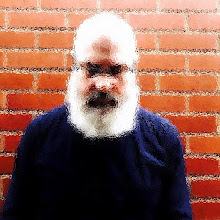
James Robert Baker
born 18 October 1946 (d. 1997)
James Robert Baker was an American author of sharply satirical, predominantly gay-themed transgressional fiction.
A native Californian, his work is set almost entirely in Southern California. After graduating from UCLA, he began his career as a screenwriter, but became disillusioned and started writing novels instead. Though he garnered fame for his books
Fuel-Injected Dreams and
Boy Wonder, after the controversy surrounding publication of his novel,
Tim And Pete, he faced increasing difficulty having his work published.
Baker was raised in what he considered a 'stifling, Republican Southern Californian household'. Rebelling against his parents, he became attracted to the fringe elements of society, including beatniks, artists and homosexuals. He also explored his homosexuality at underground gay teen nightclubs, while living in fear that his 'right wing, psycho' father would find out. At one point, his father actually hired a private detective to follow him, when he suspected Baker was having an affair with a male neighbour. This family dynamic would be used in many of his novels, most extensively in
Boy Wonder.
Baker began experimenting with drugs, and became, in his own words, 'an out of control, teenage speed freak'. He also began drinking heavily, attributing it to the fact that he was still a closeted homosexual. However, even after coming out, his substance abuse remained excessive and 'still had a life of its own'. After sobering up, he attended UCLA film school, where he was one of the winners of the Samuel Goldwyn Writing Awards, and directed two films:
Mouse Klub Konfidential and
Blonde Death.
Mouse Klub Konfidential, a film about a Mickey Mouse Club Mouseketeer who becomes a gay-bondage pornographer, was a controversial entry in the 1976 San Francisco Gay and Lesbian Film Festival, as some thought Baker was actually advocating Nazism.
Baker's lifelong ambition was to write. Upon graduating from UCLA, he spent approximately five years writing Hollywood screenplays, a process he hated. While financially successful, he was frustrated that his work was not being produced. He became discouraged and disillusioned, and turned his attention to novels. In the beginning this was just a secondary occupation, but after the release of
Fuel-Injected Dreams, his second novel, he stopped screenwriting in order to solely concentrate on books. He spent the bulk of each day writing and researching, and acted out characters and scenes of his novels on videotape to perfect the dialogue.
His primary focus was gay-themed writing, though he also wrote about the entertainment industry. Mostly satirical, his writing was filled with increasingly clear anger and disdain for the Republican neo-con agenda, especially after AIDS began to take such a large toll on the gay community. A very strong voice in gay US literature, Baker had admirers and detractors for his gay radical stance, both in the mainstream literary community as well as the gay community itself.
A self-described anarchist, Baker's writing can also be categorised as transgressional fiction, in that his novels are frequently populated by sociopathic, nihilistic characters who engage in taboo behaviours such as heavy drug use, incest, necrophilia and other aberrant sexual practices; and often commit acts of extreme, surrealistic violence. A man of eclectic tastes, Baker cited as literary influences writers and film directors ranging from Proust to Jim Thompson and Sam Peckinpah. He also admired the punk writer
Dennis Cooper.
His work is filled with pop cultural references to both film and music, as well as politics. Orson Welles'
Touch of Evil and John Ford's
The Searchers are mentioned prominently in more than one of his books, and Roxy Music are referenced in virtually every novel he wrote. The imagery in his novels is largely cinematic, with expressions such as 'fade in/fade out', 'quick cut' and 'VistaVision'; and sentences such as 'a montage traces the next fifteen years' and 'If the last reel of Cheryl's life had been a CinemaScope Technicolor movie...' With driven narratives, his books have the feel of a movie set down on paper.
His first book,
Adrenaline, was published under the pseudonym James Dillinger. A story of two gay fugitive lovers on the run, it presaged the satire and drug-fuelled violence so prominent in his later books. Here Baker began developing the themes that dominated his following works: anarchy; angry and somewhat paranoid gay men; the dark underside of Los Angeles, juxtaposed with its sunny outward image; the hypocrisy of organised religion; anonymous sex and its implications in the age of AIDS; and homophobia and the oppression of gays in a Republican dominated America. Its plot device of underdog characters forced into flight due to circumstances beyond their control was one Baker explored in all of his subsequent work. The modest success of this novel encouraged him to devote himself to what became his best known works,
Boy Wonder and
Fuel-Injected Dreams.
Baker's work received mixed reviews. His only two books not specifically gay themed (though containing gay characters and a somewhat gay sensibility),
Boy Wonder and
Fuel-Injected Dreams, were better received by critics, and more popular with readers, though he was never a best-selling author. His following book, however,
Tim And Pete, met with hostile reviews, primarily for its advocacy of political assassination and terror tactics in combating AIDS discrimination. Baker himself was ambivalent on the subject. 'I think assassination does change things... But I'm not really calling for violence,' he said. 'It's a novel, not a position paper.' There were also charges of racism, due to his portrayals of blacks and Hispanics.
The book caused a great deal of controversy among critics, with some calling it 'irresponsible', and saying it was 'determined to give offense' and 'appears to endorse violence'. Baker himself was aware that the book would be controversial, and deliberately provoked much of the reaction he received.
After the reception of
Tim And Pete, with several critics calling him 'The Last Angry Gay Man', Baker faced increasing difficulty finding a publisher for his work and his financial position became precarious. He was only able to publish one novella,
Right Wing, and that was self-published on the internet. This exacerbated a natural propensity towards depression. He was prescribed anti-depressant medication, which he disliked, and was non-compliant in the therapy. Baker committed suicide at his home on November 5, 1997.

His death was noted in literary circles, with obituaries printed in newspapers ranging from
The New York Times and
Los Angeles Times to
Gay Times in the UK.
Gay Times wrote that, 'Baker's suicide is particularly tragic because it robs American gay writing of a refreshingly distinctive voice quite unlike the po-faced prose of so many of his contemporaries.'
Since his death, Baker's reputation has steadily increased among critics and the reading public; and his works now have cult status in the literary community.
His surviving life partner and literary executor, Ron Robertson, was successful in having two additional novels published after Baker's death. One of those,
Testosterone, was filmed in 2003. The plot was significantly altered and the film was a critical and financial failure. Both
Boy Wonder and
Fuel-Injected Dreams have been optioned for the movies several times, most recently in 2004, though they were never produced.
Three of Baker's books have thus far not been published.
Labels: Anarchists, Death by suicide, Novelists, Screenwriters
 Adolf Brand born 14 November 1874 (d. 1945)
 Adolf Brand gave up homosexual activism in the early 1930s, after constant harassment from the Nazis who silenced Der Eigene, destroyed his life's work and left him in financial ruin. After the sacking and burning of the Institut für Sexualwissenschaft he finally sent a public letter to his followers announcing the end of the movement. He and his wife were killed by an Allied bomb on February 2, 1945.