Friday, March 25, 2011

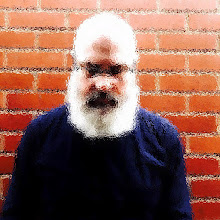
Richard O'Brien

Richard O'Brien born 25 March 1942

Richard O'Brien (born Richard Timothy Smith in Cheltenham, Gloucestershire, England) is a writer, actor, television presenter and theatre performer. He is perhaps best know known for writing the cult musical The Rocky Horror Show and for his role in presenting the popular TV show The Crystal Maze.

In addition to writing The Rocky Horror Show O'Brien also starred in its 1975 film adaptation The Rocky Horror Picture Show as the character Riff Raff. The stage show has been in almost continuous production since, and the cinematic version is one of the best known and most ardently followed cult films of all time.

O'Brien's personality is also very well known in the UK for presenting the classic 1990s TV game-show The Crystal Maze. As the eccentric and energetic maze-keeper he earned the respect of contenstants and audiences alike and dazzled them all week after week with his quirky wardrobe, sharp-wit and melodic interludes on the harmonica.

In 1952, he emigrated with his family to Tauranga, New Zealand where his father had purchased a sheep farm. After learning how to ride horses, a skill which provided him with his break into the film industry as a stuntman in Carry On Cowboy, and developing a keen interest in comic books and horror films, he returned to England in 1964. Upon launching his acting career he changed his name to O'Brien — his mother's maiden name — as there was already an actor named Richard Smith.

He joined several stage productions as an actor without ever excelling or receiving critical acclaim, but that was not his primary objective. In 1972, he met director Jim Sharman who would help make his draft of a gothic-themed, schlock-horror comic-book fantasy romp into a reality. The script took O'Brien 6 months to write, Sharman suggested changing the working title They Came from Denton High to The Rocky Horror Show and the show opened in June 1973.

O'Brien tried to repeat the success and cult status that The Rocky Horror Picture Show gained, with a continuation, 1981's Shock Treatment. Four other members of the original film-cast appeared with O'Brien in the new film, which continued the story of Brad and Janet. Over the years it has achieved minor cult status, mostly thanks to the Rocky Horror phenomenon. Fans of Rocky Horror were disappointed by the absence of both the Frank N. Furter character, and Tim Curry, who played him. Curry had been offered the role of Farley Flavors, but turned it down over concerns about the required American accent. O'Brien wrote new songs for the film, which also features a rare film appearance by Australian actor Barry Humphries (famous for his character Dame Edna Everage).

He became a serial bit-part actor in cult films and has appeared in notable movies such as Flash Gordon (1980), Dark City (1998) and Dungeons & Dragons (2000).

In other roles O'Brien has conceptualised and played the role of the Child Catcher in the West End theatre production of Chitty Chitty Bang Bang. He also occasionally does cabaret-style music and comedy performances on stages around the world, singing songs from Rocky Horror among others.

In the summer of 2006 he played the Child Catcher in the Queen's 80th birthday celebrations at Buckingham Palace.

O'Brien has married twice and fathered three children. In a 2009 interview he spoke about an ongoing struggle to reconcile cultural gender roles and described himself as being transgender or possible third sex. O'Brien stated, 'There is a continuum between male and female. Some are hard-wired one way or another, I’m in between.'

Labels: , , , , ,

Sunday, March 06, 2011

Frankie Howerd

Frankie Howerd born 6 March 1917 (d. 1992)

Frankie Howerd OBE (born Francis Alick Howard in York, England, in 1917 — not 1922 as he claimed) was a distinctive English comedian and comic actor whose career spanned six decades.

Howerd was 'lightly' educated at Shooters Hill Grammar School (later to become Eaglesfield School) in Eltham, London. His early hopes of becoming a serious actor were dashed when he failed an audition for RADA. He got into entertaining during his wartime stint in the army. Despite suffering from appalling stage fright he continued to work after the war, beginning his professional career in the summer of 1946 in a touring show called For the Fun of It.

He soon started working in radio, making his debut at the start of December 1946 on the BBC Variety Bandbox programme with a number of other ex-servicemen. His fame built steadily throughout the late 1940s and early 1950s (aided by material written by Eric Sykes, Galton and Simpson and Johnny Speight). In 1954, he made his screen debut opposite Petula Clark in The Runaway Bus, which had been written for his specific comic talents, but he never became a major film presence, although he appeared in a number of Carry Ons.

When he began experimenting with different formats and contexts, including stage farces, Shakespearean comedy roles, and television sitcoms, he began to fall out of fashion. After suffering a nervous breakdown at the start of the 1960s, he began to recover his old popularity, initially with a season at Peter Cook's satirical Establishment Club in Soho. He was boosted further by success on That Was The Week That Was in 1963 and on stage with A Funny Thing Happened on the Way to the Forum (1963–65), which led into regular television work. He was awarded an OBE in 1977.

He was famous for his seemingly off-the-cuff remarks to the audience, especially in the show Up Pompeii!, which was a direct follow-up from Forum. His television work was characterised by addressing himself directly to the camera and littering his monologues with verbal tics: 'Oooh, no missus', 'Titter ye not', and so on. Another feature of his humour was to make obvious double entendres and then blame the audience for having dirty minds when they laughed.

Howerd's face was a gift to comedy but a testament to tragedy. When a reporter wrote that he had a face like 'a landslide of sadness', Howerd got in touch with him to say how right that was.

After five years without a regular television show (though he had hosted a one-off UK version of The Gong Show for Channel 4, which was critically panned and was not commissioned for a full series), Howerd returned to the TV screens in 1987 in the Channel 4 show Superfrank!. In the last years of his career, Howerd developed a cult following with student audiences and performed at universities. He was also a regular and popular guest on the late night BBC Radio 1 programme Into the Night, hosted by Nicky Campbell.

Howerd suffered respiratory problems at the beginning of April 1992 and died in hospital of heart failure on 19 April. He posed for his last photograph with friend Cilla Black when she went to visit him.

Throughout his career, Howerd hid his potentially career-destroying homosexuality (which had been illegal in Britain until 1967) from both his audience and his mother. However, back-stage, he was notoriously bold in his advances. In 1955, Frankie met Dennis Heymer, who later became his manager. Dennis was with Frankie for thirty years until he died. One of his exes was comic actor Lee Young who created the TV sitcom Whoops Baghdad.

Frankie Howerd lived for the latter part of his life in the village of Cross, Somerset. On 15 May 2009, his former partner Dennis Heymer died in the home that he and Howerd had shared. He was aged 80. Howerd's home, Wavering Down, is now a tourist attraction and, in the summer, hosts concerts and opens regularly as a museum of Howerd's collection of memorabilia to raise funds for charities.

Howerd's grave is at St Gregory's church in Weare, Somerset.

A BBC TV biography about Frankie Howerd Rather You Than Me was produced and broadcast by BBC 4 in 2008. The comedian David Walliams was cast as Howerd. This portrayal of Howerd as an alcoholic sexual predator who had been sexually abused by his father, largely driven by Heymer, has driven Howerd's sister, Betty, to break a long silence to refute the allegations, claiming that the drama 'robs' her brother 'of his dignity'.

Labels: , , , ,

Tuesday, February 22, 2011

Kenneth Williams

Kenneth Williams born 22 February 1926 (d. 1988)

Kenneth Charles Williams was an English comic actor, star of twenty six Carry On... films and notable radio comedies with Tony Hancock and Kenneth Horne, as well as a witty raconteur on a wide range of subjects.

Kenneth Williams was born in Bingfield Street, King's Cross, London, the son of a hairdresser (Charles Williams). His relationship with his parents — he adored his vivacious mother, Louisa (Lou), but hated his morose and selfish father — was key to the development of his personality.

Williams became an apprentice draughtsman to a mapmaker and joined the army aged 18. He was part of the Royal Engineers survey section in Bombay when he had his first experience of going on stage with Combined Services Entertainment along with Stanley Baxter and Peter Nichols.

After the war, his career began with a number of roles in repertory theatre, but few serious parts were to lend themselves to his style of delivery. His failure to become established as a serious dramatic actor would disappoint him, but it was his potential as a comic performer that gave him his big break. He was spotted playing the Dauphin in George Bernard Shaw's St Joan in 1954 by the radio producer Dennis Main Wilson, who was casting Hancock's Half Hour. He would lend his distinctive voice and amazing vocal talent to the radio series to almost the end of its run, five years later. His nasal, whiny, camp-cockney inflections (epitomised in his famous 'Stop messing about....' catchphrase) would endure in popular lore for many years.

When Hancock tired (or grew jealous) of him, Williams joined Kenneth Horne in the series Beyond Our Ken (1958–1964), and its sequel Round the Horne (1965–1968). In the latter, his roles included Rambling Syd Rumpo, the eccentric folk singer; The Amazing Proudbasket, human cannonball; J. Peasemould Gruntfuttock, professional telephone heavy breather and dirty old man; and Sandy of the extremely camp couple, Julian and Sandy (Julian was played by Hugh Paddick), notable for their double entendres and use of the underground gay slang, Polari.

In 1959 Williams appeared in his own West End revue, One over the Eight, for which he commissioned sketch material from Peter Cook who was still a student at Cambridge. The revue included a number of Cook sketches such as 'One Leg Too Few' that would become classics. Williams later starred opposite Jennie Linden in the stage hit My Fat Friend in 1972. He also appeared with Ingrid Bergman in a highly successful stage production of George Bernard Shaw's Captain Brassbound's Conversion in 1971.

Williams worked extensively in television and British films, most famously the legendary Carry On... series for which he along with the rest of the cast were very poorly paid. Williams' diaries claimed he earned more in a British Gas commercial he did during the 1970s than he made out of the entire Carry On series put together — although that might only be considered true if one adds in the considerable fee he earned from the highly successful spin-off cartoon series Willo the Wisp. Despite making a good living in his later years, he lived in a series of small flats in north London.

Particularly in the theatre, he was famous for breaking out of character and talking to the audience. He was a regular panelist on the BBC radio panel game Just a Minute from its second season in 1968 until his death and regularly presented the children's story-reading series Jackanory. He was also a 'professional' talk-show guest, able to regale an audience with amusing (and often risqué) anecdotes on every subject. He was extremely well read and occasionally used to stand in as host on the popular early evening Wogan (talk) show.

Williams publicly insisted that he was celibate, but in private found his homosexuality difficult to deal with. His diaries contain many references to unconsummated or barely consummated relationships, described in code as 'traditional matters' or 'tradiola', probably because homosexuality was still a criminal offence in the United Kingdom for much of the period covered by the diaries.

He befriended Joe Orton who wrote the role of Inspector Truscott in Loot (1966) for him and enjoyed holidays with Orton and Kenneth Halliwell in Morocco. Other close friends included fellow thespians Maggie Smith, Stanley Baxter, Gordon Jackson and his wife Rona Anderson, Beverly Cross and Sheila Hancock. By turns gregarious and reclusive, Williams was also fond of the company of fellow Carry On regulars Barbara Windsor, Kenneth Connor, Hattie Jacques and Bernard Bresslaw.

In later years Williams' health declined, along with that of his elderly mother, and his depression deepened. He died on 15 April 1988 from an overdose of barbiturates. An inquest recorded an open verdict into his death as it was not possible to establish whether his death was the result of suicide or an accident. Williams' father had died after drinking a bottle of disinfectant in 1962.

The main protagonist for the 'suicide' theory was Gyles Brandreth, a friend of Williams for many years (and who edited two editions of Acid Drops for him) mainly centring on his dread of hospitals (despite being a self-confessed hypochondriac) and on the last sentence Williams wrote in his diary:

'By 6.30 pain in the back was pulsating as it's never done before … so this, plus the stomach trouble combines to torture me — oh — what's the bloody point?'

Surviving friends continue to maintain that, because of Williams' devotion to Lou (for whom he bought the flat next to his), he would never — in her lifetime — have seriously contemplated suicide. The best-selling posthumous publication of his diaries and letters, both edited by Russell Davies, not only caused some controversy over their contents (particularly Williams' often caustic remarks about many of his fellow professionals), but also revealed the periodic bouts of despondency (often primed by feelings of isolation and underachievement) that marked Williams' life.

Williams' flat was later bought by Rob Brydon and Julia Davis for the writing of their dark comedy series, Human Remains. The building was due to be demolished in a controversial regeneration scheme agreed in 2006 and finally demolished in May 2007.

In April 2007, Williams' line 'Infamy, infamy, they've all got it in for me', was voted the greatest one-liner in movie history by a poll of a thousand comedy writers, actors, impresarios and members of the public for the launch of Sky Movies Comedy Channel

Labels: , , , ,

Sunday, November 30, 2008

Charles Hawtrey

Charles Hawtrey born 30 November 1914 (d. 1988)

George Frederick Joffre Hartree, better known as Charles Hawtrey, was an English comedy actor. He took his stage name from a celebrated theatrical knight who died in 1923, Sir Charles Hawtrey. It has mistakenly been suggested, and encouraged by Hartree himself, that he was his son, but there is no foundation to this. His father was actually a London car mechanic.

Charles Hawtrey made an early start to a remarkable career that was to span a period of almost 60 years, and broke through in all the major entertainment media of the time. He began in the field of music as a renowned boy soprano, making several records before then moving onto the wireless where he performed in programmes for Children's Hour. Following study at the Italia Conti Academy of Theatre Arts in London, he embarked on a career in the theatre as both actor and director. Finally he moved from the cinema (where he regularly appeared in films supporting Will Hay in the 1930s and 40s) through the Carry On films for which he is of course best known and loved, to the television screen.

Relatively little is known about Charles Hawtrey's private life. He guarded his relationships very carefully - perhaps no surprise in an age where homosexuality was illegal and punishable by a prison sentence - but during his life he never hid (to put it mildly) his homosexuality, and was one of the first actors in British cinema to be identifiably 'gay' in the characters that he played.

His outrageous drunken promiscuity however, did not portray homosexuality in a positive light to an unsympathetic world, and nor did his general demeanour with those around him earn him many (if any) close friends. Nevertheless a few anecdotes told by his Carry On colleagues shed a little light on the character off the screen. Kenneth Williams records several encounters with Hawtrey in his 'Diaries' and 'Letters' (both published). He remembers a visit to Deal where Hawtrey's house was full of old brass bedsteads which the eccentric actor had hoarded, believing that one day he would make money from them. He would also wave with gusto at the sailors on the beach.

In her autobiography, Barbara Windsor writes openly about Hawtrey's alcohol problem. While filming Carry On Spying she thought he had fainted from fright at a dramatic scene on a conveyor belt. In fact he had passed out because he was drunk. When he came on set with a crate of R White's Lemonade, everyone knew that he had been on another heavy drinking binge.

Joan Sims could apparently communicate with him in a private language called 'Telegraphese'. He would smoke woodbines profusely and play cards between takes with Sid James and his gang. He was godfather to Richard O'Callaghan (son of Patricia Hayes) who appeared in Carry On Loving, and was also admired by Jim Dale as a type of mentor in comic timing. This was Hawtrey's absolute strength.

A lot of strain was put on him by his mother who suffered senile dementia in later years. One story has the old woman's handbag catching fire when her cigarette ash fell in. Hawtrey, without batting an eyelid, poured a cup of tea into it to put out the flames, snapped the purse shut and continued with his story. His mother would also collect toilet rolls and on another visit to the studios blocked the women's toilets with paper.

The falling-out between Hawtrey and the Carry On producer, Peter Rogers, came about partly through drink, but partly because he had hoped for higher billing. Pay for the films was bad and without either Sid James or Kenneth Williams starring in the 1971 Christmas special, Hawtrey believed it was his due to get top billing. However, the producers went with Hattie Jacques who they believed was better known on TV. Rogers tried to contact Hawtrey a day before filming began at the hotel where Hawtrey regularly dined, to ask him to reconsider; but Hawtrey declined. He never worked for Carry On again.

Hawtrey finally retired to Deal in Kent in the 1980s, where he continued to battle against alcoholism. He made the news in August 1984 when his house caught fire after he left a cigarette burning on the sofa. When rescued by firemen, a pathetic character, without the ill-fitting wig he generally wore, he tried to re-enter the house pleading that 'my fags are next to the bed, and my boyfriend's in it!' He had long suffered from arthritis, and by October 1988, following a fall in a public house, his doctors told him that the condition (compounded by smoking) had become so serious that his legs would have to be amputated. He refused, and died almost a month later, aged 73. On his deathbed, Hawtrey threw a vase at his nurse who dared to ask him for a final autograph - it was the last thing he did.

His ashes were scattered in the tranquillity of Mortlake Crematorium close to Chiswick in London.

Labels: , , , , ,