Thursday, April 21, 2011

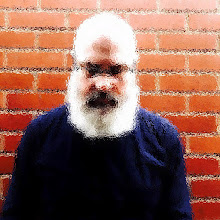
Ric Weiland

Ric Weiland born 21 April 1953 (d. 2006)

Richard W 'Ric' Weiland was a computer software pioneer and philanthropist. He was one of the first five employees of Microsoft Corp.

Weiland was a high school classmate and friend of Paul Allen, with whom he created the Lakeside Programmers Group at Lakeside School, a preparatory school in Seattle. Bill Gates, Paul Allen, Kent Evans, and Weiland were involved with the Computer Center Corporation, using their PDP-10 - a mainframe computer system beloved of US universities in the late 60s and early 70s. They worked together to create a payroll program in COBOL for Portland company Information Sciences Inc., and wrote scheduling software for a school.

After he graduated from Stanford University, Allen and Bill Gates hired him in 1975, the same year they founded Microsoft in Albuquerque. As one of only five employees, Weiland was a lead programmer and developer for the company's BASIC and COBOL language systems, two of the first personal computing interfaces.

After a stint at Harvard Business School, he rejoined Microsoft in 1982 and became the project leader for Microsoft Works. He left Microsoft in 1988 and dedicated most of his time to philanthropy. He was described by Allen as a 'brilliant programmer' and a key contributor to the company's success.

Weiland was a donor to organisations such as the Pride Foundation, the Lifelong AIDS Alliance, United Way of King County, the Fred Hutchinson Cancer Research Center, Stanford University, the Gay, Lesbian and Straight Education Network, AMFAR, The Nature Conservancy, and the National Audubon Society. He was influential as an active member of the Northwest gay community. A member of the Pride Foundation's board of directors from 1997 to 2001, he helped win the fight to get General Electric to include sexual orientation in their non-discrimination policy.

Weiland also was a quiet but key second round investor in gay online media company PlanetOut Corp. His investment helped the company survive the dot com crash of 2000. PlanetOut was acquired by Online Partners in 2001 and is now called PlanetOut Inc.

It is estimated that during his life he contributed $30 million to over 50 organisations. He was known not to seek publicity for his philanthropy.

Ric Weiland died 24 June 2006 from a self-inflicted gunshot wound to the head. He was reported to have suffered from clinical depression. Weiland is survived by his partner Mike Schaefer and several nephews and nieces.

On February 24, 2008, Pride Foundation announced that Ric Weiland had bequeathed $65 million to support gay rights and HIV/AIDS organisations - the largest ever single bequest for LGBT community. Through his estate, Weiland established a fund at the Pride Foundation that will provide $46 million over the next eight years to 10 national LGBT and HIV/AIDS organisations that he personally selected and $19 million directly to Pride Foundation for their scholarships and grants supporting the Northwest's LGBT community.

The $65 million is among bequests totaling about $160 million - the bulk of Weiland's estate - to various charities and Stanford University, according to an estimate provided by the Pride Foundation.

Labels: , , , , , ,

Saturday, April 02, 2011

David Bohnett

David Bohnett born 2 April 1956

David C. Bohnett is a philanthropist and technology entrepreneur.

David C. Bohnett is the Chairman of the David Bohnett Foundation, a non-profit, grant-making organisation with the stated goal of 'improving society through social activism'. In 1994 he founded GeoCities, an Internet-based media and e-commerce company, subsequently acquired by Yahoo! He pioneered and championed the concept of providing free home pages to everyone on the web, and he built a business model based on advertising, sponsorships, and electronic commerce.

Along with GeoCities, Bohnett, has had significant involvement with a number of web ventures, including NetZero, Stamps.com, LowerMyBills, Gamesville, PlanetOut Inc., MediaVast, and Xdrive. He currently serves as CEO of OVGuide, a company funded by his venture firm. He also manages a portfolio of investments through his investment company, Baroda Ventures, and sits on the boards of several civic, philanthropic, and privately held ventures.

Born in Chicago, Bohnett received his MBA in finance from the University of Michigan's Ross School of Business, and a BS in business administration from the University of Southern California. In addition, he has lectured at the Marshall School of Business at USC, and was named a Regent’s Lecturer at the University of California, Los Angeles.

He and his partner, radio and television personality, Tom Gregory, live in Beverly Hills, California, in a house built for Gary Cooper. Tom Gregory is the owner of the auctioned pair of cowboy shirts worn by Heath Ledger and Jake Gyllenhaal in the film Brokeback Mountain.

Labels: , , ,

Wednesday, June 23, 2010

Alan Turing

Alan Turing born 23 June 1912 (d. 1954)

It would be difficult to overestimate the importance to the modern world of the mathematical, philosophical, and cryptographic work of Alan Mathison Turing. A gifted mathematician, Turing is remembered today as one of the founders of computer science.

The gay community remembers Turing not only for his work on computers and the cracking of the Enigma machine code during World War II, but also because of his needless, horrific death. He committed suicide at the age of 41, two years after his arrest, conviction, and forced chemical castration for his homosexuality.

After pioneering work in computer and software design and in artificial intelligence, and after being honoured for his war work with an OBE in 1946 and elected a Fellow of the Royal Society in 1951 at an unusually young age, in 1952 Turing's life took an abrupt turn for the worse.

In 1948, Turing had moved to Manchester after accepting a position as Deputy Director of the Royal Society Computing Laboratory at the University of Manchester, where he soon became involved with a young working class man, Murray Arnold, who would later break into his home.

After reporting the burglary, Turing was arrested and prosecuted for what was then known under British law as Gross Indecency, a section of the Criminal Law Amendment Act 1885, under which Oscar Wilde had also been charged in 1895. Even through this ordeal, he remained open and unapologetic about his sexuality. Turing was offered a stark choice: go to prison or submit to the administration of the hormone oestrogen. Intended to suppress his libido, it was a type of chemical castration.

This treatment left Turing impotent. He also developed breasts. He found his security clearances revoked and he was unable to continue his pioneering work. Two years after his arrest, and one year after this coerced and barbaric 'therapy', Alan Turing killed himself.

He left no note, and the circumstances of his death were inadequately investigated and perhaps left deliberately murky to spare his mother anguish. She believed his death to be accidental. Most commentators believe, however, that he committed suicide by eating an apple smeared with cyanide-laced jam.

Despite the fact that he may have been the most brilliant scientist of his generation, someone whose work in deciphering the German codes during World War II played a major role in achieving Allied victory, Turing was discarded and deemed a security risk because of his homosexuality.

The city of Manchester has done something to celebrate Turing's life and achievements and make amends for the cruel treatment he received - there is now a major road called Alan Turing Way, and a statue of Turing [right] in Sackville Park, near to Manchester's Gay Village.

There is also a statue [above] at the University of Surrey, close to Turing's childhood home in Guildford. In June 2007 a new statue of Turing was unveiled at Bletchley Park, where he carried out his wartime work.

Read more about the life of this incredible man.

The play and film Breaking The Code are about the life and work of Alan Turing.

On 10 September 2009, following an Internet campaign, British Prime Minister Gordon Brown made an official public apology on behalf of the British government for the way in which Turing was treated after the war.

Labels: , ,

Saturday, October 18, 2008

Tim Gill

Tim Gill born 18 October 1953

Tim Gill is an American computer software entrepreneur and gay rights activist.

Early in his life, Gill showed both interest and talent in computer science first at Wheat Ridge High School in Jefferson County, Colorado, eventually studying the subject at University of Colorado at Boulder. After two jobs in high-tech at HP and a consulting services firm, Gill started his company, Quark, with a $2,000 loan from his parents. Quark produced successful page layout software for the graphics market. Later, the company expanded into data storage devices, which brought Quark to the brink of bankruptcy and forced Gill to lay off half of his work force in 1981. With the introduction to Farhad (Fred) Ebrahimi later that year and the monumental success of QuarkXPress, Gill became a multi-millionaire.

The passage of Colorado Amendment 2, designed to prevent laws banning discrimination against gays, in 1992 prompted Gill to become involved in LGBT political action and is now the foremost leading funder in that movement. His foundations, based in Denver and Colorado Springs are the Gill Foundation and the Gay and Lesbian Fund for Colorado. His political endeavours, which are separate from his charitable foundation, are directed through the Gill Action Fund.

Gill and his partner Scott Miller live in Denver, Colorado.

Gill Foundation

Labels: , , ,