Wednesday, May 18, 2011

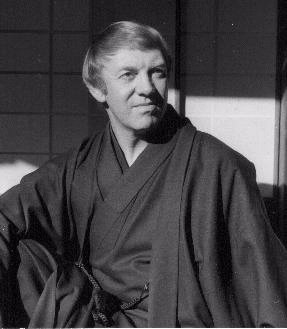
Robin Blaser

Robin Blaser born 18 May 1925 (d. 2009)

Robin Francis Blaser was a noted author and poet in both the United States and Canada.

Born in Denver, Colorado, Blaser grew up in Idaho, and came to Berkeley, California in 1944. There he met Jack Spicer and Robert Duncan, becoming a key figure in the so-called San Francisco Renaissance of the 1950s and early 1960s. He moved to Canada in 1966, joining the faculty of Simon Fraser University; in his later years he held the position of Professor Emeritus and lived in British Columbia with his partner of 30+ years, David Farwell.

In June of 1995, for Blaser's 70th birthday, a conference was held in Vancouver, Canada to pay tribute to his contribution to Canadian poetry. The conference was attended by poets from Canada, the US and around the world.

Robin Blaser was also well known as the editor of The Collected Books of Jack Spicer, which includes Blaser's essay 'The Practice of Outside'. The 1993 publication The Holy Forest represents his collected poems to that date. In 2006, Blaser received a special Lifetime Recognition Award given by the trustees of the Griffin Trust for Excellence in Poetry, which also awards the annual Griffin Poetry Prize.

Blaser died of a brain tumour on May 7, 2009, in Vancouver, at age 83.

Labels: , , , ,

Saturday, May 14, 2011

Magnus Hirschfeld

Magnus Hirschfeld born 14 May 1868 (d. 1935)

Magnus Hirschfeld was a prominent German-Jewish physician, sexologist, and gay rights pioneer.

Hirschfeld developed the theory of a third, 'intermediate sex' between men and women. He was interested in the study of a wide variety of sexual and erotic urges, at a time when the early notions of sexual identity was still being formed. His scientific work extended that of Karl Heinrich Ulrichs and influenced Havelock Ellis and Edward Carpenter.

As a young man he had lived in Paris and worked as a journalist. His subsequent career successfully found a balance between medicine and writing. After several years as a general practitioner in Magdeburg, in 1896 he issued the anonymous pamphlet Sappho and Socrates, on homosexual love.

In 1897, Hirschfeld founded the Scientific Humanitarian Committee with Adolf Brand, Benedict Friedlaender and other leaders of Der Eigene, a homosexual campaign and publication. The group aimed to undertake research to defend the rights of homosexuals and to repeal Paragraph 175, the section of the German penal code that since 1871 had criminalised homosexuality. They argued that the law encouraged blackmail, and the motto of the Committee, 'Justice through science', reflected Hirschfeld's belief that a better scientific understanding of homosexuality would eliminate hostility toward homosexuals. He was a tireless campaigner and became a well-known public figure.

Within the group, some of the women, as well as Friedlaender, scorned Hirschfeld's analogy that homosexuals are like cripples. They argued that society might tolerate or pity cripples, but never treat them as equals. They also disagreed with Hirschfeld's (and Ulrichs's) view that male homosexuals were by nature womanish — Brand, Friedlaender and others would later leave the Scientific-Humanitarian Committee and form their another group, Gemeinschaft der Eigenen, which argued that male-male love is a simple aspect of virile manliness rather than a special condition.

However, the Scientific-Humanitarian Committee, under Hirschfeld's leadership, managed to gather over 5,000 signatures from prominent Germans for a petition to overturn Paragraph 175. Signatories included Albert Einstein, Hermann Hesse, Thomas Mann, Rainer Maria Rilke and Leo Tolstoy, but no one admitted publicly to being homosexual themselves.

The bill was brought before the Reichstag in 1898, but was only supported by a minority from the Social Democratic Party of Germany, prompting a frustrated Hirschfeld to consider the controversial strategy of 'outing' — that is, forcing some of the prominent law-makers who had remained silent out of the closet. The bill continued to come before parliament, and eventually began to make progress in the 1920s before the takeover of the Nazi party obliterated any hopes for reform.

In 1921 Hirschfeld organised the First Congress for Sexual Reform, which led to the formation of the World League for Sexual Reform. Congresses were held in Copenhagen (1928), London (1929), Vienna (1930), and Brno (1932).

Hirschfeld was both quoted and caricatured in the press as a vociferous expert on sexual manners, receiving the epithet 'the Einstein of Sex'. He saw himself as a campaigner and a scientist, investigating and cataloging many varieties of sexuality, not just homosexuality. He coined the word 'transvestism', for example.

Hirschfeld co-wrote and acted in the 1919 film Anders als die Andern (Different From the Others), where actor Conrad Veidt played possibly the first homosexual character ever written for cinema. The film had a specific gay-rights law reform agenda — Veidt's character is blackmailed by a lover, eventually coming out rather than continuing to make the blackmail payments, but his career is destroyed and he is driven to suicide.

In 1919, under the more liberal atmosphere of the newly founded Weimar Republic, Hirschfeld was given a former royal palace for his new Institut für Sexualwissenschaft (Institute for Sexual Research) in Berlin. His Institute housed his immense library on sex and provided educational services and medical consultations. People from around Europe visited the Institute to gain a clearer understanding of their sexuality. Christopher Isherwood writes about his and Auden's visit to the Institute in his book Christopher and His Kind. They were visiting Francis Turville-Petre, a friend of Isherwood's who was staying there. The Institute also housed the Museum of Sex, an educational resource for the public which is reported to have been visited by school classes.

Hirschfeld's work continues to be controversial. Critics have claimed that some of his financial support came from closeted but prominent German homosexuals whom he blackmailed. Though he was immensely popular in some circles, in others he was reviled. Gatherings at which he spoke came under attack from anti-gay groups: in one such instance in 1921, his skull was fractured and he was left lying in the street.

Others complain that his belief that homosexuality was, at root, hormonal opened the door for others who were seeking a 'cure' for homosexuality.

When the Nazis took power, one of their first actions, on May 6, 1933, was to destroy the Institut and burn the library. The press-library pictures & archival newsreel film of Nazi book-burnings seen today are often pictures of Hirschfeld's library ablaze. Fortuitously, at that time Hirschfeld was away from Germany on a world speaking tour.

He never returned to Germany, dying in exile in Nice of a heart attack on his 67th birthday in 1935. He is buried there.

Labels: , , , , , ,

Tuesday, April 26, 2011

Ludwig Wittgenstein

Ludwig Wittgenstein born 26 April 1889 (d. 1951)

Ludwig Josef Johann Wittgenstein was an Austrian philosopher who worked primarily in the foundations of logic, the philosophy of mathematics, the philosophy of mind, and the philosophy of language. His influence has been wide-ranging and he is generally regarded as one of the twentieth century's most important philosophers.

Before his death at the age of 62, the only book-length work Wittgenstein had published was the Tractatus Logico-Philosophicus. Philosophical Investigations, which Wittgenstein worked on in his later years, was published shortly after he died. Both of these works are regarded as highly influential in analytic philosophy.

Ludwig Wittgenstein was born the youngest of eight children, into one of the most prominent and wealthy families in the Austro-Hungarian empire. His father's parents were born into Jewish families but later converted to Protestantism, and after they moved from Saxony to Vienna in the 1850s, assimilated into the Viennese Protestant professional classes.

Ludwig grew up in a household that provided an exceptionally intense environment for artistic and intellectual achievement. His parents were both very musical and all their children were artistically and intellectually educated. Karl Wittgenstein was a leading patron of the arts, and the Wittgenstein house hosted many figures of high culture — above all, musicians. The family was often visited by musicians such as Johannes Brahms and Gustav Mahler. Ludwig's older brother Paul Wittgenstein went on to become a world-famous concert pianist, even after losing his right arm in World War I. Ludwig himself had absolute pitch, and his devotion to music remained vitally important to him throughout his life: he made frequent use of musical examples and metaphors in his philosophical writings, and was said to be unusually adept at whistling lengthy and detailed musical passages.

His family also had a history of intense self-criticism, to the point of depression and suicidal tendencies. Three of his brothers committed suicide.

Until 1903, Ludwig was educated at home; after that, he began three years of schooling at the Realschule in Linz, a school emphasising technical topics. Adolf Hitler was a student there at the same time, when both boys were 14 or 15 years old. Wittgenstein was only a few days Hitler's junior but, instructed by private tutors, was two grades ahead of him. It is a matter of controversy whether Hitler and Wittgenstein knew each other personally.

In 1906, Wittgenstein began studying mechanical engineering in Berlin, and in 1908 he went to the Victoria University of Manchester to study for his doctorate in engineering, which led to an interest in pure mathematics and the philosophy of mathematics, and in 1912 he moved to Cambridge to become a pupil of Bertrand Russell.

His work from 1914-18 led to the writing of the Tractatus Logico-Philosophicus, which was published in Germany in 1921 and in London in 1922. Wittgenstein served in the Austrian army in World War I and was captured in Italy, and on his release after the war he gave away a considerable fortune he had inherited.

From 1920-26 he went to work as an elementary schoolmaster in Austria, then returned to Cambridge in 1929. During the next few years he came to a new position in philosophy, which was first stated in the Blue and Brown Books, a set of lecture notes from 1933-35 and published posthumously in 1958, and later in his Philosophical Investigations (published 1953). He became Professor of Philosophy at Cambridge in 1939.

In 1947 he resigned to devote himself to research, but his health soon deteriorated and he died of prostate cancer in 1951.

Although Wittgenstein was involved in a relationship with Marguerite Respinger (a young Swiss woman he had met as a friend of the family), his plans to marry her were broken off in 1931 and he never married. Most of his romantic attachments were to young men. There is considerable debate over how active Wittgenstein's homosexual life was, inspired by W. W. Bartley's claim to have found evidence of not only active homosexuality but in particular several casual liaisons with young men in the Wiener Prater park during his time in Vienna. Bartley published his claims in a biography of Wittgenstein in 1973. Wittgenstein's estate and other biographers disputed Bartley's claims and asked him to produce the sources that he claims. What has become clear, at least, is that Wittgenstein had several long-term homoerotic attachments, including an infatuation with his friend David Pinsent - who was killed in a military flying accident in 1918 - and long-term relationships during his years in Cambridge with Francis Skinner and Ben Richards.

Labels: , , , , ,

Monday, April 25, 2011

James Fenton

James Fenton born 25 April 1949

James Fenton has been, at various times, a journalist, poet, literary critic, and professor.

Fenton grew up in Lincolnshire and Staffordshire. He was educated at Repton School, where he grew fond of the work of W H Auden, who proved to be the greatest influence of Fenton's own output. After graduating from Repton, Fenton attendended Magdalen College, Oxford to study English. He was already experimenting with and winning prizes for his poetry. He earned a BA from Magdalen in 1970.

His first collection, Terminal Moraine (1972) was well received and won a Gregory Award. He used the money to travel to the Far East where he witnessed the aftermath of America's withdrawal from Vietnam and the collapse of the Lon Nol regime in Cambodia which presaged the rise of Pol Pot. In 1976 Fenton returned to London and became political correspondent for the New Statesman. The Memory of War (1982), drawing on his experience in the Far East, secured his reputation as one of the finest poets of his generation and marked the climax of a new generation of English poets. He won the Geoffrey Faber Memorial Prize in 1984 for Children in Exile: Poems 1968-1984 and in 1994 Fenton became Professor of Poetry at Oxford, a position he held until 1999. He is currently a regular contributor to the The New York Review of Books and The Guardian.

Fenton's unsettling use of traditional form to confront contemporary events, combined with images of comedy and violence is evident in poems such as Out of the East and The Ballad of the Shrieking Man. Nonsense verse has always formed a part of Fenton's output and in these poems he employs its metrical and linguistic energy to explore the nightmarish scenarios of war; the jaunty rhythms of Kipling turned into the hysteria of apocalypse. Alongside these are more personal poems of love and regret such as In Paris with You which teeters beautifully between irony and romance.

Fenton worked on the New Statesman with Martin Amis, Christopher Hitchens and Ian McEwan during the 1970s. He remains friends with them all.

Fenton's Selected Poems was published in February 2006 by Penguin and in October 2006 by Farrar, Straus and Giroux. He also recently edited The New Faber Book of Love Poems.

On 23 April 2007 it was announced from Buckingham Palace that he had been awarded The Queen's Gold Medal for Poetry for 2007. In May 2007 he was placed on the list of the 100 most influential gay and lesbian people in Britain by The Independent.

His partner is Darryl Pinckney, a writer.

James Fenton - Official Website

Labels: , , , ,

Thursday, April 21, 2011

Ric Weiland

Ric Weiland born 21 April 1953 (d. 2006)

Richard W 'Ric' Weiland was a computer software pioneer and philanthropist. He was one of the first five employees of Microsoft Corp.

Weiland was a high school classmate and friend of Paul Allen, with whom he created the Lakeside Programmers Group at Lakeside School, a preparatory school in Seattle. Bill Gates, Paul Allen, Kent Evans, and Weiland were involved with the Computer Center Corporation, using their PDP-10 - a mainframe computer system beloved of US universities in the late 60s and early 70s. They worked together to create a payroll program in COBOL for Portland company Information Sciences Inc., and wrote scheduling software for a school.

After he graduated from Stanford University, Allen and Bill Gates hired him in 1975, the same year they founded Microsoft in Albuquerque. As one of only five employees, Weiland was a lead programmer and developer for the company's BASIC and COBOL language systems, two of the first personal computing interfaces.

After a stint at Harvard Business School, he rejoined Microsoft in 1982 and became the project leader for Microsoft Works. He left Microsoft in 1988 and dedicated most of his time to philanthropy. He was described by Allen as a 'brilliant programmer' and a key contributor to the company's success.

Weiland was a donor to organisations such as the Pride Foundation, the Lifelong AIDS Alliance, United Way of King County, the Fred Hutchinson Cancer Research Center, Stanford University, the Gay, Lesbian and Straight Education Network, AMFAR, The Nature Conservancy, and the National Audubon Society. He was influential as an active member of the Northwest gay community. A member of the Pride Foundation's board of directors from 1997 to 2001, he helped win the fight to get General Electric to include sexual orientation in their non-discrimination policy.

Weiland also was a quiet but key second round investor in gay online media company PlanetOut Corp. His investment helped the company survive the dot com crash of 2000. PlanetOut was acquired by Online Partners in 2001 and is now called PlanetOut Inc.

It is estimated that during his life he contributed $30 million to over 50 organisations. He was known not to seek publicity for his philanthropy.

Ric Weiland died 24 June 2006 from a self-inflicted gunshot wound to the head. He was reported to have suffered from clinical depression. Weiland is survived by his partner Mike Schaefer and several nephews and nieces.

On February 24, 2008, Pride Foundation announced that Ric Weiland had bequeathed $65 million to support gay rights and HIV/AIDS organisations - the largest ever single bequest for LGBT community. Through his estate, Weiland established a fund at the Pride Foundation that will provide $46 million over the next eight years to 10 national LGBT and HIV/AIDS organisations that he personally selected and $19 million directly to Pride Foundation for their scholarships and grants supporting the Northwest's LGBT community.

The $65 million is among bequests totaling about $160 million - the bulk of Weiland's estate - to various charities and Stanford University, according to an estimate provided by the Pride Foundation.

Labels: , , , , , ,

James Kirkup

James Kirkup born 21 April 1918 (d. 2009)

James Kirkup was a prolific English poet, Japanese scholar, translator, and travel writer. He was brought up in South Shields, and educated at Durham University. He wrote over 30 books, including an autobiography and plays.

During World War II he was a conscientious objector, and worked on the land in the Yorkshire Dales. He taught at The Downs School in Colwall, Malvern, where W H Auden had earlier been a master. Kirkup wrote his first book of poetry, The Drowned Sailor at the Downs, which was published in 1947. From 1950 to 1952 he was the first Gregory Poetry Fellow at Leeds University, making him the first resident university poet in the United Kingdom.

In 1952 he moved south to Gloucestershire and became visiting poet at Bath Academy of Art for the next three years. Moving on from Bath, he taught in a London grammar school before leaving England in 1956 to live and work in Europe, the Americas and the Far East. In Japan, he found acceptance and appreciation of his work, and he settled there for 30 years, lecturing in English Literature at several universities.

His poem The Love That Dares To Speak Its Name, which describes a sexual fantasy of a homosexual soldier for the dead Christ, was banned in 1979 under the UK's rarely invoked blasphemy laws after it was published by Gay News in 1976.

The blasphemous libel charge named Gay News Ltd and the publisher, Denis Lemon and was brought by self-appointed media watchdog, Mary Whitehouse, founder and first president of the National Viewers' and Listeners' Association. Following the trial Lemon received a nine-month suspended jail sentence.

This still genuinely shocking poem is accessible via the Internet but is still technically banned in the UK. In 1996, the NVLA attempted to prosecute Lesbian and Gay Christian Association when it posted a hyperlink to the poem on its website. In 1997, the charges against the Lesbian and Gay Christian Association were formally dropped.

Amongst his honours, Kirkup held the Atlantic Award for Literature from the Rockefeller Foundation in 1950; he was elected the Fellow of the Royal Society of Literature in 1962; he won the Japan PEN Club Prize for Poetry in 1965; and was awarded the Scott Moncrieff Prize for Translation in 1992.

In 1997 he was presented with the Japan Festival Foundation Award and invited by the Emperor and Empress to the Imperial New Year Poetry Reading at the Palace in Tokyo.

In the early 1990s Kirkup settled in Andorra. He continued his prolific work and correspondence, notably becoming a frequent contributor to the obituary section of the British newspaper The Independent until 2008.

Kirkup died in Andorra on 10 May 2009.

Labels: , ,

Tuesday, April 12, 2011

William M. Hoffman

William M. Hoffman born 12 April 1939.

William M. Hoffman is an American playwright, editor and teacher.

New York City native Hoffman's earliest works either were mounted in small, experimental off-off-Broadway theatres or remained unproduced. It was not until 1985 that he achieved critical acclaim and public recognition when As Is, one of the first plays to focus on the AIDS epidemic, opened in New York City at the Lyceum Theatre, where it ran for 285 performances. Hoffman won a Drama Desk Award for Outstanding New Play and a Tony Award nomination for Best Play. The following year, he adapted the work for a television production directed by Michael Lindsay-Hogg.

In 1991, Hoffman was commissioned to write the libretto for the Metropolitan Opera's The Ghosts of Versailles in celebration of the company's centennial. A 1993 televised production earned him an Emmy Award nomination for Outstanding Individual Achievement in Classical Music/Dance Programming.

As an editor at Hill and Wang, Hoffman promoted the careers of Lanford Wilson, Tom Eyen, and Joe Orton, among others, by including their plays in either his New American Plays series or his anthology, Gay Plays: A First Collection.

Hoffman currently is an Associate Professor of Theatre at Lehman College at The City University of New York.

Labels: , , , ,

Sunday, April 10, 2011

George Stambolian

George Stambolian born 10 April 1938 (d. 1991)

George Stambolian was a scholar of French, and advocate and critic of American literature and photography. A pioneer of queer literary studies, he also edited many very successful collections of homosexual fiction including the Men On Men series, and was a regular contributor to The Advocate, Christopher Street and the New York Native.

He died of an AIDS-related illness in December 1991, at his home in New York.

Labels: , , ,

Friday, April 01, 2011

F O Mathiessen

F O Mathiessen born 1 April 1902 (d. 1950)

Francis Otto Matthiessen was a historian and literary critic influential in the creation of the field of American studies.

He wrote and edited landmark works of scholarship on T S  Eliot, Ralph Waldo Emerson, Sarah Orne Jewett, Sinclair Lewis, Herman Melville, Henry David Thoreau, and Walt Whitman.

Matthiessen's best-known book, American Renaissance: Art and Expression in the Age of Emerson and Whitman (1941), discussed the flowering of literary culture in the middle of the American 19th century, with Emerson, Thoreau, Melville, Whitman and Nathaniel Hawthorne. Its focus was the period roughly from 1850 to 1855 in which all these writers but Emerson published what would, by Matthiessen's time, come to be thought of as their masterpieces: Melville's Moby-Dick, multiple editions of Whitman's Leaves of Grass, Hawthorne's The Scarlet Letter and The House of the Seven Gables, and Thoreau's Walden. The mid-19th century in American literature is commonly called the American Renaissance because of the influence of this work on later literary history and criticism.

Matthiessen, as a gay man in the 1930s and 1940s, chose to remain in the closet throughout his professional career, if not in his personal life – although traces of homoerotic concern are apparent in his writings. His longtime lover and life partner, the painter Russell Cheney, shared a cottage with him in Kittery, Maine for decades.

He was hospitalised once for a nervous breakdown in 1938-39. After Cheney's death, Matthiessen was increasingly distraught; he committed suicide by jumping from a window in 1950. Inquiries by the House Un-American Activities Committee (HUAC) into his politics may also have been a factor in his suicide.

Matthiessen's politics were left-wing, socialist, though not dogmatically Marxist, as he felt his Christianity was incompatible with Marxist atheism. Matthiessen, who was already financially secure, donated an inheritance he received in the late 1940s to his friend, Marxist economist Paul Sweezy; Sweezy used the money, totalling almost $15,000, to found a new journal, which became the Monthly Review.

Labels: , ,

Wednesday, March 02, 2011

Edgar Bowers

Edgar Bowers born 2 March 1924 (d. 2000)

Edgar Bowers was an American poet who won the Bollingen Prize in Poetry in 1989.

Bowers was born in Rome, Georgia in 1924. He served in Counter-intelligence in Germany during World War II ending his military service in Berchtesgaden, Hitler's eyrie in the Bavarian Alps. The experiences of these years had a deep and permanent effect on his poetry.

On his discharge in April 1946 he returned to the University of North Carolina, and then finished his graduate studies with a Ph.D. in English at Stanford University.

For a decade he taught at several universities including Duke University and Harpur College. He then settled at the University of California at Santa Barbara where he stayed for 30 years until he retired in 1991. He was a member of the English Faculty where he specialised in English Renaissance and modern poetry.

Bowers published several books of poetry, including The Form of Loss, For Louis Pasteur, and The Astronomers. He won two fellowships from the Guggenheim Foundation, and taught at Duke University and the University of California, Santa Barbara.

He received a Guggenheim fellowship in 1959, and a second one in 1969.

The work of Edgar Bowers first came to be widely known in Britain in 1963 when Ted Hughes and Thom Gunn included him in their Faber volume Five American Poets.

Edgar Bowers was awarded the Bollingen Prize for Poetry in 1989 for his For Louis Pasteur.

After retiring in 1991 he moved to San Francisco. He died at the age of 75 from non-Hodgkins lymphoma.

Labels: , , ,

Monday, February 07, 2011

Witi Ihimaera

Witi Ihimaera born 7 February 1944

Professor Witi Tame Ihimaera-Smiler DCNZM QSM, generally known as Witi Ihimaera, is a New Zealand author, and is often regarded as the most prominent Māori writer alive today.

Ihimaera was born near Gisborne, a town in the east of New Zealand's North Island and is of Māori descent (Te Aitanga-a-Mahaki) and Anglo-Saxon descent through his father, Tom. He is the first Maori writer to publish both a novel and a book of short stories.

He began to work as a diplomat at the New Zealand Ministry of Foreign Affairs in 1973, and served at various diplomatic posts in Canberra, New York, and Washington, D.C.. Ihimaera remained at the Ministry until 1989, although his time there was broken by several fellowships at Otago University and Victoria University of Wellington (where he graduated with a BA). In 1990, he took up a position at the University of Auckland, where, today, he is Professor, Distinguished Creative Fellow in Māori Literature.

Most of Ihimaera's work consists of short stories or novels. He has written a considerable number of stories, with the most notable being works such as Tangi, Pounamu, Pounamu, and The Whale Rider (the last of which became a film of the same name). His stories generally portray Māori culture in modern New Zealand. His work often focuses on problems within contemporary Māori society.

In 1996 Ihimaera’s writing moved in a significant new direction when he decided to foreground his sexuality and write a gay novel, Nights in the Gardens of Spain. To come out so explicitly was not an easy decision, but Ihimaera describes it as keeping faith with his gay audience as, in similar fashion, he attempts to keep faith with his Maori audience.

The Uncle's Story (2000) is a powerful love story which illustrates the cyclical nature of destiny, courageously confronting Maori attitudes to sexuality and masculinity and containing some of Ihimaera's most engaging writing to date.

He was made a Distinguished Companion in the New Zealand Order of Merit (equivalent to a knighthood in the old honours system) in 2005 for services to literature.

On a more controversial note - in 2009 book reviewer Jolisa Gracewood detected evidence of plagiarism in Ihimaera's 2009 novel The Trowenna Sea. On 9 Nov 2009 Ihimaera admitted that he had plagiarised from the works of 16 other authors when writing the book. Emeritus Professor of History Keith Sorrenson has said Ihimaera had admitted plagiarising material from his works in his earlier book, The Matriarch (1986), and said the Trowenna Sea incident showed he had 'learnt nothing'. The University of Auckland took no action, saying that Ihimaera removing the book from public sale for editing was sufficient. The publisher did not in fact order a recall of the book, however, and it remained widely available in stores. A revised edition, with fuller acknowledgement, is planned for 2010.

Ihimaera is related to the British royal family by marriage - in 2004, his nephew Gary Christie Lewis married Lady Davina Windsor, becoming the first Māori to marry into the British Royal Family.

Labels: , ,

Wednesday, February 02, 2011

Havelock Ellis

Havelock Ellis born 2 February 1859 (d. 1939)

Henry Havelock Ellis was a British doctor, sexual psychologist and social reformer.

Ellis was born at Croydon, then a small town south of London. His father was a sea captain, his mother, the daughter of a sea captain, and many other relatives lived on or near the sea. At seven years of age his father took him on one of his voyages, during which he called at Sydney, Callao and Antwerp. After his return Ellis went to a fairly good school, the French and German College near Wimbledon, and afterward attended a school in Mitcham.

In April 1875 he left London on his father's ship for Australia, and soon after his arrival in Sydney obtained a position as a master at a private school. It was discovered that he had had no training for this position and so he became a tutor for a family living a few miles from Carcoar. He spent a year there, doing a lot of reading, and then obtained a position as a master at a grammar school in Grafton. The headmaster had died and Ellis carried on the school for that year, but was too young and inexperienced to do so successfully.

At the end of the year, he returned to Sydney and, after three months training, was given charge of two government part-time elementary schools, one at Sparkes Creek and the other at Junction Creek. He lived at the school house on Sparkes Creek for a year - the most eventful year of his life as he was afterwards to call it: 'In Australia I gained health of body; I attained peace of soul; my life task was revealed to me; I was able to decide on a professional vocation; I became an artist in literature . . . these five points covered the whole activity of my life in the world. Some of them I should doubtless have reached without the aid of the Australian environment, scarcely all, and most of them I could never have achieved so completely if chance had not cast me into the solitude of the Liverpool Range.'

Ellis returned to England in April 1879. He had decided to take up the study of sex and felt his first step must be to qualify as a medical man. He studied medicine at St Thomas's Hospital, but never had a regular medical practice. He joined The Fellowship of the New Life in 1883, meeting other social reformers Edward Carpenter and George Bernard Shaw.

In November 1891, at the age of 32, and still a virgin, Ellis married the English writer and proponent of women's rights, Edith Lees. From the beginning, their marriage was unconventional (Edith Ellis was openly lesbian), and at the end of the honeymoon, Ellis went back to his bachelor rooms in Paddington, while she lived at Fellowship House. Their 'open marriage' was the central subject in Ellis's autobiography, My Life.

According to Ellis in My Life, his friends were much amused at his being considered an expert on sex considering the fact that he suffered from impotence until the age of 60, when he discovered that he was able to become aroused by the sight of a woman urinating. Ellis named the interest in urination 'Undinism' but it is now more commonly called Urolagnia.

His Sexual Inversion, the first English medical text book on homosexuality, co-authored with John Addington Symonds, described the sexual relations of homosexual men and boys, something that Ellis did not consider to be a disease, immoral, or a crime. The work assumes that same-sex love transcends age as well as gender taboos, as seven of the twenty one examples are of intergenerational relationships. A bookseller was prosecuted in 1897 for stocking it. Although the term itself is attributed to Ellis, he writes in 1897, '"Homosexual" is a barbarously hybrid word, and I claim no responsibility for it.' Other psychologically important concepts developed by Ellis include autoerotism and narcissism, both of which were later taken on by Sigmund Freud.

Ellis's magnum opus was Studies in the Psychology of Sex (7 vols., 1897-1928). Until 1935 his work was legally available only to the medical profession.

Ellis was a supporter of eugenics. He served as vice-president to the Eugenics Education Society.

The last years of his life Ellis spent in retirement near Ipswich, in Suffolk. Ellis died on July 8, 1939 in Hintlesham, Suffolk. Havelock Ellis's library was purchased by Yale University in 1941. The Papers of Havelock Ellis are held at the University of Birmingham Special Collections.

Labels: , , , , ,

Wednesday, January 19, 2011

Stan Persky

Stan Persky born 19 January 1941

Stan Persky is a naturalised Canadian poet, writer, media commentator and philosophy lecturer.

Persky was born in Chicago, Illinois. As a teenager, he made contact with and received encouragement from Jack Kerouac, Allen Ginsberg and other writers of the Beat Generation. Persky served in the United States Navy, and then settled in San Francisco, California in the early 1960s, becoming part of a group of writers that included Jack Spicer, Robert Duncan, Robin Blaser and George Stanley - known as the San Francisco Renaissance.

In 1966, Persky moved to Vancouver, Canada, and attended the University of British Columbia, receiving degrees in anthropology and sociology. He became a Canadian citizen in 1972. During the 1960s and '70s, he was prominent as a student and civic activist and journalist.

After university, Persky worked at Vancouver Mental Patients Association and the Canadian Broadcasting Corporation before becoming a college lecturer in the sociology department at Northwest College in Terrace, British Columbia. He has subsequently taught political studies and philosophy in various Canadian universities. Since 1990, in addition to living in Vancouver, he has resided part-time in Berlin, Germany.

He worked as a media commentator for the CBC, a literary columnist for The Globe and Mail and The Vancouver Sun, and has written for various magazines, journals and periodicals. Stan Persky is a long-time Vancouver public intellectual and literary activist.

Stan Persky's website

Labels: , , ,

Monday, January 17, 2011

Oscar Browning

Oscar Browning born 17 January 1837 (d. 1923)

Oscar Browning was an English writer, historian and educational reformer, born in London, the son of a merchant, William Shipton Browning. He was educated at Eton College, from Eton he went up to King's College, Cambridge, where he became fellow and tutor, graduating fourth in the classical tripos of 1860, and where he was inducted into the exclusive Cambridge Apostles, a debating society for the Cambridge elite.

In 1868 he became the lover of artist Simeon Solomon. He was for fifteen years a master at Eton College, until he was dismissed in the Autumn of 1875 following a dispute over his 'overly amorous' (but purportedly chaste) relationship with a pupil, George Curzon. He had taken Curzon on a trip through Europe with Curzon's father's permission, despite having been warned away from the boy by the Headmaster at Eton, F W Hornby. His parents' church, St. Andrew's, in Clewer, describes the reasons for his dismissal as 'his injudicious talk, his favourites, and his anarchic spirit'.

After Eton he took up a life Fellowship at King's College, Cambridge, where he achieved a reputation as a wit. He was universally known as 'O.B.' He travelled to India at Curzon's invitation after the latter had become viceroy. He resumed residence in 1876 at Cambridge, where he became university lecturer in history. He soon became a prominent figure in college and university life, encouraging especially the study of political science and modern political history, the extension of university teaching and the movement for the training of teachers.

He was principal of Cambridge University Day Training College for Teachers between 1891 and 1909, treasurer of the Cambridge Union Society between 1881 and 1902, founding treasurer of the Cambridge University Liberal Club between 1885 and 1908, and president of the Cambridge Footlights between 1890 and 1895.

He stood for Parliament three times as a Liberal.

He left Cambridge in 1908 and retired to Bexhill-on-Sea. In 1914 he was visiting Italy when World War I broke out. He decided to stay there and spent his later years in Rome where he died in 1923 at the age of eighty-six.

A large part of his papers disappeared. These include 'all Browning's letters to his mother, diaries that covered the whole of his career from his arrival at Eton in 1851, much of his correspondence as an Eton master, and no doubt also a number of his subject files'. This disappearance has been attributed to Hugo Wortham, Browning's nephew and sole executor and legatee, who took the materials to produce a biography of his uncle, Victorian Eton and Cambridge: being the life and times of Oscar Browning.

Illustration: an 1888 cartoon of Oscar Browning from a Vanity Fair series of Teachers and Headmasters.

Labels: , , , ,

Sunday, January 09, 2011

William Meredith

William Meredith born 9 January 1919 (d. 2007)

William Morris Meredith, Jr. was an American poet. He graduated from with an AB from Princeton University in 1940 . He has held professorships at Princeton University, University of Hawaii, and Connecticut College.

Born in New York City, Meredith attended a Massachusetts boarding school, then Princeton, where he wrote a senior thesis on the poetry of Robert Frost, a lasting influence. After a brief spell as a journalist on The New York Times, Meredith enlisted in the US Army in 1941, where he trained as a pilot, then moved to the Navy, where he served as a carrier pilot in the Aleutian Islands and then in the Pacific campaigns.

He was writing poems throughout and his first book, Love Letter from an Impossible Land, appeared in 1944 as a volume in the Yale Younger Poets series, selected by Archibald Macleish.

After the war Meredith taught at Princeton as a Woodrow Wilson Fellow and then at the University of Hawaii before re-enlisting in the Navy to serve in Korea. A second collection, Ships and other Figures, appeared in 1948, and included several more poems about his war experiences, but it was with his next collection, The Open Sea and Other Poems (1958), that he began to find his own voice.

The greater ambition of this new work carried over into his next book, The Wreck of the Thresher (1963), where the title poem (arguably his most famous) contemplates the horrific death by drowning of the entire 129-member crew of a US submarine off the New England coast.

By now Meredith was firmly ensconced at Connecticut College, where he taught for over 30 years, eventually becoming a professor of English (he received an honorary doctorate in 1988). It was a good base for forays into New York, but allowed him to live in a country setting.

After suffering a stroke in 1983, Meredith resigned from Connecticut College and for several years was unable to write, suffering badly from expressive aphasia. After intensive therapy he gradually began to write again, with difficulty. Yet in 1997 he issued a final collection of poems called Effort at Speech.

Meredith wrote deliberately publishing 12 volumes of poetry in all. Between 1978 and 1980, he served as the consultant in poetry to the Library of Congress commonly known as the poet laureate.

In 1988, he won a Pulitzer Prize for Poetry for Partial Accounts: New and Selected Poems and the National Book Award in 1997 for Effort at Speech.

Meredith died on 31 May 2007 in New London, Connecticut, near his home in Montville, where he lived with his partner of 36 years, Richard Harteis.

Labels: , ,

Friday, January 07, 2011

Robert Duncan

Robert Duncan born 7 January 1919 (d. 1988)

Robert Duncan was an American poet who spent most of his career in and around San Francisco. Though associated with any number of literary traditions and schools, Duncan is often identified with the New American Poetry and Black Mountain poets. Duncan's mature work emerged in the 1950s from within the literary context of Beat culture and today he is also identified as a key figure in the San Francisco Renaissance.

Duncan was born in Oakland, California as Edward Howard Duncan Jr. His mother had died in childbirth and his father could not manage a small baby by himself while raising Robert's older brothers and sisters, so in 1920 he was adopted by Edwin and Minnehaha Symmes, a family of devout Theosophists. They renamed him Robert Edward Symmes; it was only in 1941 that he formed the composite of his previous names and became Robert Edward Duncan.

At age three, Duncan was injured in an accident on the snow which resulted in his becoming cross-eyed and seeing double. His adoptive status, his religious parents and his double vision were key influences in his early writing.

After his adopted father's death in 1936, Duncan started studying at the University of California, Berkeley. He began writing poems inspired in part by his left wing politics and acquired a reputation as a bohemian. Duncan thrived as storyteller, poet, and fledgling bohemian, but by his sophomore year he had begun to drop classes and had quit attending obligatory military drills.

In 1938, he briefly attended Black Mountain College, but left after a dispute with faculty on the subject of the Spanish Civil War. He spent two years in Philadelphia and then moved to Woodstock, New York, to join a commune run by James Cooney.

Duncan’s name figures prominently in the history of pre-Stonewall gay culture, particularly with the publication of 'The Homosexual in Society'. While in Philadelphia, Duncan had a relationship with a male instructor he had first met in Berkeley. In 1941 he was drafted and declared his homosexuality to get discharged. In 1943, he had his first heterosexual relationship. This ended in a short, disastrous marriage. In 1944, he published 'The Homosexual in Society', an essay in which he compared the plight of homosexuals with that of African Americans and Jews.

Duncan returned to San Francisco in 1945. He returned to Berkeley to study Medieval and Renaissance literature and cultivated a reputation as a shamanistic figure in San Francisco poetry and artistic circles. He also became friends with fellow poets Jack Spicer and Robin Blaser, plus novelist Philip K. Dick.

From 1951 until his death, he lived with the artist Jess Collins, increasingly influenced by the pleasures of gay domestic harmony. Before then, Duncan began a relationship with Robert De Niro Sr, the father of famed actor Robert De Niro, shortly before DeNiro Sr broke up with his wife, artist Virginia Admiral.

In the early 1950s he started publishing in Cid Corman's Origin and the Black Mountain Review and in 1956 he spent a time teaching at the Black Mountain College. These connections were instrumental in getting some of the Black Mountain poets involved in the San Francisco Renaissance.

During the 1960s, Duncan achieved considerable artistic and critical success with three books: The Opening of the Field (1960), Roots and Branches (1964) and Bending the Bow (1968). These are generally considered to be his most significant works.

Labels: , ,

Tuesday, January 04, 2011

Joel Dorius

Joel Dorius born 4 January 1919 (d. 2006)

Raymond Joel Dorius was an academic and a professor of literature at Yale University, Smith College and San Francisco State University.

He was most notable for having been fired by Smith College after he was arrested for possession of homosexual pornography in 1960. Fellow professors Newton Arvin and Edward Spofford were also dismissed for the same reason - in fact it was Arvin who was initially arrested and who gave up the names of his two colleagues with whom he had been sharing the material when questioned. The three were fined and given suspended prison sentences. In 2002, Smith College acknowledged the wrongful termination of the three professors' contracts by creating a lecture series and a small scholarship, the $100,000 Dorius/Spofford Fund for the Study of Civil Liberties and Freedom of Expression, and the Newton Arvin Prize in American Studies, a $500 annual stipend.

This story was detailed in the 2001 book, The Scarlet Professor, by Barry Werth.

In 2004, Dr. Dorius released his memoir, My Four Lives: An Academic Life Shattered By Scandal.

Dorius was born in Salt Lake City, Utah, and died of bone marrow cancer at his home in San Francisco, California.

Labels: ,

Sunday, August 29, 2010

Edward Carpenter

Edward Carpenter born 29 August 1844 (d. 1929)

Born in Brighton, Carpenter was educated like all his brothers at Brighton College where his father was a governor. He then attended Trinity Hall, Cambridge before joining the Church of England as a curate.

Carpenter left the church in 1874 and became a lecturer in astronomy. During this period, he moved to Sheffield to live in a same sex relationship with George Merrill, a working class man he had met on a train. Two men of different classes living together fairly openly as a couple was almost unheard of in England in the 1890s, but they would remain partners for the rest of their lives. E M Forster was close friends with the couple, and he claimed that George Merrill was the inspiration for his novel Maurice. Carpenter was also a significant influence on the author D H Lawrence, whose Lady Chatterley's Lover can be seen as a heterosexualised Maurice.

In 1883, Carpenter joined the Social Democratic Federation, and in 1885 he left with William Morris to join the Socialist League. Never committing to any narrow doctrine, he dabbled in the Labour Church movement, and studied Eastern Religion, travelling to Ceylon and India in 1890. On his return he developed a kind of 'mystic socialism' which produced campaigns against air pollution and vivisection, promoted vegetarianism and 'rational dress', a reaction to Victorian clothing which included the making and wearing of sandals. These ideas were considered crackpot by many in the Left.

Later he became a founder member of the Independent Labour Party in 1893. His pacifism led him to become a vocal opponent of first the Second Boer War and then the First World War.

In the 1890s, Carpenter began to campaign against discrimination on the grounds of sexual orientation. He strongly believed that homosexuality was a natural orientation for people of a 'third sex'. His 1908 book on the subject, The Intermediate Sex, would become a foundational text of the LGBT movements of the 20th century. Carpenter also both supported and drew inspiration from the Women's movement.

He died in 1929, thirteen months after suffering a stroke, and was buried in Mount Cemetery at Guildford in Surrey.

Edmund Carpenter was the first gay activist of the modern age. A true pioneer.

Labels: , , , ,

Monday, August 23, 2010

Newton Arvin

Newton Arvin born 23 August 1900 (d. 1963)

Frederick Newton Arvin was a literary critic, historian, and academic.

Frederick Newton Arvin studied English Literature at Harvard and was inspired by American literary critic Van Wyck Brooks. Leaving Harvard in 1922, Arvin taught at several high schools before finding tenure at Smith College in Northampton, Massachusetts.

A homosexual, Newton Arvin endured a brief and unhappy marriage and is said to have had an affair with Truman Capote during the 1940s.

Arvin often wrote about political issues, until he came to national attention with the publication in 1950 of Herman Melville, a critical biography of Herman Melville, the writer today most famous as the author of Moby-Dick. Herman Melville won the second annual National Book Award for non-fiction.

Other works by Arvin included a similar analysis of Nathaniel Hawthorne, the author of The Scarlet Letter. Another book on the same pattern, about poet and writer Henry Wadsworth Longfellow and entitled Longfellow, His Life and Work, was finished shortly before Arvin's death.

In 1960, officers of the Massachusetts State Police arrested Arvin on pornography-related charges after investigations by the office of the United States Postmaster General into soft-core homosexually-themed pictures sent to Arvin by mail. The resulting scandal destroyed his career and resulted in the firing of two colleagues, Edward Spofford and Joel Dorius, whom he gave up in exchange for leniency in sentencing.

In 2001, Barry Werth's book The Scarlet Professor: Newton Arvin: a literary life shattered by scandal, was published, detailing the affair.

In 2002, Smith acknowledged the wrongful termination of the three professors by creating a lecture series and a small scholarship, the $100,000 Dorius/Spofford Fund for the Study of Civil Liberties and Freedom of Expression, and the Newton Arvin Prize in American Studies, a $500 annual stipend.

Labels: , ,

Friday, August 06, 2010

Goldsworthy Lowes Dickinson

Goldsworthy Lowes Dickinson born 6 August 1862 (d. 1932)

Goldworthy Lowes Dickinson was an English historian and political activist. He led most of his life at Cambridge, where he did a dissertation on neo-platonism before becoming a fellow. He was closely tied with the Bloomsbury Group.

A noted pacifist, Dickinson protested Britain's involvement in World War I. His essay on the Covenant from the Treaty of Versailles (The Future of the Covenant, London: League of Nations Union, 1920) helped shape public opinion towards the League of Nations.

Born in London, his parents were artists and early Christian socialists. Educated at Charterhouse School and King's College, Cambridge, he graduated in 1884, as an outstanding scholar. That same year, he was also inducted into the Cambridge Conversazione Society, the Apostles or fratres, a club that once included Alfred Lord Tennyson and Arthur Hallam and that became the progenitor of the Bloomsbury group.

Dickinson studied medicine but never practiced. Instead, he wrote mostly indifferent poetry and pursued humanitarian projects, such as working on a cooperative farm and, like his friend Edward Carpenter, supporting the university extension programme through lecturing. He also met with many members of the socialist Fabian Society and immersed himself in classical and modern civilisation, avidly reading Plato, Shelley, and Goethe.

In 1887, he was named fellow of his old college (based on a thesis on the neo-Platonist Plotinus), which provided a more stable professional environment. In 1892, however, his fellowship was not renewed. He then became a librarian, but was appointed college lecturer in political science in 1896. In 1920, he was given a pension fellowship, tenable for life. He worked also as a lecturer at the London School of Economics and Political Science.

In 1900, Dickinson made a visit to Greece, followed by lecture tours in the United States, and finally trips to India, China, and Japan, where he soon realised the ills of Western imperialism and colonialism. He experienced a mystical heightening of consciousness and began to form a new concept of civilisation, shaped by Occidental humanism, Oriental philosophy, mystical religion, and classical wisdom.

When World War I broke out, Dickinson was deeply shocked. He founded the pacifist Bryce Group, became president of the Union of Democratic Control, joined Bertrand Russell in his stance against the war, advocated the establishment of the League of Nations (a phrase he possibly coined), and was instrumental in its conception. He hoped that his work on behalf of the League would help end future warfare.

He wrote an enormous number of books, most of which are now out of print and remain primarily of interest to specialists of the League of Nations and students of the influence of Platonism and Cambridge idealism. But the sheer number shows Dickinson's contribution to the society of his day and the unusually broad range of his interests and learning. The tomes range widely across cultures, histories, civilisations, denominations, philosophies, music, and more.

His most significant work from a gay perspective was the immensely popular The Greek Way of Life (1896), in which he delicately broaches homoeroticism and expounds his scholarship on Plato and his idealisation of male friendship.

After a prostate operation in 1932, Dickinson appeared to be recovering, but died on August 3. Memorial services were held in King's College Chapel, and in London.

E M Forster, by then a good friend who had been influenced by Dickinson's books, became his literary executor. Dickinson's sisters then asked Forster to write the dead man's biography, which was published as Goldsworthy Lowes Dickinson in 1934. Forster has been criticised for refraining from publishing details of Dickinson's sexual proclivities - but that may have said as much about Forster as Dickinson.

Labels: , , , , ,