Friday, May 27, 2011

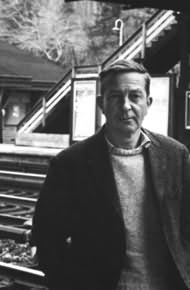
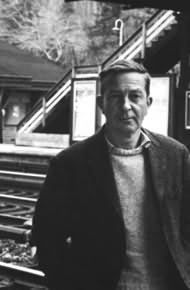
John Cheever

John Cheever born 27 May 1912 (d. 1982)

John Cheever was an American novelist and short story writer, sometimes known as the 'Checkhov of the suburbs'. His The Stories of John Cheever won the Pulitzer Prize for fiction in 1979.

He was a frequent contributor to The New Yorker and was considered one of the purest examples of 'the New Yorker writer'.
Cheever's main theme was the spiritual and emotional emptiness of life. He especially described the manners and morals of middle-class, suburban America, with an ironic humour which softened his basically dark vision.

Cheever died from cancer in 1982, and his posthumously published letters and journals revealed his bisexuality - although he enjoyed a long marriage and fathered 3 children, he had numerous affairs with both men and women.

His attitude towards his own bisexuality is reflected in his novels and short stories, moving from ambivalence and stereotypical portrayal in his earlier works to later acceptance and redemption.

Labels: , , , ,

Friday, April 08, 2011

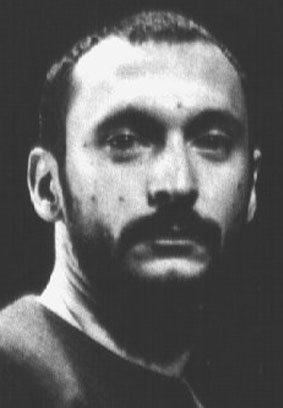
Michael Bennett

Michael Bennett born 8 April in 1943 (d. 1987)

Michael Bennett was a Tony Award-winning American musical theatre director, writer, choreographer, and dancer.

Born Michael Bennett DiFiglia to a Roman Catholic father and a Jewish mother in Buffalo, New York, he studied dance and choreography in his teens and staged a number of shows in his local high school before dropping out to accept the role of Baby John in the US and European tours of West Side Story.

Bennett's career as a Broadway dancer began in the 1961 Betty Comden-Adolph Green-Jule Styne musical Subways Are For Sleeping, after which he appeared in Meredith Willson's Here's Love and the short-lived Bajour. In the mid-1960s he was a featured dancer on the NBC pop music series Hullabaloo, where he met fellow dancer Donna McKechnie.

Bennett made his choreographic debut with A Joyful Noise (1966), which lasted only twelve performances, and in 1967 followed it with another failure, Henry, Sweet Henry (based on a Peter Sellers film). Success finally arrived in 1968 in the form of Promises, Promises, an adaptation of the film The Apartment, with a hip contemporary score by Burt Bacharach and Hal David. For the next few years, he earned praise for his work on Twigs with Sada Thompson, Coco with Katharine Hepburn, two Stephen Sondheim productions - Company and Follies (which he co-directed with Hal Prince) - and the Cy Coleman-Dorothy Fields' hit Seesaw, for which he was also the director and librettist.

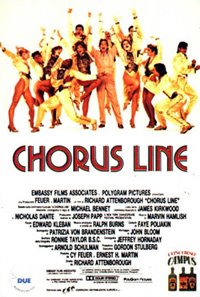
The process of taking over the troubled Seesaw on the road, just six months before it was scheduled to open, convinced Bennett the usual way of developing musicals - rehearsals, out-of-town tryouts, previews, and opening - was no longer efficient and devised a better plan. He decided to do a show about the lives of 'gypsies' - chorus boys and girls - but rather than commission a script or write one of his own he let the story-line evolve through a series of group therapy-style workshops in which fellow dancers shared their feelings and frustrations about their careers. Hundreds of hours of audio tapes eventually led to the creation of his biggest and most personally-felt triumph, A Chorus Line, which opened in July 1975 at Joseph Papp's Public Theater in lower Manhattan. The reviews were ecstatic and the demand for tickets so huge it transferred uptown to the Shubert Theater, where it remained a sell-out hit for fifteen years. It won nine Tony Awards, the New York Drama Critics' Circle Award, and the Pulitzer Prize for Drama.

As its creator, choreographer, and director, Bennett devoted the next several years of his life to the show, auditioning, rehearsing, and directing productions throughout the world. Realising it was very much a theatrical piece intended to be played on a proscenium stage, he declined an offer to direct the screen version, although he agreed to join the project as a creative consultant, a position he left early on due to differences with the studio (Bennett believed the movie should be about the audition process for the filming of the stage play, rather than a movie version of the play itself). Director Richard Attenborough declined to use Bennett's original choreography, instead opting to hire Jeffrey Hornaday, and the end result was a disappointing critical and commercial failure.

Although A Chorus Line was very much an ensemble piece, the original cast's standout star was Bennett's old friend McKechnie. The two married in 1976, but separated three months later and eventually divorced, but remained close friends. The bisexual Bennett's relationships with men, including an early one with fellow dancer Larry Fuller, were more discreet, less-publicised, and tended to be lengthy.

A Chorus Line was a tough act to follow. Bennett's next musical was the unsuccessful Ballroom, but he found himself at the top again in 1981 with Dreamgirls, with a book and lyrics by Tom Eyen and music by Henry Krieger.

In the early 1980s, Bennett worked on various projects, but none of them reached the stage. His addictions to alcohol and drugs, notably cocaine and quaaludes, severely affected his ability to work and impacted on many of his professional and personal relationships. In 1985, he abandoned the nearly-completed musical Scandal, which he had been developing for nearly five years through a series of workshop productions, and signed to direct the West End production of Chess, but he had to withdraw in January 1986 due to his increasingly failing health, leaving Trevor Nunn to complete the production using Bennett's already commissioned sets. He moved to Tucson, Arizona, where he remained until his death from AIDS-related lymphoma at the age of forty-four. He left a sizable portion of his estate to funding research to fight the epidemic.

Labels: , , , , , , ,

Tuesday, March 22, 2011

Stephen Sondheim

Stephen Sondheim born 22 March 1930

Stephen Sondheim is probably the greatest post-war writer of Broadway musicals.

Having been rescued from a lonely childhood and encouraged as a boy by his neighbourhood friend's father, Oscar Hammerstein II, and studied music at Williams College, his career took off when, aged 26, he was asked to write the lyrics for Leonard Bernstein's West Side Story. The following year he was writing lyrics for Jule Styne's songs for Gypsy. His first attempt as a composer & lyricist was A Funny Thing Happened On The Way To The Forum (1962) and a hit.

His work is hard to categorise. He is gay but has rarely created a gay character; his range of subjects is diverse; he has mastered many different musical styles, each new project is a new challenge; he is rarely formulaic. Lyrically he is as intelligent, witty and ironic as his music is audacious, in the style of his gay predecessors Noel Coward, Lorenz Hart or Cole Porter. His shows however, generally reject traditional notions of love and romance and neither do they reflect the gay culture which has emerged and become mainstream during his career, although ironically, his work has contributed much to that culture and become part of the gay musical tapestry - songs such as: Somewhere, Losing My Mind, Being Alive, Send In The Clowns...

His greatest shows include: Company (1970), Follies (1971), A Little Night Music (1973), Pacific Overtures (1976), Sweeney Todd (1979), Into The Woods (1987), Sunday In The Park With George (1984), Assassins (1991), Passion (1994) & Getting Away With Murder (1996).

He has won seven Tonys, an Academy Award, eight Grammys and a Pulitzer Prize, multiple Drama Desk and other theatre awards. His shows are regularly revived and many of his songs are now standards covered by a diverse range of artists. In 2008 he was awarded a special Tony Award for Lifetime Achievement in the Theatre.

2010 marks the 80th birthday of this Broadway and songwriting legend, and many events, benefits and tributes are planned to celebrate this landmark.

Sondheim.com

Labels: , , , , , , ,

Wednesday, March 16, 2011

David Del Tredici

David Del Tredici born 16 March 1937

Born in Cloverdale, near Los Angeles, David Del Tredici is a Pulitzer Prize-winning American composer and pianist. A child prodigy on the piano, he performed as a concert pianist until 1960.

He enrolled in the University of California at Berkeley in 1955 to study piano, but showed flair for composition and was encouraged to take his studies in that direction. He has subsequently taught at several universities and music colleges, including Boston, New York, Yale & the Juilliard.

He is best known for his series of vocal & instrumental works based on Lewis Carroll`s Alice books; he has also written works based on James Joyce, and many Victorian and American writers. Literature has been a constant influence throughout his work.

In recent years he has started to write more and more works based on the gay experience, and based on work by gay writers, especially since 1996, when he attended a workshop in gay sexuality and self-acceptance.

In addition to the Pulitzer Prize, he has also received a Guggenheim Fellowship and Woodrow Wilson fellowship, a Brandeis Creative Arts Award, a Friedheim Award, grants from the National Endowment for the Arts, and election to the American Academy and Institute of Arts and Letters. His works are regularly commissioned by major orchestras in America and abroad. His On Wings of Song was premiered in New York City in 2004 as part of the Riverside Opera Ensemble's 20th Anniversary Concert.

Del Tredici met his partner Ray Warman in 1999, and they held their commitment ceremony in 2000.

David Del Tredici Official Website

Labels: , ,

Saturday, March 12, 2011

Edward Albee

Edward Albee born 12 March 1928

Edward Franklin Albee III is an American playwright best known for Who's Afraid of Virginia Woolf?

Edward Albee was born in Washington, DC and was adopted two weeks later and taken to Westchester County, New York. Albee's adoptive father, Reed A. Albee, himself the son of vaudeville magnate Edward Franklin Albee II, owned several theatres, where Edward first gained familiarity with the theatre as a child. His adoptive mother was Reed's third wife, Frances. Albee left home when he was in his late teens, later saying in an interview, 'They weren't very good at being parents, and I wasn't very good at being a son.'

For a handful of years, he seemed to be the heir to the late Eugene O'Neill and to Arthur Miller and Tennessee Williams, who had, by the early 1960s, lost their winning streaks. However, Albee was something of a has-been by the mid-1960s.

Unlike his predecessors, Albee had his early success off-Broadway with a series of one-act plays, The Zoo Story (1958), The American Dream (1960), and The Death of Bessie Smith (1961). His first full-length play was the controversial three-and-a-half-hour Who's Afraid of Virginia Woolf (1963), his first Broadway hit.

During the ensuing years, Albee alternated increasingly 'arid' original plays with adaptations of stories and novels by contemporaries like Carson McCullers (The Ballad of the Sad Cafe [1964]) and James Purdy (Malcolm [1966]).

By 1970, Albee was a forgotten playwright whose later plays, The Lady from Dubuque (1980), Lolita (1981), and The Man Who Had Three Arms (1983), hold places only in the pantheon of major Broadway disasters.

In 1991, however, Albee had a major success with Three Tall Women, a play whose central character is a dying woman who has spurned her gay son. In 2001, Albee's The Goat or Who Is Sylvia, a tale of taboo love, which may be a parable about homosexuality, won the Tony Award for Best Play.

Albee's place in the history of gay drama is as ambiguous. His early off-Broadway work was, for its time, daring in his mention of homosexuality and its implied homoeroticism.

Yet Albee's homosexuality and the gay subtext of his early work came to haunt him. Some heterosexist critics, angered by Albee's scathing picture of modern marriage in Who's Afraid of Virginia Woolf?, insisted that George and Martha, the feuding central couple in the play, had to be a crypto-gay couple (by this logic The Taming of a Shrew is a crypto-gay play) or that the play was an act of homosexual spite. By this time, leading New York critics were becoming increasingly hostile toward the more openly gay work of Williams, William Inge, and Albee.

When Albee's allegorical Tiny Alice, in which a cardinal and a lawyer are bickering ex-lovers, opened in 1964, critics attacked furiously. Phillip Roth lambasted the play's 'ghastly pansy rhetoric'.

A member of the Dramatists Guild Council, Albee has received three Pulitzer Prizes for drama — for A Delicate Balance (1967), Seascape (1974), Three Tall Women (1990-1991); a Special Tony Award for Lifetime Achievement (2005); the Gold Medal in Drama from the American Academy and Institute of Arts and Letters (1980); as well as the Kennedy Center Honors and the National Medal of Arts (both in 1996).

Albee is the President of the Edward F. Albee Foundation, Inc., which maintains the William Flanagan Creative Persons Center (a writers and artists colony in Montauk, NY).

He is finally acknowledged as 'America's greatest living playwright.'

Albee's longtime partner, Jonathan Thomas, a sculptor, died on May 2, 2005, the result of a two year-long battle with bladder cancer.

In 2008, in celebration of his eightieth birthday, numerous Albee plays were mounted in distinguished Off Broadway venues, including the historic Cherry Lane Theatre, where the playwright himself is directing two of his one-acts, The American Dream and The Sandbox, which were produced at the theatre in 1961 and 1962, respectively.

Labels: , , ,

Wednesday, March 09, 2011

Samuel Barber

Samuel Barber born 9 March 1910 (d. 1981)

Samuel Osborne Barber II was an American composer of classical music ranging from orchestral, to opera, choral, and piano music. His Adagio for Strings became his most famous composition and a perennial favourite.

Barber was born in West Chester, Pennsylvania. At a very early age, Barber became profoundly interested in music, and it was apparent that he had great musical talent and ability. He wrote his first musical composition at the early age of 7 and attempted to write his first opera at the age of 10. He was an organist at the age of 12. When he was 14, he entered the Curtis Institute, a conservatory where he studied piano, composition, and voice.

Barber was born into a comfortable, educated, social, and distinguished Irish-American family. His father was a doctor, and his mother was a pianist. His aunt was a leading contralto at the Metropolitan Opera and his uncle, Sidney Homer, was a composer of American art songs. Louise Homer is noted to have influenced Barber's interest in voice. Through his aunt, Barber had access to many great singers and songs. This background is further reflected in that Barber decided to study voice at the Curtis Conservatory.

Barber began composing seriously in his late teenage years. Around the same time, he met fellow Curtis schoolmate Gian Carlo Menotti, and would form a lifelong personal and professional relationship. At the Curtis Institute, Barber was a triple prodigy of composition, voice, and piano. At the age of 18, Barber won a prize from Columbia University for his Violin Sonata (now lost or destroyed by the composer).

From his early to late twenties, Barber wrote a flurry of successful compositions, launching him into the spotlight of the classical music community. At the young age of 28, Barber's Adagio for Strings was performed by the NBC Symphony Orchestra under the direction of Arturo Toscanini in 1938, along with his first essay for orchestra. The Adagio had been arranged from the slow movement of Barber's string quartet op.11. Toscanini had only very rarely performed music by American composers before. At the end of the first rehearsal of the piece, Toscanini remarked: 'Semplice e bella' (simple and beautiful).

Barber served in the Army Air Corps in World War II, where he was commissioned to write his Second Symphony, a work he later suppressed. Composed in 1943, the symphony was originally titled Symphony Dedicated to the Air Forces and was premiered in early 1944 by Serge Koussevitsky and the Boston Symphony Orchestra. He revised the symphony in 1947, then decided to destroy the score in 1964. It was later reconstructed from the instrumental parts.

Barber would go on to win a prize in 1963 for his Concerto for Piano and Orchestra.

Barber spent many years in isolation (eventually diagnosed with clinical depression) after the harsh rejection of his third opera Antony and Cleopatra (which he believed contained some of his best music. The opera was written for and premiered at the opening of the new Metropolitan Opera House on 16 September 1966. The elaborate production designed by Franco Zeffirelli was marred by numerous technical disasters; it also overwhelmed and obscured Barber's music, which most critics derided as uncharacteristically weak and unoriginal. In recent years, a revised version of Antony and Cleopatra, for which Menotti provided collaborative assistance, has enjoyed some success.

After this setback, Barber continued to write music until he was almost 70 years old. Barber’s music in his later years would be lauded as reflective, contemplative, but without the morbidity or unhappiness of other composers who knew they had a limited time to live. The Third Essay for Orchestra (1978) was his last major work and critics received it as having all the vigour and imagination of his earlier works.

Barber died of cancer in 1981 in New York City at the age of 71.

Barber was president of the International Music Council of UNESCO, where he did much to bring into focus and ameliorate the conditions of international music. He was also one of the first American composers to visit Russia (which was then a constituent republic of the Soviet Union). Barber was also influential in the successful campaign of composers against ASCAP, helping composers increase the share of royalties they receive from their compositions. Barber was the recipient of numerous awards and prizes including the Rome Prize (the American version of the Prix de Rome), two Pulitzers, and election to the American Academy of Arts and Letters.

Labels: , , , ,

Sunday, January 09, 2011

William Meredith

William Meredith born 9 January 1919 (d. 2007)

William Morris Meredith, Jr. was an American poet. He graduated from with an AB from Princeton University in 1940 . He has held professorships at Princeton University, University of Hawaii, and Connecticut College.

Born in New York City, Meredith attended a Massachusetts boarding school, then Princeton, where he wrote a senior thesis on the poetry of Robert Frost, a lasting influence. After a brief spell as a journalist on The New York Times, Meredith enlisted in the US Army in 1941, where he trained as a pilot, then moved to the Navy, where he served as a carrier pilot in the Aleutian Islands and then in the Pacific campaigns.

He was writing poems throughout and his first book, Love Letter from an Impossible Land, appeared in 1944 as a volume in the Yale Younger Poets series, selected by Archibald Macleish.

After the war Meredith taught at Princeton as a Woodrow Wilson Fellow and then at the University of Hawaii before re-enlisting in the Navy to serve in Korea. A second collection, Ships and other Figures, appeared in 1948, and included several more poems about his war experiences, but it was with his next collection, The Open Sea and Other Poems (1958), that he began to find his own voice.

The greater ambition of this new work carried over into his next book, The Wreck of the Thresher (1963), where the title poem (arguably his most famous) contemplates the horrific death by drowning of the entire 129-member crew of a US submarine off the New England coast.

By now Meredith was firmly ensconced at Connecticut College, where he taught for over 30 years, eventually becoming a professor of English (he received an honorary doctorate in 1988). It was a good base for forays into New York, but allowed him to live in a country setting.

After suffering a stroke in 1983, Meredith resigned from Connecticut College and for several years was unable to write, suffering badly from expressive aphasia. After intensive therapy he gradually began to write again, with difficulty. Yet in 1997 he issued a final collection of poems called Effort at Speech.

Meredith wrote deliberately publishing 12 volumes of poetry in all. Between 1978 and 1980, he served as the consultant in poetry to the Library of Congress commonly known as the poet laureate.

In 1988, he won a Pulitzer Prize for Poetry for Partial Accounts: New and Selected Poems and the National Book Award in 1997 for Effort at Speech.

Meredith died on 31 May 2007 in New London, Connecticut, near his home in Montville, where he lived with his partner of 36 years, Richard Harteis.

Labels: , ,

Sunday, August 22, 2010

James Kirkwood

James Kirkwood born 22 August 1924 (d. 1989)

James Kirkwood was an American playwright, actor and author born in Los Angeles. His novels include P.S. Your Cat Is Dead (1972), Good Times, Bad Times (1968)
and Some Kind of Hero (1975); he was a capable author of popular fiction and most have gay elements, and a number were adapted for the stage or screen.

He is however probably best known for writing the book for the hugely successful musical A Chorus Line, for which he won a Tony in 1976, as well as a New York Drama Critic's Circle Award and the Pulitzer Prize for best drama. A Chorus Line is credited with being the first Broadway musical to deal with homosexuality in a matter-of-fact way - the concept for the show came from gay choreographer Michael Bennett.

A Chorus Line was still playing when James Kirkwood died from AIDS-related cancer at his home in New York in April 1989.

Labels: , , , , , ,

Friday, July 16, 2010

Tony Kushner

Tony Kushner born 16 July 1956

Tony Kushner is an award-winning American playwright most famous for his play Angels in America,which is one of the most powerful pieces of American theatre inspired by the AIDS epidemic, for which he was awarded the Pulitzer Prize.

He is also co-author of, along with Eric Roth, the screenplay of the 2005 film Munich, which was directed by Steven Spielberg and earned Kushner (along with Roth) an Academy Award nomination for Best Adapted Screenplay.

He was born to a Jewish family in Manhattan, but his parents, both classically trained musicians, moved to Lake Charles, Louisiana shortly after his birth. Kushner moved to New York in 1974 to begin his undergraduate college education at Columbia University, where he completed a BA in English literature in 1978. He studied directing at New York University's Graduate School, from which he was graduated in 1984.

Angels in America is a play in two parts. The first part is entitled Millennium Approaches, and the second is entitled Perestroika. His other plays include Hydrotaphia, Slavs!: Thinking About the Longstanding Problems of Virtue and Happiness, A Bright Room Called Day, Homebody/Kabul, and the book for the musical Caroline, or Change. His new translation of Bertolt Brecht's Mother Courage and Her Children was performed at the Delacorte Theater in the summer of 2006 starring Meryl Streep. He has also adapted S Ansky's play The Dybbuk.

In April 2003 he and his long-time partner, Entertainment Weekly editor Mark Harris, had a wedding ceremony in New York. Theirs was the first same-sex marriage ever covered by The New York Times's 'Vows' column.

Due to the phenomenal theatrical and critical success of Angels In America, Kushner has become a celebrity spokeman for gay politics and AIDS activism.

Labels: , , , ,

Wednesday, July 07, 2010

Gian Carlo Menotti


Gian Carlo Menotti born 7 July 1911 (d. 2007)

Gian Carlo Menotti was an Italian-born American composer and librettist who wrote the classic Christmas opera Amahl and the Night Visitors among about two dozen other operas intended to appeal to popular taste. He won the Pulitzer Prize for two of them, The Consul (1950) and The Saint of Bleecker Street (1955).

Born in Cadegliano-Viconago, Italy, Lake Maggiore and the Swiss border. Menotti began writing songs when he was seven years old, and at eleven wrote both the libretto and music for his first opera, The Death of Pierrot. He began his formal musical training at Milan's Verdi Conservatory in 1923.

After the death of his father, Menotti and his mother emigrated to the United States, and he enrolled at Philadelphia's Curtis Institute of Music. Fellow students at Curtis included Leonard Bernstein and Samuel Barber, who became Menotti's partner in life and in work, with Menotti crafting the libretto for Barber's most famous opera, Vanessa, which premiered in 1958, at the Metropolitan Opera. It was at Curtis that Menotti wrote his first mature opera, Amelia al Ballo (Amelia Goes to the Ball), to his own Italian text. The Island God (which he suppressed, though its libretto was printed by the Metropolitan Opera and can be found in many libraries) and The Last Savage were the only other operas he wrote in Italian, the rest being in English. Like Wagner, he wrote the libretti of all his operas. His most successful works were composed in the 1940s and 1950s. Menotti also taught at the Curtis Institute of Music.

Menotti wrote the libretti for two of Samuel Barber's operas, Vanessa and A Hand of Bridge, as well as revising the latter for Antony and Cleopatra.

In 1958, he founded the Festival of Two Worlds in Spoleto, Italy; he founded its companion festival in Charleston, South Carolina in 1977. For three weeks each summer, Spoleto is visited by nearly a half-million people. These festivals were intended to bring opera to a popular audience and helped launch the careers of such artists as singer Shirley Verrett and choreographers Paul Taylor and Twyla Tharp. He left Spoleto USA in 1993 to take the helm of the Rome Opera.

In 1984 Menotti was awarded the Kennedy Center Honor for achievement in the arts, and in 1991 he was chosen Musical America's "Musician of the Year". In addition to composing operas to his own texts, on his own chosen subject matter, Menotti directed most productions of his work. He and partner Barber for a time lived in a home in Westchester County, New York, called 'Capricorn'.

Menotti died on February 1, 2007 at the age of 95 in a hospital in Monte Carlo, Monaco, where he had a home. He thought it would be 'naughty' to die in Monte Carlo.

Labels: , , , , ,

Saturday, April 17, 2010

Thornton Wilder

Thornton Wilder born 17 April 1897 (d.1975)

Born Thornton Niven Wilder in Madison, Wisconsin, the son of a US diplomat, he spent part of his childhood in China.

He served in the US Coast Guard during WW1, before earning his BA at Yale in 1920. Six years later, his first novel The Cabala (1926) was published. That same year he earned his MA in French from Princeton. In 1927, The Bridge of San Luis Rey, which pioneered the diaster novel, linking individual stories via flashback with a calamity, brought him commercial success and his first Pulitzer Prize in 1928. From 1930 to 1937 he taught at the University of Chicago. He won two further Pulitzer Prizes for his plays Our Town (1938), his best loved work, and The Skin of Our Teeth (1943).

WW2 saw him return to military service gaining the rank of Lt Colonel in the Army Air Force and receive several awards. He went on to be a visiting professor at the University of Hawaii and to teach poetry at Harvard. Though he considered himself a teacher first and a writer second, he continued to write all his life, receiving numerous honours for his writing. He died in his sleep in at his home in Connecticut in December 1975.

Wilder had a wide circle of friends and enjoyed mingling with other famous people, including Ernest Hemingway, Russel Wright, Willa Cather, Montgomery Clift and Gertrude Stein.

Extremely reticent about his homosexuality, he shared a brief difficult relationship with writer and friend, Samuel Steward, but details of the private life of this shy and reserved man are few.

Labels: , , , ,

Tuesday, November 25, 2008

Virgil Thomson

Virgil Thomson born 25 November 1896 (d. 1989)

Virgil Thomson was an American composer from Kansas City, Missouri who was instrumental in the development of the 'American Sound' in classical music, so often associated with the patriotic compositions of Aaron Copland.

Thomson displayed an extraordinary intelligence at an early age. He attended Harvard University, and his tours of Europe with the Harvard Glee Club helped nurture his desire to return there. Upon his move there, he eventually studied with Nadia Boulanger and became a fixture of 'Paris in the twenties'. His most important friend from this period was Gertrude Stein, who was an artistic collaborator and mentor to him.

Following the publication of his book The State of Music he established himself in New York City, as a peer of Aaron Copland and was also a music critic for the New York Herald-Tribune from 1940 through 1954. His writings on music, and his reviews of performances in particular, are noted for their wit and their independent judgements. His definition of music was famously 'that which musicians do', and his views on music are radical in their insistence on reducing the rarefied aesthetics of music to market activity. He even went so far as to claim that the style a piece was written in could be most effectively understood as a consequence of its income source.

In the 1930s, he worked as a theatre and film composer. His most famous works for theatre are two operas with libretti by Gertrude Stein, Four Saints in Three Acts, especially famous for its use of an all-black cast, and The Mother of Us All, as well as incidental music for Orson Welles' depression-era production of Macbeth set in the Caribbean. He collaborated closely with 'Chick' Austin of Hartford's Wadsworth Atheneum in these early productions. His first film commission was The Plow That Broke the Plains, sponsored by the United States Resettlement Administration, which also sponsored the film The River with music also by Thomson. He won the Pulitzer Prize for Music in 1949 with his film score for Louisiana Story.

Additionally, Thomson was famous for his revival of the truly rare technique of composing 'musical portraits' of living subjects, often spending hours in a room with them before rushing off to finish the piece on his own. Many subjects report feeling that the pieces did capture something unique about their identities in spite of the fact that nearly all of the portraits were absent of any clearly representational content.

Later in life, Thomson became a sort of mentor and father figure to a new generation of American tonal composers such as Ned Rorem, Paul Bowles and Leonard Bernstein, a circle united as much by their shared homosexuality as by their similar compositional sensibilities.

Virgil Thomson Foundation

Labels: , , ,

Friday, November 14, 2008

Aaron Copland

Aaron Copland born 14 November 1900 (d. 1990)

Aaron Copland was an American composer of concert and film music, as well as an accomplished pianist. Instrumental in forging a distinctly American style of composition, he was widely known as 'the dean of American composers'.

Copland's music achieved a difficult balance between modern music and American folk styles, and the open, slowly changing harmonies of many of his works are said to evoke the vast American landscape. He incorporated percussive orchestration, changing meter, polyrhythms, polychords and tone rows. Aside from composing, Copland taught, presented music-related lectures, wrote books and articles, and served as a conductor (generally, but not always, of his own works).

Copland was born in Brooklyn, New York, of Lithuanian Jewish descent. Before emigrating to the United States Copland's father had Anglicised his surname 'Kaplan' to 'Copland' while in Scotland. Throughout his childhood Copland and his family lived above his parents' Brooklyn shop. Although his parents never encouraged or directly exposed him to music, at the age of fifteen he had already taken an interest in the subject and aspired to be a composer. His musical education included time with Leopold Wolfsohn, Rubin Goldmark (who also taught George Gershwin), and Nadia Boulanger at the Fontainebleau School of Music in Paris from 1921 to 1924. He was awarded a Guggenheim in Fellowship in 1925 and again in 1926.

Copland defended the Communist Party USA during the 1936 presidential election. As a result he was later investigated by the FBI during the Red scare of the 1950s, and found himself blacklisted. Because of the political climate of that era, A Lincoln Portrait was withdrawn from the 1953 inaugural concert for President Eisenhower. That same year, Copland was called before Congress where he testified that he was never a communist. Outraged by the accusations, many members of the musical community held up Copland's music as a banner of his patriotism. The investigations ceased in 1955, and were closed in 1975. Copland was never shown to have been a member of the Communist Party.

Copland exerted a major influence on the compositional style of his friend and protege Leonard Bernstein. Bernstein was considered the finest conductor of Copland's works.

Copland was a frequent guest conductor of orchestras in the US and the UK. He made a series of recordings of his music, especially during the 1970s, primarily for Columbia Records. In 1960, RCA Victor released Copland's recordings with the Boston Symphony Orchestra of the orchestral suites from Appalachian Spring and The Tender Land; these recordings were later reissued on CD, as were most of Copland's Columbia recordings (by Sony).

While his orchestral music and his ballets found success on the stages and in the concert halls of America, Copland sought to enter another arena, the emerging industry of motion pictures. He saw this as both a challenge for his abilities as a composer and an opportunity to expand his reputation and audience. However, the tendency of studios to edit and cut movie scores went against Copland’s desire for creative control over his work. Copland found a kindred spirit in director Lewis Milestone, who recognised the benefits of allowing Copland to supervise his own orchestration and refrained from interfering with his work. This collaboration resulted in the notable film Of Mice and Men (1939) that earned Copland his first nomination for an Academy Award. In a departure from other film scores of the time, Copland’s work largely reflected his own style, instead of borrowing from the late Romantic period. Additionally, he rejected the common practice of using leitmotiv to identify characters with their own personal themes.

His score for William Wyler's 1949 film, The Heiress won an Academy Award. Several themes he created are encapsulated in the suite Music for Movies, and his score for the film adaptation of John Steinbeck's novel The Red Pony was given a suite of its own. This suite was one of Copland's personal favourites. It is difficult to overestimate the influence Copland has had on film music. Virtually every composer who scored for western movies, particularly between 1940 and 1960, was shaped by the style Copland developed.

Copland was awarded the Pulitzer Prize in composition for Appalachian Spring. His scores for Of Mice and Men (1939), Our Town (1940), and The North Star (1943) all received Academy Award nominations, while The Heiress won Best Music in 1949.

Copland's best known piece of music is probably Fanfare For the Common Man (1942), a popular choice for opening ceremonies, with its dramatic opening fanfare, and turned into a worldwide pop hit in the 1970s by Emerson, Lake & Palmer.

Copland's homosexuality was documented in Howard Pollack's biography, Aaron Copland: The Life and Work of an Uncommon Man.

Copland died of Alzheimer's disease and respiratory failure in North Tarrytown, New York (now Sleepy Hollow), on December 2, 1990.

Labels: , , , , ,

Sunday, November 09, 2008

James Schuyler

James Schuyler born 9 November 1923 (d. 1991)

James Schuyler was a major American poet in the late 20th century. He was a central figure in the New York School and is often associated with fellow New York School of poets particularly John Ashbery and Frank O'Hara.

Schuyler moved to New York City in the late 1940s where he worked for NBC and first befriended W H Auden. In 1947, he moved to Ischia, Italy, where he lived in the rented apartment of W H Auden and worked as Auden's secretary.

After returning to the United States and settling in New York City, he roomed with John Ashbery and Frank O'Hara. Beginning in the 1950s, a group of poets formed a network that has been dubbed the New York School. Of the four leading members, three - John Ashbery, Frank O'Hara, and James Schuyler - are or were gay.

Schuyler, who suffered from manic-depression and titled one book The Crystal Lithium (1972), wrote either short, delicate poems of a melancholic tone or long, exuberant odes to joy. His major books include Hymn to Life (1974), The Morning of the Poem (1980), and A Few Days (1985).

Schuyler received the 1981 Pulitzer Prize for Poetry for his collection The Morning of the Poem. He also co-authored a novel, A Nest of Ninnies, with John Ashbery in 1969. Shuyler also received the Longview Foundation Award in 1961, and the Frank O'Hara Prize for Poetry in 1969 for Freely Espousing.

Schuyler was a Guggenheim Fellow and a fellow of the American Academy of Poets.

In April 1991, at age sixty-seven, Schuyler died in Manhattan following a stroke.

Labels: ,

Thursday, November 06, 2008

Michael Cunningham

Michael Cunningham born 6 November 1952

Michael Cunningham is an award-winning American writer, best known for his 1998 novel The Hours, which won the Pulitzer Prize for Fiction in 1999.

Cunningham was born in Ohio in 1952. A graduate of Stanford University (1975) and the University of Iowa Writers Workshop (1980), he also studied under a fellowship at the Fine Arts Work Center in Provincetown, Massachusetts, where he has continued to teach; he is also a member of the faculty at Columbia University.

In the 1970s and 1980s Cunningham published several short stories in the Atlantic Monthly, Paris Review, and New Yorker. An early novel, Golden States (1984), although generally well reviewed, is today dismissed by the author. Cunningham's next book, A Home at the End of the World (1990), established his reputation. It received critical praise for its style, complex characterisations, and skilful examination of contemporary mores.

In this novel Cunningham explores themes common to his later works as well: traditional and extended-family situations, the impact of AIDS, and the examination of gay culture within the context of the larger society.

Flesh and Blood (1995), a saga exploring the lives and relationships of several generations of a Greek-American family, received the Whiting Writers' Award. An ambitious and wide-ranging book, it earned a great deal of critical recognition and was praised for its reach and the elegant prose that is characteristic of all of Cunningham's writing.

Cunningham's next novel, The Hours (1999), greatly enhanced his reputation. Nominated for the National Book Critics Award, the book eventually won the Pulitzer Prize, the PEN/Faulkner Award, and the American Library Association's book award for gay and lesbian literature.

The Hours is Cunningham's most complex and fully realised novel to date, illustrating a brilliant use of point of view and a sophisticated handling of structure. In alternating chapters, the reader is taken through a single day in the lives of three women from different time periods. By the end of the novel, themes and characters are interwoven with stunning effect. Named after the working title of Virginia Woolf's Mrs. Dalloway, The Hours is an homage to that work; Woolf herself is a principal character in a moving and beautifully realised depiction of her last days. The novel was successfully filmed by Stephen Daldry starring Julianne Moore, Meryl Streep and an Oscar-winning performance by Nicole Kidman.

In numerous interviews over the past several years, Cunningham has stated that although being gay himself and concerned in all his novels with gay characters and themes, he would not label himself a 'gay novelist'. His books are in fact notable for the presentation of 'gayness' as a given and for embedding gay issues within the context of contemporary society as a whole.

Cunningham followed The Hours with the novel Specimen Days (2005).

Cunningham is also the author of Land's End: A Walk through Provincetown (2002), an evocative and loving portrait of the resort, which has long been a mecca for gay men and lesbians, as well as for artists and writers of all sexualities.

Labels: , ,

Friday, October 24, 2008

Moss Hart

Moss Hart born 24 October 1904 (d. 1961)

Moss Hart was an American playwright and director of plays and musical theatre.

After working several years as a director of amateur theatrical groups and an entertainment director at summer resorts, he scored his first Broadway hit with Once In A Lifetime (1930), a farce about the arrival of the sound era in Hollywood. The play was written in collaboration with Broadway veteran George S. Kaufman. During the next decade, Kaufman and Hart teamed on a string of successes, including You Can't Take It With You (1936) and The Man Who Came to Dinner (1939). Though Kaufman had hits with others, Hart is generally conceded to be his most important collaborator.

In 1940 Kaufman and Hart called it quits. Hart had decided it was time to move on.

Throughout the 1930s, Hart also worked, with and without Kaufman, on several musicals and revues, including As Thousands Cheer (1933), with songs by Irving Berlin, Jubilee (1935), with songs by Cole Porter and I'd Rather Be Right (1937), with songs by Richard Rodgers and Lorenz Hart.

Hart continued to write plays after parting with Kaufman however, he became best known during this period as a director.

By far his biggest hit was the musical My Fair Lady (1956) with book and lyrics by Alan Jay Lerner and music by Frederick Loewe. The show ran over seven years and won a Tony Award for Best Musical. Hart picked up the Tony for Best Director.

Occasionally, Hart wrote screenplays, including Gentleman's Agreement (1947) — for which he received an Oscar nomination — Hans Christian Andersen (1952) and A Star Is Born (1954).

The last show Hart directed was the Lerner and Loewe musical Camelot (1960). During a troubled out-of-town tryout, Hart had a heart attack. The show opened before he fully recovered, but he and Lerner reworked it after the opening.

Hart died of heart failure on December 20, 1961. He was 57.

Moody, irritable, and often depressed, Hart was married to Kitty Carlisle, but the well-dressed and longtime bachelor was regarded as homosexual by many of his friends and reportedly spent much time in therapy regarding his attraction to men. (Carlisle did ask him if he was gay before they married and he responded that he was not.) Among his reported affairs was the actor turned writer Gordon Merrick.

In his screenplay for the 1952 film Hans Christian Andersen, Hart wrote the following lines for bisexual actor Danny Kaye as the title character: 'You'd be surprised how many kings are only a queen with a moustache.'

Labels: , , , , , , ,

Monday, October 13, 2008

Richard Howard

Richard Howard born 13 October 1929

Richard Howard is a distinguished American poet, literary critic, essayist, teacher, and translator. He was born in Cleveland, Ohio and is a graduate of Columbia University. He lives in New York City.

Howard had a brief early career as a lexicographer. He soon turned his attention to poetry and poetic criticism, and won the Pulitzer Prize for poetry for his 1969 collection Untitled Subjects, which took for its subject dramatic imagined letters and monologues of 19th century historical figures. For much of his career, Howard has written poems using a quantitative verse technique.

He was awarded the PEN Translation Prize in 1976 for his translation of E M Cioran's A Short History of Decay.

Howard was a long-time poetry editor of The Paris Review and is currently poetry editor of The Western Humanities Review. A former Chancellor of the Academy of American Poets, he is Professor of Practice in the writing programme at Columbia's School of the Arts.

He has translated more than 150 books by French authors - including Charles Baudelaire, André Gide, Jean Cocteau, and Roland Barthes - and he has written incisive accounts of contemporary American poets, collected in Alone with America: Essays on the Art of Poetry in the United States Since 1950 (1969). But his own searching and witty poetry is his most significant contribution to the gay and lesbian literary heritage.

Howard's persistent themes are those of identity, existential loneliness, and the losses exacted by time. Homosexuality, which he defines as not a problem but a solution, is a significant and continuing thread that runs through all the books.

Labels: , , , ,

Wednesday, March 26, 2008

Tennessee Williams

Tennessee Williams born 26 March 1911 (d. 1983)

Thomas Lanier Williams III, better known by the pen name Tennessee Williams, was a major American playwright and one of the prominent playwrights of the twentieth century. The name 'Tennessee' was given to him by college friends because of his southern accent and his father's background in Tennessee.

He won the Pulitzer Prize for Drama for A Streetcar Named Desire in 1948 and for Cat On a Hot Tin Roof in 1955. In addition to those two plays, The Glass Menagerie in 1945 and The Night of the Iguana in 1961 received the New York Drama Critics' Circle Awards. His 1952 play The Rose Tattoo (dedicated to his partner, Frank Merlo), received the Tony Award for best play.

Tennessee Williams' family was a very troubled one that provided inspiration for much of his writings. He was born in Columbus, Mississippi, in the home of his maternal grandfather, the local Episcopal rector. His father, Cornelius Williams, was a traveling shoe salesman who became increasingly abusive as his children grew older. Dakin Williams, his brother, was often favored over him by their father. His mother, Edwina Williams, was a descendant of a genteel southern family, and was somewhat smothering. At eight, he was diagnosed with diphtheria and for two years could do almost nothing, but then his mother decided she wasn't going to allow him to continue wasting his time. She encouraged him to use his imagination and, when he was thirteen, she gave him a typewriter.

In the early 1930s Williams attended the University of Missouri-Columbia. It was there that his fraternity brothers dubbed him Tennessee for his rich southern drawl. By 1935, Williams wrote his first publicly performed play, Cairo, Shanghai, Bombay! at 1937 Snowden in Memphis, Tennessee.

Williams lived in the French Quarter of New Orleans, Louisiana. He first moved there in 1939 to write for the WPA and lived first at 722 Toulouse Street, which was the setting of his 1977 play Vieux Carré and is now a bed and breakfast. He wrote A Streetcar Named Desire (1947) while living at 632 St Peter Street.

Tennessee was close to his sister Rose who had perhaps the greatest influence on him. She was a slim beauty who was diagnosed with schizophrenia and spent most of her adult life in mental hospitals. After various unsuccessful attempts at therapy, she became paranoid. Her parents eventually allowed a prefrontal lobotomy in an effort to treat her. The operation - performed in 1943 in Washington, D.C. - went badly and Rose remained incapacitated for the rest of her life.

Rose's failed lobotomy was a hard blow to Williams, who never forgave their parents for allowing the operation. It may have been one of the factors that drove him to alcoholism. The common 'mad heroine' theme that appears in many of his plays may have been influenced by his sister.

Characters in his plays are often seen to be direct representations of his family members. Laura Wingfield in The Glass Menagerie is understood to be modelled on Rose. Some biographers say that the character of Blanche DuBois in A Streetcar Named Desire is based on her as well. The motif of lobotomy also arises in Suddenly, Last Summer. Amanda Wingfield in The Glass Menagerie can easily be seen to represent Williams' mother. Many of his characters are considered autobiographical, including Tom Wingfield in The Glass Menagerie and Sebastian in Suddenly, Last Summer.

In his memoirs, he claims he became sexually active as a teenager. His biographer, Lyle Leverich, maintained this actually occurred later, in his late 20s. His relationship with his secretary, Frank Merlo, lasted from 1947 until Merlo's death from cancer in 1963, and provided stability when Williams produced his most enduring works. Merlo provided balance to many of Williams' frequent bouts with depression, especially the fear that like his sister, Rose, he would go insane. The death of his lover drove Williams into a deep, decade-long episode of depression.

Williams was the victim of a gay-bashing in January 1979 in Key West. He was beaten by five teenage boys, but was not seriously injured. The episode was part of a spate of anti-gay violence that had occurred after a local Baptist minister ran an anti-homosexuality newspaper ad. Some of his literary critics spoke ill of the 'excesses' present in his work, but some believe that these were attacks on Williams' homosexuality.

Tennessee Williams died at the age of 71 after he choked on a bottle cap in his room at the Hotel Elysee in New York. However, some, including his brother Dakin, believe he was murdered. In contrast, the police report from his death seems to indicate that drugs were involved; many prescription drugs were found in the room, and the lack of an adequate gag response that would have released the bottle cap from his throat may have been due to drug and alcohol influence.

Williams was interred in the Calvary Cemetery, St. Louis, Missouri, despite his stated desire to be buried at sea at approximately the same place as the poet Hart Crane, whom he considered one of his most significant influences. He left his literary rights to Sewanee, The University of the South in honor of his grandfather, Walter Dakin, an alumnus of the university located in Sewanee, Tennessee. The funds today support a creative writing programme. When his sister Rose died after many years in a mental institution, she bequeathed over 50 million dollars from her part of the Williams estate to Sewanee, The University of the South as well.

The various experiences of Williams' eventful life often find manifestations within his work. For example, Cat On A Hot Tin Roof contains references to, amongst others, homosexuality, mental instability and alcoholism.

Labels: , , ,