Wednesday, March 26, 2008

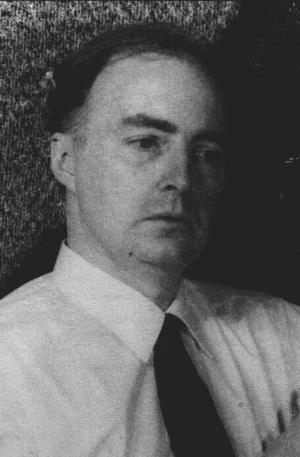
Tennessee Williams

Tennessee Williams born 26 March 1911 (d. 1983)

Thomas Lanier Williams III, better known by the pen name Tennessee Williams, was a major American playwright and one of the prominent playwrights of the twentieth century. The name 'Tennessee' was given to him by college friends because of his southern accent and his father's background in Tennessee.

He won the Pulitzer Prize for Drama for A Streetcar Named Desire in 1948 and for Cat On a Hot Tin Roof in 1955. In addition to those two plays, The Glass Menagerie in 1945 and The Night of the Iguana in 1961 received the New York Drama Critics' Circle Awards. His 1952 play The Rose Tattoo (dedicated to his partner, Frank Merlo), received the Tony Award for best play.

Tennessee Williams' family was a very troubled one that provided inspiration for much of his writings. He was born in Columbus, Mississippi, in the home of his maternal grandfather, the local Episcopal rector. His father, Cornelius Williams, was a traveling shoe salesman who became increasingly abusive as his children grew older. Dakin Williams, his brother, was often favored over him by their father. His mother, Edwina Williams, was a descendant of a genteel southern family, and was somewhat smothering. At eight, he was diagnosed with diphtheria and for two years could do almost nothing, but then his mother decided she wasn't going to allow him to continue wasting his time. She encouraged him to use his imagination and, when he was thirteen, she gave him a typewriter.

In the early 1930s Williams attended the University of Missouri-Columbia. It was there that his fraternity brothers dubbed him Tennessee for his rich southern drawl. By 1935, Williams wrote his first publicly performed play, Cairo, Shanghai, Bombay! at 1937 Snowden in Memphis, Tennessee.

Williams lived in the French Quarter of New Orleans, Louisiana. He first moved there in 1939 to write for the WPA and lived first at 722 Toulouse Street, which was the setting of his 1977 play Vieux Carré and is now a bed and breakfast. He wrote A Streetcar Named Desire (1947) while living at 632 St Peter Street.

Tennessee was close to his sister Rose who had perhaps the greatest influence on him. She was a slim beauty who was diagnosed with schizophrenia and spent most of her adult life in mental hospitals. After various unsuccessful attempts at therapy, she became paranoid. Her parents eventually allowed a prefrontal lobotomy in an effort to treat her. The operation - performed in 1943 in Washington, D.C. - went badly and Rose remained incapacitated for the rest of her life.

Rose's failed lobotomy was a hard blow to Williams, who never forgave their parents for allowing the operation. It may have been one of the factors that drove him to alcoholism. The common 'mad heroine' theme that appears in many of his plays may have been influenced by his sister.

Characters in his plays are often seen to be direct representations of his family members. Laura Wingfield in The Glass Menagerie is understood to be modelled on Rose. Some biographers say that the character of Blanche DuBois in A Streetcar Named Desire is based on her as well. The motif of lobotomy also arises in Suddenly, Last Summer. Amanda Wingfield in The Glass Menagerie can easily be seen to represent Williams' mother. Many of his characters are considered autobiographical, including Tom Wingfield in The Glass Menagerie and Sebastian in Suddenly, Last Summer.

In his memoirs, he claims he became sexually active as a teenager. His biographer, Lyle Leverich, maintained this actually occurred later, in his late 20s. His relationship with his secretary, Frank Merlo, lasted from 1947 until Merlo's death from cancer in 1963, and provided stability when Williams produced his most enduring works. Merlo provided balance to many of Williams' frequent bouts with depression, especially the fear that like his sister, Rose, he would go insane. The death of his lover drove Williams into a deep, decade-long episode of depression.

Williams was the victim of a gay-bashing in January 1979 in Key West. He was beaten by five teenage boys, but was not seriously injured. The episode was part of a spate of anti-gay violence that had occurred after a local Baptist minister ran an anti-homosexuality newspaper ad. Some of his literary critics spoke ill of the 'excesses' present in his work, but some believe that these were attacks on Williams' homosexuality.

Tennessee Williams died at the age of 71 after he choked on a bottle cap in his room at the Hotel Elysee in New York. However, some, including his brother Dakin, believe he was murdered. In contrast, the police report from his death seems to indicate that drugs were involved; many prescription drugs were found in the room, and the lack of an adequate gag response that would have released the bottle cap from his throat may have been due to drug and alcohol influence.

Williams was interred in the Calvary Cemetery, St. Louis, Missouri, despite his stated desire to be buried at sea at approximately the same place as the poet Hart Crane, whom he considered one of his most significant influences. He left his literary rights to Sewanee, The University of the South in honor of his grandfather, Walter Dakin, an alumnus of the university located in Sewanee, Tennessee. The funds today support a creative writing programme. When his sister Rose died after many years in a mental institution, she bequeathed over 50 million dollars from her part of the Williams estate to Sewanee, The University of the South as well.

The various experiences of Williams' eventful life often find manifestations within his work. For example, Cat On A Hot Tin Roof contains references to, amongst others, homosexuality, mental instability and alcoholism.

Labels: , , ,

Friday, July 02, 2010

Donald Windham

Donald Windham born 2 July 1920 (d. 2010)

Donald Windham was an American novelist and memoirist. He was perhaps best known for his close friendships with Truman Capote and Tennessee Williams.

Born in Atlanta, Georgia, Windham moved with his partner Fred Melton, an artist, to New York City in 1939. He collaborated with Williams on a play, You Touched Me!, based on a D H Lawrence story, in 1942.

In 1943, after Melton had married, Windham met Sandy Montgomery Campbell [pictured left with Windham], who became his lifelong partner. An actor and publisher of high quality limited editions, Campbell published many of the first editions of Windham's works, until his death in 1988.

Windham became estranged from Williams in the seventies after Williams published his inaccurate Memoirs (1975). Windham later published a volume of their correspondence, which Williams incorrectly claimed was done without his permission. Windham remained a friend of Capote until Capote's death. Windham also met and befriended such diverse figures as Lincoln Kirstein, Pavel Tchelitchew and Paul Cadmus. Windham's diaries and memoirs have made as much of a contribution - certainly to gay studies - as his published fiction.

Windham's novels include The Dog Star (1950), praised by André Gide and Thomas Mann, The Hero Continues (1960), which was likely based on Williams, and Tanaquil (1972), based on the life of George Platt Lynes. Lost Friendships, a memoir of his friendships with Capote and Williams and others, was published in 1987. It has been regarded by some as his best book.

Windham died at his home in Manhattan on 31 May 2010.

Obituary - New York Times

[Pictured left: Windham with E M Forster]

 Donald Windham, second from left, in 1949 at Cafe Nicholson in Manhattan with, from left, the ballerina Tanaquil Le Clercq, the artist Buffie Johnson, Tennessee Williams and Gore Vidal

Labels: ,

Saturday, July 17, 2010

James Purdy

James Purdy born 17 July 1923 (d. 2009)

Novelist James Purdy was born in Ohio and moved to Chicago when he was still in his teens. He attended the University of Chicago and the University of Puebla in Mexico. From 1949 to 1953, he taught at Lawrence College in Wisconsin and then lived abroad for some years before returning to live and work in the US.

Purdy began to publish stories in magazines in the 1940s. In the 1950s, he tried without success to find an American publisher. His first book was published privately and then by a major publisher in England, where he had many supporters in the literary world, most notably Dame Edith Sitwell and Angus Wilson.

James Purdy's novels often describe obsessive love between men for whom homosexuality is unthinkable and whose fate is inevitably bleak; the themes of alienation and violence are common. His writing is characterised by bleak pessimism, tempered with some humour, and a simplicity which veers between the monumental and the gothic. His best known works include his first novel 63: Dream Palace (1956) Eustace Chisholm and the Works (1967) In a Shallow Grave (1975) and Narrow Rooms (1978). His work has been described as 'singular', 'controversial' and 'obscure'.

Following several reissues of previously out-of-print novels, as well as an appreciation by Gore Vidal in The New York Times Book Review, Purdy's work enjoyed a renaissance. As Edward Albee wrote long ago, there is a Purdy renaissance every ten years, like clockwork. Albee has been proved right every decade since.

Since the 1990s, when great age began to make itself felt, he had worked closely with his companion John Uecker (who was previously the last amanuensis of Tennessee Williams), a partnership that resulted in such late works as the novel Gertrude of Stony Island Avenue (1997) and the collection of stories Moe's Villa (2003, 2005). He continued to dictate to a small team of devoted friends, and ascribed his continued intellectual vigor to the drinking of green tea and the avoidance of alcohol and tobacco. His advice to young writers was to 'banish shame'.

Purdy continued to dictate and to draw nearly every day until his death at 94. After several years of declining health, he fractured a hip and died in Englewood, New Jersey on 13 March 2009.

Shortly after his death in 2009 a book of plays, James Purdy, Selected Plays was published. It features an insightful foreword by John Uecker (who also edited the book) about the friendship between Tennessee Williams and James Purdy. It also focuses on Purdy's play writing being his first form of writing since childhood, when he wrote plays for his brother, an actor, to perform. The book is dedicated by Purdy 'To those who stood behind me', to Tennessee Williams and John Uecker.

John Waters contributed the following blurb on the cover: 'James Purdy's Selected Plays will break your damaged little heart.' Also on the cover, Gore Vidal calls Purdy 'An authentic American genius'.

Although he never achieved either the popular success or critical acclaim he perhaps deserved, he has influenced several young gay writers.

James Purdy Society

Labels:

Monday, January 10, 2011

Sal Mineo

Sal Mineo born 10 January 1939 (d. 1976)

Salvatore 'Sal' Mineo, Jr. was an American movie and stage actor, best known for his Academy Award-nominated performance opposite James Dean in the film Rebel Without a Cause.

Mineo had his first stage appearance in The Rose Tattoo (1950), a play by Tennessee Williams. He also played the young prince opposite Yul Brynner in the stage musical The King and I.

After a few more film and television appearances his breakthrough was Rebel Without A Cause (1955) in which he gave an impressive performance as John 'Plato' Crawford, the sensitive teenager smitten with James Dean's Jim Stark. Mineo was later reunited with Dean in Giant (1956), although only in a few scenes.

Many of his subsequent roles were variations of his role in Rebel Without a Cause and he often played juvenile delinquents. By the late 1950s the actor was a major celebrity, sometimes referred to as the 'Switchblade Kid'.

In 1957, Mineo made a brief foray into music by recording a handful of songs and an album. Two of his singles reached the US Top 40 pop charts. He starred as drummer Gene Krupa in the movie The Gene Krupa Story (1959).

Meanwhile, Mineo made an effort to break his typecasting. His acting ability and exotic good looks earned him not only roles as a Native American boy in Tonka, but also as a Jewish emigrant in Otto Preminger's Exodus (1960) for which he received another Academy Award nomination as Best Supporting Actor (and reportedly was bitterly disappointed when he didn't win.)

By the early 1960s he was getting too old to play the types that had made him famous and for a variety of reasons wasn't considered appropriate for leading roles. He auditioned for David Lean's film Lawrence of Arabia but wasn't hired. Mineo was baffled by his sudden loss of popularity, later saying, 'One minute it seemed I had more movie offers than I could handle, the next, no one wanted me.'

His role as a stalker in Who Killed Teddy Bear? (1965) didn't seem to help. Although his performance was praised by critics, he found himself typecast anew, now as a deranged criminal. He returned to the stage to produce the gay-themed Fortune and Men's Eyes (1971), starring Don Johnson of later Miami Vice fame. Although the play got positive reviews in Los Angeles, it was panned during a run in New York and its expanded prison rape scene was criticised as excessive and prurient. A string of failed projects and flops followed. A small role in Escape from the Planet of the Apes (1971) as chimpanzee Dr Milo turned out to be Mineo's last movie appearance.

By 1976 Mineo's career seemed to be turning around again. Playing the role of a gay burglar in a San Francisco run of the stage comedy P.S. Your Cat Is Dead, he received substantial publicity from many positive reviews and moved on to Los Angeles with the play. Arriving home after a rehearsal on February 12, 1976, Mineo was stabbed to death in the alley behind a West Hollywood apartment building. He was 37 years old.

A career criminal named Lionel Ray Williams was later sentenced to life in prison for killing Mineo. Although there was considerable confusion relating to what witnesses had seen in the darkness the night Mineo was murdered, Williams was reported to have boasted of the crime, which turned out to be a botched mugging - despite years of speculation that the murder had a 'homosexual' motive. At the time of the murder, Williams had no idea who Sal Mineo was. Williams was paroled in 1990, after serving 12 years, but was jailed numerous times afterwards for parole violations.

Mineo is interred in the Cemetery of the Gate of Heaven in Hawthorne, New York.

Labels: , , ,

Tuesday, July 06, 2010

Harold Norse

Harold Norse born 6 July 1916 (d. 2009)

Harold Norse was an American writer, who created a body of work using the American idiom of everyday language and images. One of the expatriate artists of the Beat generation, Norse has been widely published and anthologised.

Norse became a part of W H Auden's 'inner circle' at the age of 22 when he and his then boyfriend Chester Kallman - who was to become Auden's life partner - went to an Auden and Isherwood reading on the English pair's arrival in New York, but soon found himself allied with William Carlos Williams, who rated Norse the 'best poet of [his] generation'.

From 1954-59 he lived in Italy. He penned the experimental cut-up novel Beat Hotel in 1960 while living in Paris with William S Burroughs, Allen Ginsberg and Gregory Corso. He returned to live in the US in 1969.

Memoirs of a Bastard Angel traces Norse's life and literary career with W H Auden, Christopher Isherwood, e e cummings, Tennessee Williams, William Carlos Williams, James Baldwin, Dylan Thomas, William Burroughs, Allen Ginsberg, Lawrence Ferlinghetti, Paul Bowles, Charles Bukowski, Robert Graves and Anaïs Nin.

With Carnivorous Saint: Gay Poems 1941-1976 Norse became a leading gay liberation poet. His collected poems, In the Hub of the Fiery Force, appeared in 2003.

Norse is a two-time NEA grant recipient, and National Poetry Association award winner. Norse received a BA from Brooklyn College (1938) and an MA from New York University (1951).

He lived in the Mission District of San Francisco for the last 35 years of his life.

Harold Norse died in San Francisco on 8 June 2009.

Labels: , , ,

Saturday, March 12, 2011

Edward Albee

Edward Albee born 12 March 1928

Edward Franklin Albee III is an American playwright best known for Who's Afraid of Virginia Woolf?

Edward Albee was born in Washington, DC and was adopted two weeks later and taken to Westchester County, New York. Albee's adoptive father, Reed A. Albee, himself the son of vaudeville magnate Edward Franklin Albee II, owned several theatres, where Edward first gained familiarity with the theatre as a child. His adoptive mother was Reed's third wife, Frances. Albee left home when he was in his late teens, later saying in an interview, 'They weren't very good at being parents, and I wasn't very good at being a son.'

For a handful of years, he seemed to be the heir to the late Eugene O'Neill and to Arthur Miller and Tennessee Williams, who had, by the early 1960s, lost their winning streaks. However, Albee was something of a has-been by the mid-1960s.

Unlike his predecessors, Albee had his early success off-Broadway with a series of one-act plays, The Zoo Story (1958), The American Dream (1960), and The Death of Bessie Smith (1961). His first full-length play was the controversial three-and-a-half-hour Who's Afraid of Virginia Woolf (1963), his first Broadway hit.

During the ensuing years, Albee alternated increasingly 'arid' original plays with adaptations of stories and novels by contemporaries like Carson McCullers (The Ballad of the Sad Cafe [1964]) and James Purdy (Malcolm [1966]).

By 1970, Albee was a forgotten playwright whose later plays, The Lady from Dubuque (1980), Lolita (1981), and The Man Who Had Three Arms (1983), hold places only in the pantheon of major Broadway disasters.

In 1991, however, Albee had a major success with Three Tall Women, a play whose central character is a dying woman who has spurned her gay son. In 2001, Albee's The Goat or Who Is Sylvia, a tale of taboo love, which may be a parable about homosexuality, won the Tony Award for Best Play.

Albee's place in the history of gay drama is as ambiguous. His early off-Broadway work was, for its time, daring in his mention of homosexuality and its implied homoeroticism.

Yet Albee's homosexuality and the gay subtext of his early work came to haunt him. Some heterosexist critics, angered by Albee's scathing picture of modern marriage in Who's Afraid of Virginia Woolf?, insisted that George and Martha, the feuding central couple in the play, had to be a crypto-gay couple (by this logic The Taming of a Shrew is a crypto-gay play) or that the play was an act of homosexual spite. By this time, leading New York critics were becoming increasingly hostile toward the more openly gay work of Williams, William Inge, and Albee.

When Albee's allegorical Tiny Alice, in which a cardinal and a lawyer are bickering ex-lovers, opened in 1964, critics attacked furiously. Phillip Roth lambasted the play's 'ghastly pansy rhetoric'.

A member of the Dramatists Guild Council, Albee has received three Pulitzer Prizes for drama — for A Delicate Balance (1967), Seascape (1974), Three Tall Women (1990-1991); a Special Tony Award for Lifetime Achievement (2005); the Gold Medal in Drama from the American Academy and Institute of Arts and Letters (1980); as well as the Kennedy Center Honors and the National Medal of Arts (both in 1996).

Albee is the President of the Edward F. Albee Foundation, Inc., which maintains the William Flanagan Creative Persons Center (a writers and artists colony in Montauk, NY).

He is finally acknowledged as 'America's greatest living playwright.'

Albee's longtime partner, Jonathan Thomas, a sculptor, died on May 2, 2005, the result of a two year-long battle with bladder cancer.

In 2008, in celebration of his eightieth birthday, numerous Albee plays were mounted in distinguished Off Broadway venues, including the historic Cherry Lane Theatre, where the playwright himself is directing two of his one-acts, The American Dream and The Sandbox, which were produced at the theatre in 1961 and 1962, respectively.

Labels: , , ,

Monday, November 24, 2008

Candy Darling

Candy Darling born 24 November 1944* (d. 1974)

Candy Darling was a pre-op transsexual Warhol superstar who starred in Andy Warhol's films Flesh (1968) and Women in Revolt (1971).

Candy Darling was born James Lawrence Slattery in Forest Hills, New York, son of a bookkeeper at Manhattan's Jockey Club and a father who was described as a violent alcoholic. There is some conjecture around Candy's year of birth. According to former Warhol associate, Bob Colacello, Candy was born in 1946, while IMDb has listed her year of birth as 1948. Her friend, roommate, and posthumous editor, Jeremiah Newton, states that she was born in 1944.

Early years - as a male - were spent in Massapequa Park, Long Island, New York where he and his mother had moved after his parents divorced. His half-brother Warren, from his mother's first marriage, left home for the US military, leaving Jimmy as the only child; Warren later denied his connection to Candy/Jimmy.

Jimmy spent much of his childhood absorbing the influences of US television and old Hollywood movies, from which he learned to impersonate his favourite actors and actresses - his favorite being Joan Bennett and Kim Novak. He claimed to have 'learned about the mysteries of sex from a salesman in a local children's shoe store' and finally revealed an inclination towards cross-dressing when his mother confronted him about local rumours which described him dressed as a girl frequenting a local gay bar called The Hayloft. In response Jimmy left the room and reappeared in full drag. His mother later said that, 'I knew then... that I couldn't stop Jimmy. Candy was just too beautiful and talented.'

Late at night Candy would often take a cab (thereby avoiding the attention of neighbours she would receive if she walked) a short distance to the Long Island Rail Road station for the train to Manhattan. Once there, she referred to her modest home in Massepequa Park as her 'country house' and hung out in Greenwich Village, meeting people through the circle of Seymour Levy on Bleecker Street.

Her first assumed name was Hope Slattery. Candy adopted this name sometime in 1963/1964 after she started going to gay bars in Manhattan and making visits to a doctor on Fifth Avenue for hormone injections. Jackie Curtis claimed that Candy adopted the name from a well-known Off-Off Broadway actress named Hope Stansbury, with whom she lived with for a few months in an apartment behind the Caffe Cino so he could study her. Holly Woodlawn remembers that Candy's name evolved from Hope Dahl to Candy Dahl and then to Candy Cane. In her autobiography, Woodlawn recalled that Candy had adopted the last name of Darling because a friend of hers affectionately called 'Candy, darling' so often that it finally stuck.

Before they actually met in 1967, Candy saw Andy Warhol at the after-hours club called The Tenth of Always. Candy was with Jackie Curtis, who invited Warhol to the play she had written and directed called Glamour, Glory and Gold.

It wasn't long before Warhol invited Candy to appear in one of his movies. She was given a short comedic scene in Flesh (1968) with Jackie Curtis and Joe Dallesandro. After Flesh, Candy was cast in a central role in Women In Revolt (1971). She played a Long Island socialite drawn into a woman's liberation group called PIGS (Politically Involved Girls) by a character played by Jackie Curtis.

Women in Revolt was first shown at the first Los Angeles Filmex as Sex. Later it was shown as Andy Warhol's Women, an homage to George Cukor. Unable to get a distributor for the film, Warhol rented out a small cinema in New York and launched the film with a celebrity preview on February 16, 1972. After the screening there was a dinner in Candy's honor at the restaurant, Le Parc Perigord on Park Avenue at 63rd Street, followed by a party at Francesco Scavullo's townhouse round the corner, where they watched disastrous TV reviews of the movie.

Candy Darling went on to appear in other independent films. She also appeared in Klute (as an extra in the disco scene) with Jane Fonda and Lady Liberty with Sophia Loren. Her attempt at cracking the mainstream movie circuit - by campaigning for the leading role in Myra Breckinridge (1970) - led to rejection and bitterness.

Theatre credits include two Jackie Curtis plays - Glamour, Glory and Gold (1967) and Vain Victory: The Vicissitudes of the Damned (1971) and Tennessee Williams' play, Small Craft Warnings, at the invitation of Williams himself. She also starred in the 1973 Off-Broadway revival of The White Whore and the Bit Player, a 1964 play by Tom Eyen. Darling's character, a Hollywood actress known only as 'the Whore', was based on Marilyn Monroe [pictured].

Candy succumbed to leukemia and pneumonia on 21 March 1974, aged about 29. She allegedly developed leukemia as a result of the hormones she had been taking, the long-term results of which had not been sufficiently studied. In a letter written on her deathbed and intended for Andy Warhol and his followers, Darling said, 'Unfortunately before my death I had no desire left for life ... I am just so bored by everything. You might say bored to death. (D)id you know I couldn't last. I always knew it. I wish I could meet you all again.'

Her funeral was attended by huge crowds; Gloria Swanson was remembered for saluting Darling's coffin. The New York Times honoured her request that her obituary should appear on the front page of that newspaper.


She is the subject of The Velvet Underground's song Candy Says and was one of several Warhol associates mentioned in Lou Reed's Walk on the Wild Side.

Peter Hujar's photo, 'Candy Darling on her Deathbed' was used by Antony and the Johnsons for the cover of their 2005 Mercury Music Prize winning album I Am a Bird Now. [pictured above]

An image of her, taken from Women In Revolt, was also featured on the front cover of the 1989 single Sheila Take a Bow by The Smiths. This was in keeping with lead singer Morrissey's penchant for using photographs of sometimes obscure cultural icons on the band's record sleeves.

Labels: , , , , , ,

Monday, March 14, 2011

Sean Mathias

Sean Mathias born 14 March 1956

Sean Gerard Mathias is a British theatre director, film director, writer and actor.

He was born in Swansea, south Wales. He is known for directing the film, Bent, and for directing highly acclaimed theatre productions in London, New York, Cape Town, Los Angeles and Sydney. He has also had a notable professional and personal partnership with the actor, Sir Ian McKellen.

Mathias began his career as an actor, making his first appearance on screen in an episode of the cult BBC TV series, Survivors, in 1977 in a small role. In the same year, he played an Irish Guards lieutenant in the film, A Bridge Too Far.

In 1978, Mathias appeared in a production at the Edinburgh Festival Fringe, during which time he met the actor, Ian McKellen, who subsequently became his partner of about nine years.

His acting career continued into the 1980s, with minor appearances on TV and in films. Although he made one notable appearance in the film, White Mischief, in 1988 as Gerald Portman, his greatest achievements have come in directing and writing.

Mathias's play, Cowardice, was produced at the Ambassadors Theatre in London in 1983, starring McKellen. Despite poor reviews, he was undeterred and followed it with Infidelities, which premiered at the Edinburgh Fringe in 1985 before transferring to London's Donmar Warehouse. A Prayer For Wings, directed by Joan Plowright, was produced in Edinburgh in 1987 and, after winning a Fringe First awards, transferred to London. Later plays include Poor Nanny (1989), Swansea Boys (1990).

His writing also includes a novel, Manhattan Mourning, published in 1988, and the BBC TV film, The Lost Language of Cranes (1992).

Mathias' career as a theatre director took off in 1988 with Exceptions. The following year, he directed a revival of Bent, the award-winning play by Martin Sherman that had opened on Broadway in 1979 starring McKellen. Performed as a benefit, this performance featured McKellen, Richard E Grant, Ian Charleson and Ralph Fiennes. After receiving critical acclaim, Mathias directed a full run in 1990 with McKellen alongside Paul Rhys and Christopher Eccleston.

Buoyed by this success, Mathias went on to direct hit shows in both London and on Broadway, including Chekhov's Uncle Vanya with McKellen and Antony Sher, Alan Bennett’s Talking Heads (again with McKellen), and Noel and Gertie.

In 1994, Mathias won the London Critics Circle Theatre Award for Best Director for Noel Coward's Design for Living and Jean Cocteau's Les Parents Terribles. This transferred to Broadway in 1995 as Indiscretions. It earned nine Tony Award nominations including Best Director of a Play.

Mathias directed his first Stephen Sondheim musical, A Little Night Music, at the National Theatre in 1995, with Judi Dench and Sian Phillips. He worked with Phillips again in 1997, directing her as Marlene Dietrich in Marlene, which transferred to Broadway two years later and gained two Tony Award nominations.

Other London directorial credits include Antony and Cleopatra and Tennessee Williams' Suddenly Last Summer. His career moved across the Atlantic to New York, where, in 2001, he directed McKellen and Helen Mirren in Strindberg’s Dance of Death. He went on to direct this in London and Sydney in 2003. Also in 2001, he directed an off-Broadway production of Servicemen by Evan Smith. He followed this with a Broadway revival of The Elephant Man.

In 2002, he returned to Sondheim to direct Company at the Kennedy Center Eisenhower Theater in Washington DC as part of its Sondheim Celebration, with a cast including John Barrowman and Lynn Redgrave.

Mathias gave into the lure of panto, and for Christmas 2004 he directed Aladdin at the Old Vic in London, with McKellen as Widow Twankey. Due to its huge success, Mathias reunited with McKellen for a second run the following Christmas.

Mathias has been based in South Africa since 1997 after visiting the country with the National Theatre in 1994 for a series of workshops. He has continued to direct occasional plays in London, the US and elsewhere.

Despite his focus on theatre direction, Mathias is also known as a film director because of his first - and currently only - feature film, Bent (1997), based on the play that propelled him to success.

In 2009 Mathias directed two very different, high-profile West End smash hits: a dream cast revival of Waiting for Godot starring Sir Ian McKellen and Sir Patrick Stewart, and Breakfast at Tiffany's starring Anna Friel.

Labels: , ,

Friday, March 04, 2011

David Plante

David Plante born 4 March 1940.

Author, David Plante was born in Providence, Rhode Island, but has lived much of his life in London.

Since the publication of his first novel, The Ghost of Henry James in 1970, Plante has proved to be one of the most prolific and experimental of contemporary writers, with eleven other novels, as well as many reviews, essays, and a nonfiction book, Difficult Women (1983), to his credit.

Plante is most noted for The Family (1978), The Country (1981), and The Woods (1982), his highly acclaimed Francoeur 'trilogy'. (The Foreigner and The Catholic have rather specific links to the trilogy but are set 'away' from the family of the novels.) While these novels vary in their presentation of overtly gay characters or sex scenes, they do suggest other coming-of-age works by gay writers such as Tennessee Williams, Carson McCullers, and Truman Capote. However, Plante's novels lack the gothic extravagances often associated with those other writers.

Plante's low-key approach allows the other family members and characters to emerge as clearly as his narrator, Daniel, who seems sexually ambiguous in the trilogy. Such ambiguity as found in life is a hallmark of Plante's writing, sexuality included.

Plante's approach to homosexuality ranges from the explicit and emotionally violent, as in The Catholic, to the quietly transcending, as in his earlier novels. In the novels of the trilogy, as well as The Foreigner and The Accident (1991), Plante's leading male characters suggest sexualities unacknowledged.

His most recent book is a memoir of Nikos Stangos, his partner of forty years, The Pure Lover (2009). The papers of his former partner, Nikos Stangos (1936-2004), are in The Princeton University Library, the Program in Hellenic Studies. Plante lives in London, Lucca Italy, and Athens Greece. He has dual citizenship, American and British.

Plante focuses not only on the varieties of love and sexuality but on the different expressions love and sexuality may take. He refuses clearly to be locked in as a writer, and this refusal makes his gay characters, and his work generally, complex, as does his often experimental style. Plante's conviction that he himself has many identities and different sexualities shows in his writing.

Labels: ,

Sunday, May 15, 2011

Javier de Frutos

Javier de Frutos born 15 May 1963

Javier de Frutos is a multi award-winning director and choreographer who has directed a dynamic range of theatre productions as well as movement for TV and film. In 2007 he received an Olivier Award for his choreography in Cabaret

Javier De Frutos was born in Venezuela in 1963 where he began his dance training in 1980, continuing at the London School of Contemporary Dance and at the Merce Cunningham School, New York.

From 1988 to 1992 he was a member of Laura Dean Dancers and Musicians in New York. In 1992, he was appointed Choreographer in Residence at Movement Research in New York City. On his return to the UK in 1994 he established the Javier De Frutos Dance Company which toured to great acclaim around the world.

In 1999 his achievements were recognised in a South Bank Show. The programme was nominated for the Royal Television Society Award.

In 2000 the digital channel Artsworld made a documentary about the making of The Celebrated Soubrette for Rambert Dance Company as well as a companion broadcast of its performance at Sadler’s Wells Theatre, London. His ballet Milagros features in the documentary celebrating the 50th anniversary of the Royal New Zealand Ballet. The same year Javier was among the first to be made a Fellow of The Arts Council of England, conducting two years exhaustive research on the work of playwright Tennessee Williams.
 
In 2006 he represented Britain at the Venice Biennale with a trilogy of his work and developed and staged a new musical called Cattle Call in collaboration with Richard Thomas (creator of Jerry Springer the Opera) and the 2008 Tony Award winning designer Katrina Lyndsay.

Javier’s film and TV credits include The Long Road to Mazatlan in collaboration with Isaac Julien which was nominated for the Turner prize in 2001. Javier is also credited with the movement direction for Mika’s music video We Are Golden and more recently the pilot for the new HBO drama Game of Thrones directed by Thomas McCarthy.

Javier’s work is in the repertoire of many ballet and contemporary dance companies, including Rotterdam Dance Group, Ballet Shindowski, Nuremberg Ballet, Rambert Dance Company, The Royal New Zealand Ballet, Candoco, The Royal Ballet and Gothenburg Ballet.

His range extends beyond ballet and contemporary dance. A passionate focus of Javier’s work is musicals. He choreographed Carousel for the Chichester Festival Theatre, the National Theatre’s production of Wole Soyinka’s Death and the King’s Horseman (for which he was also movement director) and the acclaimed West End and touring productions of Kander and Ebb’s Cabaret for which he won the prestigious Olivier Award for Best Theatre Choreographer in February 2007. This follows Olivier Awards nominations in 2004 for best achievement in Dance (Elsa Canasta) and in 2005 for best new dance production (Milagros).

Other awards include the 1995 Paul Hamlyn Award, 1996 Bagnolet Prix d’ Auteur (E Muio Disperato…), 1997 South Bank Show Award (Grass and All Visitors Are Welcome, Some by Coming Some by Going), 2004 Time Out Live Award (Sour Milk) and the 2005 Critics Circle National Dance Award for Best Choreography (Elsa Canasta and Milagros) plus a nomination for the same award again in 2008. Javier has also received nominations for the Theatregoers’ Choice Award (Cabaret), Manchester Evening News Theatre Awards and the International Theatre Institute Award.

Javier directed and choreographed the Pet Shop Boys ballet The Most Incredible Thing, which premiered in London in spring 2011 to mostly favourable reviews.

Labels: , , , ,

Friday, July 23, 2010

Gavin Lambert

Gavin Lambert born 23 July 1924 (d. 2005)

Gavin Lambert was a British-born screenwriter, novelist and biographer who lived for part of his life in Hollywood.

Lambert was educated at Cheltenham and Oxford, where he became friends with filmmakers Karel Reisz and Lindsay Anderson. At Oxford he also founded, together with Reisz and Anderson, the short-lived but influential journal, Sequence, which he co-edited with Anderson. From 1949 to 1955 he edited the periodical Sight and Sound, with Anderson as a regular contributor. He also wrote film criticism for The Sunday Times and The Guardian. In 1957 he moved to Hollywood, California, in order to work there as a screenwriter and personal assistant to director Nicholas Ray, whose movie Bitter Victory (1957) he co-wrote. He claimed he became Ray's lover for a period of time.

Lambert became a notable screenwriter of the Hollywood studio era. In 1954, while still living in England, he wrote his first screenplay, Another Sky, about the sexual awakening of a prim English woman in North Africa. In 1955, he also directed Another Sky in Morocco. This was followed in 1958 by the Hollywood screenplay, Bitter Victory and in 1960 by Sons and Lovers. The latter, for which Lambert gained an Academy Award nomination, based on the novel by D. H. Lawrence. The Roman Spring of Mrs Stone (1961), adapted a novella by Tennessee Williams on the affairs of an older actress with a young Italian gigolo.

As, from the 1920s through the late 1960s, homosexuality was rarely portrayed on the screen, gay screenwriters like Lambert learned to express their personal sensibilities discreetly between the lines of a film. It was not until 1965 that Lambert adapted his own Hollywood insider novel Inside Daisy Clover (1963) for the screen. Clover, starring Natalie Wood and Robert Redford, tells the cautionary tale of a teenage movie star involved in the Hollywood studio system of the 30s and her unhappy marriage to a closeted gay leading man. However, in the film version he was not fully identified as gay because at Redford's request, the husband he played was changed from homosexual to appear as though he might be bisexual.

Later, the author also wrote the scripts for some TV movies such as Second Serve (1986) on transgender tennis player Renee Richards and Liberace: Behind the Music (1988). In 1997, he contributed to Stephen Frears's film A Personal History of British Cinema. He was heavily quoted in William J. Mann's book, Behind the Screen: How Gays and Lesbians Shaped Hollywood, 1910-1969.

Lambert was also a noted biographer and novelist, who focused his efforts on biographies of gay and lesbian figures in Hollywood. He wrote biographies on some Hollywood stars, such as George Cukor and Norma Shearer. His book, Nazimova: A Biography (1997) was the first full-scale account of the private life and acting career of lesbian actress Alla Nazimova. He was the author of the memoir Mainly About Lindsay Anderson (2000) and wrote seven novels primarily with Hollywood settings including Inside Daisy Clover (1963), The Goodbye People (1971) about Hollywood's beautiful people, and Running Time (1982), a portrait of a woman from child starlet to screen goddess, but also a unique life history of the American film industry. In 1996, Lambert wrote the introduction to 3 Plays, a collection of works by his longtime friend, Mart Crowley.

His final biography, Natalie Wood: A Life (2004) supplied an insider's look at actress Natalie Wood and chronicled everything concerning her life, as Lambert was a Wood friend for 16 years. In his book, Lambert controversially claimed that Wood frequently dated gay and bisexual men, including director Nicholas Ray and actors Nick Adams, Raymond Burr, James Dean, Tab Hunter and Scott Marlowe. Lambert said he was also involved with Ray and that Wood supported gay playwright Mart Crowley (a later lover of Lambert's) in a manner that made it possible for him to write his play, The Boys in the Band (1968). Lambert's final book was The Ivan Moffat File: Life Among the Beautiful and Damned in London, Paris, New York and Hollywood (2004).

Gavin Lambert became an American citizen in 1964. From 1974 to 1989, he chiefly stayed in Tangier, where he was a close friend of the writer and composer Paul Bowles. He spent the final years of his life in Los Angeles, where he died of pulmonary fibrosis on July 17, 2005. He named Mart Crowley executor of his estate.

Labels: , , , , ,

Sunday, July 11, 2010

Tab Hunter

Tab Hunter born 11 July 1931

A product of Hollywood’s golden age, Tab Hunter - born Arthur Andrew Kelm - became Hollywood’s golden boy as one of the first teen idols .

His first starring role, at the age of 19, was opposite Linda Darnell in the romantic South Seas adventure Island of Desire. An instant success, Hunter went on to star in over 50 films. Tab also enjoyed a brief but very successful recording career that culminated with one of the top records of the rock and roll era. His recording of Young Love spent weeks at the number 1 spot on the charts worldwide. Apparently, his success lead Warner Bros to form Warner Bros Records.

Tab subsequently starred in his own television series for NBC, was nominated for an Emmy for his performance opposite Geraldine Page in Playhouse 90’s Portrait of a Murderer and has guest starred in over 200 television series episodes. He also appeared on Broadway with Tallulah Bankhead in Tennessee Williams’s The Milk Train Doesn't Stop Here Anymore.

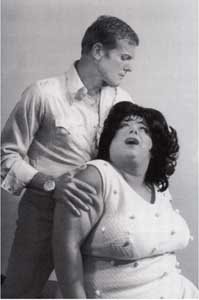
Tab’s film career took off once again in the 1980s/90s as he starred in such films as John WatersPolyester, Grease 2, and the cult comedy-Western Lust in the Dust, his second film with Divine.

In his autobiography Tab Hunter Confidential: The Making of a Movie Star he admitted that he was gay, confirming rumours that had circulated since the height of his fame in the 50s. Hunter also confessed to having two love affairs with women, one with whom he was passionately in love. He was passionately in love with co-star Etchika Choureau, while simultaneously, secretly dating bisexual actor Anthony Perkins. He wanted to marry Etchika but couldn’t picture himself being heterosexually monogamous and backed out. His other opposite sex relationship was with Joan Cohn, widow of Columbia Pictures mogul, Harry Cohn.

He lives in California with his partner of 25 years, film producer Alan Glaser.

TabHunter.com

Labels: , ,

Tuesday, December 30, 2008

Paul Bowles

Paul Bowles born 30 December 1910 (d. 1999)

Paul Frederic Bowles was an expatriot American composer, author, and traveller.

Bowles was born in New York in 1910. His father was a dentist who exhibited little warmth for his son; an inflexible man, he evoked responses of passive resistance and secrecy, characteristics that would mark Paul's life and writing. As a boy, Bowles had few friends and took refuge in fantasy writing. He matriculated at the University of Virginia, but academic life did not interest him, and he left for Paris abruptly in 1929. Although he soon returned to New York, from 1931 onward he would spend most of his life outside the United States.

Bowles's literary reputation rests on his novels, but until he was thirty-five he showed more interest in musical composition and poetry. Aaron Copland was a mentor, and in France, he intrigued Gertrude Stein, though she thought he was no poet. But Bowles was gifted in a number of fields, and increasingly he spread his skills over several: music for plays and films, short stories, autobiography, travel writing, and translations.

In Berlin, he met Stephen Spender and Christopher Isherwood. Isherwood later gave the name Bowles to the heroine of Goodbye to Berlin. The following year Bowles returned to North Africa and travelled throughout other parts of Morocco, the Sahara, Algeria and Tunisia. Throughout the next decade, Bowles composed a good body of music including sonatas, song cycles, and music for stage productions (including Doctor Faustus directed by Orson Welles, the orchestration for George Balanchine's Yankee Clipper at Lincoln Kirstein's request), and also made early recordings of North African music.

In childhood, Bowles was fond of a homosexual uncle. During one stay-over with him, he happened to enter a room where men were dancing intimately together. His uncle's anger at his nephew hurt Bowles, who had not been alarmed at this sight, and the incident suggests Bowles's attitude to different sexual behavior: He liked to examine sexuality from a dispassionate perspective for its psychological suggestiveness. Such is the case in his most explicitly homosexual story, Pages from Cold Point (1947), in which a boy tries to seduce his father.

Pages from Cold Point marked a turning point in Bowles's life. In 1938, he had married Jane Auer, and in 1947, they went to live in Tangier. Jane Bowles had published Two Serious Ladies, and explored gay relationships in both her life and in her fiction.

Paul Bowles explored the psychological dimensions of relationships less directly, and many readers prefer to interpret his ground-breaking novel The Sheltering Sky (1949) in existentialist terms, even though it deals centrally with the extraordinary dynamic of his relationship with Jane - a dynamic to which the homosexuality of both is relevant.

With the arrival of the Bowles, the Tangier cult developed rapidly. American writers and artists of the Beat Generation - William Burroughs, Allen Ginsberg, Gregory Corso, Tennessee Williams, Truman Capote, and others - visited and socialised; the ambience of Tangier, as well as its toleration of experiments in drug use and sexual expression proved liberating and stimulating.

Jane Bowles, always on the edge of sexual scandal, died in 1973. Paul Bowles, though he continued to attract interesting figures and, in his discreet way, a cult following, was very stable, and continued to produce a stream of work until his death in 1999.

His translation work started with the Sartre classic No Exit (1958) but became more significant with his translations of previously unknown works by Moroccan writers Mohammed Mrabet, Mohamed Choukri and, subsequently, others.

Bowles died of heart failure at the Italian Hospital in Tangier on November 18, 1999 at the age of 88. He had been ill for some time with respiratory problems. The following day a full-page obituary appeared in The New York Times. Although he had lived in Morocco for 52 years, he was buried in Lakemont, New York, next to the graves of his parents and grandparents.

Labels: , , , , ,