Tuesday, May 17, 2011

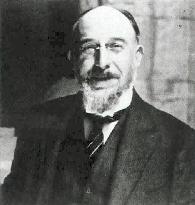
Erik Satie

Erik Satie born 17 May 1866 (d. 1925)

French composer and pianist Erik Satie, was a pioneer of classical music whose ideas were to have a tremendous influence on 20th century modernism.

A contemporary of Ravel and Debussy, he would later go on to work with Jean Cocteau to create the ballet Parade (1917) for the Ballet Russes, with set designs by Pablo Picasso and choreography by Leonide Massine. He knew, worked with or influenced most of the artists and writers and musicians who frequented Paris when it was the undoubted cultural hub of the world. Although sometimes credited with being the precursor of practically every avant-garde movement of the 20th century, he was genuinely influential in the fields of minimalism and ambient music, the use of prepared piano and music-to-film synchronisation.

Despite all this, he was an incredibly private and eccentric man - known to enter a room and sit without removing his hat, coat or gloves, and always with a brand-new umbrella. He is thought to have been homosexual because of the company he kept, but he appears to have mostly lived an asexual life.

After his funeral 1925, his friends entered the tiny room he had occupied for 27 years but had never allowed anyone else to enter. Apart from dust and cobwebs, they found huge quantities of umbrellas - many never used - as well as large numbers of unknown compositions hidden all over the room.

Labels: , , , , ,

Monday, May 16, 2011

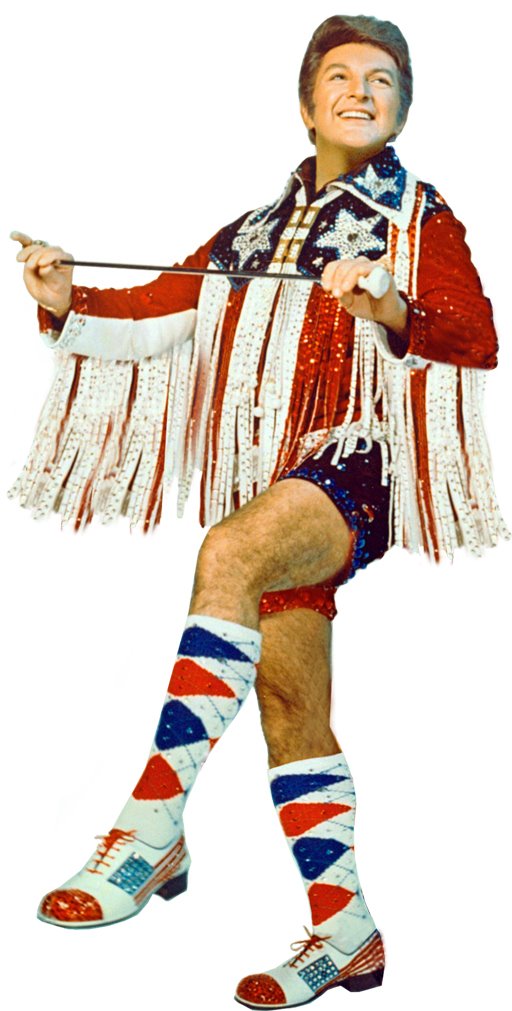
Liberace

Liberace born 16 May 1919 (d. 1987)

Wladziu Valentino Liberace, or Lee to his friends, was a classically trained musician who found a rich vein of record, concert and television success when he left the 'boring parts out'. His blend of campy, extravagant theatricals, flamboyant dress, witty self-deprecation and feather-light classical music made him adored by generations of women who were either oblivious to his blatant flaming, or just didn't care.

He suffered from ill-health in later life including heart and liver trouble, and emphysema from smoking, but it was an AIDS-related illness which finally sent him to his candelabra'ed rhinestone coffin in the sky at the age of 67.

Liberace always denied that he was homosexual, and the pretty young men were just his chauffeurs and personal assistants.
The Liberace Foundation

Labels: , , ,

Friday, May 13, 2011

Modest Ilyich Tchaikovsky

Modest Ilyich Tchaikovsky born 13 May 1850 (d. 1916)

Modest Ilyich Tchaikovsky was a Russian dramatist, opera librettist and translator.

Modest Ilyich was the younger brother of the composer Pyotr Ilyich Tchaikovsky. He graduated from the School of Jurisprudence with a degree in law. Like many graduates of this school (including his brother) he was homosexual and lived relatively openly with the poet Aleksey Apukhtin and then with another boyfriend, Kolya Konradi.

Tchaikovsky chose to dedicate his entire life to literature and music. He wrote plays, translated sonnets by Shakespeare into Russian and wrote librettos for operas of his brother, as well as other composers such as Eduard Nápravník, Arseny Koreshchenko, Anton Arensky and Sergei Rachmaninov. Being the nearest friend of his brother, he became his first biographer, and also the founder of Tchaikovsky's museum in Klin.

Labels: , , , , ,

Saturday, May 07, 2011

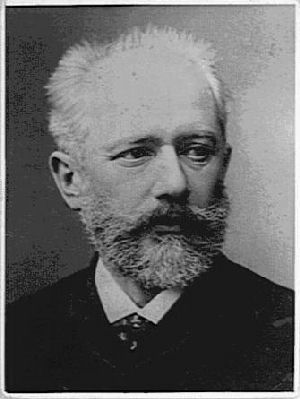
Peter Ilych Tchaikovsky

Peter Ilyich Tchaikovsky born 7 May 1840 (d. 1893)

Peter Ilych Tchaikovsky was a Russian composer of the Romantic era.
Peter (or Pyotr) Ilyich Tchaikovsky is a composer whose music has made an indelible impression on the world, yet many things seemed to be stacked against him. His mother died from Cholera when Tchaikovsky was only 14 years old and this great loss affected the boy deeply. As a boy and also in later life, he suffered from various neuroses and experienced periods of deep depression. Although he learned the piano as a boy, Tchaikovsky was initially to study law and his first profession was as a clerk performing administrative functions. It was only at the age of 23 that he made a career change and decided to study composition at the new St Petersburg Conservatory.

His success there led to a post at the (also new) Moscow Conservatory with Nicholas Rubenstein (the brother of Anton Rubenstein who had established the St Petersburg Conservatory). Although Tchaikovsky's music is now universally admired across the world, he wasn't always to receive a warm reception in his native Russia and a poor critical reception to his works understandably contributed to his periods of depression. For example, his first Piano Concerto which is now instantly recognisable and a firm favourite with concert goers was initially dedicated to Nicholas Rubenstein. He didn't like the work and Tchaikovsky felt devastated. The dedication was changed but years later Rubenstein changed his mind and was to play the work regularly.

The image that history has left us of Tchaikovsky is of a solitary figure who often worked in isolation. When in later life he accepted invitations to conduct, he felt homesick and longed to return home. For a while Tchaikovsky struck up a curious relationship with a woman called Nadezhda van Meck who became his benefactor, and her regular funding and letters of encouragement allowed him to compose without the constant worry of earning a living and he resigned from the Moscow Conservatory to concentrate on composition. The relationship was curious because the two never met.

Undoubtedly a major contributor to the composer's bouts of depression was his homosexuality. This is not surprising since at that time in Russia, the state considered certain acts to be crimes carrying the death penalty. At one stage Tchaikovsky married a female admirer, perhaps to conceal his true nature, but the marriage was a disaster. It broke up within a short period of time, and Tchaikovsky suffered a breakdown and attempted suicide. It is not surprising that some of Tchaikovsky's music is full of sadness and despair. What is surprising perhaps is that much of his music is bright and happy.

Tchaikovsky was never a total recluse. He met many other composers and musicians of the day. In his native Russia he certainly knew several members of the Russian Nationalist School and for a while was inspired by their musical thinking. These composers - Rimsky-Korsakov, Balakirev, Borodin, Mussorgsky - sought to compose and promote music which emphasised its Russian origins using folk music and other traditions, and largely shunning the music being composed in other parts of the world. Tchaikovsky's music might seem very Russian to modern ears, but his fellow countrymen detected traces of European influence. It is true that his music has a broader appeal, characterised by beautiful melodies, inventive orchestration, and a 'heart on sleeve' emotional warmth and engagement. Indeed his music was more popular abroad than in his native country, and perhaps this was the cause of some initial resentment back home.

In time Tchaikovsky's music became more accepted in Russia. When his former benefactor stopped his allowance after 13 years, he was soon the beneficiary of funding from the Russian government. He even overcame his previous reluctance both to travel and to conduct. He travelled abroad to conduct his own music in European cities and in the US to great success. However his life was to end in tragedy. The official story is that he contacted Cholera (the same disease which had struck his mother years before) by carelessly drinking a glass of unboiled water, though a later story suggested that he committed suicide. Shortly before he died, Tchaikovsky had completed his 6th Symphony. The premier was not a great critical success, but the piece's mood of deepest despair seems prophetic.

Tchaikovsky has left us a wealth of great music including Symphonies and Concertos, some Operas and many shorter works. He is particularly remembered for his story-telling music, including Romeo and Juliet and the evocative free-flowing ballet music for Swan Lake, The Nutcracker and Sleeping Beauty.

The importance of Tchaikovsky's homosexuality and its consequences on the personal expression in his compositions cannot be underestimated. Tchaikovsky's gayness in itself has been known to the West for at least 75 years, gathered from the composer's own writings as well as those of his brother Modest, who was also gay. More debatable is how well he accepted his sexuality or was comfortable with it.

Tchaikovsky

Labels: , , ,

Wednesday, March 16, 2011

David Del Tredici

David Del Tredici born 16 March 1937

Born in Cloverdale, near Los Angeles, David Del Tredici is a Pulitzer Prize-winning American composer and pianist. A child prodigy on the piano, he performed as a concert pianist until 1960.

He enrolled in the University of California at Berkeley in 1955 to study piano, but showed flair for composition and was encouraged to take his studies in that direction. He has subsequently taught at several universities and music colleges, including Boston, New York, Yale & the Juilliard.

He is best known for his series of vocal & instrumental works based on Lewis Carroll`s Alice books; he has also written works based on James Joyce, and many Victorian and American writers. Literature has been a constant influence throughout his work.

In recent years he has started to write more and more works based on the gay experience, and based on work by gay writers, especially since 1996, when he attended a workshop in gay sexuality and self-acceptance.

In addition to the Pulitzer Prize, he has also received a Guggenheim Fellowship and Woodrow Wilson fellowship, a Brandeis Creative Arts Award, a Friedheim Award, grants from the National Endowment for the Arts, and election to the American Academy and Institute of Arts and Letters. His works are regularly commissioned by major orchestras in America and abroad. His On Wings of Song was premiered in New York City in 2004 as part of the Riverside Opera Ensemble's 20th Anniversary Concert.

Del Tredici met his partner Ray Warman in 1999, and they held their commitment ceremony in 2000.

David Del Tredici Official Website

Labels: , ,

Saturday, March 12, 2011

David Daniels

David Daniels born 12 March 1966

David Daniels is an American singer. He is one of the best-known and highly regarded countertenors in modern opera. He is greatly admired for the power, agility, and tonal beauty of his voice as well as his rugged good-looks and stage presence.

Daniels was born in Spartanburg, South Carolina, the son of two singing teachers. He began to sing as a boy soprano, moving to tenor as his voice matured. He studied music at the Cincinnati College Conservatory of Music. Dissatisfied with his achievements as a tenor, Daniels switched to singing countertenor during graduate studies at the University of Michigan.

Daniels made his professional singing debut in 1992. In 1999, he made his debut with the Metropolitan Opera as Sesto in Giulio Cesare. His repertoire has grown to include other major Handel's roles, including Julius Caesar: Arsace in the comedy Partenope (at the Lyric Opera of Chicago), the title role in Tamerlano and Arsamene in Xerxes. At the Bavarian State Opera in Munich he played the title roles in Rinaldo and Orlando as well as David in Saul. Furthermore he interpreted Ottone in Monteverdi's L'Incoronazione di Poppea.

Daniels has also branched out from the baroque roles usually associated with counter-tenors to include Oberon in Benjamin Britten's Midsummer Night's Dream at the Metropolitan Opera and as Orfeo in Gluck's Orfeo ed Euridice at the Royal Opera House, Covent Garden.

In addition to his operatic work, Daniels also gives regular recitals, for which he has developed a repertoire that includes nineteenth and twentieth century art songs not usually associated with countertenors, with works by such composers as Berlioz and Poulenc.

Labels: , ,

Friday, March 11, 2011

Henry Cowell

Henry Cowell born 11 March in 1897 (d. 1965)

Henry Cowell was an American composer, musical theorist, pianist, teacher, publisher, and impresario.

Henry Cowell was born in Menlo Park, California, where he was unconventionally home-schooled by his left-wing writer parents, and surrounded by a wide variety of different music, from Irish and American folk to a wide variety of what would now be called World Music. Musically gifted from an early age, he began to study music formally at the University of California and went on to teach music in California and New York.

He was hugely influential, expanding on European classical traditions to explore Appalachian, Irish, Chinese, Japanese, Javanese, African, Indian and Tahitian music. He was a true musical innovator; The Tides of Manaunaun (1912) was the first to include tone clusters, The Aeolian Harp (1923) required the soloist to directly play the strings of a piano without the keyboard. In 1931, he worked with Russian engineer and electronic music pioneer, Leon Theremin, to create an early electronic keyboard called the Rhythmicon.

He composed some twenty symphonies and many other orchestral and choral works, including his best known work Fuguing Tunes (1945-1945).

He was a teacher and mentor to many other composers including John Cage, George Gershwin and Burt Bacharach, and particularly championed the music of Charles Ives. He did much to develop and promote and inspire contemporary music.

However, his career took an unexpected downward turn in 1936 when he was arrested for having sexual relations with a seventeen year old youth. Hoping for leniency, he pleaded guilty to that and related charges, but was sentenced to fifteen years in prison.

He continued to compose and write, but his reputation was destroyed, although he was loyally supported by family, friends and colleagues, including Martha Graham and Percy Grainger. Charles Ives, for whom he had done so much, dropped him like a hot stone.

He was paroled in 1940, and in 1942 received a pardon and became a Senior Music Editor in the Office of War Information. Shgortly after his parole he married a prominent folk music scholar who had been prominent in campaigning for his release. Whether this was a genuine love match or a marriage of convenience to complete his 'rehabilitation' is not clear, although the marriage was musically productive and lasted twenty-five years.

He spent the rest of his life continuing to compose, write and teach. He received many honours and grants, including his election to the American Institute of Arts and Letters in 1951.

Hugely significant in expanding the cultural and experimental boundaries of classical music, he has never been regarded as the significant composer his early career suggested. Whether this is due to the unfortunate disruption of his imprisonment, or to his unconventional musical approach, is anyone's guess.

Recordings of his work are available, including some on the excellent budget Naxos label.

Labels: , , ,

Wednesday, March 09, 2011

Samuel Barber

Samuel Barber born 9 March 1910 (d. 1981)

Samuel Osborne Barber II was an American composer of classical music ranging from orchestral, to opera, choral, and piano music. His Adagio for Strings became his most famous composition and a perennial favourite.

Barber was born in West Chester, Pennsylvania. At a very early age, Barber became profoundly interested in music, and it was apparent that he had great musical talent and ability. He wrote his first musical composition at the early age of 7 and attempted to write his first opera at the age of 10. He was an organist at the age of 12. When he was 14, he entered the Curtis Institute, a conservatory where he studied piano, composition, and voice.

Barber was born into a comfortable, educated, social, and distinguished Irish-American family. His father was a doctor, and his mother was a pianist. His aunt was a leading contralto at the Metropolitan Opera and his uncle, Sidney Homer, was a composer of American art songs. Louise Homer is noted to have influenced Barber's interest in voice. Through his aunt, Barber had access to many great singers and songs. This background is further reflected in that Barber decided to study voice at the Curtis Conservatory.

Barber began composing seriously in his late teenage years. Around the same time, he met fellow Curtis schoolmate Gian Carlo Menotti, and would form a lifelong personal and professional relationship. At the Curtis Institute, Barber was a triple prodigy of composition, voice, and piano. At the age of 18, Barber won a prize from Columbia University for his Violin Sonata (now lost or destroyed by the composer).

From his early to late twenties, Barber wrote a flurry of successful compositions, launching him into the spotlight of the classical music community. At the young age of 28, Barber's Adagio for Strings was performed by the NBC Symphony Orchestra under the direction of Arturo Toscanini in 1938, along with his first essay for orchestra. The Adagio had been arranged from the slow movement of Barber's string quartet op.11. Toscanini had only very rarely performed music by American composers before. At the end of the first rehearsal of the piece, Toscanini remarked: 'Semplice e bella' (simple and beautiful).

Barber served in the Army Air Corps in World War II, where he was commissioned to write his Second Symphony, a work he later suppressed. Composed in 1943, the symphony was originally titled Symphony Dedicated to the Air Forces and was premiered in early 1944 by Serge Koussevitsky and the Boston Symphony Orchestra. He revised the symphony in 1947, then decided to destroy the score in 1964. It was later reconstructed from the instrumental parts.

Barber would go on to win a prize in 1963 for his Concerto for Piano and Orchestra.

Barber spent many years in isolation (eventually diagnosed with clinical depression) after the harsh rejection of his third opera Antony and Cleopatra (which he believed contained some of his best music. The opera was written for and premiered at the opening of the new Metropolitan Opera House on 16 September 1966. The elaborate production designed by Franco Zeffirelli was marred by numerous technical disasters; it also overwhelmed and obscured Barber's music, which most critics derided as uncharacteristically weak and unoriginal. In recent years, a revised version of Antony and Cleopatra, for which Menotti provided collaborative assistance, has enjoyed some success.

After this setback, Barber continued to write music until he was almost 70 years old. Barber’s music in his later years would be lauded as reflective, contemplative, but without the morbidity or unhappiness of other composers who knew they had a limited time to live. The Third Essay for Orchestra (1978) was his last major work and critics received it as having all the vigour and imagination of his earlier works.

Barber died of cancer in 1981 in New York City at the age of 71.

Barber was president of the International Music Council of UNESCO, where he did much to bring into focus and ameliorate the conditions of international music. He was also one of the first American composers to visit Russia (which was then a constituent republic of the Soviet Union). Barber was also influential in the successful campaign of composers against ASCAP, helping composers increase the share of royalties they receive from their compositions. Barber was the recipient of numerous awards and prizes including the Rome Prize (the American version of the Prix de Rome), two Pulitzers, and election to the American Academy of Arts and Letters.

Labels: , , , ,

Wednesday, March 02, 2011

Marc Blitzstein

Marc Blitzstein born 2 March 1905 (d. 1964)

Marc Blitzstein was an American composer.

Marc Blitzstein composed in a variety of forms, but is best known today for his opera scores, especially The Cradle Will Rock (1936). Although none of his operas is in the standard repertory or often performed, he had a major influence on other composers who aspired to blend classical and popular forms, especially Leonard Bernstein and Stephen Sondheim.

Blitzstein was born in Philadelphia into an affluent Jewish banking family. He began playing piano at the age of three and began composing when he was seven. He attended the University of Pennsylvania briefly. He studied privately in New York City, enrolled in the Curtis Institute of Music in Philadelphia upon its founding in 1924, and then studied with Arnold Schoenberg in Berlin and Nadia Boulanger in Paris.

Upon returning to the United States, he performed his own Piano Sonata (1927) in New York in 1928. He began work as a music critic for Modern Music at this time, and eventually wrote for Musical Quarterly and New Masses as well.

Although he originally followed the 'art for art's sake' doctrine prevalent in America, writing intellectually challenging music for a select elite, as he adopted more radical political positions (and joined the Communist Party - he cited his homosexuality as the reason for discontinuing his membership in the Communist Party, which did not consider homosexuality compatible with the party's ideals) he came to espouse the doctrines of Kurt Weill, Bertolt Brecht, and Hanns Eisler, who were responsible for creating socially conscious, popular theatre in Germany.

Blitzstein thus began to embrace the philosophy of 'music for the people', the immediate result of which was the opera The Cradle Will Rock (1936), a politically charged work about labour unionism.

The first production was directed by Orson Welles in New York and produced by John Houseman under the auspices of the Federal Theater Project (FTP). Its legendary first performance was a sensation, in part because the Works Progress Administration (WPA), which administered the FTP, was under attack by the US government for its pro-labour stance. The WPA had its budget cut just before the premiere of the opera. The show went on without orchestra, sets, costumes, lights, or union actors, staged in a theatre that had been procured the evening of the performance.

The success (and notoriety) of the impromptu production made Blitzstein famous as a leading exponent of politically committed musical theatre. Leonard Bernstein, who saw a 1938 production of the opera on Broadway, produced it at Harvard and became a friend and protégé of the composer.

In 1951 Blitzstein was subpoenaed to appear before the House Committee on Un-American Activities. In closed session he admitted having been a member of the Communist Party and then refused to 'name names', and wound up not being called upon to testify publicly. However, he was blacklisted by the movie studio bosses.

Other important Blitzstein works include his The Airborne Symphony (1946), written while the composer was stationed in Great Britain during World War II and first performed in New York under the baton of Leonard Bernstein; his ambitious opera Regina (1949), based on Lillian Hellmann's play The Little Foxes; an influential and altogether successful adaptation and translation of Weill and Brecht's The Threepenny Opera (1952) - which spawned the pop hit Mack the Knife covered by Bobby Darin and Robbie Williams amongst many others; and the opera Juno (1959), based on Sean O'Casey's play Juno and the Paycock.

Although necessarily publicly closeted, Blitzstein was honest about his homosexuality with his friends and colleagues. However, in 1933, he married critic and writer Eva Goldbeck (1901-1936), who seems to have been aware of his homosexuality; nevertheless, they had a deep relationship until her death three years later.

Subsequently, his erotic life seems to have been exclusively homosexual. His homosexuality probably inspired the sympathy for outsiders that motivated his political activism.

Blitzstein's death came in Martinique where he was wintering in 1963. He apparently made sexual advances to three Portuguese sailors whom he had picked up. What exactly happened next is unclear, but Blitzstein was robbed, beaten, and stripped. Found the next morning, he was immediately taken to a hospital where he died of internal bleeding on January 22, 1964.

Although interest in Blitzstein and his work declined in the 1960s and 1970s, more recently he has come to be recognised as a significant figure in the history of American musical theatre. Renewed attention to Blitzstein also resulted from Tim Robbins' film Cradle Will Rock (1999), which took as its subject the creation of The Cradle Will Rock.

Labels: , , ,

Tuesday, March 01, 2011

Thomas Adès

Thomas Adès born 1 March 1971

Thomas Adès is a British composer, pianist and conductor.

London-born Adès studied piano and composition at Guildhall School of Music and Drama, London. After attending University College School, he graduated in 1992 from King's College, Cambridge. His degree was classified as 'double starred first', indicating outstanding academic distinction. He was made Britten Professor of Composition at the Royal Academy of Music, and in 2004 was given an honorary doctorate by the University of Essex.

In 2007 a retrospective festival of his work was presented at the Barbican Centre in London and he was the focus of Radio France's annual contemporary music festival, 'Présences' and Helsinki's 'Ultimo' festival. The Barbican festival, 'Traced Overhead: The Musical World of Thomas Ades', included the UK premiere of a new work for Simon Rattle and the Berlin Philharmonic, Tevot.

In 1993, at the age of twenty-two, Adès gave his first public piano recital in London as part of the Park Lane Group series of recitals.

Asyla, for orchestra, was premiered in Symphony Hall, Birmingham in October 1997 by Simon Rattle and the City of Birmingham Symphony Orchestra at the 1997 BBC Proms. This work also received the Grawemeyer Award for Music Composition in 2000.
Adès conducted the BBC Symphony Orchestra in the London premiere of the work while, in September 2002, Simon Rattle gave his first concert as principal conductor of the Berlin Philharmonic Orchestra with Asyla and Gustav Mahler's Symphony No. 5, both of which have also been released on CD and DVD by EMI. Asyla has since been performed across the world, including on a recent tour of the Far East by Rattle and the Berlin Philharmonic.

Arcadiana, a seven-movement, 20-minute string quartet (Op. 12) was recorded in 1998 along with other work from the 1993 to 1994 period. America: a Prophecy was commissioned for the New York Philharmonic Orchestra's Millennium Messages in November 1999 and it received its UK premiere at the Aldeburgh Festival in June 2000. Concentric Paths, Adès' violin concerto, received its premiere in September 2005 to critical acclaim.

Adès has composed two operas, Powder Her Face (1995) a chamber opera with a libretto by Philip Hensher, won both good reviews and notoriety for its musical depiction of fellatio. The opera was commissioned by Almeida Opera, and has since been given new productions by chamber opera groups around the world. The Duchess depicted in the opera is the notorious Margaret Campbell, Duchess of Argyll whose scandalous behaviour in Britain in the early 1960s was revealed during her divorce trial with the introduction into evidence of photographs of her various sexual acts. The Tempest, adapted from Shakespeare's play, was premièred to critical acclaim at the Royal Opera House, Covent Garden in February 2004, followed by several productions around the world. The opera was revived by Covent Garden in March 2007 to great acclaim.

Adès was Artistic Director of the Aldeburgh Festival from 1999-2008 and Musical Director of the Birmingham Contemporary Music Group. In 2000, he was composer-in-residence of the Ojai Festival in California (along with Mark-Anthony Turnage).

Adès is also a noted pianist, having been a runner-up in the BBC's Young Musician of the Year competition in 1990.

He was resident with the Los Angeles Philharmonic during their 2005/6 and 2006/7 seasons as part of the orchestra's 'On Location' series.

In 2007 a retrospective festival of his work was presented at the Barbican Arts Centre in London and he was the focus of Radio France's annual contemporary music festival, 'Présences' and Helsinki's 'Ultimo' festival. The Barbican festival, 'Traced Overhead: The Musical World of Thomas Adès', included the UK premiere of a new work for Simon Rattle and the Berlin Philharmonic, Tevot. In 2009, he was the focus of Stockholm Concert Hall's annual Composer Festival.

In 2006, he entered a civil partnership with Tal Rosner.

Labels: , , , ,

Friday, January 07, 2011

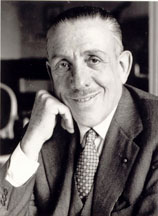
Francis Poulenc

Francis Poulenc born 7 January 1899 (d. 1963)

Francis Jean Marcel Poulenc was a French composer and a member of the French group Les Six. He composed music in all major genres, including art song, chamber music, oratorio, opera, ballet music and orchestral music.

Francis Poulenc was born in Paris. His mother, an amateur pianist, taught him to play, and music formed a part of family life.

An outstanding pianist, the keyboard dominated much of his early compositions. He also, throughout his career, borrowed from his own compositions as well as those of Mozart and Saint-Saëns.

Poulenc was a member of Les Six, a group of young French composers, Milhaud, Auric, Durey, Honegger and Tailleferre, who also had links with Erik Satie and Jean Cocteau. He embraced the Dada movement's techniques, creating melodies that would have been appropriate for Parisian music halls.

During the late 1920s Poulenc came to realise his homosexuality and met his first lover, the painter Richard Chanlaire. This realisation resulted in his first serious period of depression, heightened in 1930 by the death of Raymonde Linossier, the only woman Poulenc seriously considered marrying. (He would later have a brief affair with a woman known only as Frédérique and have a daughter, Marie-Ange, by her in 1946.) Linossier's death affected Poulenc deeply and may have led him to return to Roman Catholicism for solace.

The death in 1936 of a rival composer, Pierre-Octave Ferroud, prompted Poulenc to undertake a religious pilgrimage to Notre Dame de Rocamadour near Noizay. This pilgrimage in particular seems to have confirmed the revival of his Roman Catholicism, for he began to compose sacred works thereafter, beginning with Litanies à la Vierge noire (1936) and continuing with some of his most popular works: the Stabat Mater (1950) and the Gloria (1959).

Poulenc never entirely abandoned the light gracefulness of his earlier music, but many of the later compositions are notably deeper and more serious.

Poulenc toured widely, mostly as a means of raising money, but did not enjoy travelling beyond the confines of the comfortable and familiar parts of Europe. He made one tour of the United States, where he met a friendly gay couple, Arthur Gold and Robert Fizdale, the accomplished duo pianists who commissioned the Sonata for Two Pianos (1953).

Poulenc found the tours difficult, for they separated him from his lover of the time, Lucien Roubert, who died of pleurisy in 1955, just after Poulenc completed one of his masterpieces, the opera Les dialogues des Carmélites.

After the Dialogues, Poulenc found it difficult to compose, but in 1957 he met his last significant lover, Louis Gautier, who helped to revive his spirits. In that year, Poulenc produced his Flute Sonata.

La voix humaine, a one-act lyric tragedy based on a libretto by Jean Cocteau, one of the icons of French homosexuality and a friend of Poulenc's for more than 50 years, followed in 1958. This was also the time that he renewed his acquaintance with Benjamin Britten and Peter Pears.

Two more important works were to be written before Poulenc's death: Gloria and, at the commission of Leonard Bernstein for the opening of the Philharmonic Hall of Lincoln Center, the Sept répons des ténèbres (1961).

Poulenc died suddenly of heart failure in Paris in 1963.

Labels: ,

Sunday, January 02, 2011

Michael Tippett

Sir Michael Tippett born 2 January 1905 (d. 1998)

Sir Michael Kemp Tippett, OM was one of the foremost English composers of the 20th century.

Tippett was born in London of English and Cornish stock. His mother was a charity worker and a suffragette. Although he enjoyed his childhood, after losing their hotel business in southern France, his parents decided to travel through and live on the Continent, and Michael and his brother attended boarding schools in England. At that time, Tippett won a scholarship and studied in Fette's College, Edinburgh, but he soon moved to Stamford School after some extremely unhappy personal experience. This, combined with his discovering his homosexuality, contributed to making Tippett's teenage years lonely and rather stressful. Although he was open about his sexual orientation, it seems that he started to feel emotional strain from a rather early age, and this later became a major motivation to his composition. Before his time at Stamford, Tippett hardly had any contact with music at all, let alone formal musical training. He recalled that it was in Stamford, where he had piano lessons and saw Malcolm Sargent conducting, that he decided to become a composer, although he did not know what it meant nor how to start.

He registered as a student in the Royal College of Music, where he studied composition with Charles Wood and C H Kitson, and the former's teaching on counterpoint had profound influence on Tippett's future compositional style.

At the RCM, Tippett also studied conducting with Adrian Boult and Malcolm Sargent. In the 1920s, living simply in Surrey, he taught French a preparatory school and plunged himself into musical life, conducting amateur choirs and local operas.

In 1940, he was appointed Director of Music at Morley College in London, a post he retained until 1951.

Although Tippett's early compositions had their first public performance in 1930, the work that brought him widespread recognition came a decade later. The oratorio A Child of Our Time (1939-1941) was inspired by Tippett's concern for the oppressed and his outrage over Nazi persecution of the Jews.

The work is dedicated to Hershel Grynszpan, a gay Jewish youth who, in 1937, assassinated a Nazi official in a Paris club frequented by homosexuals, an act that the Nazis used as a pretext for the acts of anti-Semitic terror known as Kristallnacht, although elements of this story are much disputed.

From the mid-1960s until the early 1970s, Tippett had a close relationship with the Leicestershire Schools Symphony Orchestra (LSSO), conducting them regularly in the UK and on tour in Europe and generally supporting the state-funded musical education programme that had produced an orchestra of such high standards. He conducted the LSSO almost exclusively in twentieth-century music, including Gustav Holst's The Planets, Charles Ives's Three Places in New England, Gershwin's Rhapsody in Blue, Hindemith's Symphonic Metamorphoses and many new works by English composers. Under Tippett, the LSSO, an orchestra of ordinary secondary school children aged 14 to 18, regularly performed on BBC radio and TV, made commercial gramophone records and established new standards for music-making in an educational context. Many leading British performers had their first experience of orchestral music in the LSSO under Tippett.

Tippett was, in the words of his partner Meirion Bowen, an 'unabashed homosexual', and he defied the social taboos of his time by incorporating homoerotic themes in his operas.

Despite his openness as a gay man, Tippett was knighted in 1966, and awarded the Order of Merit in 1983. He remained very active composing and conducting. His opera, New Year, received its premiere in 1989. Then came Byzantium, a piece for soprano and orchestra premiered in 1991. His autobiography, Those Twentieth Century Blues also appeared in 1991. A string quartet followed in 1992. In 1995 his ninetieth birthday was celebrated with special events in Britain, Canada and the US. In that year a collection of his essays, Tippett on Music, also appeared.

Tippett was regarded by many as an outsider in British music, a view that may have been related to his conscientious objector status during World War II and his homosexuality. His pacifist beliefs led to a prison sentence in World War II, and for many years his music was considered ungratefully written for voices and instruments, and therefore difficult to perform. An intense intellectual, he maintained a much wider knowledge and interest in the literature and philosophy of other countries (Africa, Europe) than was common among British musicians. His (sometimes quirky) libretti for his operas and other works reflect his passionate interest in the dilemmas of human society and the enduring strength of the human spirit.

Tippett was never a prolific composer, and his works, completed slowly, comprised five string quartets, four concerti, four symphonies, five operas and a number of vocal and choral works.

In 1997, in Stockholm for a retrospective of his concert music, he developed pneumonia. He was brought home where he died early in 1998.

Labels: ,

Wednesday, September 08, 2010

Sir Peter Maxwell Davies

Sir Peter Maxwell Davies born 8 September 1934 (d. 2016)

Sir Peter Maxwell Davies, CBE), is an English composer and conductor.

Davies was born in Salford, Lancashire. He took piano lessons and composed from an early age. After education at Leigh Grammar School, he studied at the University of Manchester and at the Royal Manchester College of Music (amalgamated into the Royal Northern College of Music in 1973), where his fellow students included Harrison Birtwistle, Alexander Goehr, Elgar Howarth and John Ogdon. Together they formed New Music Manchester, a group committed to contemporary music. After graduating in 1956, he briefly studied with Goffredo Petrassi in Rome before working as Director of Music at Cirencester Grammar School from 1959 to 1962.

After a further period of study on a Harkness Fellowship at Princeton University Davies moved to Australia, where he was Composer in Residence at the Elder Conservatorium of Music, University of Adelaide from 1965-66.

He then returned to the United Kingdom, and moved to the Orkney Islands, initially to Hoy in 1971 and later to Sanday where he lives with his partner Colin Parkinson. Orkney (particularly its capital, Kirkwall) hosts the St Magnus Festival, an arts festival founded by Davies in 1977. He frequently uses it to premiere new works (often played by the local school orchestra).

Davies was Artistic Director of the Dartington Summer School from 1979 to 1984 and has held a number of posts. From 1992 to 2002 he was associate conductor/composer with the BBC Philharmonic Orchestra and he has conducted a number of other prominent orchestras, including the Philharmonia, the Cleveland Orchestra, the Boston Symphony Orchestra and the Leipzig Gewandhaus Orchestra.

He has been awarded a number of honorary doctorates at various institutions. He has been President of Making Music (The National Federation of Music Societies) since 1989. Davies was made a CBE in 1981 and knighted in 1987. He was appointed Master of the Queen's Music for a ten-year period from March 2004. Oxford University awarded him an honorary Doctor of Music degree in July 2005. On 25th November 2006 Sir Peter was appointed an Honorary Fellow of Canterbury Christ Church University at a service in Canterbury Cathedral. He is also a professor of composition at the Royal Academy of Music.

Davies is openly gay and has a keen interest in environmentalism. In 2007, there was a controversy around his planned Civil Partnership when he was told that the ceremony could not take place on Sanday. He later abandoned his plans.

Davies' surname is 'Davies'; 'Maxwell' is his middle name, and he is known informally as 'Max'.
Davies is a prolific composer who has written music in a variety of styles and idioms over his career, often combining disparate styles in one piece. His work includes symphonies, concerti, chamber music, opera, ballet music and classical songs, as well as various pieces for children.

Since his move to Orkney, Davies has often drawn on Orcadian or more generally Scottish themes in his music. Additionally he wrote the scores for Ken Russell's films The Devils and The Boy Friend.

Sir Peter Maxwell Davies, who had leukaemia, died at home in Orkney in 2016 aged 81.

Labels: ,

Sunday, September 05, 2010

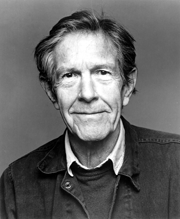
John Cage

John Cage born 5 September 1912 (d. 1992)

John Milton Cage was an American experimental music composer, writer and visual artist. He is most widely known for his 1952 composition 4'33", whose three movements are performed without playing a single note.

Cage was an early composer of what he called 'chance music' — music where some elements are left to be decided by chance; he is also well known for his non-standard use of musical instruments and his pioneering exploration of electronic music. His works were sometimes controversial, but he is generally regarded as one of the most important composers of his era, especially in his raising questions about the definition of music.

Along with painters Robert Rauschenberg and Jasper Johns, John Cage and his life partner choreographer, Merce Cunningham became a part of a circle of young gay artists whose ideas challenged the macho, self-expressive Abstract Expressionists, who were to dominate the 1950s New York art scene. They developed an alternative creative process that has become the hallmark of post-modern art.

John Cage and Merce Cunningham's musical and romantic partnership was to last 54 years until Cage's death in 1992.

Labels: , ,

Wednesday, August 25, 2010

Leonard Bernstein

Leonard Bernstein born 25 August 1918 (d. 1990)

Leonard Bernstein was an American conductor, composer, and pianist. He was the first conductor born in the US to receive world-wide acclaim, and is known for both his conducting of the New York and Berlin Philharmonics, including the acclaimed Young People's Concerts series, and his multiple compositions, including West Side Story, Candide and On The Town.

Bernstein was very highly regarded as a conductor, composer, and educator, and probably best known to the public as longtime music director of the New York Philharmonic Orchestra, for conducting concerts by many of the world's leading orchestras, and for writing the music for West Side Story. He may well be more famous among the general public than any other conductor before or since. All told, he wrote three symphonies, two operas, five musicals, and numerous other pieces.

Throughout the 1960s, Leonard Bernstein was undoubtedly the most visible proponent of classical music in American culture. Through his outgoing personality and resourceful uses of the media, particularly television, Bernstein introduced 'highbrow' culture into the homes of middle America, while also defending rock and roll as 'real' music and espousing radical causes.

Given his overwhelming celebrity and acclaim as a composer, conductor, pianist, and lecturer, the meteoric career of this son of Russian Jewish immigrants would seem to exemplify the all-American success story; yet, for most of his life, the spectre of the closet lurked threateningly behind the glamorous and often brash public image of Leonard Bernstein.

In spite of Bernstein's public avowal of unpopular causes - he was outspoken on civil rights and Vietnam - he was, for much of his career, unwilling to risk exposure of his homosexuality. Indeed, the social mores of the 1950s and 1960s were such that a revelation of homosexuality would undoubtedly have destroyed the celebrity and influence he had attained.

In 1951, Bernstein married the Chilean actress Felicia Montealegre, with whom he had three children. Bernstein nonetheless engaged in a number of homosexual relationships over the years. In the mid-1970s, the couple separated, and Bernstein attempted to live an openly gay life with Tom Cochran, who had been his lover since 1971. A year later, he returned to his wife, who was by this time terminally ill.

After Montealegre's death in 1978, Bernstein became increasingly open about his gayness.

Bernstein's final major composition, the opera A Quiet Place (1983), positions a bisexual male character, who functions as the mediator between the other, more conflicted characters, at the centre of the action. The opera's message is one of reconciliation and acceptance among all people.

Although increasingly in ill health in his final years, Bernstein continued to perform and record until his death from a heart attack on October 14, 1990.

As a conductor, he had a vast repertoire and recorded frequently, often in collaboration with the greatest singers and solo musicians of the postwar era. As a result, he has left an extensive and remarkable legacy of recordings and video performances that will ensure his reputation as an intelligent and enthusiastic conductor, composer, and musician for generations to come.

Labels: , , , ,

Monday, August 09, 2010

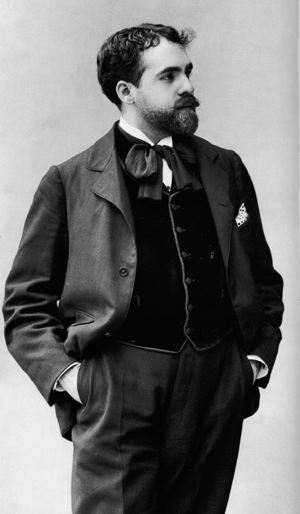
Reynaldo Hahn

Reynaldo Hahn born 9 August 1875 (d. 1947)

Although born in Caracas, Venezuela, Reynaldo Hahn was raised and educated in France, studying music at the Paris Conservatoire under Massenet. He also studied with Gounod and Saint-Saens, with whom he is widely believed to have had a relationship. He is also thought to have been a lover of Proust's.

He is best known as a composer of French songs in the classical song tradition, including settings to Victor Hugo and the poems of Verlaine, but he also wrote operettas, chamber and orchestral music. The fine craftsmanship, remarkable beauty, and originality of his works capture the insouciance of la belle époque.

He was also a conductor, specialising in the works of Mozart; was general manager of the Cannes Casino opera house; and was for years the influential music critic of the French newspaper Le Figaro.

Forced to leave Paris in 1940 during the Nazi occupation, he returned after the war in 1945 to fulfill his appointment as director of the Paris Opéra. Unfortunately, he died shortly afterwards without executing the reforms for which his supporters had hoped.

He also appears to have been rather handsome, intelligent and charming.

Labels: , ,

Friday, July 16, 2010

Edward Dent

Edward Dent born 16 July 1876 (d. 1957)

Edward Joseph Dent was a British musicologist, translator and academic.

Edward Dent was born in Hunsingore in Yorkshire. His father was John Dent, who was a barrister who had been a Conservative Member of Parliament. Edward Dent was the youngest of seven children, including four sons and three daughters. He was brought up at the family home at Ribston Hall on a large estate between York and Harrogate.

Edward Dent was educated at Eton College where he studied music with C H Lloyd. He then went to King's College, Cambridge University. In 1898 he obtained a third class in part one of the classical tripos. In 1899 he obtained his Mus.B.

He was elected a Fellow of King's College Cambridge in 1902. He began lecturing on the history of music in 1902, and he also taught counterpoint, harmony, and composition. His closest friends were Lawrence Haward and J B Trend, but he began a close friendship with Clive Carey in 1902 which continued until Edward Dent's death. Clive Carey was a 19-year-old organ scholar at Clare College. Edward Dent wrote him over four hundred letters during their friendship.

Another friend was E M Forster who represented him as the character Philip Herriton in Where Angels Fear To Tread. Edward Dent also introduced Ronald Firbank to Rupert Brooke.

Edward Dent was part of a circle of gay men at Cambridge which included A T 'Theo' Bartholomew. In the summer of 1915 they met Gabriel Atkin who was in Cambridge for his officer training. In August that year they also met Siegfried Sassoon who arrived in Cambridge for the same reason. Gabriel Atkin had already left but Edward Dent engaged in some matchmaking and encouraged Siegfried Sassoon and Gabriel Atkin to meet, which they did in November, 1918. This was the start of an affair of several years.

In 1918 Edward Dent moved to London and he became the music critic of the Athenaeum in 1919. In 1926 he returned to Cambridge University as Professor of Music, and he was also elected again as a Fellow of King's College. He was President of the Royal Musical Association from 1928 to 1935. In 1928 he was one of the founders of the International Society for Contemporary Music, and he was its President from its inauguration. He was then made an Honorary Life President in 1938.

He was President of the Société Internationale de Musicologie from 1931 to 1949. He was then made an Honorary Life President in 1949. He was awarded an honorary Doctorate of Music at various universities: Oxford in 1932, Harvard in 1936, and Cambridge in 1947.

He was a director and later governor of Sadler's Wells Opera, and a director of Covent Garden Opera Trust.

He was keen that as many people as possible should enjoy music and opera. His facility with languages allowed him to provide translations of work to make them more accessible to a wider audience.

He retired from his professorship in 1941, and from then on he lived in London.

In 1953 he was one of the first two musicians to be elected a Fellow of the British Academy.

In 1961 the Royal Musical Association instituted a Dent Medal which is awarded annually to recipients selected for their outstanding contributions to musicology.

Labels: , , ,

Monday, July 12, 2010

Van Cliburn

Van Cliburn born 12 July 1934 (d. 2013)

Van Cliburn - born Harvey Lavan Cliburn Jr. - was an American pianist who achieved worldwide recognition in 1958, when at age 23, he won the first quadrennial International Tchaikovsky Piano Competition in Moscow, at the height of the Cold War.

Cliburn was born in Shreveport, Louisiana, and began taking piano lessons at the age of three from his mother, Rildia Bee O'Bryan (who had been taught by Arthur Friedheim, a pupil of Franz Liszt). When Cliburn was six, he and his family moved to Kilgore, Texas, and at twelve he won a statewide piano competition which enabled him to debut with the Houston Symphony Orchestra. He entered The Juilliard School at age 17, and studied under Rosina Lhévinne, who trained him in the tradition of the great Russian romanticists. At age 20, Cliburn won the prestigious Levintritt Award, and made his Carnegie Hall debut.

But it was his recognition in Moscow which propelled him to international fame. The First International Tchaikovsky Piano Competition in 1958 was an event designed to demonstrate Soviet cultural superiority during the Cold War, on the heels of their technological victory with the Sputnik launch in October 1957. Cliburn's luminous virtuosity in his competition finale performances of the Tchaikovsky: Piano Concerto No. 1 and Rachmaninoff: Piano Concerto No. 3 earned him a standing ovation which lasted a full eight minutes. The Soviet judges were compelled to ask Premier Nikita Khrushchev for permission to give the first prize to an American. "Is he the best?" Khrushchev asked them. "Then give him the prize!" Cliburn returned home to a ticker-tape parade in New York City, the only time that honour has been accorded a classical musician. TIME put him on their cover, proclaiming him as "The Texan Who Conquered Russia." RCA Victor signed him to an exclusive contract, and his subsequent recording of the Tchaikovsky: Piano Concerto No. 1 became the first classical album to sell a million copies. It was the best-selling classical album in the world for more than a decade, eventually going triple-platinum. Cliburn won the 1958 Grammy Award for Best Classical Performance for this recording.

In 1962, Cliburn became the artistic advisor for the Van Cliburn International Piano Competition. The competition was founded by a group of Fort Worth, Texas music teachers and volunteers, and its prestige now rivals that of the Tchaikovsky Competition.

Cliburn performed and recorded through the 1970s, but in 1978, after the deaths of his father and manager, began a hiatus from public life.

In 1987, he was invited to perform at the White House for President Reagan and Soviet General Secretary Mikhail Gorbachev, and afterwards was invited to open the 100th anniversary season of Carnegie Hall. He received the Kennedy Center Honors in 2001. He was awarded the Presidential Medal of Freedom in 2003 by President George W. Bush, and, in October of 2004, the Russian Order of Friendship, the two highest civilian awards of the two countries. He was also awarded the Grammy Lifetime Achievement Award the same year.

In 1996 Thomas E. Zaremba filed a palimony suit against Cliburn, claiming that because of "an oral and/or implied partnership agreement," he was entitled to a share of Cliburn's income and property. Zaremba said that he had assisted in the management of Cliburn's career and finances as well as performing domestic services such as helping Cliburn care for his aged mother. Zaremba further alleged that Cliburn may have exposed him to AIDS during their seventeen-year relationship, which lasted until around the end of 1994, after which Zaremba moved to Michigan, where he found work as a mortician.

Cliburn called the accusations "salacious" but otherwise had little to say about the case. Indeed, though always described as gracious and polite, Cliburn wais known to be notoriously difficult to interview. Music insiders had long been aware of his homosexuality, and he and Zaremba had appeared together at public functions in Fort Worth, but in Cliburn's thirty-plus years as a celebrity, the press had never linked him romantically with anyone.

The public's image of him was still that of the All-American Boy - he seemed almost frozen in time at the moment of his victory in Moscow. He lived with his mother until her death at 97, was a lifelong Baptist and a regular church-goer, did not drink or smoke, and would begin his concerts with The Star-Spangled Banner.

Zaremba's lawsuit was eventually dismissed because of the lack of a written agreement, which is required under Texas law.

He continued to give a limited number of performances into his 70s. He  played for royalty, heads of state from dozens of countries, and for every President of the United States since Harry Truman.

He died at his home in Fort Worth, Texas, on 27 February 2013, after suffering from bone cancer, aged 78.

Labels: ,

Friday, July 09, 2010

David Diamond

David Diamond born 9 July 1915 (d. 2005)

Born in Rochester, New York, David Leo Diamond is considered one of the pre-eminent American composers of his generation.

His most popular piece is Rounds (1944) for string orchestra. He also wrote 11 symphonies, concertos, 11 string quartets and other works for orchestra, piano and vocal music, and a ballet.

Due to the political climate in the United States during the 1950s he spent fifteen years in Europe studying, writing and teaching. In 1973 he returned to the US as professor of composition at The Juilliard School, where he taught until 1997.

He died from a heart attack at his home in Rochester in 2005.

Labels: ,

Wednesday, July 07, 2010

Gian Carlo Menotti


Gian Carlo Menotti born 7 July 1911 (d. 2007)

Gian Carlo Menotti was an Italian-born American composer and librettist who wrote the classic Christmas opera Amahl and the Night Visitors among about two dozen other operas intended to appeal to popular taste. He won the Pulitzer Prize for two of them, The Consul (1950) and The Saint of Bleecker Street (1955).

Born in Cadegliano-Viconago, Italy, Lake Maggiore and the Swiss border. Menotti began writing songs when he was seven years old, and at eleven wrote both the libretto and music for his first opera, The Death of Pierrot. He began his formal musical training at Milan's Verdi Conservatory in 1923.

After the death of his father, Menotti and his mother emigrated to the United States, and he enrolled at Philadelphia's Curtis Institute of Music. Fellow students at Curtis included Leonard Bernstein and Samuel Barber, who became Menotti's partner in life and in work, with Menotti crafting the libretto for Barber's most famous opera, Vanessa, which premiered in 1958, at the Metropolitan Opera. It was at Curtis that Menotti wrote his first mature opera, Amelia al Ballo (Amelia Goes to the Ball), to his own Italian text. The Island God (which he suppressed, though its libretto was printed by the Metropolitan Opera and can be found in many libraries) and The Last Savage were the only other operas he wrote in Italian, the rest being in English. Like Wagner, he wrote the libretti of all his operas. His most successful works were composed in the 1940s and 1950s. Menotti also taught at the Curtis Institute of Music.

Menotti wrote the libretti for two of Samuel Barber's operas, Vanessa and A Hand of Bridge, as well as revising the latter for Antony and Cleopatra.

In 1958, he founded the Festival of Two Worlds in Spoleto, Italy; he founded its companion festival in Charleston, South Carolina in 1977. For three weeks each summer, Spoleto is visited by nearly a half-million people. These festivals were intended to bring opera to a popular audience and helped launch the careers of such artists as singer Shirley Verrett and choreographers Paul Taylor and Twyla Tharp. He left Spoleto USA in 1993 to take the helm of the Rome Opera.

In 1984 Menotti was awarded the Kennedy Center Honor for achievement in the arts, and in 1991 he was chosen Musical America's "Musician of the Year". In addition to composing operas to his own texts, on his own chosen subject matter, Menotti directed most productions of his work. He and partner Barber for a time lived in a home in Westchester County, New York, called 'Capricorn'.

Menotti died on February 1, 2007 at the age of 95 in a hospital in Monte Carlo, Monaco, where he had a home. He thought it would be 'naughty' to die in Monte Carlo.

Labels: , , , , ,