Sunday, May 22, 2011

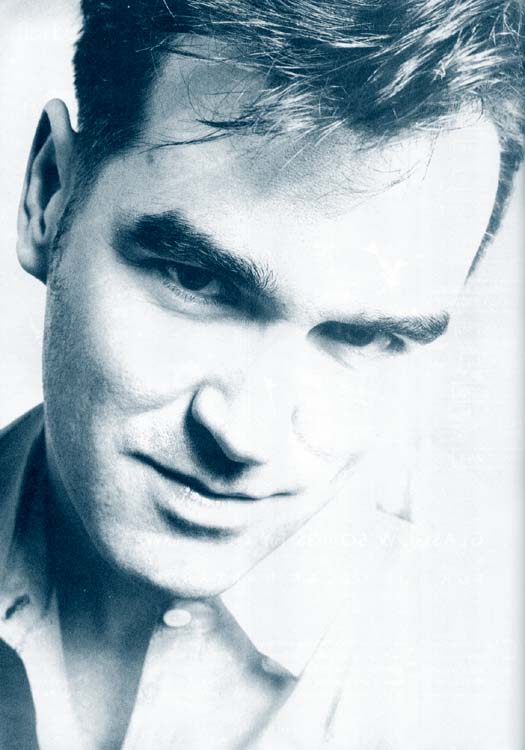
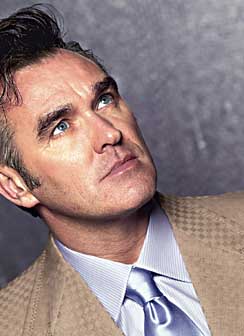
Morrissey

Morrissey born 22 May 1959

"I don't recognise such terms as heterosexual, homosexual, bisexual, and I think it's important that there's someone in pop music who's like that. These words do great damage, they confuse people and they make people feel unhappy, so I want to do away with them."

"Artists aren't really people. And I'm actually 40 per cent papier mache."

"I lost myself to music at a very early age, and I remained there."

Labels: , , , ,

Tuesday, May 17, 2011

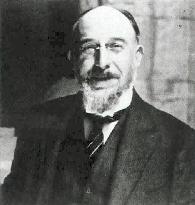
Erik Satie

Erik Satie born 17 May 1866 (d. 1925)

French composer and pianist Erik Satie, was a pioneer of classical music whose ideas were to have a tremendous influence on 20th century modernism.

A contemporary of Ravel and Debussy, he would later go on to work with Jean Cocteau to create the ballet Parade (1917) for the Ballet Russes, with set designs by Pablo Picasso and choreography by Leonide Massine. He knew, worked with or influenced most of the artists and writers and musicians who frequented Paris when it was the undoubted cultural hub of the world. Although sometimes credited with being the precursor of practically every avant-garde movement of the 20th century, he was genuinely influential in the fields of minimalism and ambient music, the use of prepared piano and music-to-film synchronisation.

Despite all this, he was an incredibly private and eccentric man - known to enter a room and sit without removing his hat, coat or gloves, and always with a brand-new umbrella. He is thought to have been homosexual because of the company he kept, but he appears to have mostly lived an asexual life.

After his funeral 1925, his friends entered the tiny room he had occupied for 27 years but had never allowed anyone else to enter. Apart from dust and cobwebs, they found huge quantities of umbrellas - many never used - as well as large numbers of unknown compositions hidden all over the room.

Labels: , , , , ,

Thursday, May 12, 2011

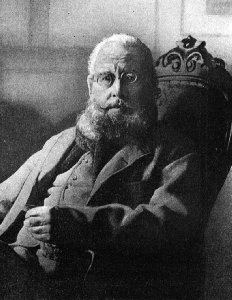
Edward Lear

Edward Lear born 12 May 1812 (d. 1888)

Although a talented illustrator and painter, Edward Lear is best known for his nonsense verse. His poetry demonstrates a defining love of eccentricity, verbal invention and poetic delight in the sound of words. His best known poem is The Owl & The Pussycat.

He enjoyed poor health most of his life, suffering from epilepsy, asthma, bronchitis, and in later life, partial blindness. Although there a few clues in some of his work, the clearest indications of his attraction to other men are in his letters and diaries of the 1850s-70s. However, his lack of any relationships beyond mere longing and the nature of his verse and ironically sad life have encouraged some critics to see him as a shy heterosexual or completely unsexual.

Labels: , , , , ,

Friday, May 06, 2011

Rudolph Valentino

Rudolph Valentino born 6 May 1895 (d. 1926)

Born Rodolfo Alfonso Raffaello Piero Filiberto Guglielmi di Valentina d'Antoguolla in Italy, he arrived in the US in 1913 and eventually became a taxi dancer and instructor, and eventually, an exhibition dancer. He made his way across the country to California, where he played a number of small parts in silent movies. He was impressive enough to be cast as the lead in The Four Horsemen of the Apocalypse (1921); the film was a success and made him a star. Later the same year, The Sheik made him a legend.

In 1926, he collapsed with a perforated ulcer; after an apparently successful operation peritonitis set in and 8 days later, the greatest romantic hero of the silent era was dead. He was just 31 and had been a star for a mere five years.

100,000 distraught women swarmed his funeral, and many rumours abound, but male audiences were offended by Valentino's extravagant dress, colourful spats, make-up, and willingness to display his body on screen. Valentino disrupted his era's rigid codes of sex and gender.

Although his legendary star status is assured, his legacy of work died with the silent film era and while he retains an extraordinary beauty, glamour and allure on screen, his body of work is insufficiently substantial to stand among cinematic greats - like his style of acting, Valentino's work is frozen in time and almost incomprehensible to modern viewers with the heavy make-up and exaggerated mime and melodrama of silent acting

Accused at the time of downgrading masculinity with his perceived effeminacy, time has not been kind and Valentino seems as camp now as then.

Valentino's sexuality remains ambiguous, but rumours of his homosexuality were rife among Hollywood gay circles, despite (or because of) his marriages to and divorces from Jean Acker and Natacha Rambova, both lesbian.

Labels: , , ,

Wednesday, April 20, 2011

Luther Vandross

Luther Vandross born 20 April 1951 (d. 2005)

Luther Ronzoni Vandross, Jr was probably the greatest male R&B singer of his generation. During his career, Vandross sold 25 million albums and won eight Grammys including Best Male R&B Vocal Performance four times. He won four Grammy awards in 2004 including the Grammy for Song of the Year for the track Dance With My Father.

Initially content to remain in the background as a backing singer and producer - he toured with David Bowie in 1974 and sang backing vocals on the Young Americans (1975) album - Vandross was encouraged to take centre stage by Roberta Flack, who thought he had a unique talent.

His breakthrough to major chart success came as lead singer with Change, and he went on to have a string of million selling hit solo albums, and successful collaborations with other artists, throughout the 80s and 90s.

During Vandross' entire career he was 'dogged' by questions regarding his sexuality. He never married, his name was never romantically linked in the media with women. Although Vandross never explicitly denied being gay, he never publicly acknowledged it either. He generally fielded questions by saying that his 'busy lifestyle' made marriage difficult and indicated that, in any case, 'it was not what he wanted.' Many gay publications have stated that Vandross' gayness was an 'open secret' in the music business, but even now it is rarely spoken of.

Vandross had diabetes, a disease that ran in his family, as well as hypertension. His weight fluctuated wildly throughout his career. His father, Luther Sr, died of complications from diabetes when Luther Jr. was eight years old. Luther Jr.'s two sisters and a brother also predeceased him. In 2003 Vandross suffered a stroke at his home in Manhattan. Although he appeared briefly on video at the 2004 Grammys to accept his Song of the Year award, he was otherwise never seen in public again. On the videotape on which Vandross appeared he sent an emotional message that said: 'Whenever I say goodbye it's never for long because I believe in the power of love.'

Vandross died in hospital on 1 July 2005 . He was just 54 years old and reportedly had never fully recovered from the 2003 stroke. It was reported that he died peacefully, surrounded by his family and friends.

Labels: , , ,

Friday, April 15, 2011

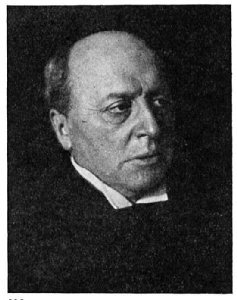
Henry James

Henry James born 15 April 1843 (d. 1916)

Henry James was born in New York City to a prominent intellectual American family, and was educated in a childhood split between Europe and the States.

James's writing career was long and prolific, producing around thirty novels and novellas in addition to huge numbers of short stories, travel sketches and critical essays. He is significant for his role in developing the novel, innovating the dramatic presentation of character and the use of interior monologue as narrative.

By the turn of the century, his popularity had waned, although he continued to produce good work - The Wings of the Dove (1902), The Ambassadors (1903) and The Golden Bowl (1904) are often considered his literary masterpieces.

James's sexuality remained a subject of debate for many years because of his well-known friendships with women; because many critics were unable to read his homosexuality into his work; and because in literary circles, while he was acknowledged to be homosexual in his interests, the common opinion was that he did not actually indulge.

More modern critics have reappraised his work and placed a different interpretation on his 'ambiguity'. It has also become clear that James enjoyed close relationships of a romantic, even erotic, nature with several young men of his acquaintance. It could also be that his place in the literary closet may have been down to Oscar Wilde, whose flamboyant sexuality he abhorred, and whose scandalous trial drove so much of gay society scurrying terrified for cover.

Comfortable in the cultural environment of Europe, Henry James settled in England in 1875. In 1914, James became heavily involved in the war effort in support of British troops and frustrated by the US government's reluctance to commit to WW1, became a British citizen in 1915. His health began to deteriorate soon after, and he died from a stroke in 1916 at his home in Rye.

Labels: , ,

Sunday, March 20, 2011

Lauritz Melchior

Lauritz Melchior born 20 March 1890 (d. 1973)

Born in Copenhagen, Denmark Lauritz Melchior was a boy soprano and amateur singer before starting operatic vocal training in 1908.
He became a professional opera singer in 1913, initially performing as a baritone. Between 1917 & 1918 he studied to become a heldentenor - a powerful tenor suited to heroic operatic roles.

In 1920, he came to England where he sang in an experimental radio broadcast for the Marconi company, and where he met a man who was to become patron and lover for several years - author Hugh Walpole. After his relationship with Walpole cooled he apparently enjoyed the company of a merchant seaman he shared with his friend, the American poet, Hart Crane. He also married.

Melchior began to master the major Wagnerian roles which were to become his trademark; through the 1920s he performed in most of the major concert halls and opera houses in the Western world, with most of the great sopranos and conductors of the age, but he is best known for his hundreds of Wagner performances as a member of the Metropolitan Opera company between 1926 and 1950.

He appeared in 5 Hollywood musicals for MGM and Paramount between 1944 and 1952, mostly in jovial singing grandfather roles. In 1947, his hand and footprints were immortalised in cement in the forecourt of Grauman's Chinese Theatre.

He unofficially retired in 1955, although he continued to make occasional singing appearances. In the late 1960s, he set up a fund through the Juilliard school for the training of heldentenors. He was married twice but is widely acknowledged to have batted for both teams. A household name in his day, he is not so widely remembered today, although many recordings of his performances are still available.

He died in Santa Monica, California in 1973. He had been an American citizen since 1947, but is buried in Copenhagen.

Labels: , , ,

Saturday, March 19, 2011

Sir Richard Burton

Sir Richard Burton born 19 March 1821 (d. 1890)

Captain Sir Richard Francis Burton KCMG FRGS was an English explorer, translator, writer, soldier, orientalist, ethnologist, linguist, poet, hypnotist, fencer and diplomat. He was known for his travels and explorations within Asia and Africa as well as his extraordinary knowledge of languages and cultures. According to one count, he spoke twenty-nine European, Asian, and African languages.

Burton's best-known achievements include travelling in disguise to Mecca, making an unexpurgated translation of The Book of the Thousand Nights and a Night (the collection is more commonly called The Arabian Nights in English) and the Kama Sutra and journeying with John Hanning Speke to discover the Great Lakes of Africa in search of the source of the Nile. He was a prolific author and wrote numerous books and scholarly articles about subjects including travel, fencing and ethnography.

He was a captain in the army of the East India Company serving in India (and later, briefly, in the Crimean War). Following this he was engaged by the Royal Geographical Society to explore the east coast of Africa and led an expedition which discovered Lake Tanganyika. In later life he served as British consul in Fernando Po, Damascus and, finally, Trieste. He was a Fellow of the Royal Geographical Society and was awarded a knighthood (KCMG) in 1886. Burton was considered a controversial figure in his day and, while some considered him a hero, others considered him a scoundrel.

Firstly, in a society where sexual repression was the norm, Burton's writing was unusually open and frank about his interest in sex and sexuality. His travel writing is often full of details about the sexual lives of the inhabitants of areas he travelled through and many of these details would have been shocking to the average Victorian. Burton's interest in sexuality led him to make measurements of the penis lengths of the inhabitants of various regions, which he includes in his travel books. He also describes sexual techniques common in the regions he visited, often hinting that he had participated, hence breaking both sexual and racial taboos of his day.

Allegations of homosexuality 'dogged' Burton throughout most of his life, a particularly serious accusation as it was a criminal offence in Victorian England. Biographers disagree on whether or not Burton ever experienced homosexual sex (he never directly admits to it in his writing but he would hardly be expected to). These allegations began in his army days when General Sir Charles James Napier requested that Burton go undercover to investigate a male brothel reputed to be frequented by British soldiers. It has been suggested that Burton's detailed report on the workings of the brothel may have led some to believe he had been a customer. His later writings on the subject of pederasty and the fact that he and his wife, Isabel, remained childless gave further ground for speculation.

Burton was a heavy drinker at various times in his life and also admitted to taking both hemp and opium. Friends of the poet Algernon Swinburne blamed Burton for leading him astray, holding Burton responsible for Swinburne's alcoholism and interest in the works of the Marquis de Sade.

He died after suffering a heart attack in Trieste in 1890. His wife ordered a marble monument for him shaped like a tent, in which he had spent so much of his life.

Sir Richard F Burton - glbtq encyclopedia

Labels: , , , , , ,

Sunday, February 20, 2011

William Lygon, 7th Earl Beauchamp

William Lygon, 7th Earl Beauchamp born 20 February 1872 (d. 1938)

William Lygon, 7th Earl Beauchamp KG, KCMG, PC, British politician, succeeded his father as Earl Beauchamp in 1891, and was mayor of Worcester at age 23. A progressive in his ideas, he was surprised to be offered the post of Governor of New South Wales in May 1899. Though good at the job, he was unpopular in the colony, and Beauchamp returned to Britain in 1900, where he joined the Liberal Party.

Beauchamp was Lord Steward of the Household to King Edward VII and was made a Privy Counsellor in 1906. He served in the Liberal Government as Lord President of the Council from June to November 1910, First Commissioner of Works from 1910 to 1914, Lord President again from 1914 to 1915, and was Liberal Leader in the House of Lords from 1924, supporting the failing party with his substantial fortune.

Beauchamp was made Lord Lieutenant of Gloucestershire in 1911, carried the Sword of State at the coronation of King George V, was made Lord Warden of the Cinque Ports in 1913 and a Knight of the Garter in 1914.

He was also Chancellor of London University, a Six Master (Governor of RGS Worcester) and Captain of the Honourable Corps of Gentlemen-at-Arms.

In 1931, he was 'outed' as homosexual (despite his 7 children) to the King and Queen by his violently-Tory brother-in-law, the Duke of Westminster, who hoped to ruin the Liberal Party through Beauchamp. Homosexuality was a criminal offence at the time, and the King was horrified, infamously observing, 'I thought men like that shot themselves'.

To those in the know Beachamp was notorious for his weakness for footmen, and his children would warn their male friends to lock their doors at night if they stayed at Madresfield, the family estate. His second son, Hugh Lygon, was a close friend, probably a lover, of Evelyn Waugh, and is generally accepted to be one of the main inspirations for Sebastian Flyte in Waugh's novel Brideshead Revisited.

There was no public scandal, but Lord Beauchamp resigned all his offices, except Lord Warden of the Cinque Ports, and went into exile on the Continent. He died of cancer in New York City, aged 66.

Lord Beauchamp is generally supposed to have been the model for Lord Marchmain (who was also outed by his brother-in-law) in Brideshead Revisited.

Labels: , , , ,

Thursday, February 03, 2011

Francis Douglas, Viscount Drumlanrig

Pictured with his brother Lord Alfred Douglas [left]
Francis Douglas, Viscount Drumlanrig born 3 February 1867 (d. 1894)

Francis Archibald Douglas, Viscount Drumlanrig was a Scottish nobleman and politician, the eldest son of the 9th Marquess of Queensberry.

He was educated at Harrow School and later served as a private secretary to the Liberal politician Lord Rosebery. Thanks to Rosebery's patronage, on 22 June 1893 he was raised to the Peerage of the United Kingdom as Baron Kelhead, of Kelhead in the County of Dumfries. This provided him with a seat in the House of Lords.

Drumlanrig's father served in Parliament from 1872 to 1880 as a representative peer, but in 1880 he refused, as an atheist, to take the religious oath of allegiance to the Queen. He was not allowed to take his seat and was never again chosen as representative peer by the Scottish nobles. His son's accession to Parliament as the 1st Baron Kelhead precipitated a bitter dispute between them and also between Queensberry and Lord Rosebery, who became Prime Minister in 1894.

In October 1894, eighteen months after his ennoblement, Drumlanrig died in what may have been a hunting accident or suicide. He was unmarried and his younger brother Lord Percy Douglas became heir to his father's titles.

It was speculated at the time, and evidence suggests that Drumlanrig may have had a homosexual relationship with Rosebery, and further, that Queensberry had threatened to expose the Prime Minister's supposed proclivities if his government did not vigorously prosecute Oscar Wilde in the affair stemming from Wilde's relationship with Francis Douglas's younger brother Lord Alfred Douglas. Rosebery was, by most accounts, happily married until the death of his wife in 1890, though gossip that Rosebery was homosexual or bisexual was indeed widespread. Queensberry believed that, as he phrased it to Lord Alfred in a letter, 'Snob Queers like Rosebery' had corrupted his sons, and held the Prime Minister indirectly responsible for Drumlanrig's death.

Labels: , , , , ,

Sunday, January 23, 2011

Randolph Scott

Randolph Scott born 23 January 1898 (d. 1987)

Randolph Scott was an American motion picture actor whose career spanned from 1928 to 1962.

As a leading man for all but the first three years of his cinematic career, Scott appeared in a variety of genres, including social dramas, crime dramas, comedies, musicals (albeit in non-singing and non-dancing roles), adventure tales, war films, and even a few horror and fantasy films. However, his most enduring image is that of the tall-in-the-saddle Western hero. Out of his more than 100 film appearances more than 60 were in Westerns.

Tall (6 ft 2 in), lanky, and handsome, Scott displayed an easygoing charm and courtly Southern drawl in his early films that helped offset his limitations as an actor, where he was frequently found to be stiff or 'lumbering'. As he matured, however, Scott's acting improved while his features became burnished and leathery, turning him into the ideal 'strong, silent' type of stoic hero. The BFI Companion to the Western noted:

In his earlier Westerns ... the Scott persona is debonair, easy-going, graceful, though with the necessary hint of steel. As he matures into his fifties his roles change. Increasingly Scott becomes the man who has seen it all, who has suffered pain, loss, and hardship, and who has now achieved (but at what cost?) a stoic calm proof against vicissitude.

During the early 1950s, Scott was a consistent box-office draw. In the annual Motion Picture Herald Top Ten Polls, he ranked tenth in 1950, eighth in 1951, and again tenth in 1952.

Following the making of Ride the High Country (1962), Scott retired from film making at the age of 64. Having made shrewd investments throughout his life, he eventually accumulated a fortune worth a reputed US$100 million.

During his retirement years he became friends with the Reverend Billy Graham. Scott was described by his son Christopher as being a deeply religious man. He was a Freemason and active in the York Rite. He was also an Episcopalian and a member of St Peter's Episcopal Church in Charlotte, NC, where he was buried.

Scott died at age 89 in Beverly Hills, California. He was interred in the Elmwood Cemetery in Charlotte, North Carolina.

Scott married twice. The first time, in 1936, he became the second husband of heiress Marion Du Pont. Reputedly the couple spent little time together and the marriage ended in divorce three years later.

In 1944, Scott married Patricia Stillman, with whom he adopted two children. The marriage lasted 43 years until Scott's death in 1987.

OK, so the first marriage sounds a little suspicious but what is Western hero Randolph Scott doing on Gay For Today?

Although Scott achieved fame as a motion picture actor, he managed to keep a fairly low profile with his private life. Off screen he became good friends with Fred Astaire and Cary Grant. He met Grant on the set of Hot Saturday and shortly afterwards they began rooming together in a beach house in Malibu that became known as 'Bachelor Hall'.

They would live together, on and off, for ten or more years, presumably because they liked each other's company and wanted to save on living expenses (they were both considered notorious tightwads), even if both were successful movie stars.

As Scott shared 'Bachelor Hall' with Cary Grant more than a decade, it was rumored that the two actors were romantically involved, and that the name 'Bachelor Hall' and the reported parade of women there were invented by the studio who wanted to keep their valuable actors away from any public scandal. In his book, Cary Grant: Grant's Secret Sixth Marriage, Marc Eliot claims Grant had a sexual relationship with Scott after they met on the set of Hot Saturday (1932).

In his book, Hollywood Gays, Boze Hadleigh, author of numerous books purporting to reveal the sexual orientation of celebrities, makes various claims for Scott's homosexuality. He cites gay director George Cukor who said about the homosexual relationship between the two: 'Oh, Cary won't talk about it. At most, he'll say they did some wonderful pictures together. But Randolph will admit it – to a friend.'

According to William J. Mann's book, Behind the Screen: How Gays and Lesbians Shaped Hollywood, 1910-1969, photographer Jerome Zerbe spent 'three gay months' in the movie colony taking many photographs of Grant and Scott, 'attesting to their involvement in the gay scene.' In 1995, Richard Blackwell published his autobiography From Rags to Bitches, where he declared he was lovers to both Cary Grant and Scott.

In 1944, Scott and Grant stopped living together but remained close friends throughout their lives. Both Grant and Scott consistently denied the allegations. Grant always vehemently denied being gay, and many of his friends have concurred over the years. Scott's adopted son, Christopher, also challenged the rumours. Following Scott's death, Christopher wrote a book entitled, Whatever Happened to Randolph Scott, in which he rebuts rumours of his father's alleged homosexuality. Scott's wife and daughter denied the rumours, too, as did many of Scott's close friends. Budd Boetticher, the director most often linked with Scott's work, had this to say about the rumors: 'Bullshit'.

Prior to and between his first and second marriages Scott was romantically linked with several prominent film actresses, including Lupe Velez, Sally Blane, Claire Trevor, and Dorothy Lamour.

The question is, I suppose, was Randolph Scott in enough Westerns to realise that there is no smoke without fire?

Labels: , , , ,

Wednesday, January 12, 2011

John Singer Sargent

John Singer Sargent born 12 January 1856 (d. 1925)

John Singer Sargent was the most successful portrait painter of his era, as well as a gifted landscape painter and watercolorist. Sargent was born in Florence, Italy to American parents.

Sargent studied in Italy and Germany, and then in Paris under Emile Auguste Carolus-Duran.

In the early 1880s Sargent regularly exhibited portraits at the Salon, and these were mostly full-length portrayals of women: Madame Edouard Pailleron in 1880, Madame Ramón Subercaseaux in 1881, and Lady with the Rose, 1882. Sargent's best portraits reveal the individuality and personality of the sitters; his most ardent admirers think he is matched in this only by Velázquez, who was one of Sargent's great influences.

Although Sargent was an American expatriate, he returned to the United States many times, often to answer the demand for commissioned portraits. Many of his most important works are in museums in the US. Sargent made numerous visits to the United States in the last decade of his life, including a stay of two full years from 1915-1917.

In a time when the art world focused, in turn, on Impressionism, Fauvism, and Cubism, Sargent practised his own form of Realism, which brilliantly referenced Velázquez, Van Dyck, and Gainsborough. His seemingly effortless ability to create portraits worthy of the masters but in a contemporary fashion led to a stream of commissioned portraits of remarkable virtuosity. Still, during his life his work engendered critical responses from some of his colleagues, who regarded his work as highly competent but overly traditional. By the time of his death he was dismissed as an anachronism, a relic of the Gilded Age and out of step with the artistic sentiments of post-World War I Europe. Foremost of Sargent's detractors was the influential English art critic Roger Fry, of the Bloomsbury Group, who at the 1926 Sargent retrospective in London dismissed Sargent's work as lacking aesthetic quality.

Despite a long period of critical disfavour, Sargent's popularity has increased steadily since the 1960s, and Sargent has been the subject of recent large-scale exhibitions in major museums, including a retrospective exhibition at the Whitney Museum of American Art in 1986, and a 1999 'blockbuster' travelling show that exhibited at the Museum of Fine Arts, Boston, the National Gallery of Art Washington, and the National Gallery, London.

Sargent was extremely private regarding his personal life, although the painter Jacques-Émile Blanche, who was one of his early sitters, said after his death that Sargent's sex life 'was notorious in Paris, and in Venice, positively scandalous. He was a frenzied bugger.' The truth of this may never be established. Some scholars have also suggested that Sargent was homosexual. He had personal associations with Prince Edmond de Polignac and Count Robert de Montesquiou. His male nudes reveal complex and well-considered artistic sensibilities about the male physique and male sensuality. However, there were many friendships with women, as well, and a similar sensualism informs his female portrait and figure studies - he was simply a very gifted painter. His career doesn't show the same kind of bias in subject matter as Henry Scott Tuke, for example. The likelihood of an affair with Louise Burkhardt, the model for Lady with the Rose, is accepted by Sargent scholars.

John Singer Sargent is interred in Brookwood Cemetery near Woking, Surrey.

Portrait of Madame X (1884) Metropolitan Museum of Art


Lady Agnew of Lochnaw (1892) National Galleries of Scotland


Ena and Betty, Daughters of Asher and Mrs Wertheimer (1901) Tate Gallery


Dr Pozzi at Home (1881) Hammer Museum


John Singer Sargent Virtual Gallery

Labels: , , ,

Sunday, January 09, 2011

Richard Halliburton

Richard Halliburton born 9 January 1900 (d. 1939)

Richard Halliburton was an American explorer, athlete, and author.

Halliburton was born in Brownsville, Tennessee and raised in Memphis. He attended the all-boys college preparatory school Memphis University School. He went to Princeton University and graduated but he was not a model student and soon found he didn't fit into a structured life, instead desiring spontaneity and adventure.

At Princeton, Field and Stream Magazine bought an article of his for $150, which encouraged him to lead an unpractical life of travelling and working through paid correspondence. He had marginal success as a writer at first, and tried talking about his travels on the public speaking circuit.

On March 3, 1939, Halliburton began a new journey in which he attempted to pilot a junk eastward across the Pacific. He departed from Hong Kong aboard a custom-built Chinese junk, intending to sail to San Francisco in time for the Golden Gate International Exposition. On March 24, a typhoon struck unexpectedly and Halliburton, his ship, and crew, failed to return (despite an extensive search, no trace was ever found).

While many of Halliburton's stories recount his own irresponsibility and document attitudes which today would almost universally be condemned as racist, his books continue to be of great interest for their romantic recountings of escapades ranging from making the first documented winter ascent of Mount Fuji to being the first and only person to swim the the length of the Panama Canal, registering as a ship and paying a toll of 36 cents, based on his weight of 140 pounds. In his first book of marvels, where the story of the Panama Canal is recounted, he also reenacted the ritual of Mayan sacrifice by diving into the well that virgins were thrown down through.

In his Second Book of Marvels, he stated, 'Astronomers say that the Great Wall is the only man-made thing on our planet visible to the human eye from the moon.' Although untrue, this statement was possibly source for the urban legend that the Great Wall of China could be seen from space. He also personally met the last emperor of China.

In The Royal Road to Romance, he recounted being arrested for taking photos of the guns at Gibraltar. Enamored of seeing a sunset from the Taj Mahal, he hid himself on the grounds and swam in a pool by moonlight.

Although he was a writer, Halliburton made more money from his public speaking engagements. He was a popular figure, handsome and romantic, and was renowned in the period between the two World Wars.

In his youth he courted girls and was seriously infatuated with at least two, as revealed by his letters to them. As he matured, he became bisexual, as observed by at least one travelling companion. Halliburton kept his sexual orientation secret from his public and his parents, who longed for grandchildren. His correspondence and his relations clearly offer this view of his orientation. He was a friend, and may have been a lover, of one of the first openly gay film stars, Ramon Novarro. A biographer of Novarro asserts that Halliburton chose Paul Mooney as crew for his fatal final voyage because the pair were lovers.

Halliburton commissioned a modernist house from William Alexander Levy, a 27 year old architect. Levy was lovers with Paul Mooney, Halliburton's editor and ghostwriter, and the house was built with three bedrooms, one for each of the men. The concrete box house, suspended between canyon and ocean in Laguna Beach, California, was soon dubbed 'Hangover House'. It was used under the name of the Heller House by Ayn Rand in The Fountainhead (1943).

Labels: , , , , ,

Wednesday, January 05, 2011

Richard Heber

Richard Heber born 5 January 1773 (d. 1833)

Richard Heber, an English book-collector, was born in London.

As an undergraduate at Brasenose College, Oxford, he began to collect a purely classical library, but his taste broadening, he became interested in early English drama and literature, and began his wonderful collection of rare books in these departments. He attended continental book sales, purchasing sometimes single volumes, sometimes whole libraries. Sir Walter Scott, whose intimate friend he was, classed Heber's library as 'superior to all others in the world'; Campbell described him as 'the fiercest and strongest of all the "bibliomaniacs"'.

He did not confine himself to the purchase of a single copy of a work which took his fancy. 'No gentleman,' he remarked, 'can be without three copies of a book, one for show, one for use, and one for borrowers.' To such a size did his library grow that it over-ran eight houses, some in England, some on the Continent. It is estimated to have cost over £100,000, and after his death the sale of that part of his collection stored in England realised more than £56,000. He is known to have owned 150,000 volumes, and probably many more. He possessed extensive landed property in Shropshire and Yorkshire, and was sheriff of the former county in 1821, was member of Parliament for Oxford University from 1821-1826, and in 1822 was made a DCL of that University. He was one of the founders of the Athenaeum Club, London.

According to Martin Greif's marvellous The Gay Book of Days, Heber was 'forced to leave England in exile after public disclosure of his "unnatural acts"', but corroboration of this has been hard to find.

Labels: ,

Friday, August 13, 2010

Gene Raymond

Gene Raymond born 13 August 1908 (d. 1998)

Gene Raymond, leading man of stage, film, and TV, singer, composer, writer, director, producer, decorated military pilot, and, for twenty-eight years, the first and only husband of singer Jeanette MacDonald.

A popular film actor in the 1930s and 40s, like many pre-war stars, his film career fell away after his military service but he enjoyed further success on television up until the 1970s, and was active behind the scenes in the industry with the Screen Actors Guild, the Academy of Television Arts and Sciences and other organisations.

Ten years after McDonald's death in 1965, he married for a second time and that marriage lasted until her death in 1995.

So, why is he here? A 2001 biography of Nelson Eddy and MacDonald, Sweethearts by Sharon Rich, says that Raymond had affairs with men during his marriage to MacDonald. The book includes documentation of Raymond being arrested on three occasions for sex with other men: a photo of Raymond's January 1938 arrest and booking number; a US Army nurse is named and quoted concerning the second arrest; while retired Scotland Yard detective Joe Sampson confirms the third arrest, which occurred in England during World War II.

The book also claims that Louis B. Mayer engineered the marriage of MacDonald to Raymond - even though Mayer knew Raymond was bisexual - to prevent MacDonald from marrying Eddy. Mayer was concerned that a MacDonald-Eddy marriage would end in divorce, due to their temperaments, then he would lose his lucrative box office team. Also, Eddy wanted children and preferred MacDonald to at least semi-retire, which didn't please the studio mogul. While Mayer blessed the MacDonald-Raymond union, he had Raymond blacklisted following his 1938 arrest.
... but the marriage lasted.

Labels: , , , ,

Saturday, July 24, 2010

Thomas Eakins

Thomas Eakins born 24 July 1844 (d. 1916)

Thomas Cowperthwaite Eakins was a painter, sculptor, photographer and fine arts teacher. He is associated with realism, and is often regarded as the father of American painting.

Raised and educated in Philadelphia, he studied art at the Pennsylvania Academy of Fine Arts, and then spent several years studying in Paris and Spain. He returned to the Pennsylvania Academy to teach in 1876, and in 1882 became its director. His teaching methods were controversial at the time, notably his interest in instructing his students in all aspects of the human figure, including the nude. Though there were tensions between him and the Academy's board of directors throughout his teaching career, he was ultimately fired in 1886 for removing the loincloth of a male model in a class where female students were present. The majority of Eakins's students liked his teaching methods and encouraged him to continue teaching them at Philadelphia's Art Students League.

Deeply influenced by his dismissal, his later painting concentrated on portraiture - usually of friends and family, and done with a realistic but psychological approach, rather than pure representation.

In the 1880s, Eakins became aware of the photographic motion studies of Eadweard Muybridge and enthusiastically embraced photography, making nude motion studies of his own and even developing a method of early motion capture. Photography also became an influence on his painting, although his photographs were then regarded as source material and a personal interest and not as art in themselves.

Eakins was unsuccessful as an artist in his lifetime, but has come to be regarded as one of the most influential and important figures in American painting. His work has also been significant for its homoeroticism, and his teaching methods, for his insistence on teaching men and women together and in the same way, which was ground breaking and controversial at the time.

Eakins was married and his sexuality remains a matter of dispute, but his body of nude work, his close friendship with Walt Whitman and his belief that a naked woman was the most beautiful form in nature - 'except a naked man', give some clues.

Probably Eakins' best known work The Swimming Hole (1884-5)

The Wrestlers (1889)

Photographic motion study (1884 or 5)

Labels: , , ,

Thursday, June 24, 2010

Rex Whistler

Rex Whistler born 24 June 1905 (d. 1944)

Rex Whistler, Reginald John 'Rex' Whistler. English Artist, designer and illustrator.

Rex Whistler was the son of Henry and Helen Frances Mary Whistler. He was sent to board at Haileybury in May 1919 where he began to show a precocious talent for art, providing set designs for play productions and giving away sketches to prefects in lieu of 'dates' (a punishment unique to Haileybury, similar to 'lines' but whereby offenders are required to write out long, set lists of historical dates).

After Haileybury the young Whistler was accepted at the Royal Academy but disliked the regime there and was 'sacked for incompetence'. He then proceeded to study at the Slade School of Art where he met The Honourable Stephen Tennant, soon to become one of his best friends and a model for some of the figures in his works. Through Tennant, he later met the poet Siegfried Sassoon and his wife Hester, to both of whom Whistler became very close.

Upon leaving the Slade he burst into a dazzling career as a professional artist. His work encompassed all areas of art and design. From West End theatre to book illustration (including works by Evelyn Waugh and Walter de la Mare, and perhaps most notably, for Gulliver's Travels) and mural and trompe l'oeil painting. Paintings at Port Lympne, Plas Newydd [detail below] and Dorneywood amongst others, show his outstanding talent in this genre.

During his time at Plas Newydd he may well have become the lover of the daughter of the 6th Marquess of Anglesey, the owner of the house who had commissioned him to undertake the decorative scheme. Whistler and Lady Caroline Paget are known to have become very close friends and he painted numerous portraits of her, including a startling nude. Whether this painting was actually posed for or whether it was how Rex imagined her naked is a matter of debate.


His most noted work during the early part of his career was for the Cafe at the Tate Gallery completed in 1927 when he was only 22. He was commissioned to produced posters and illustrations for Shell Petroleum and the Radio Times. He also made designs for Wedgwood china based on drawings he made of the Devon village of Clovelly. Whistler's elegance and wit ensured his success as a portrait artist among the fashionable and he painted many members of London society, including Edith Sitwell, Cecil Beaton and the other members of the set which he belonged to and which became known as the 'Bright Young Things'.

When war broke out, though he was 35, he was eager to join the army. He was commissioned into the Welsh Guards as Lieutenant 131651. His artistic talent, far from being a stumbling block to his military career, was greatly appreciated and he was able to find time to continue some of his work, including a notable self portrait in uniform now in the National Army Museum [pictured left]. In 1944 he was sent to France following the D-Day Landings.

In July he was with the 2nd (Armoured) Battalion in Normandy as the invasion force was poised to break out of the salient east of Caen. On a hot and stuffy 18 July his tank, after crossing a railway line, drove over some felled telegraph wires beside the railway, which became entangled in its tracks. He and the crew got out to free the tank from the wire when a German machine gunner opened fire on them, preventing them from getting back into their tank. Whistler dashed across an open space of 60 yards to instruct its commander to return the fire. As he climbed down from the tank a mortar bomb exploded beside him and killed him instantly, throwing him into the air. He was the first fatality suffered by the Battalion in the Normandy Campaign. The two free tanks of his troop carried out their dead commander's orders before returning to lay out his corpse beside a nearby hedge, after first having removed his personal belongings. Whistler's neck had been broken, but there was not a mark on his body. The troop was then immediately called away to act as infantry support. When that evening permission was obtained to locate and bury Rex Whistler, they found that this had already been done by an officer of the Green Jackets, a regiment in which Whistler's younger brother, Laurence (an acclaimed glass engraver and poet) was serving.

Later the body of Rex Whistler was moved to a grave in the Banneville-la-Campagne War Cemetery in Calvados, about two miles from the place where he was killed on his first day in action. His grave can still be found there today in the immaculately kept Military Cemetery.

Because he died relatively young and his art was more decorative than 'serious' and is far from fashionable now, there is little evidence either way on Rex Whistler's sexuality. However, he moved in very 'artistic' circles, never married and many of his closest friends certainly were gay - and most of his work is decidedly camp, draw your own conclusions.

Photograph of Rex Whistler by Cecil Beaton

Labels: , , , ,

Horatio Herbert (Lord) Kitchener

Horatio Herbert (Lord) Kitchener born 24 June 1850 (d. 1916)

He never married and appreciated porcelain, fine fabrics and interior decor, but it is disputed whether Horatio Kitchener was gay or was just more interested in empire than the opposite sex.

The hero of Sudan and the Boer war, whose portrait encouraged millions to enlist for the first world war, has been declared gay by several historians. Little was known about his sexual preferences, although a contemporary journalist remarked that Kitchener 'has the failing acquired by most of the Egyptian officers, a taste for buggery'. Source: The Guardian

Great moustache, great poster. His death in 1916 - the ship he was travelling on HMS Hampshire struck a mine near Scapa Flow on a diplomatic mission to Russia - was a momentous event to World War I Britain.

Naturally, conspiracy theories abound. His body was never recovered.

Labels: , , ,

Monday, January 18, 2010

Cary Grant

Cary Grant born 18 January 1904 (d. 1986)

Archibald Alexander Leach, better known by his screen name, Cary Grant, was an English film actor. With his distinctive mid-Atlantic accent, he was noted as perhaps the foremost exemplar of the debonair leading man, not only handsome, but also witty and charming. He was named the second Greatest Male Star of All Time of American cinema by the American Film Institute.

Archibald Leach was born in Bristol, England. An only child (before he was born his parents had had another son who died in infancy), Leach had a confused and unhappy childhood. His mother, Elsie, was placed in a mental institution when he was nine. His father told him that she was dead, and he only learned in 1935 that she was still alive, in an institution.

After being expelled from Fairfield Grammar School in Bristol in 1918 (for investigating the girls' bathroom), he joined the Bob Pender stage troupe.

Grant travelled with the troupe to the United States in 1920 for a two-year tour. When the troupe returned to England, Grant decided to stay in the US and continue his stage career. Over time, he created a unique accent and persona that mixed working and upper class accents, while supporting himself as, among other things, a hawker and a male escort for socialites.

After some success in light Broadway comedies, he came to Hollywood in 1931, where he acquired the name Cary Grant.

Grant starred in some of the classic screwball comedies, including The Awful Truth with Irene Dunne (the pivotal film in the establishment of Grant's screen persona), Bringing Up Baby with Katharine Hepburn, His Girl Friday with Rosalind Russell and Arsenic and Old Lace with Priscilla Lane. These performances solidified his appeal, and The Philadelphia Story, with Hepburn and James Stewart, presented his best-known screen role: the charming if sometimes unreliable man

Grant was one of Hollywood's top box-office attractions for several decades. He was a versatile actor, who did demanding physical comedy in movies like Gunga Din with the skills he had learned on the stage.

In the mid-1950s, Grant formed his own production company and produced a number of movies distributed by Universal, such as Operation Petticoat, Indiscreet, That Touch of Mink (co-starring Doris Day), and Father Goose.

While Grant was nominated for two Academy Awards in the 1940s, he was denied the Oscar throughout his active career as he was considered a maverick by virtue of the fact that he was the first actor to 'go independent', effectively bucking the old studio system, which pretty much completely controlled what an actor could or could not do. In this way, Grant was able to control every aspect of his career. The cost was no golden statuette during his active career. Grant finally received a special Academy Award for Lifetime Achievement in 1970.

In the last few years of his life, Grant undertook tours of the United States with 'A Conversation with Cary Grant', in which he would show clips from his films and answer audience questions. It was just before one of these performances, in Davenport, Iowa, on November 29, 1986, that Grant suffered a stroke, and died in the hospital a few hours later.

Grant's personal life was complicated, involving five marriages and speculation about his sexuality.

In 1932 he met fellow actor Randolph Scott on set, and the two shared a rented beach house (known as 'Bachelor Hall') on and off for twelve years. Rumours ran rampant at the time that Grant and Scott were lovers.

Authors Marc Elliot, Charles Higham and Roy Moseley consider Grant to have been bisexual, with Higham and Moseley claiming that Grant and Scott were seen kissing in a public car park outside a social function both attended in the 1960s. In his book, Hollywood Gays, Boze Hadleigh cites an interview with director George Cukor, who said about the alleged homosexual relationship between Scott and Grant: 'Oh, Cary won't talk about it. At most, he'll say they did some wonderful pictures together. But Randolph will admit it – to a friend.'

According to screenwriter Arthur Laurents, Grant was 'at best bisexual'. William J. Mann's book Behind the Screen: How Gays and Lesbians Shaped Hollywood, 1910-1969 recounts how photographer Jerome Zerbe spent 'three gay months' (his words) in the movie colony taking many photographs of Grant and Scott, 'attesting to their involvement in the gay scene'. Zerbe says that he often stayed with the two actors, 'finding them both warm, charming, and happy.' In addition, Darwin Porter's book, Brando Unzipped (2006) claims that Grant had a homosexual affair with Marlon Brando.

Many writers seem to have no doubt about the actor's bisexuality; Grant, however, did not identify himself as such. He had many gay friends, including Cukor, William Haines, and Australian artist and costume designer Orry-Kelly, but he is not alleged to have had relationships with them, well, with Haines, at least.

When Chevy Chase joked about Grant being gay in a television interview in 1980 ('Oh, what a gal!') Grant sued him and they settled out of court. Grant also complained to writer/director Peter Bogdanovich about the Chevy Chase incident, emphatically insisting that he was not gay, and that while he had nothing against homosexuals, he was simply not one himself (this exchange is cited at length in the chapter on Grant in Bogdanovich's 2005 book Who the Hell's in It?). Grant thought of the cottage industry of writers imagining him to be gay as merely a media echo chamber of falsehood. Also, it should be noted Grant had numerous heterosexual relationships throughout his life, marrying several times, and during the filming of The Pride and the Passion, he and Sophia Loren engaged in a passionate love affair.

Grant's first wife was actress Virginia Cherrill. They married on February 10, 1934, and divorced just over a year later on March 26, 1935.

After becoming a naturalised US citizen in 1942, he married ultra-wealthy socialite Barbara Hutton. The couple was derisively nicknamed 'Cash and Cary', though an extensive prenuptial agreement was signed before the marriage. However, when he and Hutton divorced in 1945, Grant refused to accept a money settlement from her and they remained friends.

Grant's third wife was actress and writer Betsy Drake. This was his longest marriage (1949 - 1962). In a 2004 interview for the Turner Classic Movies production, Cary Grant: A Class Apart, Drake mocked rumors of Grant's homosexuality. 'I didn't have time to think about his homosexuality,' she says, 'we were too busy fucking.'

His fourth marriage, to actress Dyan Cannon, on July 22, 1965, in Las Vegas, resulted in the birth of his only child, Jennifer, when he was 62. The marriage was troubled from the beginning (Grant was 61 and Cannon was 28), and they separated within 18 months, with Cannon claiming that Grant spanked her for disobeying him. The divorce, finalised on May 28, 1967, was bitter and messy, and the custody disputes over their daughter went on for years.

Grant married British hotel PR agent Barbara Harris (47 years his junior), on April 11, 1981, a marriage which lasted until his death.

Labels: , , , ,

Wednesday, November 19, 2008

Calvin Klein

Calvin Klein born 19 November 1942

American designer Calvin Klein has created an extraordinarily successful fashion empire through the simple and elegant design of his clothes and through his skilful employment of provocative advertising campaigns that are saturated with homoeroticism.

Born in the Bronx, New York, the son of a Jewish grocer, Klein taught himself to sketch and sew as a boy. His mother was an elegant and sophisticated woman who played an important role in shaping her son's fashion sense by taking him on trips to her dressmakers. His grandmother had the greatest influence on his budding career by teaching him to use a sewing machine.

Klein attended New York's Fashion Institute of Technology. After graduating in 1962, he worked for a Seventh Avenue coat and suit house. In 1968, with his childhood friend Barry Schwartz, he opened his own business, designing and selling women's coats.

Klein's emphasis in designing clothes has always been on modernity and simplicity, creating wearable outfits for both men and women.

In 1964, Klein married Jayne Centre, with whom he had a daughter, Marci. Klein and Centre were divorced in 1974.

During the late 1970s and early 1980s, Klein was a familiar face on the New York club scene. He was regularly seen at celebrity night spots, such as the now legendary Studio 54, accompanied by a loosely knit circle of friends, who included designers Halston and Giorgio di Sant'Angelo, artist Andy Warhol and his acolytes, and Bianca Jagger, among others.

Rumours of drug consumption and sexual excesses abounded, as did rumours that Klein had contracted AIDS. In fact, an Italian radio station announced his death from the disease. In May 1988, Klein revealed his drug addiction and checked into a drug rehabilitation clinic.

Rumours have circulated widely about Klein's sexuality. In their 1994 unauthorised biography, Obsession, Steven Gaines and Sharon Churcher alleged that he is bisexual. They said that he has a preference for 'straight boys' and that he is a member of a so-called 'Velvet Mafia' of millionaires who swap lovers.

In 1986, Klein wed a thirty-two-year-old worker from his design studio, Kelly Rector. The fact that the couple continued to live in separate apartments only added fuel to the rumours.

Klein developed his fashion empire by branching out from women's coats to sportswear, then developing a line of designer jeans, and launching successful fragrances in the 1970s and 1980s.

In 1982 Klein altered the way men viewed and bought underwear with the introduction of Calvin Klein underwear. This may be his biggest contribution to gay culture. To announce the launch of his men's white briefs, he erected an enormous billboard in New York's Times Square, featuring an overtly sexual image of a perfectly formed muscular man wearing nothing but white underwear.

Klein's billboard has been credited with heralding a new era in imagery of men in advertising and in precipitating a new fashion in men's underwear. This campaign ran just a few years before the revolution in men's magazine advertising that sexualised the male form as a hairless muscular object of desire.

The homoerotic appeal was enhanced by the use of photographs by Bruce Weber and Herb Ritts. By the beginning of the 1990s, Calvin Klein white cotton briefs were the most popular item of underwear for gay men, enhanced by the use of increasingly sexual images, such as the 1992 campaign featuring then rap star Marky Mark (Wahlberg).

In 1993 Klein created a breakthrough new concept in designer fragrance with the launch of cK One, a unisex fragrance designed to be worn by both men and women.

Advertising has played a major role in the success of Calvin Klein's many fashion enterprises. From the Richard Avedon advertisement for Calvin Klein jeans featuring a young Brooke Shields asking, 'You know what comes between me and my Calvin's? Nothing,' through the homoeroticism of the jeans insert in Vanity Fair shot by Bruce Weber, and the stylish black and white advertisements for the perfumes Obsession and Eternity, to the controversial 1995 campaign for cK Calvin Klein jeans that was quickly withdrawn after accusations of child pornography, Klein's advertising campaigns have been both provocative and enormously successful.

Commenting on the importance of advertising Klein himself stated that 'I think it starts with the product. Then you need to communicate what the product's about. We've done that efficiently.'

More than efficient, the advertising campaigns for Klein's products have made homoeroticism a staple of consumer culture in North America and Western Europe.

Labels: , ,