Tuesday, May 17, 2011

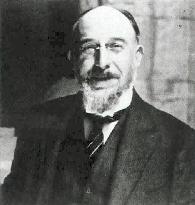
Erik Satie

Erik Satie born 17 May 1866 (d. 1925)

French composer and pianist Erik Satie, was a pioneer of classical music whose ideas were to have a tremendous influence on 20th century modernism.

A contemporary of Ravel and Debussy, he would later go on to work with Jean Cocteau to create the ballet Parade (1917) for the Ballet Russes, with set designs by Pablo Picasso and choreography by Leonide Massine. He knew, worked with or influenced most of the artists and writers and musicians who frequented Paris when it was the undoubted cultural hub of the world. Although sometimes credited with being the precursor of practically every avant-garde movement of the 20th century, he was genuinely influential in the fields of minimalism and ambient music, the use of prepared piano and music-to-film synchronisation.

Despite all this, he was an incredibly private and eccentric man - known to enter a room and sit without removing his hat, coat or gloves, and always with a brand-new umbrella. He is thought to have been homosexual because of the company he kept, but he appears to have mostly lived an asexual life.

After his funeral 1925, his friends entered the tiny room he had occupied for 27 years but had never allowed anyone else to enter. Apart from dust and cobwebs, they found huge quantities of umbrellas - many never used - as well as large numbers of unknown compositions hidden all over the room.

Labels: , , , , ,

Tuesday, May 10, 2011

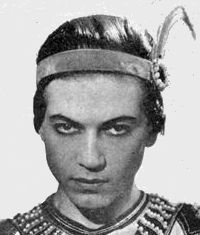
Léon Bakst

Léon Bakst born 10 May 1866 (d. 1924)

Léon Nikolayevich Bakst was a Russian painter and scene- and costume-designer who revolutionised the arts he worked in.

Léon Bakst was born as Lev (Leib) Rosenberg in Grodno (currently Belarus) in a middle-class Jewish family. After graduating from gymnasium (school), he studied at St Petersburg Academy of Arts as a non-credit student, working part-time as a book illustrator.

On his first exhibition (1889) he took the name of Bakst based on his maternal grandmother's family name, Baxter -  Rosenburg was considered too Jewish and not good for business. At the beginning of the 1890s he exhibited his works with the Society of Watercolourists. During 1893-1897 he lived in Paris, where he studied at the Académie Julian while still visiting St Petersburg often. After the mid-1890s he became a member of the circle of writers and artists formed by Sergei Diaghilev and Alexandre Benois, which later became the Mir Iskusstva art movement.

In 1899, he co-founded with Sergei Diaghilev the influential periodical World of Art. His graphics for the World of Art magazine brought him fame.

He continued easel painting as well producing portraits of Filipp Malyavin (1899), Vasily Rozanov (1901), Andrei Bely (1905) [pictured left], Zinaida Gippius (1906). He also worked as an art teacher for children of Grand Duke Vladimir Alexandrovich. In 1902 he took a commission from Tsar Nicholas II to paint Meeting of Russian sailors in Paris.

In 1898 he showed his works in the Diaghilev-organised First exhibition of Russian and Finnish Artists; in World of Art exhibitions, as well as the Secession in Munich, exhibitions of the Union of Russian Artists, etc.

After the end of the decade of the 1900s, Bakst worked mostly as a stage-designer. Bakst designed settings for Greek tragedies, and in 1908 made a name as a stage and costume designer for Diaghilev with the Ballets Russes (Cleopatra 1909, Shakherezada 1910, Carnaval 1910, Narcissus 1911, Daphnis et Chloé 1912). For this work, Bakst was to make a massive contribution in changing the visual vocabulary of theatre and dance.

During his visits to St Petersburg he taught in Zvantseva's school. One of his students was Marc Chagall (1908-1910).

In 1914 Bakst was elected a member of the Imperial Academy of Arts.

In 1918 he severed  his ties with Diaghilev and the Ballets Russes. He died in 1924 in Paris from lung problems.

Top right: Self-portrait by Leon Bakst. Bottom left: Portrait of Leon Bakst by Amadeo Modigliani


Design by Léon Bakst for Phedre and Theseus in 1923

Labels: , , , , , , ,

Wednesday, May 04, 2011

Lincoln Kirstein

Lincoln Kirstein born 4 May 1907 (d. 1996)

Lincoln Edward Kirstein was an American writer, impresario, art connoisseur, and cultural figure in New York City, famous less for his own artistic achievement than for his social influence.

Born in Rochester, New York, to a very wealthy Bostonian family, he was educated at Harvard, from which he graduated in 1930.

His interest in ballet and George Balanchine started when he had seen Apollo with the Ballet Russes. He became determined to get Balanchine to America. Together with Edward M. M. Warburg (a classmate from Harvard), they started the School of American Ballet in Hartford, Connecticut, in October 1933. The studio moved to the fourth floor of a building at Madison Avenue and 59th Street in New York City in 1934. Warburg's father invited the group of students from the evening class to perform at a private party. The ballet they did was Serenade, the first major ballet choreographed by Balanchine in America. Just months later Kirstein and Warburg founded, together with Balanchine and Dimitriev, The American Ballet.

During World War 2 Kirstein joined the Army and served in Europe. He worked with the division of Monuments, Fine Arts, and Archives, helping to recover stolen artwork from the Nazis. He was honorably discharged in 1946.

The American Ballet would become the resident company of the Metropolitan Opera, but this proved unsatisfactory because the Opera would not allow Balanchine and Kirstein artistic freedom. In 1946, Balanchine and Kirstein founded the Ballet Society, renamed the New York City Ballet in 1948. Together they made this one of the most innovative dance companies in the world.

His eclectic interests, ambition and keen interest in high culture, funded by independent means drew a large circle of friends which would stimulate creativity in many of the arts. These included: Glenway Wescott, Monroe Wheeler, George Platt Lynes, Pavel Tchelitchev, Katherine Anne Porter, Gertrude Stein, Cecil Beaton, Jean Cocteau, Jared French, George Tooker and far too many more to name.

[Lincoln Kirstein pictured right with Igor Stravinsky]

He was married in 1940 to Fidelma Cadmus, some say because he was in love with her brother Paul Cadmus. While his wife and he enjoyed an amicable relationship, he continued to pursue affairs with other men. The New York art world, considered his pursuit of men an 'open secret', although he did not publicly acknowledge his sexual orientation until 1982.

He was the primary patron of Cadmus and purchased many of his paintings and subsidised his living expenses. Cadmus had difficulty selling his work through galleries because of the erotically charged depictions of working and middle class men, which provoked great controversy.

Kirstein commissioned and helped to fund the physical home of the New York City Ballet: the New York State Theater building at Lincoln Center, designed in 1964 by gay architect Philip Johnson. Despite its conservative modernist exterior, the glittery red and gold interior recalls the imaginative and lavish backdrops of the Ballets Russes. He would serve as the general director of the ballet company from 1948 to 1989.

Kirstein and Balachine's collaboration lasted until Balanchine's death in 1983 [Kirstein and Balanchine pictured left].

President Ronald Reagan on March 26, 1984, presented him with the Presidential Medal of Freedom.

Kirstein was a great collector, and early in the history of the Dance Collection gave The New York Public Library for the Performing Arts a wealth of rare dance materials. Before his death in 1996, he donated all his papers, artworks, and other materials related to the history of dance and his life in the arts. These treasures in the Kirstein collection will be available to inform future generations pursuing the knowledge of dance.

He exerted his greatest influence in the 1940s. He also appears to have been excessively handsome. [Photo: George Platt Lynes]

Labels: , , , , ,

Saturday, April 02, 2011

Serge Lifar

Serge Lifar born 2 April 1905 (d. 1986)

Born in Kiev, Sergei Mikhailovich Serdkin was the last of Sergei Diaghilev's dancer-lovers. He used his looks, charisma and talent, fuelled by his fierce ambition to become one of the greatest dancers and choreographers of the 20th century.

He enrolled in the Kiev Opera Ballet at age 15, and in 1923, Diaghilev asked Bronislava Nikinska, his ballet teacher, to provide her five best students for the Ballet Russes. Nijinska, who was not keen on Lifar, did not select him but one of the five dropped out and Lifar lept at his chance.

Some say that Diaghilev was instantly drawn to the handsome 18 year-old dancer, others suggest that Lifar made sure Diaghilev noticed him, but his charm, persistance, whatever, paid off and he joined the list of Diaghilev star dancers/lovers in the footsteps of Nijinsky, Leonide Massine & Anton Dolin. This meant he was cast in leading roles and encouraged to choreograph, as Diaghilev had done before.

Given an inch of acclaim, Lifar kept taking so much that even the world-devouring Diaghilev became exasperated at his extreme ambition and self-promotion. By that point, however, Lifar was indispensable as a star and the only choice for plum roles such as Apollo in Balanchine's history-making Apollon musagète (1928) and the title role in Balanchine's The Prodigal Son (1929).

Lifar's own first ballet, Renard (1929, to a score by Igor Stravinsky), though energetic and athletic, proved to be no masterpiece. His later work, however, demonstrated that he had learned much from Diaghilev, Balanchine, and Stravinsky.

He was at Diaghilev's bedside when he died in 1929, but the maestro's death left the Ballet Russes in chaos. However, Lifar was invited to star in a production at the Paris Opera Ballet, to be choreographed by George Balanchine, but his illness saw Lifar taking his place and he successfully went on to become ballet master and director of the Paris Opera Ballet until 1957 - although he was accused of collaborating with the German High Command during the Occupation of Paris and banished between 1944 and 1947.

In Paris, he maintained the Diaghilev tradition, reviving not only Ballet Russes classics, but the fortunes of French ballet itself, developing the profile of male dancers and employing great choreographers - Balanchine, Massine and Frederick Ashton.

He remained a major figure in international ballet for the rest of his life and was, with Boris Kochno, Diaghilev's last love, the last of the line from the great Diaghilev. He died in Switzerland in 1986.

Labels: , , , ,

Saturday, March 19, 2011

Sergei Diaghilev

Sergei Diaghilev born 19 March 1872 (d. 1929)

Sergei Diaghilev was a Russian impressario and founder of the Ballet Russes. He is one of the most significant artistic figures of the early 20th century.

In 1905 he staged an exhibition of Russian portrait painting in St Petersburg, and the following year took a major exhibition of Russian art to Paris. He went on to present concerts of Russian music and opera in Paris, and this lead to the invitation which prompted him to create the Ballet Russes - with the most exciting young Russian dancers, among them Anna Pavlova and Vaslav Nijinsky. They were an instant success.

Diaghilev's contribution to the artistic growth and richness of his era was his dedication to the notion of 'total theatre', which saw him bring together not only the finest dancers, but commission exciting new music from Claude Debussy, Maurice Ravel, Erik Satie, Richard Strauss, Sergei Prokofiev, Francis Poulenc, Ottorino Respighi and Igor Stravinsky; he sought design contributions from Jean Cocteau, Pablo Picasso, Leon Bakst. He took ballet and made it exciting, cutting edge and gave it massive popular appeal - the Ballet Russes had a wide cultural effect. He fathered the rebirth of ballet through supporting pioneering choreography to dynamic and challenging new music, with astonishingly original set designs and costumes - erotic and exotic.

Initially choreographed by Michel Fokine, Diaghilev encouraged his lover and star dancer to choreograph for the Ballet Russes, and Vaslav Nijinsky duly rewrote the visual vocabulary of dance. Lovers from 1909 until 1913, when Nijinsky married and was briefly exiled, they were the most celebrated gay couple of their age.

Diaghilev had a series of relationships with his younger star dancers, but each was loving and long-term, and each was encouraged to grow artistically and each went on to make a huge contribution to ballet as choreographers and artistic directors. He not only loved them for their youth and beauty but in each he identified and nurtured their genius: Leonide Massine - one of the greatest 20th century choreographers; Anton Dolin - great British dancer; Serge Lifar - later director of the Paris Opera Ballet; and Boris Kochno - his last love who became an associate director of the Ballet Russes.

Other members of the Ballet Russes went on to found great ballets in the US and England - George Balanchine, Ninette de Valois, Marie Rambert.

Although he could be possessive and controlling, he inspired love and admiration, as his lovers' autobiographies bear witness. Stories that he corrupted Nijinsky and contributed to his mental illness are an innacurate re-write of history. Diaghilev created a massive gay-friendly international organisation of incredible creativity and influence, passionately committed to excellence and modernism; and his sexual relationships with men were central to that creative force. In fact, the enduring and fantastically creatively productive link between gay men and ballet - as performers, creators and audience - can be traced directly to Diaghilev.

He died in Venice, Italy in 1929 of complications from diabetes. Lifar, Kochno, and friends Coco Chanel, Misia Sert & Baroness Catherine d'Erlanger were at his bedside.

Labels: , , ,

Saturday, March 12, 2011

Vaslav Nijinsky

Vaslav Nijinsky born 12 March 1890 (d. 1950)

Probably the greatest male ballet dancer of all time, Nijinsky's two greatest achievements, assisted by his impresario lover Sergei Diaghilev, were to bring the role of the male dancer to the fore, and to revitalise a world of classical ballet which had entered a period of decline.

Born in Kiev, Ukraine to Polish dancer parents, he was admitted to the St Petersburg Imperial School of Ballet aged 10, where he received an excellent general education as well as a thorough grounding in classical ballet. He was a brillant student and on graduation joined the Imperial Ballet as a soloist in 1907.

He had two love affairs with two Russian noblemen, Prince Pavel Dmitrievitch Lvov and Count Tishkievitch but then he met Sergei Diaghilev and joined the Ballet Russes - history was in the making. He went with the company to Paris in 1909 and became an international star.

Diaghilev used all his considerable skill and flair to create ballets which showcased his star and lover's incredible sensuality, athleticism and charisma, such as Petrushka, Daphnis & Chloe and Le Spectre de la Rose . He also gave Nijinsky the freedom and encouragement to choreograph to his own extraordinary vision. He created four ballets in all - L'Apres-midi d'un faune (1912) , Le Sacre du Printemps (Rite of Spring) (1913), Jeux (1913) and Till Eulenspiegel (1916) - each so technically innovative that Nijinsky could be credited with creating modern dance. His ballets were equally groundbreaking for their explorations of sexuality and sensuality.

In 1913 he married a young Hungarian woman, Romola Pulszky, who had travelled throughout Europe in pursuit of her dieu de la danse, whilst on tour in Buenos Aires. Devastated by his betrayal, Diaghilev dismissed his star from the company leaving Nijinsky stranded with wife and child and no career - furthermore, it was the First World War and Nijinsky was a Russian citizen in Hungary, and technically a prisoner of war.

Diaghilev attempted a reconciliation with Nijinsky, inviting him to rejoin the Ballet Russes on more than one occasion, but relations between the two former lovers and Nijinsky's wife frustrated every attempt to recreate his former success.

In the later years of the First World War signs of Nijinsky's mental illness became increasingly obvious to his wife and colleagues. In 1919 he suffered a mental breakdown. Increasingly unhappy with his marriage, his ruined career, and a world in turmoil, Romola committed him to a mental institution where he was diagnosed with schizophrenia and subjected to years of drugs and experimental shock treatment. He became a broken man and spent the rest of his life drifting between institutions, even having to be rescued from one asylum when the Nazis began to inter the mentally ill. He died in London in 1950.

Some people are just too beautiful and extraordinary for life.


Labels: , , , ,

Monday, January 03, 2011

Boris Kochno


Boris Kochno born 3 January 1904 (d. 1990)

Boris Kochno was a Russian poet, dancer and librettist.

He was a lover of Karol Szymanowski while a schoolboy of fifteen in Elisavetgrad (now Kirovohrad) in 1919, where he received as a gift a Russian translation of the chapter The Symposium from Efebos, the composer's unpublished novel on male love. Szymanowski also dedicated four love poems to the youth.

In 1920 he became Sergei Diaghilev's secretary, librettist, and eventually main collaborator. They were also lovers until Diaghilev's death in 1929 at 57. Kochno wrote the libretto of Mavra (1921), the Fâcheux (1924), La Chatte (1927) and of le Fils prodigue(1929). He also had an affair with Cole Porter in 1925, with whom he carried on a lengthy correspondence.

Upon Diaghilev's death he and Serge Lifar tried but failed to hold the Ballets Russes together. The two inherited part of Diaghilev's archives and collections, which Kochno completed and part of which was acquired by the Bibliothèque Nationale de France. His later career included a position as Monte Carlo ballet director, where he became an influential figure in post-WWII French ballet. In 1933 he co-founded, together with George Balanchine, the short-lived company Les Ballets 1933, which made its debut that summer at the Théâtre des Champs-Élysées. At the end of WWII, Kochno entered into collaboration with Roland Petit, with whom he founded the Ballets des Champs-Élysées.

There are a number of published works by him. One, Diaghilev and the Ballets Russes, is a record of the Diaghilev era. The other, Christian Bérard, is a scrapbook of reminiscences about, and art of, his former friend and collaborator.

Labels: , , , ,

Tuesday, September 21, 2010

Pavel Tchelitchew

Pavel Tchelitchew born 21 September 1898 (d. 1957)

Pavel Tchelitchew was a Russian-born surrealist painter.

Tchelitchew was born near Moscow on the estate of his aristocratic family. He was educated by a series of French, German, and English governesses, who encouraged his interest in the arts.

His father, a follower of Tolstoyian principles, supported his desire to become a painter. In spite of his father's liberal views, however, the family was expelled from its property in 1918 following the revolution of 1917.

Tchelitchew joined the White army, and the family fled to Kiev, which was not yet under Communist control. While in Kiev he continued his studies and produced his first theatre designs.

By 1920 he was in Odessa, escaping the advancing Red armies. He went on to Berlin via Istanbul. There he met Allen Tanner, an American pianist, and became his lover. In 1923 they moved to Paris and Tchelitchew began painting portraits of the avant-garde and homosexual elite. His work was much admired and bought by Gertrude Stein.

In addition to becoming an accomplished painter, he also became one of the most innovative stage designers of the period and designed ballets for Diaghilev and the Ballets Russes in Paris.

His first US show was of his drawings, along with other artists, at the newly-opened Museum of Modern Art in 1930.

In 1934, he moved from Paris to New York City with his then partner, writer Charles Henri Ford. He and Ford were at the centre of a social world of wealthy, artistic homosexuals, such as Lincoln Kirstein, for whom he also designed ballets. He also designed for Balanchine's fledgling American Ballet.

From 1940 to 1947, he provided illustrations for the Surrealist magazine View, edited by Ford and writer and film critic Parker Tyler.

Tchelitchew's critical reputation declined in the 1950s and 1960s along with the decline of interest in figurative art.

In 1952 Tchelitchew became a US citizen, but shortly afterwards moved to Frascati, Italy. He suffered a heart attack in 1956 and died on July 31, 1957 in Rome, with Ford by his bedside.

[Centre picture: Charles Henri Ford reads as Tchelitchew paints Peter Watson's portrait]

Labels: , , , , ,

Monday, August 09, 2010

Leonide Massine

Leonide Massine born 9 August 1896 (d. 1979)

Born in Moscow, Leonide Massine was a Russian ballet dancer and choreographer.

Massine studied dance at the Bolshoi Theatre School. From 1915 to 1921, he was principal choreographer of Sergei Diaghilev's Ballet Russes, creating new work with composers such as Erik Satie and Stravinsky with sets and costumes by the likes of Picasso and Matisse. Following Nijinsky's departure, he became one of the principal male leads for the Ballet, as well as another of Diaghilev's string of prodigiously gifted lovers.

After Diaghilev's death, Massine kept the flame of the Ballet Russes burning through his involvement with the Ballet Russe de Monte Carlo - one of two ballet companies to rise from the ashes of Diaghilev's genius. He is established as one of the most important choreographers of the 20th century.

Massine appeared in two Powell and Pressburger ballet films The Red Shoes (1948) and The Tales of Hoffman (1952). He died in Cologne aged 82.

Labels: , , , ,

Friday, August 06, 2010

Richard Buckle

Richard Buckle born 6 August 1912 (d. 2001)

Christopher Richard Sandforth Buckle, better known as Richard Buckle, was a lifelong devotee of ballet, and a well-known ballet critic.

Buckle came from an army family. His father, a major, was killed in 1918 when Buckle was just two. His childhood was dominated by women, including his mother who lived until well into her 90s. He was educated at Marlborough, where he discovered that he was an aesthete, and went up to Oxford to read modern languages, but failed to obtain a scholarship and left after the first year.

Subsequently, he was sent to Heatherley's Art School, although by then he had already alighted upon his metier. In 1933, on Liverpool Street station, he saw a copy of Romola Nijinsky's biography of her husband. That changed his life. Seventeen years on, Buckle was to be one of the pall-bearers at the great dancer's funeral.

He founded the magazine Ballet in 1939, and revived it after the war (during which he served with the Scots Guards, being mentioned in despatches in 1944 during the Italy campaign). Between 1948 and 1955 he was ballet critic for The Observer.

He organised a number of highly successful exhibitions, including most notably one in 1954 on the life and work of Diaghilev, first at the Edinburgh Festival and then at Forbes House in London. He also organised the quatercentenary Shakespeare exhibition at Stratford-upon-Avon in 1964-5. His long series of exhibitions during the decade 1954 to 1964 were hugely innovative. They orchestrated an army of talents, from Cecil Beaton to David Hockney, from Leonard Rosoman to Nicholas Georgiadis. Their eventual impact on the staid world of art exhibitions and indeed on permanent museum display was considerable, even if never really acknowledged. Buckle was the first person to raise exhibition making of this kind to the level of an art form in its own right.

In 1967 he began to work to create a museum of the performing arts, and he was instrumental in the purchase from the sale of the remaining Diaghilev scenery the Picasso backcloth to the ballet Le Train Bleu. In 1973 the project merged with the old British Theatre Museum under the aegis of the Victoria & Albert museum and became the Theatre Museum in Covent Garden.

Richard Buckle's contribution to dance criticism was significant during a period when modern ballet style was emerging. He praised the Russian style which used the whole body and contrasted it unfavourably with the British style. He could be brutal and his criticism of the July 1951 production of the ballet Tiresias by the choreographer Frederick Ashton and composer Constant Lambert was particularly resented. However, his writing became uneven as drink got the better of him.

His health deteriorated and he had mental breakdowns in 1971 and 1976, and he had a heart attack in 1979. In 1976 he left London and settled in Wiltshire where he continued to write, and he produced two more autobiographies.

His publications include the most comprehensive biographies of Nijinsky (1971) and Diaghilev (1979), and he edited several books, including the autobiography of Lydia Sokolova and the selected diaries of Cecil Beaton.

He was appointed a CBE in 1979.

Labels: , ,

Tuesday, July 27, 2010

Anton Dolin

Anton Dolin born 27 July 1904 (d. 1983)

Anton Dolin was the stage name of Sydney Francis Patrick Healey-Kay, an English ballet dancer and choreographer.

Born in Slinfold in Sussex, the young Sydney Healey-Kay started his ballet studies in Brighton with Serafina Astafieva and Bronislava Nijinska. He worked as a child actor and when Sergei Diaghilev produced The Sleeping Princess in London in 1921, Dolin, under the name of Patrikief, was hired as a member of the corps de ballet. At this time Russia did not let their dancers emigrate to the West, so Diaghilev was forced to hire dancers from many countries and give them Russian names.

Dolin left the company after The Sleeping Princess only to rejoin the Ballets Russes in 1924 and was swiftly promoted to soloist. He created roles in Nijinska's Le Train bleu in 1924, and Balanchine's The Prodigal Son and Le Bal, both in 1929. Dolin became one of Diaghilev's lovers, in competition with Sergei Lifar and Boris Kochno, Diaghilev's secretary and librettist. Kochno accepted the situation and turned a blind eye to Diaghilev's other amours. It would be impossible to write about the male stars of the Ballets Russes without revealing that many of them were lovers of the great impresario. The competition between Dolin and Lifar lasted until Dolin left to form his own company with Vera Nemtchinova in 1927. During the brief existence of the Dolin-Nemtchinova company he choreographed Gershwin's Rhapsody in Blue and Chopin's Revolutionary Etude.

Dolin returned to Diaghilev's company in late 1927 and remained until Diaghilev's death in 1929. He then choreographed a number of musical revues and became co-founder of the Camargo Society in 1930. The Camargo Society was founded in London to further the cause of ballet. Dolin created the role of Satan in Ninette de Valois' Job in 1931, and during that same year he joined the Vic-Wells Ballet (later called Sadler's Wells and then The Royal Ballet).

Dolin became the first premier danseur with Ballet Theatre (now American Ballet Theatre) in 1940. For Ballet Theatre he restaged Swan Lake, Giselle, Princess Aurora, and choreographed Quintet, Pas de Quatre, Capriccioso, and Romantic Age. In 1935 Dolin and Alicia Markova founded the Markova-Dolin company which performed until 1938, and was reorganised in 1945.

Anton Dolin danced and choreographed for most of the major ballet companies in the West. Dolin was knighted in 1981 and was involved in ballet until he died in Paris on November 25, 1983.

Dolin wrote several books, including the autobiography Ballet Go Round (1938) and Alicia Markova: Her Life and Art (1953). For many years he lived with the ballet dancer John Gilpin.

Labels: , , ,