Wednesday, May 18, 2011

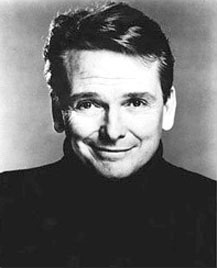
Pierre Balmain

Pierre Balmain born 18 May 1914 (d. 1982)

Pierre Alexandre Claudius Balmain was a French fashion designer. Known for sophistication and elegance, he said that 'dressmaking is the architecture of movement'.

Balmain's father, who died when the future designer was 7 years old, was the owner of a wholesale drapery business. His mother and her sisters operated a fashion boutique. After first studying architecture, he went to work for the fashion designer Edward Molyneux, for whom he worked from 1934 until 1939. He joined Lucien Lelong after World War II and opened his own fashion house in 1945. He collaborated closely with Christian Dior while working for Lelong.

He was a leading practitioner of the 'New French Style' (or 'New Look') of Paris couture following World War II and the 'Jolie Madame' style of the mid-1950s, but was not hemmed into the heavily draped and embroidered styles of his early designs, as he changed to structural, uncluttered designs in the 1960s. Balmain claimed that he, not Dior, deserved credit for the small-waisted, bell-shaped skirts that were a key component of the 'New Look'.

Balmain also created perfumes, including Vent Vert (1947), his first successful scent and one of the best-selling perfumes of the late 1940s and early 1950s, Jolie Madame (1953), Ivoire (1979), and Eau d'Amazonie (2006). His first perfume bore his company's address, Elysées 64-83.

Balmain was nominated for the Tony Award for Best Costume Design and won the Drama Desk Award for Outstanding Costume Design for Happy New Year (1980). Additional Broadway theatre credits include costumes for Katharine Hepburn in The Millionairess (1952) and Josephine Baker for her eponymous 1964 revue. He also was a costume designer for 16 films, including the Brigitte Bardot vehicle And God Created Woman, and designed on-screen wardrobes for the actresses Vivien Leigh and Mae West.

Balmain's 1964 autobiography was titled My Years and Seasons.

His companion was the Danish designer Erik Mortenson, who worked as a designer at Balmain from 1948 until 1991.

The house of Pierre Balmain has continued, first under the leadership of Erik Mortensen (of whom Pierre Balmain said 'He is more Balmain than me') and then to Herve Pierre, Oscar de la Renta, Laurent Mercier, and now Christopher Decarnin.

Labels: , , ,

Tuesday, May 10, 2011

Léon Bakst

Léon Bakst born 10 May 1866 (d. 1924)

Léon Nikolayevich Bakst was a Russian painter and scene- and costume-designer who revolutionised the arts he worked in.

Léon Bakst was born as Lev (Leib) Rosenberg in Grodno (currently Belarus) in a middle-class Jewish family. After graduating from gymnasium (school), he studied at St Petersburg Academy of Arts as a non-credit student, working part-time as a book illustrator.

On his first exhibition (1889) he took the name of Bakst based on his maternal grandmother's family name, Baxter -  Rosenburg was considered too Jewish and not good for business. At the beginning of the 1890s he exhibited his works with the Society of Watercolourists. During 1893-1897 he lived in Paris, where he studied at the Académie Julian while still visiting St Petersburg often. After the mid-1890s he became a member of the circle of writers and artists formed by Sergei Diaghilev and Alexandre Benois, which later became the Mir Iskusstva art movement.

In 1899, he co-founded with Sergei Diaghilev the influential periodical World of Art. His graphics for the World of Art magazine brought him fame.

He continued easel painting as well producing portraits of Filipp Malyavin (1899), Vasily Rozanov (1901), Andrei Bely (1905) [pictured left], Zinaida Gippius (1906). He also worked as an art teacher for children of Grand Duke Vladimir Alexandrovich. In 1902 he took a commission from Tsar Nicholas II to paint Meeting of Russian sailors in Paris.

In 1898 he showed his works in the Diaghilev-organised First exhibition of Russian and Finnish Artists; in World of Art exhibitions, as well as the Secession in Munich, exhibitions of the Union of Russian Artists, etc.

After the end of the decade of the 1900s, Bakst worked mostly as a stage-designer. Bakst designed settings for Greek tragedies, and in 1908 made a name as a stage and costume designer for Diaghilev with the Ballets Russes (Cleopatra 1909, Shakherezada 1910, Carnaval 1910, Narcissus 1911, Daphnis et Chloé 1912). For this work, Bakst was to make a massive contribution in changing the visual vocabulary of theatre and dance.

During his visits to St Petersburg he taught in Zvantseva's school. One of his students was Marc Chagall (1908-1910).

In 1914 Bakst was elected a member of the Imperial Academy of Arts.

In 1918 he severed  his ties with Diaghilev and the Ballets Russes. He died in 1924 in Paris from lung problems.

Top right: Self-portrait by Leon Bakst. Bottom left: Portrait of Leon Bakst by Amadeo Modigliani


Design by Léon Bakst for Phedre and Theseus in 1923

Labels: , , , , , , ,

Sunday, April 24, 2011

Jean Paul Gaultier

Jean-Paul Gaultier born 24 April 1952

Gaultier never received formal training as a designer. Instead, he started sending sketches to famous couture stylists at an early age. Pierre Cardin was impressed by his talent and hired him as an assistant in 1970.

His first individual collection was released in 1976 and his characteristic irreverent style dates from 1981, and he has long been known as the enfant terrible of French fashion. Many of Gaultier's following collections have been based on street wear, focusing on popular culture, whereas others, particularly his Haute Couture collections, are very formal yet at the same time unusual and playful.

Jean-Paul Gaultier produced sculptured costumes for Madonna during the nineties with her infamous cone-bra for her Blond Ambition Tour and designed the wardrobe for her Confessions Tour in 2006, as well. Gaultier has also worked in close collaboration with Wolford Hosiery. He promoted the use of skirts, especially kilts for men - with little lasting success.

Gaultier caused shock by using unconventional models for his exhibitions, like older men and full-figured women, pierced and heavily tattooed models, and by playing with traditional gender roles in the shows. This earned him both criticism and enormous popularity.

At the end of the 1980s, Gaultier suffered some personal losses, including his lover and business partner Francis Menuge, who died of AIDS-related causes.

Gaultier has designed costumes for many films, including Luc Besson's The Fifth Element, Pedro Almodóvar's Kika, Peter Greenaway's The Cook, the Thief, His Wife & Her Lover, and Jean-Pierre Jeunet's La Cité des enfants perdus (The City of Lost Children).

He currently designs for three collections: his own couture and ready-to-wear lines, as well as the newly relaunched clothing line for Hermès, a French leather goods company well-known for their equestrian background, scarves, and expensive and difficult to obtain handbags.

Gaultier has designed a number of the costumes and outfits worn by rocker Marilyn Manson, including the outfits for Manson's Golden Age of Grotesque album.

In addition to being a fashion designer, Jean-Paul Gaultier is known for a popular line of perfumes distinctively packaged in bottles referencing his love of corsetry for women and the matelot image for men.

Labels: ,

Thursday, March 24, 2011

Bob Mackie

Bob Mackie born 24 March 1940

Robert Gordon Mackie was born in Monterey Park California. He is a costume and fashion designer best known for his outrageous costumes for Cher [pictured below] cunningly constructed from little more than net, feathers and sequins.

He has won seven Emmys for his costumes for Cher, Carol Burnett and Mitzi Gaynor. He has been nominated for an Academy Award three times.

He has dressed a veritable who's who of fabulous divas old and new - Diana Ross, Judy Garland, Marlene Dietrich, Madonna, Barbra Streisand, Lucille Ball, Bette Midler, Tina Turner, Ann Margret, Liza Minnelli, Elton John, RuPaul, Eva Longoria Parker, Katy Perry, Pink & Barbie have all sparkled in his fabulous and imaginative creations.

Mackie also designed the memorable reation worn by Cher at the March 1986 Academy Awards [pictured]. Introduced by Jane Fonda with the words, 'Wait'll you see what's gonna come out here,' Cher was appearing as a presenter after what many considered an Oscar snub (Cher was not nominated for her performance in Mask). 'As you can see,' said Cher, 'I did receive my Academy booklet on how to dress like a serious actress.'

In the 1980s he launched his first ready to wear collections which have expanded to include knitwear, eveningwear, suits, eyewear, fragrances, bags, shoes, scarves, watches, jewellery & stationery. He also designs outfits for highly collectible (and camp) couture Barbie dolls.

More recently an American furniture company have produced a range of Mackie designs.

Labels: , ,

Friday, January 14, 2011

Cecil Beaton

Cecil Beaton born 14 January 1904 (d. 1980)

Sir Cecil Walter Hardy Beaton was an English fashion and portrait photographer and a stage and costume designer for films and the theatre.

When Beaton was growing up his Nanny had a Kodak 3A Camera, a popular model which was renowned for being an ideal piece of equipment to learn on. Beaton's nanny began teaching him the basics of photography and developing film. He would often get his sisters and mother to sit for him. When he was sufficiently proficient, he would send the photos off to London society magazines, often writing under a pen name and ‘recommending’ the work of Beaton.

Schooled at Heath Mount School (where he was bullied by Evelyn Waugh) and St Cyprian's School, Eastbourne, he went on to Harrow and finally St John's College, Cambridge, which he left without a degree. At the end of his college career in 1925, he set up his own successful photography studio. One of his earliest clients and, later, best friends was Stephen Tennant; Beaton's photographs of Tennant and his circle are considered some of the best representations of the 'Bright Young Things' of the twenties and thirties.

He was already taking photographs for the British edition of Vogue in 1931 when George Hoyningen-Huene, who was a photographer for the French Vogue travelled to England with his new friend Horst. Horst himself would begin to work for French Vogue in November of that year. The exchange and cross pollination of ideas between this collegial circle of artists across the Channel and the Atlantic gave rise to the look of style and sophistication for which the 1930s are known.

Beaton is best known for his fashion photographs and society portraits. He worked as a staff photographer for Vanity Fair and Vogue in addition to photographing celebrities in Hollywood.

Beaton was never known as a highly skilled technical photographer, and instead focused on staging a compelling model or scene and looking for the perfect shutter-release moment.

Beaton often photographed the Royal Family for official publication. Queen Elizabeth, the Queen Mother was his favorite Royal sitter. Beaton took the famous wedding pictures of the Duke and Duchess of Windsor. During World War II, he worked for the British Ministry of Information, as a documentary photographer.

Beaton had a major influence on and relationship with two other leading lights in British photography, Angus McBean and David Bailey. McBean was arguably the best portrait photographer of his era - in the second part of McBean's career (post-war) his work is clearly heavily influenced by Beaton, though arguably McBean was technically far more proficient in his execution. Bailey was also enormously influenced by Beaton when they met whilst working for British Vogue in the early 60's.

After the war, Beaton tackled the Broadway stage, designing sets, costumes, and lighting for a 1946 revival of Lady Windermere's Fan, in which he also acted.

His most lauded achievement for the stage was the sets and costumes for Lerner and Loewe's My Fair Lady (1956), which led to two Lerner and Loewe film musicals, Gigi (1958) and My Fair Lady (1964), both of which earned Beaton the Academy Award for Costume Design.

His last work for Broadway was sets and costumes for Coco (1969) starring Katharine Hepburn.

In 1972, he received his knighthood, but suffered a stroke two years later. This hindered him from photographing for five years. He picked up the camera again for a short while in 1979, but died the following year.

Though primarily homosexual — the great love of his life was the wealthy art collector Peter Watson - he did have relationships with women. Beaton also claimed to have had an affair with the American actor Gary Cooper, who was a close friend of his for many years.

Labels: , , , ,

Tuesday, November 24, 2009

Albert Wolsky

Albert Wolsky born 24 November 1930

Albert Wolsky is an American costume designer. He has worked both on stage shows as well as for film, and has received two Academy Awards.

Wolsky was born in Paris, France. He graduated from the City College of New York and began an early career in the travel industry. He decided to change careers and took an assistant's job with notable costume maker Helene Pons. Wolsky became a well regarded costume designer, working both on Broadway and in the motion picture industry.

Wolsky worked on many films including Harry and Tonto, The Turning Point, Grease and Manhattan. He worked with Bob Fosse, a leading Broadway director, on All That Jazz and won his first Academy Award. He won his second Academy Award for Bugsy in 1991 and has been nominated five other times, most recently for his work on Julie Taymor's Beatles-inspired musical Across the Universe (2007) and Sam Mendes's Revolutionary Road (2008).

He began his career as costume designer for the theatre by assisting costume designer Ann Roth on A Case of Libel (1963); he later assisted Roth on The Odd Couple (1965), Patricia Zipprodt on Fiddler on the Roof (1964), and Theoni Aldredge on Illya Darling (1967). His first work as lead costumer was Generation (1965). He went on to serve as principal costume designer for both plays and musicals, including The Sunshine Boys (1972) and Sly Fox (1976).

Wolsky is currently a Member of the Board of Governors of the Academy of Motion Picture Arts and Sciences.

He is the recipient of the 2010 TDF/Irene Sharaff Lifetime Achievement Award For Costume Design.

Labels: , , ,

Wednesday, December 31, 2008

Orry-Kelly

John Orry-Kelly born 31 December 1897 (d. 1964)

Orry-Kelly was the professional name of John Orry Kelly, a prolific Hollywood costume designer. Some sources cite his name as George Orry Kelly.

Born in Kiama, New South Wales in Australia, he grew up to study art there, becoming a tailor's apprentice and window dresser in Sydney.

He journeyed to New York to pursue an acting career. He shared an apartment there with Charlie Spangles and Cary Grant. A job painting murals in a nightclub led to his employment by Fox East Coast studios illustrating titles. He designed costumes and sets for Broadway's Shubert Revues and George White's Scandals.

He went to Hollywood in 1932, working for all the major studios (Warner Brothers, Universal, RKO, 20th Century Fox, and MGM), and designed for all the great actresses of the day, including Bette Davis, Olivia DeHavilland, Katharine Hepburn, Ava Gardner, Ann Sheridan, and Merle Oberon.

He worked on many films now deemed classic, including 42nd Street, The Maltese Falcon, Casablanca, Arsenic and Old Lace, Harvey, Oklahoma!, Auntie Mame, and Some Like It Hot.

He won three Academy Awards for costume design (for An American in Paris, Cole Porter's Les Girls, and Some Like It Hot) and was nominated for a fourth (for Gypsy).

A longtime alcoholic, he died of liver cancer in Hollywood, California and was interred in the Forest Lawn Memorial Park (Hollywood Hills).

Labels: , , , ,