Wednesday, May 18, 2011

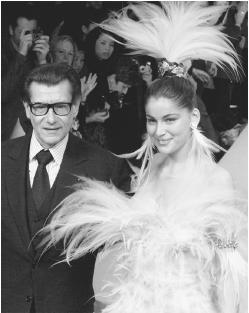
Pierre Balmain

Pierre Balmain born 18 May 1914 (d. 1982)

Pierre Alexandre Claudius Balmain was a French fashion designer. Known for sophistication and elegance, he said that 'dressmaking is the architecture of movement'.

Balmain's father, who died when the future designer was 7 years old, was the owner of a wholesale drapery business. His mother and her sisters operated a fashion boutique. After first studying architecture, he went to work for the fashion designer Edward Molyneux, for whom he worked from 1934 until 1939. He joined Lucien Lelong after World War II and opened his own fashion house in 1945. He collaborated closely with Christian Dior while working for Lelong.

He was a leading practitioner of the 'New French Style' (or 'New Look') of Paris couture following World War II and the 'Jolie Madame' style of the mid-1950s, but was not hemmed into the heavily draped and embroidered styles of his early designs, as he changed to structural, uncluttered designs in the 1960s. Balmain claimed that he, not Dior, deserved credit for the small-waisted, bell-shaped skirts that were a key component of the 'New Look'.

Balmain also created perfumes, including Vent Vert (1947), his first successful scent and one of the best-selling perfumes of the late 1940s and early 1950s, Jolie Madame (1953), Ivoire (1979), and Eau d'Amazonie (2006). His first perfume bore his company's address, Elysées 64-83.

Balmain was nominated for the Tony Award for Best Costume Design and won the Drama Desk Award for Outstanding Costume Design for Happy New Year (1980). Additional Broadway theatre credits include costumes for Katharine Hepburn in The Millionairess (1952) and Josephine Baker for her eponymous 1964 revue. He also was a costume designer for 16 films, including the Brigitte Bardot vehicle And God Created Woman, and designed on-screen wardrobes for the actresses Vivien Leigh and Mae West.

Balmain's 1964 autobiography was titled My Years and Seasons.

His companion was the Danish designer Erik Mortenson, who worked as a designer at Balmain from 1948 until 1991.

The house of Pierre Balmain has continued, first under the leadership of Erik Mortensen (of whom Pierre Balmain said 'He is more Balmain than me') and then to Herve Pierre, Oscar de la Renta, Laurent Mercier, and now Christopher Decarnin.

Labels: , , ,

Sunday, April 24, 2011

Jean Paul Gaultier

Jean-Paul Gaultier born 24 April 1952

Gaultier never received formal training as a designer. Instead, he started sending sketches to famous couture stylists at an early age. Pierre Cardin was impressed by his talent and hired him as an assistant in 1970.

His first individual collection was released in 1976 and his characteristic irreverent style dates from 1981, and he has long been known as the enfant terrible of French fashion. Many of Gaultier's following collections have been based on street wear, focusing on popular culture, whereas others, particularly his Haute Couture collections, are very formal yet at the same time unusual and playful.

Jean-Paul Gaultier produced sculptured costumes for Madonna during the nineties with her infamous cone-bra for her Blond Ambition Tour and designed the wardrobe for her Confessions Tour in 2006, as well. Gaultier has also worked in close collaboration with Wolford Hosiery. He promoted the use of skirts, especially kilts for men - with little lasting success.

Gaultier caused shock by using unconventional models for his exhibitions, like older men and full-figured women, pierced and heavily tattooed models, and by playing with traditional gender roles in the shows. This earned him both criticism and enormous popularity.

At the end of the 1980s, Gaultier suffered some personal losses, including his lover and business partner Francis Menuge, who died of AIDS-related causes.

Gaultier has designed costumes for many films, including Luc Besson's The Fifth Element, Pedro Almodóvar's Kika, Peter Greenaway's The Cook, the Thief, His Wife & Her Lover, and Jean-Pierre Jeunet's La Cité des enfants perdus (The City of Lost Children).

He currently designs for three collections: his own couture and ready-to-wear lines, as well as the newly relaunched clothing line for Hermès, a French leather goods company well-known for their equestrian background, scarves, and expensive and difficult to obtain handbags.

Gaultier has designed a number of the costumes and outfits worn by rocker Marilyn Manson, including the outfits for Manson's Golden Age of Grotesque album.

In addition to being a fashion designer, Jean-Paul Gaultier is known for a popular line of perfumes distinctively packaged in bottles referencing his love of corsetry for women and the matelot image for men.

Labels: ,

Saturday, April 23, 2011

Halston

Halston born 23 April 1932 (d. 1990)

Roy Halston Frowick, also known as Halston was an iconic clothing designer of the 1970s.

He was born in Des Moines, Iowa. He began his career as a milliner (designing the pillbox hat Jacqueline Kennedy wore to her husband's 1961 Presidential inauguration) and when he moved to designing women's wear, Newsweek dubbed him 'the premier fashion designer of all America'. His designs were worn by Bianca Jagger, Liza Minnelli, Anjelica Huston, Lauren Bacall and Elizabeth Taylor, setting a style that would be closely associated with the international jet set of the era.

As 'the first [American] designer to realise the potential of licensing himself,' his influence went beyond style to reshape the business of fashion. Through his licensing agreement with US retailer JC Penney, his designs were accessible to women at a variety of income levels. Although this practice is common today, it was a controversial move at the time and cost him more couture customers.

Despite his achievements, his increasing drug use - he enthusiastically embraced the jetset lifestyle of his celebrity friends and clients - and failure to meet deadlines (he was reluctant to hire junior designers to design licensed products) undermined his success. In October of 1984 he was fired from his own company and lost the right to design and sell clothes under his own name.

Halston was diagnosed with AIDS in 1988. He died of AIDS-related lung cancer in San Francisco, California on March 26, 1990.

According to Salon.com, Halston was 'the first international fashion superstar - and possibly the best designer America has ever had.'


In the Sister Sledge disco hit He's The Greatest Dancer Halston is memorably mentioned in a description of a well-dressed man: 'Halston, Gucci, Fiorucci - he looks like a still, the man is dressed to kill'.

Halton is often mentioned in songs, films and TV shows - usually as a yardstick for a certain kind of style.

The Halston label was resurrected in 2008 with London-based designer Marios Schwab.

Labels: , ,

Saturday, April 09, 2011

Marc Jacobs

Marc Jacobs born 9 April 1963

Marc Jacobs is an American fashion designer. He is the head designer for Marc Jacobs, as well as the diffusion line Marc by Marc Jacobs. Jacobs is currently the creative director of the prestigious French design house Louis Vuitton.

In 2009, Jacobs was ranked 15th on Out magazine's list of '50 Most Powerful Men and Women in America'.

In recent years Jacobs had increased his number of boutiques, diffusuion lines and fragrances making him now one of the world's leading designer names.

Jacobs is currently married to advertising executive Lorenzo Martone. In July of 2009, the couple held their wedding in Provincetown, Massachusetts.

Labels: , ,

Thursday, March 24, 2011

Bob Mackie

Bob Mackie born 24 March 1940

Robert Gordon Mackie was born in Monterey Park California. He is a costume and fashion designer best known for his outrageous costumes for Cher [pictured below] cunningly constructed from little more than net, feathers and sequins.

He has won seven Emmys for his costumes for Cher, Carol Burnett and Mitzi Gaynor. He has been nominated for an Academy Award three times.

He has dressed a veritable who's who of fabulous divas old and new - Diana Ross, Judy Garland, Marlene Dietrich, Madonna, Barbra Streisand, Lucille Ball, Bette Midler, Tina Turner, Ann Margret, Liza Minnelli, Elton John, RuPaul, Eva Longoria Parker, Katy Perry, Pink & Barbie have all sparkled in his fabulous and imaginative creations.

Mackie also designed the memorable reation worn by Cher at the March 1986 Academy Awards [pictured]. Introduced by Jane Fonda with the words, 'Wait'll you see what's gonna come out here,' Cher was appearing as a presenter after what many considered an Oscar snub (Cher was not nominated for her performance in Mask). 'As you can see,' said Cher, 'I did receive my Academy booklet on how to dress like a serious actress.'

In the 1980s he launched his first ready to wear collections which have expanded to include knitwear, eveningwear, suits, eyewear, fragrances, bags, shoes, scarves, watches, jewellery & stationery. He also designs outfits for highly collectible (and camp) couture Barbie dolls.

More recently an American furniture company have produced a range of Mackie designs.

Labels: , ,

Saturday, March 19, 2011

Julien Macdonald

Julien Macdonald born 19 March 1972

Julien Macdonald OBE is a Welsh fashion designer.

Born in Merthyr Tydfil, Macdonald was taught knitting by his mother, and soon became interested in design. He was also interested in a career as a dancer, but instead studied textiles at Brighton and went on to the Royal College of Art where he gained a Masters.

Soon after he graduated, Karl Lagerfeld recruited him to work for Chanel. He also worked freelance creating knitwear for Alexander McQueen.

In 2000, he was appointed as successor to Alexander McQueen as chief designer at the Paris Haute Couture house of Givenchy, and in 2001 he was named British Fashion Designer of the Year. His creations have been worn by stars such as Joely Richardson, Kylie Minogue, Geri Halliwell, Dame Shirley Bassey, Carmen Electra and Naomi Campbell.

He was also selected by British Airways to redesign their cabin and flight crew uniforms. He also acts as a judge on the British version of Project Runway, known as Project Catwalk, which is broadcast on Sky One. Macdonald was announced as in 2010 as a new judge on Britain's Next Top Model, alongside new host Elle Macpherson.

In June 2006 he was awarded an OBE in the Queen's Birthday Honours for services to fashion.

Macdonald has attracted much criticism for his extensive use of fur, including one incident in which he and Paris Hilton were flour-bombed. He has stated that fur provides the majority of his revenue and that his label would collapse were he not to use it. In February 2007, Macdonald was again criticised for the prominent use of fur in his autumn collection, causing further outrage when he claimed that, People who don't like fur can p*ss off. I love fur. It's a beautiful natural product from animals.'

Labels: ,

Thursday, March 17, 2011

Alexander McQueen

Alexander McQueen born 17 March 1969 (d. 2010)

Alexander McQueen CBE - born Lee Alexander McQueen - was an English fashion designer.

Born in the East End of London, the son of a taxi driver, McQueen started making dresses for his three sisters at a young age and announced his intention of becoming a fashion designer. McQueen left school at 16, landing himself an apprenticeship with Savile Row tailors Anderson and Shepherd, then working for Gieves & Hawkes and the famous theatrical costumiers Angels and Bermans.

Whilst on Savile Row, McQueen's clients included Mikhail Gorbachev and Charles, Prince of Wales. He also spent a period of time working for Koji Tatsuno before travelling to Italy and working for Romeo Gigli.

McQueen returned to London and applied to London's most prestigious fashion school, Central Saint Martins College of Art and Design to work as a pattern cutter tutor. Due to the strength of his portfolio he was persuaded by the Head of the Masters course to enroll on the course as a student. His graduation collection in 1991 was bought in its entirety by influential fashion stylist Isabella Blow, and was said to have persuaded McQueen to change his name from Lee to Alexander (his middle name) when he subsequently launched his fashion career.

McQueen's early runway collections developed his reputation for controversy and shock tactics (earning the title 'enfant terrible' and 'the hooligan of English fashion'), with trousers aptly named 'bumsters', and a collection entitled 'Highland Rape'. It has also been claimed that he was on income support and that he needed to change his name for his first show so that he could continue to receive benefit.

The president of LVMH, Bernard Arnault caused a stir when he instated McQueen as head designer at Givenchy in 1996, succeeding John Galliano. McQueen toned down his act at Givenchy, but continued to indulge his rebellious streak, causing controversy in Autumn 1998 with a show which included car-robots spraying paint over white cotton dresses, and double amputee model Aimee Mullins striding down the catwalk on intricately carved wooden legs. McQueen stayed with Givenchy until March 2001.

Some of Alexander McQueen's accomplishments include being one of the youngest designers to achieve the title British Designer of the Year, which he won four times between 1996 and 2003. He has also been awarded the CBE, as well as being named International Designer of the Year at the Council of Fashion Designer Awards.

December 2000 saw a new partnership for McQueen with Gucci Group acquiring 51% of the company, and McQueen serving as Creative Director. Plans for expansion have included the opening of stores in London, Milan, and New York, and the launch of his perfumes Kingdom, and more recently My Queen. He collaborated in recent years with Puma, MAC cosmetics and Samsonite. January 2006 heralded the birth of McQ – Alexander McQueen – a denim based ready to wear line (womenswear, menswear and accessories).

In summer 2000 McQueen married his twenty-four-year-old lover George Forsyth, a documentary filmmaker. The ceremony, which took place in Ibiza on a yacht owned by a friend of supermodel Kate Moss (who was also bridesmaid), was covered by the press in much the same way as any other celebrity wedding. The relationship however did not last

Alexander McQueen was found dead at his London home on 11 February 2010. McQueen had killed himself. He was just 40 and days away from presenting a new collection in Paris.

On 3 February, he wrote on his Twitter page that his mother had passed away the day before, adding: "RIP mumxxxxxxxxxxxxxxxxxxxxxxxxxxx." Four days later he wrote that he had had an 'awful week' but said 'friends have been great', adding: 'now i have to some how pull myself together'.

His death also came just three years after his close friend, Isabella Blow - who plucked him from obscurity and helped him become a star - killed herself.

Alexandra Shulman, editor of British Vogue, said Mr McQueen had influenced a whole generation of designers.

His initial London inquest confirmed that McQueen hanged himself in a wardrobe after leaving a note. Westminster Coroner's Court was told a post-mortem examination had said he had died due to asphyxiation and hanging. His final inquest on 28 April 2010 confirmed that McQueen hanged himself after taking a mix of cocaine, tranquillisers and sleeping pills, adding that he had a history of depression, anxiety and insomnia, had attempted suicide before and researched killing himself on the internet prior to his death.

Labels: , ,

Thursday, March 03, 2011

Perry Ellis

Perry Ellis born 3 March 1940 (d. 1986)

Perry Ellis was an American fashion designer.

Perry Edwin Ellis was born in Virginia. His father owned a fuel company, which enabled the family to live a comfortable middle-class life. Perry studied at the College of William and Mary, in Williamsburg, Virginia, and graduated with a degree in business administration in 1961. He enlisted in the United States Coast Guard reserve to avoid the military draft and after six months he enrolled at New York University, from which he graduated with a master's degree in retailing in 1963.

He then started out in department store retailing in the Richmond, Virginia area to gain experience in the fashion industry as a buyer and merchandiser. He later joined the sportswear company John Meyer in New York. In the mid-1970s, eventually, he was approached by his then employer, The Vera Companies to design a fashion collection for them. Soon after that, Ellis presented his first women's sportswear line, called Portfolio, in November 1976. Although he could not sketch, he knew exactly how the industry worked and proved a master of innovative ideas who created 'new classics' that American women longed for at the time.

Praised by critics as the ideal American sportswear designer of the time and loved by female consumers for his clean-cut yet casual style, Ellis, together with The Vera Companies' parent company, founded his own fashion house, Perry Ellis International, in 1978. He opened his showroom on New York's Seventh Avenue. As the company's chairman and head designer he later developed Perry Ellis Menswear Collection — widely successful, and marked by 'non-traditional, modern classics'. Step by step, he added shoes, accessories, furs and perfume that all bore his name. It became his trademark to skip down the runway at the end of his fashion shows.

Throughout the 1980s the company continued to expand and include various labels such as Perry Ellis Collection and Perry Ellis Portfolio. By 1982, the company had more than 75 staff. In 1984, Perry Ellis America was created in cooperation with Levi Strauss. In the early 1980s, wholesale revenues had figured at about $60 million. By 1986 that number had risen to about $250 million.

In November 1984, Barbara Gallagher, a Hollywood screenwriter and long-time Ellis friend, gave birth to Ellis' daughter Tyler Alexandra Gallagher Ellis.

Ellis' long-time partner Laughlin Barker since 1980, an attorney, became president and legal counsel for Perry Ellis International in 1981. Barker's health deteriorated seriously in the early 1980s and when he died on January 2, 1986, aged 37, it was said in a whisper that he had suffered from HIV and AIDS although officially only lung cancer was mentioned. 'It's been a difficult time for me', said Ellis of Barker's death in 1986: 'Laughlin was an extraordinary man, and I loved him. We worked together 24 hours a day, and he brought genius and humor to this business. We were together five years, and there was never an argument or a disagreement.'

Perry Ellis fell seriously ill during the mid-1980s. Initially, it was not said what he was suffering from although he had been treated for hepatitis in a previous year. At the Council of Fashion Designers of America (CFDA) annual awards ceremony in January of 1986 he had to be accompanied to the podium by an aide to receive his award.

On 8 May of that year, Ellis was not able to perform his traditional skip down the runway anymore and, looking shockingly gaunt and frail, had to be supported by two of his employees when he briefly appeared at the end of the runway. It was to be his last fashion show and he received standing ovations for it. Immediately after the show, he was admitted to New York Hospital-Cornell Medical Center where he fell into a coma and died two weeks later of viral encephalitis, an AIDS-related disease, on 30 May 1986. A memorial was held at the New York Ethical Culture Society on 12 June. Perry Ellis was dead at 46 and one of the first prominent American figures to succumb to AIDS.

In early 1986, Robert L. McDonald, a former film producer and close friend of Ellis, succeeded Barker as president of Perry Ellis International. After Ellis' death in May 1986, McDonald announced that under the terms of Ellis' will he had full control of the company in trust for Ellis' heirs. McDonald successfully guided the company through setbacks and challenges in the years to come. Recommended to McDonald by the fashion director of Bloomingdale's at that time, the young designer Marc Jacobs, who would start his own label in 1993 and become head designer of Louis Vuitton in Paris in 1997, designed for the house of Perry Ellis from 1988 to 1993. Isaac Mizrahi and Tom Ford both also worked for Perry Ellis early in their careers.

Since then, the company has changed hands several times but the Perry Ellis name survives and is now one of the top menswear brands in the US.

Robert McDonald died of AIDS in 1990 at the age of 45.

Labels: , , ,

Friday, February 04, 2011

Walter Van Beirendonck

Walter Van Beirendonck born 4 February 1957

Walter Van Beirendonck (born in Brecht, Belgium) is a Flemish fashion designer.

He graduated in 1980 from the Royal Arts Academy in Antwerp. Together with Dirk Van Saene, Dries van Noten, Ann Demeulemeester, Marina Yee and Dirk Bikkembergs they became known as the Antwerp Six.

Since 1983, he issues his own collections. They're inspired by the visual arts and literature, but also by nature, politics and ethnic influences. His unusual colour combinations and a strong graphic influence are characteristic of his collections. He also regularly uses non-standard models in his shows and editorial images.

In addition to designing his collections van Berirendonck involves himself in many projects: designing costumes for theatre, ballet and film, curating expositions, designing objects, think-thank for commercial projects and products, image-making for pop-groups, illustrating books, designing commercial collections...

In 1997, he designed the costumes for the U2 Popmart Tour. In 1999, he was awarded the honorary title of 'Cultural Ambassador of Flanders'.

In 2001, he was the curator for the exhibition Mode 2001 Landed-Geland in Antwerp.

waltervanbeirendonck.com Official Website

Labels: ,

Friday, January 21, 2011

Christian Dior

Christian Dior born 21 January 1905 (d. 1957)

Christian Dior was an influential French fashion designer. He was born in Normandy, France.

Born into a wealthy family, while growing up he spent much of his time in museums and galleries, but at his parents' insistence he studied political science at the École des Sciences Politiques.

After two years of military service Dior began his design career by selling sketches. Both before and after World War II (when he served in the south of France), Dior worked for a number of design houses. In 1946, backed by the textile manufacturer Marcel Boussac, he launched the House of Dior.

For his first collection in 1947, Dior created the extremely popular 'New Look'. In direct opposition to the 'manly and depraved' styles of the war period, the New Look celebrated femininity with rounded shoulders, cinched waists, and full bell skirts in luxurious fabrics. The New Look was considered revolutionary by the fashion press, but it was very popular and set the look of post-war women's fashion.

In the space of ten years Christian Dior created a fashion house whose name is famous worldwide. Each of his collections during this time was themed, and he was responsible for creating a whole series of new looks for women, including, for example, the short waistless sack dress or H-line (1954), the Y-line (1954), and the A-line (1955).

It was partly due to Dior's success that Paris was re-established as the capital of world fashion in the 1950s.

Dior also pioneered in the fashion world by setting up licensing agreements for furs, cosmetics, stockings, and accessories. These agreements assured Dior a world-wide presence and established policies that have since been much imitated.

In 1953 Dior hired Yves Saint Laurent as an assistant. After Dior's sudden death in Italy in October 1957, Saint Laurent became head designer and introduced the trapeze dress in his first collection.

Dior never married, and there were and continue to be rumours and speculation about his sexuality. When he first moved to Paris in the 1920s Dior was drawn to the artistic bohemian life of the city and became friends with artist Jean Cocteau.

Dior's sexuality has never been publicly disclosed and the issue is not mentioned in his autobiography published shortly before his death in 1957. The nearest he gets is in the penultimate chapter, 'Friendships and Frustrations', where he comments that he and Pierre Colle, the manager of a shop in the Rue Cambacérès in Paris where the surrealists exhibited, became 'intimate friends, for we both placed the same high value on friendship'.

The absence of any discussion of Dior's private life in his autobiography may constitute a kind of negative evidence of his presumed homosexuality, for it was difficult, if not impossible, for gay men in the public eye to come out in the first half of the twentieth century.

The House of Dior has continued to flourish under a series of chief designers. Marc Bohan replaced Saint Laurent when the latter was called up for military service in 1960; and in 1989 Italian Gianfranco Ferré took over from Bohan.

In 1990 the House of Dior was bought by luxury products manufacturer Moët Hennessy Louis Vuitton (LMVH). In October 1996, LMVH chairman and CEO Bernard Arnault moved the enfant terrible of English fashion, John Galliano, from another of LMVH's major holdings, the House of Givenchy, to serve as chief designer at Dior, a post he held with great success until he was controversially dismissed in February 2011.

Labels: ,

Sunday, August 29, 2010

Richard 'Mr Blackwell' Blackwell

Richard Blackwell born 29 August 1922 (d. 2008)

Richard Blackwell, born Richard Sylvan Selzer, in Brooklyn, New York was a fashion critic, journalist, television personality, artist, and former fashion designer known internationally as Mr Blackwell. He was the creator of the Ten Worst Dressed Women list, an annual awards presentation he unveiled in January of each year. He also published the 'Fabulous Fashion Independents' list and an annual Academy Awards fashion review, both of which received somewhat less media attention. His longtime companion, former Beverly Hills hairdresser, Robert Spencer, managed him. He wrote two books, Mr. Blackwell: 30 Years of Fashion Fiascos and an autobiography, From Rags to Bitches.

After a troubled and poverty-stricken childhood he began acting in theatre in his teens. After relocating to the West Coast in the 1930s he adopted the name 'Dick Ellis' and was signed by the studios to play small parts in movies. Howard Hughes changed his name to Richard Blackwell when he signed him to RKO. He went back to Broadway in 1944 but eventually left acting for a short stint as a Hollywood agent. He discovered a talent for design while making his client’s stage costumes.

The name, 'Mr. Blackwell' came in the late-1950s when he launched his clothing line. He was an important designer and during the 1960s he became the first in history to present his line on a television broadcast; and the first to make his line available for plus-size women. During the nearly two decade existence of the 'House of Blackwell', he was designer to Yvonne DeCarlo, Jayne Mansfield, Dorothy Lamour, Jane Russell and California first lady Nancy Reagan. During the 1980s the emerging drift toward casual wear brought an end to The House of Blackwell.

The first 'Ten Worst Dressed Women' list premiered in 1960, to moderate media success, but as the House of Blackwell became more successful, the list took off. By its third year every television and radio network and virtually all news services worldwide began to cover it. For more than forty years after first released, Blackwell annually spent a week after its publication on telephone interviews to fashion magazines, radio programmes and news networks. No star, celebrity or royal was immune to his scathing critique of their wardrobe. He on occasion included men in his lists. His lists have inspired many imitators and today's often cruel and judgemental view of celebrity fashion owes a debt to Mr Blackwell.

He was a pioneer in American television fashion and was a fixture in the medium throughout his career as a designer and critic.

In 2001, Blackwell was diagnosed with Bell’s Palsy which causes limited to severe paralysis of facial muscles and effects the use of the extremities and can effect eyesight as well. Although it is treatable it is incurable, however often it tends to clear up on it own. He was unable to unveil the 2000 list at a live news conference for the first time in its 40-year history and remained out of the public eye for six months. He came back for the 2001 Worst Dressed and continued his great work, awarding 2006's No 1 spot jointly to Britney Spears and Paris Hilton.

Blackwell died in Los Angeles in October 2008 of complications from an intestinal infection. He was 86.

Labels: ,

Friday, August 27, 2010

Tom Ford

Tom Ford born 27 August 1961

Tom Ford is an American fashion designer. He is well known within the fashion industry for his legendary turnaround of Gucci, one of the most influential fashion houses in the world.

Ford was born in Austin, Texas. After graduating from the Parsons School of Design in 1986, initially having studied architecture, he took design jobs with Cathy Hardwick and Perry Ellis. In 1990, he was recruited by Gucci to design women's ready-to-wear, and Ford later moved on to become the chief director for Gucci. Ford called french editor Carine Roitfeld and photgrapher Mario Testino and asked them to help him revamp the old fashioned house. His own film star looks probably helped re-invest Gucci with its lost glamour.

By 1999, Ford had helped propel Gucci into a fashion powerhouse. When Gucci acquired the house of Yves Saint Laurent, Ford was named the creative director of that label as well.

In 2004, Ford stepped down or was asked to step down from both of his positions, amid rumours he wished to direct films.

Following his departure from Gucci (and YSL), Ford opened the fashion house, Tom Ford. Ford began with accessories; his line of eyewear was the first to become successful. The Tom Ford line now covers menswear, beauty, eyewear, and both men and women's accessories. In 2006, he also established a fragrance line called Tom Ford Beauty.

In 2009, Ford made his film directorial debut with A Single Man, which was based on the novel of the same name by Christopher Isherwood. The film stars Colin Firth, Julianne Moore, Nicholas Hoult and Matthew Goode. The screenplay was adapted by Ford and David Scearce. Ford also produced the film, which premiered on September 11, 2009 at the 66th Venice International Film Festival and was nominated for a Golden Lion. Colin Firth, who plays the protagonist George, was awarded the Volpi Cup as Best Actor for his performance and was also nominated for an Academy Award, Golden Globe, Independent Spirit Award and Screen Actor's Guild award. He won the BAFTA for Best-Actor in a Leading role. Julianne Moore was nominated for Best Supporting actress at the Globes. Tom Ford was nominated for two Independent Spirit Awards in 2009 including Best First Feature and Best First Screenplay.

Ford's partner of nearly two decades, Richard Buckley, is a fashion and style journalist.

Labels: , ,

Friday, August 13, 2010

Domenico Dolce

Domenico Dolce born 13 August 1958

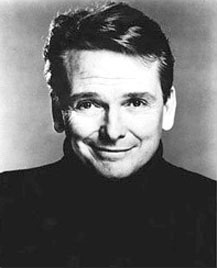
Domenico Dolce is an Italian fashion designer and half of the famous duo Dolce&Gabbana [Dolce pictured left].

Born in Polizzi Generosa a small village near Palermo, Sicily, Dolce studied fashion design in Sicily and worked in his family's small clothing factory.

Stefano Gabbana had no fashion education; he had studied graphic design. Dolce and Gabbana met in 1980 when they were working as assistants in an atelier in Milan. When they started business together in 1982, they continued to do freelance designing for others.

Their first collection in 1986 won international acclaim, and their first boutique opened in 1989 in Japan. In 1990 they presented their first men's collection and opened their first women's boutique in Milan. That same year, the duo began designing the Complice line for the Genny Group in Milan (Complice had been designed by Versace from 1975 to 1981, and then by Claude Montana until 1987.) Scarves, ties, beachwear, perfume, and accessories were added in 1992.

Dolce&Gabbana are on the same line of contemporary Italian couture houses as Armani, Gucci, Versace, Prada and Moschino. Sexy and glamorous, hugely popular with Hollywood and celebrities, Dolce&Gabbana have become one of the defining high-end fashion houses of recent years.

Dolce and Gabbana announced on 20 February 2005 that they would split up after 19 years, having been one of the world's most high-profile gay couples. Stefano Gabbana said that, 'This is a love split, not a business split'. Moreover he said, 'Domenico and I are still very good friends and, as for the working relationship, we are still very much together. Business, in fact, has never been better.'

Labels: , ,

Sunday, August 08, 2010

Rudi Gernreich

Rudi Gernreich born 8 August 1922 (d. 1985)

Rudi Gernreich was an Austrian-American designer and early gay activist.

Gernreich was born in Austria in 1922. He and his mother fled Hitler's growing power by emigrating to the US following the Anschluss of 1938. After studying art and a brief stint as a professional dancer, Gernreich began working in the fashion industry in the 1950s. While he achieved modest success, it was not until the swinging 1960s that his natural avant-garde tendencies were able to surface.

During the 1950s Gernreich made his mark in the fashion world by designing the first unstructured women's swimsuit, a form-fitting one-piece with no wire or other supports. In 1964 he one-upped himself with the topless bathing suit. Basically a classic one-piece women's swimsuit, Gernreich cropped it just above the waist and supported it with a V-shaped pair of thin, over-the-shoulder straps, thus exposing the breasts on either side.

Initially a purely artistic statement devised in response to both his own and rival Italian designer Pucci's predictions about the future of womenswear, the design became an unexpected commercial hit and international scandal. It took the exposure of female flesh pioneered by Mary Quant's mini-skirt to the next logical step and became a couture emblem of the 1960s sexual revolution.

Gernreich immediately followed up the success of his topless bathing suit with a more practical and permanent innovation: the no-bra bra. Instead of using rigid supports and padding, Gernreich conceived a soft, minimal skintone bra that went along with the often unstructured styles of the time, as well as with the many sheer fabrics and plunging necklines. Variations on this design are taken for granted as basic lingerie more than thirty years later.

Among Gernreich's other innovations was the use of cut-outs. In both swimwear and other designs he utilised provocative and erotic cut-out areas in the side, back, front, and elsewhere. Similarly, he sometimes used transparent plastics for the same effect, and was among a group of 1960s designers responsible for the integration of plastics and other new materials into clothing. Like many others in the 1960s, Gernreich exploited brilliant new colours and psychedelic patterns sometimes inspired by Op Art and other 1960s trends.

In the 1970s, Gernreich again became a controversial pioneer, this time for his exploration of unisex fashion, which he carried to an extreme by using identical clothing on totally hairless male and female models. In 1974 he designed what were - arguably - the prototypes of the thong swimsuits that became famous years later.

Ultimately, Gernreich was one of the great modernists of fashion design, always thinking about the future and making his clothes consciously futuristic both technically and stylistically.

Gernreich designed the Moonbase Alpha uniforms on the television series Space: 1999.

In some ways Gernreich was ahead of his time in his attitude about his homosexuality as well. On the one hand, he had to remain relatively closeted in accordance with the customs of the time. On the other hand, he never seemed to consider it much of an issue in the first place. Paradoxically, however, after his death it was revealed that Gernreich was actually a founding member of the Mattachine Society in the early 1950s.

Gernreich's participation in the pioneering homophile gay rights group was likely caused by his year-long relationship with radical activist Harry Hay in 1950-1951. He left the group when Hay did in 1953.

Gernreich's association with the Mattachine Society was kept quiet by Hay until the designer's death. However, the posthumous establishment of an endowment at the American Civil Liberties Union by the estates of Gernreich and his life-partner Oreste Pucciani, a Professor of French at UCLA, for the purpose of education and litigation in the area of gay civil rights, suggests an underlying political commitment to change that is equivalent to his more public innovations in fashion.

Labels: , , , ,

Sunday, August 01, 2010

Yves Saint Laurent

Yves St Laurent born 1 August 1936 (d. 2008)

Born in Algeria to French parents, Yves Saint Laurent had a difficult childhood. Although taunted at school, he found solace at home in his drawing and painting and occasional designs of dresses for his mother and two sisters.

He first came to the fashion world's attention when he was seventeen and studying in Paris. He won 1st prize in a dress design competition sponsored by the International Wool Secretariat.

When Christian Dior saw Saint Laurent's designs, he was so impressed that he offered the young man a job as an assistant and was soon referring to Saint Laurent as his 'dauphin'. When Dior died in 1957, Saint Laurent took over the house. His first collection for Dior in 1958 was greeted enthusiastically and his 1960 collection for Dior appropriated the Left Bank style, with black leather jackets, knitted turtlenecks, and crocodile jackets with mink collars. The fashion world watched with fascination as street fashion was redesigned at the hands of a couturier.

In the same year Saint Laurent was called up to fight in the Algerian war. When he was discharged several months later, he discovered that he had been replaced as head designer at Dior - so he created his own house.

Under his own name, Saint Laurent continued to produce elegant wearable clothes that drew on a huge range of influences and he successfully tapped into the vogue for androgynous dressing that spread throughout Europe and America in the mid-1960s. By feminising the basic shapes of mens fashion, he can be credited with transforming evening wear and the working woman's wardrobe - as Armani was to do again in the 1980s.

In 1993, Yves Saint Laurent , which was by now also a major perfume house, was sold to a major company and has changed hands a number of times since, becoming part of the Gucci NV group in 1999 with Tom Ford as designer and creative director for couture and Yves Saint Laurent Perfumes, as well as designer for the YSL Rive Gauche label.

In 1958, Saint Laurent met Pierre Bergé, who was at the time the manager and lover of the Parisian painter Bernard Buffet. At a weekend party Buffet met his future wife, and Saint Laurent and Bergé commenced a romantic relationship that lasted until 1976. After their breakup Bergé continued to serve as Saint Laurent's business manager and remained living in their jointly owned home until 1986.

Although his sexuality was hardly a secret in the fashion world, Saint Laurent did not publicly acknowledge his homosexuality until 1991, in an interview in the French daily newspaper Le Figaro.

Almost any other leading designer will cite him as their idol. Marc Jacobs refers to him as god. Tom Ford and Jean-Paul Gaultier called him their mentor.

In 2002, dogged by years of poor health, drug abuse, depression, alcoholism, criticisms of YSL designs, and 'problems' with lead designer Tom Ford, Saint-Laurent and Gucci closed the illustrious couture house of YSL. While the house no longer exists, the brand still survives through its parent company Gucci.

The pret-a-porter line is still being produced under the direction of Stefano Pilati after Tom Ford retired in 2004, while the boxer briefs sold all over the world still carry the brand name.

After his retirement, Saint Laurent became increasingly reclusive and spent much of his time at his house in Marrakech, Morocco. He died 1 June 2008 in Paris, aged 71, after a long illness.

Labels:

Saturday, July 17, 2010

Hardy Amies

Sir Hardy Amies born 17 June 1909 (d. 2003)

Sir Hardy Amies was for 48 years the Queen's official dressmaker. As a couturier he was known for his restrained, conservative, but beautifully tailored suits and dresses. He was also famed for his self-confessed snobbery.

Born in London, Edwin Hardy Amies was the son of a civil servant and a saleswoman at a firm that made clothing for members of the Court. After leaving school in 1927 he worked in France and Germany, where he became fluent in French and German. He returned to England in 1933 and was appointed designer at London's House of Lachasse. By 1935 he was managing director as well as chief designer. Lachasse closed in 1939 with the outbreak of World War II.

During the war, Amies served in the intelligence corps. He also continued designing clothes for the domestic market that conformed to the requirements of clothes rationing, as well as luxury couture to sell abroad.

On leaving the army in 1946 Amies bought a bombed out house at 14 Savile Row and set up his own couture house. In 1951 the then Princess Elizabeth asked Amies to design some day clothes for a tour of Canada. This was the beginning of a long and productive relationship.

In 1955 Amies became, by appointment, one of the new queen's dressmakers. He continued in this position until 1990 when he felt it was time for younger designers to dress the queen. In 1989, in recognition of his long service as the queen's dressmaker, he was made a Knight Commander of the Royal Victorian Order.

In addition to his royal duties, he was an influential couture and ready to wear designer, and occasionally designed for the stage and films - notably the costumes for Stanley Kubrick's 2001: A Space Odyssey.

In his old age Amies was relaxed about acknowledging his homosexuality, often referring to it in a witty (and somewhat bitchy) fashion. Speaking of his royal dressmaking rival Sir Norman Hartnell, he said, 'It's quite simple. He was a silly old queen and I'm a clever old queen.'

He lived quietly with one man for many years but, when he went out socially, the lover remained at home: 'It's just too common for two men to go around together,' he explained. He was, though, proud of the fact that he never lost his eye for youth and beauty.

Amies and his partner, Ken Fleetwood (who was design director of Hardy Amies Ltd), were together for 43 years until Fleetwood's death in 1996.

Portrait of The Queen by Cecil Beaton, wearing a dress designed by Hardy Amies for the State Visit to Germany, 1965. The portraits were taken for The Queen's birthday, 1969.
Image: © V&A Images/Victoria and Albert Museum

Labels: ,

Tuesday, June 22, 2010

Bill Blass

Bill Blass born 22 June 1922 (d. 2002)

William Ralph 'Bill' Blass was an American fashion designer, born in Fort Wayne, Indiana. He is known for his tailoring and his innovative combinations of textures and patterns. He is the recipient of many fashion awards, including seven Coty Awards and the Fashion Institute of Technology's Lifetime Achievement Award (1999).

Bill Blass was the son of a dressmaker and a travelling hardware salesman. His father committed suicide when Bill was five, and afterwards Bill found refuge in the arts.

In his autobiography Blass wrote that the margins in his school books were filled with sketches of Hollywood-inspired fashions instead of notes. At fifteen, he began sewing, selling evening gowns for $25 each to a New York manufacturer. At 17 he had saved up enough money to move to Manhattan and study fashion. He excelled in his fashion studies immediately and at 18 was the first male to win Mademoiselle’s Design for Living award. He spent his salary of $30 a week on clothing, shoes, and elegant meals.

In 1942 Blass enlisted in the army. He was assigned to the 603rd Camouflage Battalion with a group of writers, artists, sound engineers, theatre technicians, and other creative professionals. Their mission was to fool the German Army into believing the Allies were positioned in fake locations. They did this by using recordings, dummy tanks, and other false materials.

Blass began his New York fashion career in 1946. He was a protégé of Baron de Gunzburg - an influential fashion editor at Vogue and Harper's. In 1970, after two decades of success in menswear and womenswear, he bought Maurice Rentner Ltd., which he had joined in 1959, and renamed it Bill Blass Limited. Over the next 30 years he expanded his line to include swimwear, furs, luggage, perfume, and chocolate. By 1998, his company had grown to a $700-million-a-year business.

Blass’s designs are best known for being wearable. In a time when other designers were designing clothes which were known more for being a work of art, Blass was designing clothing which even everyday women could wear day or night.

In New York, Blass is also remembered as a generous and influential supporter of AIDS treatment services since the late 1980s and was a major donor to Gay Men's Health Crisis at a time when prominent people were silent about AIDS.

In 1999 Blass sold Bill Blass Limited for $50 million and retired to his home in New Preston, Connecticut. Blass was diagnosed with oral/tongue cancer in 2000, not long after he began writing his memoirs. His cancer later became throat cancer and caused Blass's death in 2002. He died six days after completing his memoir, Bare Blass.

Blass was a connoisseur of antiquities, and his will bequeathed half his $52 million estate, as well as several important ancient sculptures, to the Metropolitan Museum of Art.

Labels: , ,

Saturday, June 12, 2010

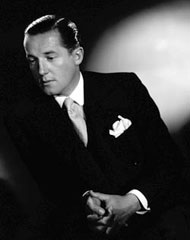
Norman Hartnell

Sir Norman Hartnell born 12 June 1901 (d. 1979)

Sir Norman Bishop Hartnell, KCVO, was an English fashion designer appointed dressmaker to the British Royal Family in 1938. In addition to his royal work, Hartnell was a successful and influential couturier who defined smart and glamorous dressing for British post-war high society.

Educated at Brighton College before studying Architecture at Cambridge University, he opened his own business in 1923 and became known for his elaborate and intricately decorated gowns. Hartnell designed the dresses worn by Queen Elizabeth II on her marriage to Prince Philip, Duke of Edinburgh in 1947, and her coronation in 1953. He also designed dresses for Elizabeth, The Queen Mother and Queen Mary.

The dress designed for the Queen's wedding contained 10,000 seed pearls and many thousands of white crystal beads. For its display in 2003 for the anniversary of the coronation of Her Majesty The Queen, ten restorers worked on it. In the embroidery, various symbols for different countries of the Commonwealth can be seen, such as the Scottish thistle, Australian wattle, the maple leaf of Canada and the pearly lotus flower for India.

Hartnell also designed Queen Elizabeth the Queen Mother's famous 'White Wardrobe' for her 1938 State Visit to France with her husband King George VI. On the death of Queen Elizabeth's mother, the Countess of Strathmore, Hartnell remade the Queen's entire wardrobe in white, resurrecting the ancient French usage of white as royal mourning.

Hartnell moved in theatrical circles, counting famed photographer Cecil Beaton and dandy and socialite Bunny Roger as close friends. His autobiography, released in 1955, was entitled Silver and Gold and reveals little of his personal life as one might expect. As they say, he never married.

On 11 May 2005, Hartnell was commemorated with an English Heritage Blue Plaque at 26 Bruton Street, London W1, where he lived and worked from 1935 to 1979.

Labels:

Wednesday, June 09, 2010

Ossie Clark

Ossie Clark born 9 June 1942 (d. 1996)

Raymond 'Ossie' Clark was an English fashion designer who was a major figure in the Swinging Sixties scene in London and the fashion industry in that era. As a result, Ossie Clark is now extremely well renowned for his vintage designs, the contemporary fashion era being characterised by past influences and a retro feel to design.

Clark is compared to the 1960s fashion greats Mary Quant and Biba. Ossie Clark was a key figure in the world of photographers, designers, rock stars and other celebrities who took London by storm in the 60s and 70s. The famous and the fashionable wore Ossie Clark’s designs including Marianne Faithfull, Jimi Hendrix and Patti Boyd. He created jumpsuits for Mick Jagger, silk dresses for Bianca Jagger and dressed Eartha Kitt in snakeskin.

Ossie Clark is featured in David Hockney's 1970 painting Mr and Mrs Clark and Percy [pictured below]. It now hangs in the Tate Britain gallery on Millbank and is one of the most visited paintings in Britain. His diaries, which he began in 1971, were published posthumously by his close friend Lady Henrietta Rous in 1998 as The Ossie Clark Diaries. A retrospective of his work was held at London's V&A museum in 2003.

Born in Warrington, Lancashire, Raymond Clark's parents, moved to Oswaldtwistle during the war, hence his nickname, 'Ossie'. Young Ossie would make clothes for his nieces and nephews. He practiced tailoring clothing on his dolls and designed swimsuits for the neighbourhood girls when not yet ten years old. The art teacher at Ossie's secondary school recognised Ossie's creative flair and gave him a large collection of Vogue and Harper's Bazaar magazines. Clark poured over these magazines and took in all the glamour and cutting-edge fashion.

Soon after leaving school, Clark attended the Regional College Of Art in Manchester at age sixteen. Ossie had to get up very early in the morning to make the long trip from home to college each day. His mother would give Ossie prescribed pills to keep him awake and alert. This would be the start of a life-long addiction to both prescribed and illegal drugs.

While attending college in Manchester, Clark was introduced to Celia Birtwell by a close friend and classmate. The pair started out as just good friends but that friendship soon developed into a love affair. Ossie also became good friends with artist David Hockney during this period. Clark and Hockney took a inspirational trip to New York together while still at college where they made many valuable connections in the fashion, art, and entertainment communities. The friends are widely rumoured to have been lovers with a volatile relationship.

Clark graduated in 1958 and then attended the Royal College of Art in London and achieved a first-class degree in 1965. While attending college in London Celia Birtwell came to live with Ossie in his small Notting Hill flat. Ossie's degree fashion show at the RCA was a huge success. At this time Ossie's design style was heavily influenced by Pop Art and Hollywood glamour. The final line-up featured a dress with flashing lightbulbs down the front which was shown in every major newspaper and fashion publication the following day. In August that year he had his first feature in British Vogue.

He quickly began to make his mark in the fashion industry, with Alice Pollock's exclusive boutique Quorum featuring his designs in 1966. Ossie had met Pollock at a party on the King's Road and so taken with the young designer was she that she immediately ordered a whole collection of dresses for her boutique. Ossie presented a collection of white and cream chiffon garments that sold fast. Pollock wanted Clark's clothes to have a more organic feel and so commissioned Celia Birtwell to produce special textiles for the next collection. In this way, one of fashions most famous collaborations was born: with Osssie Clark designing clothes and Celia Birtwell desiging prints. This partnership would last for almost all of Clark's career in fashion.

The period from 1965 to 1974 is regarded as his zenith, during which time he had many famous clients.

In the late 1960s, Clark hit a rich vein for his flamboyant clothing range. The fashion press dubbed Ossie 'The King Of King's Road'. Clark launched his menswear line in 1968, which reflected the period's more relaxed attitude to male dressing. Clark's great idol was the famous dancer Nijinsky and his love of dance inspired his clothes to be free moving and not to restrict the female form. This style of dressing became quite popular in the 1970s thanks in large part to the popularity of Clark's clothing. Ossie Clark is well known for his use of muted colours and moss crepe fabric.

Celia would work up several prints of her own design and liking, with no imput from Ossie as to their colour or design. The prints were usually based upon Birtwell's interpretations of the natural world. Clark would then design clothing based around and inspired by these designs.

In 1969, he married Celia Birtwell. Ossie remained openly bisexual and carried on many affairs with men; he and Birtwell had two sons together. Clark had long hoped for a large family of his own and his children were a great joy in his life.

Clark was not just popular in London, but also in New York and Paris. He dressed the rich and famous who inhabited the beau monde of the late 1960s and early 1970s of London. Clark got in on the ground floor with many of the popular performers and actors of the period and was accepted in their circles when many other designers were not. This gave him many advantages to dress the rich and famous. Clark made many stage costumes for Mick Jagger, the Beatles, Marianne Faithfull and Liza Minnelli, among others.

Although society and celebrities accepted Clark as one of their own, Ossie always felt less appreciated artistically and financially than some of the people he was surrounded by. This feeling would lead to many personal frustrations. More and more Ossie would work less and party more and his work began to suffer. Clark freely adopted the hedonistic lifestyle of the 1960s and 1970s: his drug use greatly impacted on his emotional state and finances. Clark and Birtwell divorced in the 1970s. This started a slow downward spiral for Ossie, who never recovered emotionally from the separation from Birtwell and his two children. With his family structure and work stability now gone, his creative output became strained.

Going into the 1980s, fashion — British fashion in particular — turned towards the new punk style. Clothing from Vivienne Westwood's shop on the King's Road became the most popular look. Ossie Clark's romantic flowing gowns were no longer in fashion. His business declined and Clark went bankrupt and eventually was forced to close his business. Although technically out of business, Ossie would design freelance and do one-off dresses for friends and loyal fans. He taught at the RCA and launched a lingerie company in partnership with Gina Fratini, trading under the name Rustle. He also trained the designer Bella Freud to pattern-cut in the early 1990s

In 1996, Ossie was stabbed 57 times in his Holland Park apartment by his former lover, Diego Cogolato. Cogolato then broke Clark's skull with a teracotta pot, killing him. Cogolato was convicted of manslaughter and jailed for six years.

Labels: , , ,