Sunday, May 29, 2011

Helmut Berger

Helmut Berger born 29 May 1944

Helmut Berger is an Austrian actor.

Berger (whose real name is Helmut Steinberger) was born in Bad Ischl, Austria, into a family of hoteliers and although he had no interest in gastronomy or the hospitality industry, he initially trained and worked in this area. At the age of 18, he moved to London, where he did odd-jobs whilst simultaneously taking acting classes. After studying languages in Perugia, Berger moved to Rome.

In 1964, he first met Luchino Visconti, whose life partner he later became. Visconti gave him his first acting role in the movie Le Streghe (1967) (in the episode La Strega Bruciata Viva), but he attained international fame playing Martin von Essenbeck in Visconti's The Damned (1969). In this film, in what is perhaps his best known scene, he mimics the role of Lola, as played by Marlene Dietrich in The Blue Angel . However, the role of Ludwig II of Bavaria in Visconti's Ludwig can be considered the pinnacle of his acting career: here he portrays the monarch from his blooming youth, to his dissolute final years – and in the process reveals a nervous and paranoid lord of decay drawn from his own weaknesses and psychological depths.

Visconti also introduced him to new people. Musicians and models first (in London), and then Berger was introduced to international artists - conductor Leonard Bernstein, opera singer Maria Callas, ballet dancer Rudolf Nureyev - with whom Berger had an affair; Nureyev was sexually hyper-active, but Berger disliked the Russian's passion for garlic and vodka. Nureyev wanted to live with Berger but he could not give him the security of Visconti. For a short time, Nureyev was his lover, but Visconti was his husband and his father-figure.

Visconti's death in 1976 plunged Berger into a deep personal and financial crisis. Visconti's will, in which Berger was apparently named as heir, could not be found. A former friend and companion of Visconti, the director Franco Zeffirelli, has subsequently castigated Berger publicly, accusing him of exploiting his mentor. In addition to a suicide attempt on the first anniversary of Visconti's death, Berger has also had alcohol and drug-related problems.

He has made appearances in various B-movies and smaller prestige pictures such as Ash Wednesday (1973) with Elizabeth Taylor. Berger has also worked in television, most notably in the role of Peter De Vilbis on Dynasty. Since Visconti's death no director has been able to fulfill Berger's potential again.

Berger, with his dissipated lifestyle and openly acknowledged bisexuality, has been a welcome guest on talk shows telling for example of erotic adventures with Marisa Berenson, whom he supposedly wished to marry, and Mick Jagger.

In 2004, to the great interest of the Austrian media, Berger moved from Rome to Salzburg to live with his mother; he denied rumours of financial difficulties, explaining he was merely looking for a new apartment in Rome. He also declared he had come off all drugs.

In 2007, he received the honour of a Special Teddy at the Berlin Film Festival for his overall professional achievements.

Labels: , , , , ,

Monday, May 23, 2011

Gabriel Atkin

Gabriel Atkin born 1897* (d. 1937)

Gabriel Atkin was a British artist.

Born William Park Atkin, Gabriel Atkin was born in South Shields, Durham, the son of a builder. Before the First World War he showed promise as a water-colourist and he studied briefly at Armstrong College in Newcastle with tutor Richard George Hatton.

With the start of the war he enlisted and was based mostly on the south coast. In the summer of 1915 he was sent to Cambridge for officer training. While there he got to know the circle of gay men including the academics Edward Dent and A. T. 'Theo' Bartholomew. Although Atkin could be charming he was also prone to drunkenness and riotous behaviour, which caused those around him embarrassment and anguish. They engaged in some matchmaking and encouraged Siegfried Sassoon to meet Atkin. The meeting took place when Siegfried Sassoon travelled to Margate, where Gabriel Atkin was staying, on 20 November 1918. The meeting went well and they immediately fell for each other. They spent that Christmas together at Siegfried Sassoon's family home at Weirleigh and at Robert Ross's rooms in Half Moon Street in London. Gabriel Atkin almost certainly provided Siegfried Sassoon with his first sexual encounter.

After this Siegfried Sassoon became a minor literary celebrity and got to know a number of well-known people. This meant that Gabriel Atkin also got to know them. Sacheverell Sitwell introduced Siegfried Sassoon to Ronald Firbank. Although Siegfried Sassoon did not find Ronald Firbank's work appealing they met a couple more times mainly because Atkin was a devotee. They had also got to know some of the Bloomsbury Set including Lytton Strachey, Mark Gertler, Duncan Grant, and John Maynard Keynes.

Gabriel Atkin had a show at the London Salon in 1919. He also sent work to the Artists of the Northern Counties exhibits.

In 1920 Atkin was living in a studio flat in Tite Street in Chelsea, London, and Siegfried Sassoon gave him an allowance of £300 so that he could continue painting. They began to see much less of each other, although Siegfried Sassoon continued to send money for some years.

Gabriel Atkin travelled to France and for a while was a male prostitute in Lyon and then the south of France.

In 1928 he met the minor writer Mary Butts, and they married in London in 1930. For the first two years of their marriage they lived in London and Newcastle. They then settled in Sennen in Cornwall and bought a cottage that they called Tebel Vos. They both relied on drink and drugs. The marriage was troubled and Gabriel Atkin left in 1934. By 1937 they were both dead.

*actual birthday unknown

Labels: , , , , , ,

Saturday, May 21, 2011

Fred Barnes

Fred Barnes born 21 May 1885 (d. 1938)

Fred Barnes was an English music hall artist.

He experienced extremes of success and failure, and as a young gay man escaped to London from his father and his father's lifestyle.

Barnes was born in a bedroom above his father's butcher's shop at number 219 Great Lister Street, Saltley, Birmingham, England.

Aged ten, after seeing Vesta Tilley, first visiting her sister who lived close to the shop, and later playing the lead in Dick Whittington at the Prince of Wales Theatre, Fred became interested in the stage. His first notable performance was playing the Duke of Solihull in Cinderella at the Alexandra Theatre, in 1906. It was while starring in the pantomime that Fred acquired his first agent and attracted the attention of another Birmingham-born music hall artist, George Lashwood, who, in Fred's own words, 'took me in hand... [placed] at my disposal, free and unasked, the lessons of his long and brilliant career'. It was following Cinderella's fourteen week run that Fred first performed in London, persuaded by fellow cast members, the Eight Lancashire Lads, to travel with them. Upon his arrival, Fred found himself playing the hated first slot on the bills. However, this was to change when he decided to try out a new song that he'd written, The Black Sheep of the Family, at the Hackney Empire in 1907. It was a huge success and was to remain Fred's most popular song.

As Fred says in his account of his life ('How success ruined me'), his name was 'made in a single night'. With this impressive start to his career he spent the next few years establishing himself. By 1911 he was top of the bill on all of the major circuits and principle boy in a number of pantomimes.

In 1913 his father committed suicide. Two weeks later, Barnes performed at the Birmingham Hippodrome, 'a place full of memories of my father. To this day I don't know how I got through that week'. The Birmingham Gazette of August 30 commented, 'Fred Barnes has this week proved the hollowness of the old saying that an artiste is never appreciated in his own town. He has gone a long way towards packing the house at every performance at the Hippodrome'. Following his father's death Fred's career continued to improve.

In an Era interview from 1914 he stated that he had no vacant dates for the next three years and held contacts for the next ten. It was when his personal problems, namely spending and drinking too much, began. He attributed these to dealing with both the death of his father and his new found success and popularity. The large sums of money he was earning and which he inherited led him to begin spending extravagantly - a habit he found hard to break when he was no longer earning any money. But it was drinking which was to ruin Fred's career. He missed performances, went on stage incapable of singing or dancing and generally put less and less care into his performances. This led to his being moved down the bills until he was finally back at first turn. Managers grew wary of him and soon his outstanding contracts were paid off and he was without work altogether.

During the twenties Fred was arrested (and later sentenced to one month in jail) for driving while drunk, in a dangerous manner and without a licence. Following the arrest, Fred, deemed a 'menace to His Majesty's fighting forces' (almost certainly because of the topless sailor who had been travelling with him at the time of the accident), was banned from attending the Royal Tournament, an annual military tattoo; he returned each year and each year successfully evaded discovery.

He was also open about his sexuality, and was one of the well-known 'twanks' of his period, unsurprisingly since he was known to pick up sailors and guardsmen in his Rolls-Royce.

It is for these reasons rather than his musical achievements (he only made ten recordings during his career), that only two biographies exist.

By the mid 30s Fred was suffering from tuberculosis. His failing health led him and his lover and manager John Senior to move to Southend-on-Sea. By this time any work consisted of playing the piano in pubs while John collected tips. Luckily for Fred and John a past manager, Charles Ashmead Watson, paid their rent, lighting and clothing costs, as well as giving them a weekly allowance of 30 shillings. Fred had made a number of attempts to return to the stage, most of which were unsuccessful; a final job in the summer of 1938, playing his songs in the lounge of a local hotel restored some of his confidence in his own ability. But by that winter he could no longer live with the pain he constantly suffered. Two and a half years after he was told he had only three months to live, Fred Barnes committed suicide.

When the Jury at the inquest into Fred's death commented that Watson had been 'wonderful' to Fred, he replied 'He was a great man'. He was not the only person who thought so. Naomi Jacob said 'he had one of the kindest hearts in the world. Moreover he was a fine artist and no mean dancer'. An Era interviewer in 1911 commented on his 'singularly pleasing popularity'. Fred's funeral on the second of July 1938, was attended by hundreds, the St Saviour's Churchyard and nearby streets crowded with mourners.

He was free with facts in interviews and in his own account of his life; his numerous publicity stunts which included announcements of his 'near-death' in a fire and a fake marriage. His appearance, he was known to walk around London at the height of his success with a marmoset perched on his shoulder (later, playing the pubs in Southend-on-Sea, he made do with a chicken).

Footlight Notes - profile of Fred Barnes with photographs

Barnes' life is featured in Three Queer Lives by Paul Bailey.

Labels: , , , , ,

Tuesday, May 17, 2011

Robin Maugham

Robin Maugham born 17 May 1916 (d. 1981)

Robin Maugham was an author of short stories, novels, non-fiction, plays, and screenplays; an officer in World War II; a barrister-at-law; and 2nd Viscount Maugham of Hartfield. His success was not without struggle. In the preface to his first autobiography Escape from the Shadows Maugham describes the three shadows of his life: his uncle William Somerset Maugham, his father Viscount Frederic Herbert Maugham, and the guilt he experienced due to the 'strict upper-middle class moral convictions' that declared his homosexual desires to be perverse.

Robin Maugham was born Robert Cecil Romer Maugham. Maugham described his childhood as lonely, with the exception of an imaginary friend, Tommy. Throughout his autobiographical works, Maugham speaks frankly about the troubles he experienced because of his attraction to men.

He spent most of his youth in boarding schools, beginning with Highfield School, Eton, and Trinity Hall, Cambridge. Both sides of his family practiced law, and Maugham was urged to follow the family tradition. His interest in law was less than enthusiastic; he found writing, painting, and music more pleasurable. He left Cambridge in 1937, signed up for the Inns of Court Regiment and became a judge's marshal. In April 1939, Maugham became the private secretary to the Director of the National Service Campaign. As part of this assignment, Maugham worked with Winston Churchill, creating a relationship that lasted until just before Churchill's death. When war was declared in September 1939, Maugham entered as a trooper in the Inns of Court Regiment.

Maugham served in World War 2 from 1939 to 1945, first with the 8th Army in North Africa and later with the Middle East Intelligence Centre. During a 1942 battle he was hit in the head with a shell fragment. This caused him to have blackouts, but the severity was never enough to have the shrapnel removed. However, due to this injury he was released from duty in 1945 and was unable to resume his law practice.

Maugham's short story, The 1946 Ms, had been published by the War Facts Press in 1943 and was his first published work. Convoy, a journal bridging the gap between military and civilian life during World War II, was created by and edited by Maugham for seven issues beginning in 1944. When his father died in 1958, Maugham became the 2nd Viscount Maugham of Hartfield. In 1960 he gained a seat in the House of Lords.

After his first published work in 1943, Maugham wrote novels, short stories, plays, travel books, dramatic works, a biography of his family, two autobiographies, and film scripts. His writing has been compared to that of his uncle in their use of 'exotic locales', though Robin is much more frank in his writing regarding sexuality and sexual guilt, particularly in his first autobiography. Writer, editor, and journalist Peter Burton met Maugham in 1968 and helped with the revision and rewriting of several novels, as well as several articles and reviews. Burton worked as a writer and editor for Gay News from 1972 to 1982. During this time, he also worked with Maugham on many projects and compiled Maugham's bibliography. Burton discusses the many aspects of their relationship in Parallel Lives.

Maugham was also assisted in his writing by his partner William Lawrence, who worked as his personal assistant for the last 11 years of his life, and is the copyright holder of Robin Maugham's estate.

Maugham's best known work is probably The Servant, which was notably adapted for the screen by Harold Pinter and directed by Joseph Losey in 1963. The film starred James Fox, Dirk Bogarde, Sarah Miles and Wendy Craig.

By 1981, Maugham's health had deteriorated. Diabetes and his abuse of alcohol, in addition to other physical problems, ended his life two months shy of his 65th birthday, on March 13, 1981.

Labels: , , , , , ,

Monday, May 02, 2011

Lorenz Hart

Lorenz Hart born 2 May 1895 (d. 1943)

Lyricist Lorenz Hart is, with his musical partner Richard Rodgers, one of the greatest American songwriters of all-time.

His best-loved lyrics include Bewitched, Bothered & Bewildered, Blue Moon, My Funny Valentine and Where Or When.

Hart was born in Harlem to Jewish immigrant parents. He attended Columbia University, where a friend introduced him to Rodgers [pictured left with Hart], and the two joined forces to write songs for a series of amateur and student productions. They continued working together until Hart's death in 1943, along the way producing scores for a series of hit shows and making a substantial contribution to the Great American Songbook.

The partnership was instinctive and comradely, and ideas were worked out at great speed, Rodgers providing the melodies to fuel Hart's invention. Hart was a sophisticated perfectionist as a wordsmith, but endearingly disorganised as a person; Rodgers, the more methodical and business-like one, would take charge and handle all negotiations.

Hart struggled with his homosexuality in an era when such a lifestyle was socially unacceptable and with alcoholism, which eventually contributed to his death. Hart also suffered great emotional turmoil toward the end of his life. His personal problems were often the cause of friction between him and Richard Rodgers, and in fact led to a brief breakup in 1943, at which time Rodgers started working with Oscar Hammerstein II.

Rodgers and Hart teamed up one last time for a revival of one of their earlier hit shows, but within days, Hart died of pneumonia from exposure.

Labels: , , ,

Saturday, April 16, 2011

Guy Burgess

Guy Burgess born 16 April 1911 (d. 1963)

Guy Francis De Moncy Burgess was a British-born intelligence officer and double agent who worked for the Soviet Union and was part of the Cambridge Five spy ring who betrayed allied secrets to the Soviets before and during the Cold War. Burgess and Anthony Blunt contributed to the Soviet cause with the transmission of secret Foreign Office and MI5 documents that described Allied military strategy.

Burgess was the son of a naval officer and although he attended Royal Naval College, Dartmouth, he failed to follow in his father's footsteps.

Like most of the Cambridge five, he came from a privileged background, attending Eton College, and eventually attending Cambridge University, where he was recruited into the Cambridge Apostles, a secret, elite, debating society, whose members at the time included Anthony Blunt and Kim Philby.

Notorious for his bad behaviour and overt alcoholism, Burgess initially worked for The Times and, briefly, the BBC, as the producer of The Week in Westminster, covering Parliamentary activity - wherein he was able to further his acquaintance with important politicians. He spent some time in Spain during the Spanish Civil War. Burgess and the other members of the 'Five' were divided with regard to the impact of the Molotov-Ribbentrop Pact, which compromised their hard left ideals as Soviet Russia and the Nazis agreed on the division of most of Eastern Europe.

He was most useful to the Soviets in his position as secretary to the British Deputy Foreign Minister, Hector McNeil. As McNeil's secretary, Burgess was able to transmit top secret Foreign Office documents to the KGB on a regular basis, secreting them out at night to be photographed by his controller and returning them to McNeil's desk in the morning.

Assigned to the British embassy in the USA, Burgess continued his life as an unpredictable heavy drinker and indiscreet homosexual. He lived with Kim Philby in a basement flat, perhaps so that Philby could keep an eye on him. Nonetheless, Burgess was irrepressible, once insulting the wife of a high-ranking CIA official at one of Philby's dinner parties. The FBI allegedly described him in a report as 'a loud, foul-mouthed queer with a penchant for seducing hitchhikers'.

After he was unmasked as a double agent, Burgess moved to Moscow on a moonlit flight with Donald Maclean, arranged by controller Yuri Modin. However, unlike Donald Maclean who became a respected Soviet citizen in exile and lived until the 1980s, Burgess seems not to have taken to life in the USSR so well. Homosexuality was much more frowned upon in the Soviet Union, and this may have been a problem, even though he had a state-sanctioned lover. Also, unlike Maclean, he never bothered to learn Russian, and even continued to order his clothes from his Saville Row tailor.

Becoming ever more dependent on drink, he appears to have been killed by his alcoholism, aged 52.

The Julian Mitchell-penned play and film Another Country and the Alan Bennett play An Englishman Abroad were both either inspired by or directly based on Burgess's life.

Labels: , , ,

Saturday, April 09, 2011

Marc Jacobs

Marc Jacobs born 9 April 1963

Marc Jacobs is an American fashion designer. He is the head designer for Marc Jacobs, as well as the diffusion line Marc by Marc Jacobs. Jacobs is currently the creative director of the prestigious French design house Louis Vuitton.

In 2009, Jacobs was ranked 15th on Out magazine's list of '50 Most Powerful Men and Women in America'.

In recent years Jacobs had increased his number of boutiques, diffusuion lines and fragrances making him now one of the world's leading designer names.

Jacobs is currently married to advertising executive Lorenzo Martone. In July of 2009, the couple held their wedding in Provincetown, Massachusetts.

Labels: , ,

Wednesday, April 06, 2011

Charles R. Jackson

Charles R. Jackson born 6 April 1903 (d. 1968)

Relatively little seems to be known about Charles R. Jackson considering he is the author of a well-known novel which is still in print, upon which a multi Oscar-winning film was based - The Lost Weekend.

Born in Summit, New Jersey, he graduated from Newark High School in 1921. As a young man he worked as an editor for local newspapers and in various bookstores in New Jersey, Chicago and New York prior to falling ill with tuberculosis. Jackson spent the years 1927-1931 in sanatoriums and eventually recovered in Switzerland. His successful battle cost him a lung and served as a catalyst for his alcoholism. He returned to New York at the height of the Great Depression and his difficulty in finding work spurred on his binge drinking. His battle to stop drinking started in late 1936 and was largely won by 1938, the year in which he married. During this time he was a free-lance writer and wrote radio scripts.

Jackson is best known for his 1944 novel The Lost Weekend. Made into a critically acclaimed film by Billy Wilder starring Ray Milland in 1945, The Lost Weekend is a seemingly semi-autobiographical novel detailing a struggling writer's five-day alcohol binge.

But it is Jackson's second novel that is interesting. In 1946, he published The Fall of Valor, a novel exploring a married man's growing awareness of his homosexuality and his love for a young Marine captain. Jackson was married and appears to have had two daughters, but this novel, which pre-dates Gore Vidal's explosive and significant The City & the Pillar (1948), has an emotional centre which 'seems unlikely to be the work of an outsider' - Joseph Cady. The novel ends with violence, but that is typical of gay fiction at that time. Long out of print, I bought a 1974 edition sometime in the early 1980s. This is a significant 'lost' gay novel of the 20th century, although it appears to have been a critical and financial success at the time.

Jackson wrote at least three further novels and a book of short stories, but never equalled the success or critical acclaim of The Lost Weekend.

He was a binge drinker who recovered sufficiently to speak to others in large groups, sharing his experience, strength and hope. He was the first speaker in AA to openly address drug dependence (barbiturates and paraldehyde) as part of his story.

Jackson appears to have spent much of his life battling the twin demons of alcohol dependency and a homosexual nature he struggled to accept, and his intense, compelling description of homoeroticism and sexual obsession in The Fall of Valor has the authenticity of a first person narrative.

He died in New York in 1968 after committing suicide, never having managed to defeat his alcoholism.

Biography of Charles R. Jackson - IMDb

Labels: , , ,

Wednesday, March 30, 2011

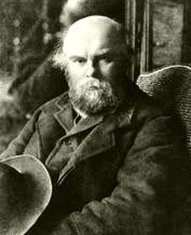
Paul Verlaine

Paul Verlaine born 30 March 1844 (d. 1896)

One of the greatest and most popular French poets, bisexual Paul Verlaine was born in Metz, but educated in Paris where he started writing poetry early. He published his first volume in 1867 aged 23 and was soon recognised as a poet of promise and orginality.

His private life and his work are inextricably linked, beginning with his love for Mathilde Maute, who became his wife. He eventually lost interest in her after he paired up with a young poet who hero-worshipped him and became his drinking buddy and lover - Arthur Rimbaud.

Together they travelled widely throughout Europe but Verlaine brought their volatile affair to an abrupt halt in 1873 when he shot Rimbaud in a drunken jealous rage. Rimbaud survived but Verlaine was eventually arrested, subjected to a brutal internal examination to identify the nature of their relationship and sentenced to two years imprisonment at Mons. There, he underwent a religious conversion and his ensuing work took on a mystical spiritual bent.

On his release, Verlaine travelled to England where he continued to write and teach. On returning to France in 1877 to teach English, he became infatuated with a pupil named Lucien Letinois, but was devastated when the boy died of typhoid.

Verlaine's final years saw a decline into poverty and alcoholism - although his enthusiam for younger men remained with him. He continued to be recognised as a ground-breaking poet and did much to preserve the poetic reputation of his former lover, Rimbaud, who died aged 37 in 1891.

His best known poem is probably Chanson d`automne, largely thanks to its use as a code message for the Allies during WW2. His poetry has also proved popular with composers - Gabriel Faure set several to music. A heavy drinker and plagued with poor health in later years, he remained a prolific writer passionately dedicated to sensuality and poetry.

Labels: , ,

Sunday, March 20, 2011

Edmund Goulding

Edmund Goulding born 20 March 1891 (d. 1959)

Edmund Goulding was a film director. He was born in Feltham, Middlesex, England.

The son of a butcher, Goulding began acting in amateur theatricals and by 1909 began appearing on the West End in productions such as Gentlemen, The King (1909), Alice in Wonderland (1909), and a notorious presentation of Oscar Wilde's The Picture of Dorian Gray (1913), adapted for the stage by G Constant Lounsbery.

Goulding served in World War I, then immigrated to the United States to become a singer. He was a fine ideas man, and could crank out a silent screen scenario very quickly. His writing talents were in demand by producers at Paramount and Famous Players Lasky, and so his singing aspirations were shelved. He wrote for several early film stars, and met his greatest success as co-author of Henry King's Tol'able David, a 1921 silent masterpiece.

Goulding directed Joan Crawford in her first substantial role, in Sally, Irene and Mary (1925), and Greta Garbo and John Gilbert in the smash hit Love (1927), before writing the script for Broadway Melody (1929), the first film musical.

Goulding directed Gloria Swanson in her first talkie, The Trespasser (1929). However, his greatest triumph came as director of Metro-Goldwyn-Mayer's Grand Hotel, winner of the 1932 Academy Award as Best Picture and granddaddy of the all-star ensemble story format.

Goulding moved to Warner Brothers in 1937, where he directed some of his best movies: Dawn Patrol (1938), White Banners (1938), and four outstanding melodramas with Bette Davis: That Certain Woman (1937), Dark Victory [pictured](1939), The Old Maid (1939), and The Great Lie (1941).

The Constant Nymph (1943) with Joan Fontaine, Claudia (1943) with Dorothy McGuire, and Of Human Bondage (1946) with Eleanor Parker were further testimonies to Goulding's adept direction of actresses.

After World War II, Goulding was hired at Twentieth Century Fox and made two excellent movies of starkly contrasting themes: The Razor's Edge (1946), based on a novel by Somerset Maugham, and the noir thriller Nightmare Alley (1947), both featuring Tyrone Power at his best.

Goulding's output after that was uneven. His last movie was Mardi Gras (1958), a dismissable musical starring Pat Boone.

By then, the man who directed the great stars of early moviedom was old, tired, and alcoholic.

Goulding's style as a director is distinguished by brisk pacing and an ability to elicit honest emotion from his players. He mastered a number of genres - comedy, romance, musicals, noir, and the war picture - and he adapted well to the personnel and conditions of each studio for which he worked.

There is a paradox to Goulding. His sensitivity to women's emotions brought him enduring success, as witnessed by his swooning melodramas, but his private life tells a different story. Goulding was bisexual, with a decided taste for promiscuity and voyeurism. His sex parties and casting couch were notorious.

A 2004 biography of Goulding, Edmund Goulding's Dark Victory by Matthew Kennedy says that it was widely known in Hollywood that Goulding was bisexual, and hosted wild parties for all persuasions.

But he cannot be dismissed simply as a sex addict or sexual exploiter. For every excoriation of his morals, there are accounts of his loyalty to friends, generosity to family, gentlemanly manner on the set, and preternatural ability to bring out the best in his actors.

He never had a long lasting romance. A marriage to dancer Marjorie Moss ended quickly with her premature death from tuberculosis. He maintained brief love affairs with younger men and women throughout his life, but either did not want or proved unable to sustain a long term relationship.

The real romance in Edmund Goulding's life is found in his movies.

He died following surgery at Cedars of Lebanon Medical Center in Los Angeles, California in 1959, although there are sources that say he committed suicide.

[Matthew Kennedy]
Edmund Goulding: Q&A with biographer Matthew Kennedy

Labels: , , , ,

Monday, March 14, 2011

Count Eric Stenbock

Eric Stenbock born 14 March 1860 (d. 1895)

'Scholar, connoisseur, drunkard, poet, pervert, most charming of men' - W. B. Yeats.

Count Eric Stanislaus (or Stanislaus Eric) Stenbock was a Baltic German poet and writer of macabre fantastic fiction.

Stenbock was the Count of Bogesund and the heir to an estate in Estonia. He was the son of Lucy Sophia Frerichs, a Manchester cotton heiress, and Count Erich Stenbock, of a distinguished Baltic German noble family with Swedish roots.

Stenbock's father died suddenly while he was one year old; his properties were held in trust for him by his grandfather. Eric's paternal grandfather died while Eric was quite young, also, in 1866, leaving him another trust fund.

Stenbock attended Balliol College in Oxford but never completed his studies. While at Oxford, Eric was deeply influenced by the homosexual Pre-Raphaelite artist and illustrator Simeon Solomon. He is also said to have had a relationship with the composer and conductor Norman O'Neill and with other 'young men'.

In Oxford, Stenbock also converted to Roman Catholicism taking for himself the name Stanislaus. Some years later Eric also admitted to having tried a different religion every week in Oxford. At the end of his life, he seemed to have developed a composite religion containing elements of Catholicism, Buddhism and idolatry.

In 1885, Count Magnus died, upon which Stenbock, as the oldest living male relative, acceded to the status of Count and to the possession of the family's estates in Estonia. Eric travelled to and lived in Kolga, Estonia for a year and a half; he returned to England in the summer of 1887, during which time he sank deeper into alcoholism and drug addiction.

He returned to London and entered into London literary circles with the likes of W. B. Yeats, Aubrey Beardsley, Robert Ross, Charles Shannon, Charles Ricketts, Lionel Johnson and Oscar Wilde - who he rivalled for his sense of exotic decadence.

Stenbock lived in England most of his life, and wrote his works in the English language. He published a number of (now largely forgotten) books of verse (generally morbid, opium-drenched) during his lifetime, including Love, Sleep, and Dreams (1881), and Rue, Myrtle, and Cypress (1883). In 1894, Stenbock published The Shadow of Death, his last volume of verse, and Studies of Death, a collection of short (gothic gay-ish vampyr) stories that were good enough to be the subject of favourable comment by H P Lovecraft.

Stenbock died, either of cirrhosis of the liver, or from a blow to the head from a fall in Brighton. Rumour has it that on April 26th 1895, he died after a drunken incident involving taking a swing at someone with a poker and toppling into the grate. It was the first day of Oscar Wilde's trial. London's society's attention was thus focused elsewhere. His death certificate lists 'sepatic cirrhosis' as the cause of death.

In a macabre final twist, although his body is buried in Brighton, his heart was removed and sent to Estonia, where it was preserved in a glass urn in the family church.

A Secret Kept: A Brief Life of Count Stenbock

Labels: , , , , , ,

Sunday, March 13, 2011

Brian Howard

Brian Howard born 13 March 1905 (d. 1958)

Brian Christian de Claiborne Howard was an English poet, whose work belied a spectacularly precocious start in life; in the end he became more of a journalist, writing for the New Statesman.

He was born to American parents in Hascombe, Surrey, and brought up in London; his father Francis Gassaway Howard was an associate of James Whistler. He was educated at Eton College, where he was one of the Eton Arts Society group including Harold Acton, Oliver Messel, Anthony Powell and Henry Yorke.

He entered Christ Church, Oxford in 1923, not without difficulty. He was prominent in the group later known as the Oxford Wits. He was one of the Hypocrites group that included Harold Acton, Lord David Cecil, L P Hartley and Evelyn Waugh. He allegedly provided the model for Anthony Blanche, the social butterfly in Evelyn Waugh's Brideshead Revisited,

At this time he had already been published as a poet, in A R Orage's The New Age, and the final Sitwell Wheels anthology. He used the pseudonyms Jasper Proude and Charles Orange. His verse also was in Oxford Poetry 1924.

Subsequently he led a very active social life, tried to come to terms with his homosexuality, and published only one substantial poetry collection God Save the King (1930). He was active as a poet during the Spanish Civil War, but did not ultimately invest in his work with seriousness.

During the 1930s he drifted around Europe. He had affairs with various young men before settling on Toni, a young blond German bisexual who he had met in Munich. In September 1935 he and Toni were staying at the same pension as Christopher Isherwood and Klaus Mann, son of Thomas Mann, in Amsterdam. At the start of the war Toni was interned in France but eventually managed to escape to the States, where he married an American, putting distance and an end to their twelve-year relationship.

In 1931, in Germany, Howard had become influenced by novelist Thomas Mann's loathing for Hitler and he filed anti-Hitler articles to the British press. His anti-Nazi stance was further informed by his Jewishness. Later, in 1939, Howard assisted the release of a number of anti-Nazi Germans imprisoned in France.

Brian Howard was often drunk throughout his adult life and alcohol began to become a problem, along with drugs, during his 30s.

In 1940, Howard was recruited into MI5 as an undercover 'outside contact' to report on pro-Nazi personalities. His political acumen must have been respected by MI5 because, in the early years of the war, Howard's dark apprehensions from the 1930s were reflected in a series of sophisticated anti-Nazi propaganda scripts that he wrote for BBC radio. These scripts were some of the earliest to broadcast the facts of the genocidal 'eugenics programme' of the Third Reich. Following his dismissal from MI5 in 1942 he served in a low-key role in the RAF.

During this time, he renewed his acquaintance with the spy Guy Burgess, a fellow Old Etonian and also a BBC correspondent. Burgess, one of the Soviet Union's 'Cambridge Five' spy ring, had studied at Trinity College, Cambridge, and he and Oxonian Howard knew each other in 1937 in Germany.

In the autumn of 1943 Brian Howard started a relationship with Sam, a nineteen-year-old Irishman, and in command of an Air-Sea Rescue Launch. In June 1944 Brian Howard began being checked over for health problems at RAF Halton, and in December 1944 he was given an honourable discharge from the RAF for being 'below Air Force physical standard, although fit for selected employment in civil life'. Sam was invalided out of the Navy because of foot trouble and he got a job at the BBC.

Brian Howard wondered what he was going to do next and spent his time writing book reviews for the New Statesman. After the war he continued to drift with Sam. They lived in France for a while but in 1950 Howard was unexpectedly expelled as an 'undesirable' and they fled to Italy and then travelled around Austria and Germany.

Brian Howard's health failed during the 1950s and he relied on sedatives. He had tuberculosis that he said he had contracted in Spain, and his alcoholism was taking its toll. He and Sam continued to wander around Europe looking for a home. They spent some time in Tangier in the spring of 1954 where Brian Howard was curing his addiction to alcohol but becoming dependent on drugs.

In June 1954 he received a letter from Paris saying that he would be allowed to return to France, although more complications arose and doubts continued about whether either Brian Howard or Sam could have a visa. Both were still keen to settle in France and Howard's mother used an inheritance to buy a house near Nice. Brian Howard and Sam moved into the house at the beginning of January 1958 but disaster struck within two weeks of their arrival. In the morning of 11 January 1958 Sam went to have a bath but workmen had removed an exhaust pipe from the bathroom and Sam died accidentally of asphyxiation from fumes from a gas heater. He was 32. Four days later Brian Howard killed himself by taking an overdose of sedatives. He was 52. After a double funeral they were buried together at the Caucade de Nice cemetery.

Labels: , , , , , ,

Wednesday, February 16, 2011

John Balance

John Balance born 16 February 1962 (d. 2004)

John Balance - first name later spelled Jhon and Jhonn; born Geoff Burton, later Rushton following his mother's remarriage, in Mansfield, England, was the founder of the experimental music group Coil, along with lover Peter Christopherson. They met while working together as members of Psychic TV.

He was responsible for vocals, lyrics, chants, synthetics and various esoteric sound-making instruments and devices. Outside of Coil he collaborated with Nurse With Wound, Death In June, Psychic TV, Current 93, Thighpaulsandra, and produced a couple of Nine Inch Nails remixes. His early work and wide-ranging collaborations made him one of the most influential figures in the industrial, experimental minimalist and neofolk music scenes.

Balance was considered by many to be one in a long line of magicians and occultists such as Brion Gysin, John Dee, William Burroughs, Aleister Crowley and Austin Osman Spare. He drew on the works of Crowley, Dee, Spare, Ex-Velvet Underground member/mystical poet/percussionist Angus Maclise, poet/painter William Blake and Surrealist painter/sculptor Max Ernst for inspiration and guidance. He blended belief systems such as Shamanism, Christianity, Buddhism, Paganism, Hermeticism and Gnosticism and imbued Coil's vast output with a magickal current designed to have a functionally transcendent effect on listeners. He employed magick devices such as sigils in and around the music to create the sense of an otherworldly 'presence'. Balance's musical concepts were a kind of sonic alchemy, combining the mechanics of avant electronic music and archaic synthesizers with the physics of magick and mysticism. This would define much of Coil's sound.

He had long struggled with alcoholism, which was cited as one of the major contributing factors to the breakup of his long-standing relationship with Industrial Records co-founder Peter Christopherson, and was a recurring theme in his later musical work. He died after apparently losing his balance [sic] and tipping over the banisters at his home while drunk. Peter Christopherson - they remained good friends after their split - was watching TV in another room in the house and heard the crash. Balance was rushed to hospital, but he did not regain consciousness. His condition deteriorated over the next few hours, and at 9.20 pm on 13 November 2004 he was pronounced dead.

Labels: , , , ,

Sunday, January 30, 2011

Jack Spicer

Jack Spicer born 30 January 1925 (d. 1965)

Jack Spicer was an American poet often identified with the San Francisco Renaissance.

Spicer was born in Los Angeles and spent most of his writing life in San Francisco. He spent the years 1945 to 1955 at the University of California, Berkeley, where he began writing, doing work as a research linguist, and publishing some poetry. During this time he searched out fellow poets, but it was through his alliance with Robert Duncan and Robin Blaser that Spicer forged a new kind of poetry, and together they referred to their common work as the Berkeley Renaissance. The three, who were all rumoured to be gay, also educated younger poets in their circle about their 'queer genealogy', Rimbaud, Lorca, and other gay writers. Spicer's poetry of this period is collected in One Night Stand and Other Poems (1980). His Imaginary Elegies, later collected in Donald Allen's The New American Poetry 1945-1960 anthology, were written around this time.

In 1954, he co-founded the famous Six Gallery, the scene of the famous October 1955 Six Gallery reading that launched the West Coast Beat movement. In 1955, Spicer moved to New York and then to Boston, where he worked for a time in the Rare Book Room of Boston Public Library. Blaser was also in Boston at this time, and the pair made contact with a number of local poets, including John Wieners.

He returned to San Francisco in 1956 and started working on After Lorca. This book represented a major change in direction for two reasons. Firstly, he came to the conclusion that stand-alone poems were unsatisfactory and that henceforth he would compose serial poems. In fact he wrote to Blaser that 'all my stuff from the past (except the Elegies and Troilus (his then unpublished play)) looks foul to me.' Secondly, in writing After Lorca, he began to practice what he called 'poetry as dictation'.

In 1957, Spicer ran a workshop called Poetry as Magic at San Francisco State College. He also participated in, and sometimes hosted, Blabbermouth Night at a literary bar called The Place. This was a kind of contest of improvised poetry and encouraged Spicer's view of poetry as being dictated to the poet.

Spicer's view of the role of language in the process of writing poetry was probably the result of his knowledge of modern pre-Chomskian linguistics and his experience as a research linguist at Berkeley. In the legendary Vancouver lectures he elucidated his ideas on 'transmissions' (dictations) from the outside, using the comparison of the poet as crystal set or radio receiving transmissions from outer space, or Martian transmissions. Although seemingly far-fetched, his views had a strong basis in contemporary linguistic theory. As such, Spicer is acknowledged as a precursor and early inspiration for the Language poets. However, many working poets today list Spicer in their succession of precedent figures.

Spicer died as a result of his alcoholism. Since the posthumous publication of The Collected Books of Jack Spicer (first published in 1975), his popularity and influence has steadily risen, affecting poetry throughout the United States, Canada, and Europe.

Labels: , ,

Monday, January 17, 2011

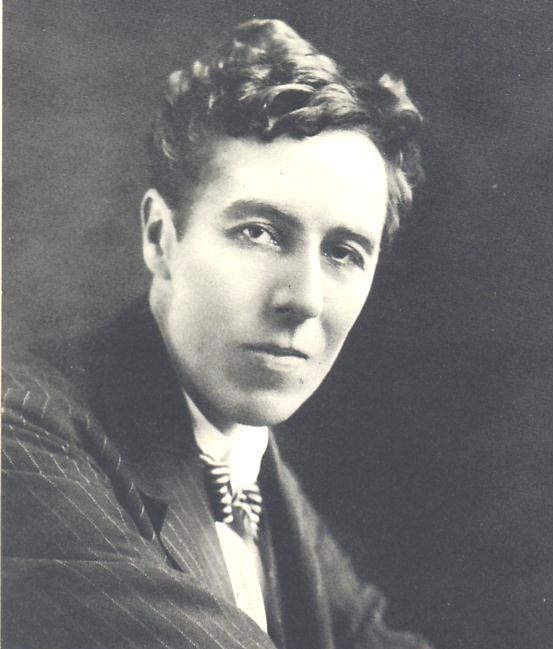
Ronald Firbank

Ronald Firbank born 17 January 1886 (d. 1926)

Arthur Annesley Ronald Firbank was an eccentric and effete British novelist.

Ronald Firbank was born in London, the son of society lady Harriet Jane Garrett and MP Sir Thomas Firbank. He went to Uppingham School, and then on to Trinity Hall, Cambridge. He converted to Catholicism in 1907. In 1909 he left Cambridge, without completing a degree.

He published his first book, Odette d'Antrevernes, in 1905 before going up to Cambridge. From then, from The Artificial Princess (written in 1915, published posthumously in 1934) and Vainglory (1915, his longest work) to Concerning the Eccentricities of Cardinal Pirelli (1926, also posthumous) he produced a series of novels.

Inclinations (1916) takes place mainly in Greece, where 15-year-old Mabel Collins is travelling with her female chaperone, Miss O'Brookomore; Mabel elopes with an Italian conte, but the plot is of minor importance, the book's interest - as with all Firbank's work - lies in the dialogue. His next novel Caprice followed in 1917.

Valmouth (1918) is based on the activities of various people in a health resort on the West Coast of England; most of the inhabitants are centenarians, and some are improbably older. The plot, such as it is, is concerned with the attempts of two elderly ladies, Mrs Hurstpierpoint and Mrs Thoroughfare, to marry off the heir to Hare-Hatch House, Captain Dick Thoroughfare, who is engaged to a black woman, Niri-Esther, is loved frantically by Thetis Tooke, a farmer's daughter, but prefers his 'chum', Jack Whorwood, to both of them. Meanwhile Mrs Yajnavalkya, a black masseuse, manages an alliance between the centenarian Lady Parvula de Panzoust and David Tooke, Thetis's brother. A musical comedy by Sandy Wilson gave the novel some popularity in the 1960s. It has several times been revived and recorded on CD.

In The Flower Beneath The Foot (1923), the setting is an imaginary country which may be assumed to be somewhere in the Balkans. The characters include the King and Queen, sundry high-born ladies about the Court, and the usual attendant chorus of priests and nuns.

Sorrow in Sunlight, retitled at the suggestion of the publisher Prancing N*gger (1925) was especially successful in America. The scene is laid in an imagined West Indian republic. A black family, socially ambitious, move from their rural home to the capital, and the story is concerned with their attempts (which prove mainly abortive) to 'get into society'.

Concerning the Eccentricities of Cardinal Pirelli (1926) begins with the Cardinal christening a dog in his cathedral and ends with His Eminence dying of a heart attack while chasing, naked, a choirboy around the aisles.

Firbank's play The Princess Zoubaroff (1920) has been compared to William Congreve, but is rarely produced; Dame Edith Evans, perhaps the greatest English actress of her time, played the part in a radio production in 1964. The dialogue is highly characteristic: as, Princess Zoubaroff: 'I am always disappointed with mountains. There are no mountains in the world as high as I would wish...They irritate me invariably. I should like to shake Switzerland.'

His Complete Short Stories were published in a single volume in 1990 (ed. Steven Moore), and his Complete Plays in 1991 in a volume containing The Princess Zoubaroff.

He left among his manuscripts the first few characteristic chapters of a novel set in New York, The New Rythum [sic], published in 1962 after a sale of many of his manuscripts and letters.

Some critics have dismissed Firbank's novels as slight, but they have been championed by a large number of English novelists including E M Forster, Evelyn Waugh and Simon Raven. The poet W H Auden praised him highly in a radio broadcast on the BBC in 1961. Susan Sontag named his novels as constituting part of 'the canon of camp' in her 1964 essay 'Notes on "Camp"'. His writing style is sufficiently distinctive that the adjective 'Firbankian' was coined.

Living off his inheritance more than his writing, he travelled around Spain, Italy, the Middle East, and North Africa.

Ronald Firbank died of lung disease while in Rome in 1926.

Labels: , , ,

Monday, January 10, 2011

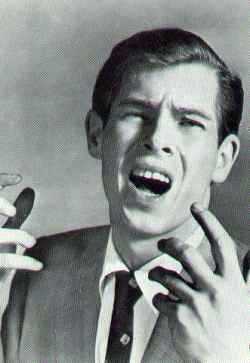
Johnnie Ray

Johnnie Ray born 10 January 1927 (d. 1990)

John Alvin Ray was an American singer, songwriter and pianist.

He was one of the most popular American singers of his day, and is considered by many people to be the forerunner of what would become rock 'n' roll.

Ray first attracted attention while performing at the Flame Showbar in Detroit, an R&B nightclub where he was the only white performer - he was in fact part-Native American. Inspired by rhythm singers like Kay Starr, LaVern Baker and Ivory Joe Hunter, Ray developed a unique rhythm-based style that was far closer to what would become known as 'rock and roll' than any other music of the time. Much like Frankie Laine before him, he was often mistaken for a black artist when his records first started hitting the airwaves.

His first record, the self-penned R&B number for OKeh Records, Whiskey and Gin, was a minor hit in 1951, but by the end of the year he would be dominating the charts with the double-sided monster hit single of Cry backed by The Little White Cloud That Cried (the latter also a Ray composition). His emotional delivery struck a chord with teenagers, and he quickly became the biggest teen idol since Frank Sinatra almost ten years earlier. Ray has been cited as the historical link between Frank Sinatra and Elvis Presley in the development of popular music.

Ray's unorthodox performing style included many theatrics later associated with rock 'n' roll, including beating up his piano, writhing on the floor and, most famously, crying. Also like Laine, his shows were often compared to religious revival meetings with the singer and audience both reaching an emotional frenzy. Ray quickly earned a plethora of nicknames including 'The Atomic Ray', 'Mr. Emotion', 'The Nabob of Sob', 'The Cry Guy' and 'The Prince of Wails'.

More hits followed. He was even more popular in the UK than in the US, breaking the record at the London Palladium formerly set by Frankie Laine. Although his star rapidly diminished in the US, he retained a loyal fan base overseas, particularly in Australia.

As wild off the stage as on, Ray soon became fodder for tabloids like Confidential and Hush-Hush which conspired to destroy his phenomenal popularity (at one point he had four of the top songs on the charts in one week out of the US Top Ten). But, ironically, he was ultimately a victim of the rock 'n' roll genre he did so much to establish. As younger and younger artists came to dominate the charts, the thirty-something Johnnie Ray was soon left by the wayside.

Though Ray married Marilyn Morrison in 1952, his wife was well aware of the singer's homosexuality. She believed she would be able to 'straighten it out'. But some years later, his manager Bill Franklin became Ray's lover. Rumored to be bisexual, the singer was prosecuted for indecency in a public toilet. When he was arrested in 1959, there was much gossip about his homosexual leanings. This took a toll on Ray's popularity and contributed to the decline of his career.

His career revived in the 1970s, but it is only since the late 1990s that he has gained a great deal of recognition. A chronic and lifelong alcoholic, he died of liver failure in Los Angeles at the age of 63.

Labels: , , ,

Saturday, January 08, 2011

Graham Chapman

Graham Chapman born 8 January 1941 (d. 1989)

Graham Chapman was an English comedian and writer. He was one of the six Monty Python members and lead actor in their two narrative films, playing King Arthur in Monty Python and the Holy Grail and Brian in Life of Brian.

Chapman was educated at Melton Mowbray Grammar School and studied medicine at Cambridge, where he began writing comedy with fellow University student John Cleese. He qualified as a medical doctor at the Barts Hospital Medical College, but rarely practised medicine.

While at Cambridge, Chapman joined Footlights. Fellow members were included John Cleese, Tim Brooke-Taylor and Bill Oddie. Their revue A Clump of Plinths was so successful at the Edinburgh Fringe Festival that they renamed it Cambridge Circus, and took the revue to the West End in London and later New Zealand and Broadway. The revue appeared in October 1964 on The Ed Sullivan Show.

Chapman and Cleese wrote professionally for the BBC during the 1960s, primarily for David Frost, but also for Marty Feldman. Chapman also contributed sketches to the BBC radio series I'm Sorry, I'll Read That Again and television programmes such as The Illustrated Weekly Hudd (starring Roy Hudd), Cilla Black, This is Petula Clark, and This is Tom Jones. Chapman, Cleese, and Tim Brooke-Taylor then joined Feldman in the television comedy series At Last the 1948 Show. Chapman (and Cleese on occasion) also wrote for the long-running television comedy series Doctor in the House.

In 1969 Chapman and Cleese joined Michael Palin, Terry Jones, Eric Idle and American artist Terry Gilliam for Monty Python's Flying Circus. After Cleese left the series in 1973, Chapman wrote alone, as well as a bit with Neil Innes and Douglas Adams for the final fourth series. He then developed a number of television and movie projects.


In the late 1970s, Chapman moved to Los Angeles, where he guest-starred on many US television shows and he began the first of a lengthy series of US college comedy lecture tours in the 1980s. His memoir, A Liar's Autobiography, was published in 1980.

Chapman was an alcoholic in the 1970s, which greatly affected his nerves during recordings of the television show, and also on the Holy Grail movie. At Christmas 1977, he eventually decided to stop drinking, and remarkably kept his word, which helped him with his performance in Life of Brian. Unfortunately, years of alcohol built up in his body would affect his liver and, along with his smoking habits, would tragically claim his life.

He also kept his homosexuality a secret until the middle of that decade (although his fellow Pythons were already aware of his sexual orientation, and in 1972 he lent his support to the new gay newspaper Gay News which publicly acknowledged his financial and editorial support by listing him as one of the paper's 'Special Friends') when he famously came out on a chat show hosted by British jazz musician George Melly, thus becoming one of the first celebrities to do so. Several days later, he came out to a group of friends at a party held at his home in Belsize Park where he officially introduced them to his partner, David Sherlock whom he met in Ibiza in 1966. Afterwards, he became a vocal spokesman on gay rights.

After Chapman made his homosexuality public, a member of the television audience wrote to the Pythons to complain that she had heard a member of the team was a homosexual, and reminded Python that the Bible recommends all homosexuals be stoned to death. Eric Idle sent a reply saying, 'Don't worry, we figured out who it was, dragged him outside, and stoned him."'

Chapman died at the age of 48 on 4 October 1989, of pneumonia brought about by throat cancer, which had spread to his spine. He had been diagnosed with this in November 1988 when he visited his dentist and the growth was found on his tonsils. Those at his side at the time of his passing were John Cleese, Michael Palin, David Sherlock, his brother John and John's wife. Terry Jones and Peter Cook had visited earlier in the day.

His last appearance was the part of the teacher in Iron Maiden's video for Can I Play With Madness?

Chapman's death occurred one day before the 20th anniversary of the first broadcast of Flying Circus — in Jones' words, 'the worst case of party-pooping in all history.'

The remaining Python members have acknowledged that, while brilliant, Chapman was exasperating to work with, and difficult to know. After his death, speculation of a Python revival inevitably faded. As Idle said, 'we would only do a reunion if Graham came back from the dead. So we're negotiating with his agent.'

Labels: , , , ,

Thursday, January 06, 2011

John Wieners

John Wieners born 6 January 1934 (d. 2002)

John Wieners, born in Massachusetts, was an American lyric poet.

After graduating from college, in 1958 he moved to San Francisco, associating with painter, Robert LaVigne, poet, Robert Duncan and other writers and bohemians. His first work, The Hotel Wentley Poems, was published in 1958. He soon became a fellow of University at Buffalo and did extensive work with the Poet's Theater, Cambridge he wrote three plays during this time. He published Ace of Pentacles in 1965, Nerves in 1970 and Behind the State Capitol or Cincinnati Pike in 1975.

He was institutionalised several times during his life, largely due to issues with drug and alcohol dependency. He was also involved in the antiwar movement, crusaded against racism, and campaigned for gay liberation and women's rights.

His journals include prose essays devoted to such subjects as his heroin addiction, the abortion of his child by an ex-lover, his homosexuality, the state and purpose of poetry, and the virtues of his numerous friends and mentors.

He was considered a 'Beat' poet, and hit his artistic peak in the mid-1960s.

Wieners died on March 1, 2002 at Massachusetts General Hospital, having collapsed a few days previously after an evening attending a party with his friend and publisher Charley Shively. Kidnap Notes Next, a collection of poems and journal entries edited by Jim Dunn, was published posthumously in 2002.

A Book of Prophecies came out in 2007 from Bootstrap Press. The manuscript was discovered in the Kent State University archive's collection by poet Michael Carr. It was a journal written by Wieners in 1971, and opens with a poem titled 2007.

Labels: , ,

Saturday, September 18, 2010

Jack Robinson

Jack Robinson born 18 September 1928 (d. 1997)

Jack Robinson was an American photographer famous for 1960s celebrity and fashion photography and documenting the New Orleans of the 1950s.

Jack Uther Robinson, Jr. was born in Meridian, Mississippi. He grew up in Clarksdale, Mississippi, in the heart of the Mississippi Delta, an area famous for racial injustice, the Blues, and social and religious conservatism. His father was a mechanic and auto parts dealer.

Robinson attended Clarksdale High School, from which he graduated in 1945. He then enrolled at Tulane University in New Orleans, where he completed five semesters before dropping out in 1948.

In 1951, he began his professional career in photography, working as a graphic artist for an advertising agency in New Orleans. He took numerous photographs of the city and his friends, many of them artists and photographers. His early work captured the charm of the French Quarter and documented New Orleans night life. It also preserved valuable glimpses into the New Orleans gay subculture of the 1950s.

Among Robinson's most fascinating images are photographs of the Mardi Gras festivities in the years between 1952 and 1955. Some of these document the celebrations in the gay area of Bourbon Street, especially around Dixie's Bar of Music, then one of the most prominent gay bars in the country.

In addition to architectural photographs, society portraits, and Mardi Gras pictures, Robinson also took a number of photographs of young gay couples, romantically posed. These photographs are striking because of their rarity, and touching because of their sincerity. At a time when there were few precedents for posing gay couples, Robinson conveyed homoerotic attraction in a number of ways, including having the young men stare deeply into each other's eyes and touch tentatively. The very awkwardness of these embraces conveys a profound sense of commitment.

During the New Orleans period, Robinson fell in love with a young man named Gabriel, whom he photographed incessantly, often in the nude. The Gabriel photographs are especially distinguished by their play of light and shadow and by their sensuality.

In 1954, Robinson and Gabriel travelled to Mexico. There the artist captured Mexican scenes in large and medium format photographs.

In 1955 Robinson and Gabriel moved to New York where he quickly became noted for his fashion photography. He was sought out by many of the top designers and others in the fashion industry. By 1959, one of his photographs graced the cover of Life magazine, signalling his arrival as a top commercial photographer.

Carrie Donovan, then a fashion reporter for the New York Times, commissioned Robinson to shoot several fashion layouts in the early 1960s and continued to work with him when she became editor of Vogue in 1965. Robinson's work appeared in Vogue over 500 times between 1965 and 1972.

Vogue's legendary editor-in-chief Diana Vreeland recognised Robinson's particular gift for portraiture. In addition to commissioning fashion photography from him, she also commissioned portraits of celebrities, especially the rising stars of music, film, television, and literature.

By 1970, Robinson had established himself as one of the leading commercial photographers in the world. He travelled to Europe to record the fashion innovations of the great design houses. His work was regularly featured in the most prestigious fashion and celebrity magazines of the day.

Robinson's art documents the social changes that occurred in the 1960s and early 1970s as reflected by the new stars of the worlds of fashion, art, literature, film, the stage, and, especially, music. He photographed virtually every musician that we think of when we think Woodstock and the Summer of Love.

Robinson documented the Nixon White House, the unbridled decadence of New York's club scene, and the unequalled elegance of Jacquelyn Kennedy in full formal regalia. In addition, he captured both the era's haute couture, as epitomised in the fashion of designers such as Emilio Pucci, Pierre Cardin, Yves St Laurent, and Bill Blass, and also the casual look that is perhaps even more representative of the time.

He also made particularly sensitive family portraits. His photographs of the wedding of Peter Allen and Liza Minnelli, with mother-of-the-bride Judy Garland, reveal a particular gift for family portraiture.

But even as Robinson succeeded professionally, his personal life became increasingly problematic. His relationship with Gabriel failed. He suffered from the stigma associated with homosexuality. He increasingly turned to drugs and alcohol for solace. Frequently in the company of Andy Warhol and his entourage, he became part of New York's frenetic club scene.

Such fast living soon affected Robinson's work. His daybooks and list of commissions reflect the deterioration of his life. As jobs dwindled, he was forced to move from his fashionable studio at 11 East 10th Street. Finally, in December of 1972, he retreated to Memphis, where his parents and older brother lived.

Broken and addicted to alcohol, Robinson sought help from a long-time friend, who sponsored his membership in Alcoholics Anonymous and helped him recover his emotional health.

In Memphis, Robinson abandoned his career as a commercial photographer. He began painting and soon took a job as assistant to noted artist Dorothy Sturm, who designed stained glass windows for churches at Laukauff Studio, one of the largest stained glass studios in the country. Although he was undoubtedly lonely, and in the words of a friend 'full of anger and angst,' he seemed to enjoy his anonymity and seldom revealed that he had once been a leading photographer in New York City.

In 1976, Robinson left Laukauff Studio to work at another glass studio, Rainbow Studio, where he was to remain for the rest of his career.

Robinson fell ill in November 1997 and was soon diagnosed with cancer. He died on December 15, 1997.

Robinson left his estate to his employer, Dan Oppenheimer, owner of Rainbow Studio. Oppenheimer was surprised to discover in Robinson's small and spartan apartment over 140,000 negatives. In 2002, Oppenheimer opened the Jack Robinson Gallery and Archive in Memphis. It is dedicated to preserving and promoting Robinson's legacy.

Although Robinson soon slipped into obscurity, his work has recently been rediscovered, thanks to the efforts of the Robinson Gallery and Archive and to several recent exhibitions in Memphis, London, and New Orleans.

The Jack Robinson Archive

Labels: , , , ,

Monday, August 16, 2010

Wallace Thurman

Wallace Thurman born 16 August 1902 (d. 1934)

Wallace Henry Thurman was an African American novelist during the Harlem Renaissance. He is best known for his novel The Blacker the Berry: A Novel of Negro Life, which describes discrimination based on skin colour among black people.

Thurman was born in Salt Lake City in 1902 to Beulah and Oscar Thurman. Beulah Thurman was reportedly never fond of Wallace; she would marry six times during her lifetime. Between his mother's many marriages, Wallace Thurman and his mother lived with Emma Jackson, the maternal grandmother to Wallace. His grandmother's home doubled as a saloon where alcohol was served without a license. The relationship between Wallace and his father was a distant one. While Wallace was less than a month old, Oscar Thurman abandoned and lived apart from his wife and son. Wallace was almost thirty years old when he met his father.

Thurman's early life was marked by loneliness, family instability and poor health. He began grade school at age six in Boise, Idaho, but poor health eventually led to a long absences from school and several moves, although he did finish high school. Throughout it all, Thurman was a voracious reader, writing his first novel at the age of ten. He attended the University of Utah from 1919 to 1920 as a pre-medical student. Later, in 1922, he transferred to the University of Southern California in Los Angeles but left without receiving a degree. While in Los Angeles he became a reporter for an African American owned newspaper where he wrote his first column.

In 1925 he moved to Harlem in New York City. During his time in Harlem and in less than ten years, he obtained various employments as a publisher, an editor for magazines and a major publisher, a writer of novels, plays, and articles, and at various times he served as a ghostwriter to various people. The following year he became the editor of The Messenger, a socialist journal aimed at black audiences. While at the Mesenger, Thurman became the first person to publish the adult-themed stories of Langston Hughes. Thurman left The Messenger in October 1926 to become the editor of a white owned magazine called World Tomorrow. The following month, he collaborated in the publishing of the literary magazine Fire!!

Only one issue of Fire!! was ever published. Fire!! challenged the idea that black art should serve as propaganda and those within the African American bourgeoisie who sought social equality and racial integration at the expense denying certain less-than-stellar aspects of black life in the United States. Thurman, like his fellow contributors to the magazine, attempted to show the real lived lives of African Americans, both the good and the bad. His view was that black artists should be more objective in their writings and not so self-conscious that they did not acknowledge and celebrate the arduous conditions of African American lives, as many actually existed instead of presenting a singular false facade to win white approval. This was in contrast to African American leaders and middle class who saw the goal of the New Negro movement as showing white Americans that blacks were not inferior.

During this time, Thurman's rooming house apartment at 267 West 136th Street in Harlem became the main place where the African American literary avant-garde and visual artists of the Harlem Renaissance met and socialised.

In 1928, Thurman published another magazine called Harlem: a Forum of Negro Life. The publication lasted for only two issues. Afterwards, Thurman became a reader for a major publishing company. He was the first African American in such a position in a New York publishing house.

Thurman wrote a play, Harlem, which debuted on Broadway in 1929 to mixed reviews. The same year his novel The Blacker the Berry: A Novel of Negro Life was published. The novel is now recognised as a ground breaking work of fiction because of its focus on intraracial prejudice, specifically between light-skinned and dark-skinned black people - Thurman was very dark-skinned. However, at the time many African Americans did not like the public airing of their community's so-called 'dirty laundry'.

Three years later Thurman published Infants of the Spring, a satire about the themes and the individuals of the Harlem Renaissance. He co-authored a final novel, The Interne, published in 1932.

Thurman married Louise Thompson Patterson on August 22, 1928. The marriage lasted only six months. Thompson noted that Wallace was a homosexual and thus their union was incompatible.

Thurman died in 1934 at the age of 32 from tuberculosis, which many suspect was exacerbated by his long fight with alcoholism.

Labels: , , , , , ,