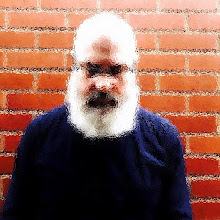
Donald Maclean

Donald Maclean born 25 May 1913 (d. 1983)
Donald Duart Maclean was a career British diplomat turned Soviet intelligence agent. Maclean was one of the Cambridge Five, members of MI5, MI6 or the diplomatic service who acted as spies for the Soviet Union during WWII and in the early-Cold War era. His actions are widely thought to have contributed to the 1948 Soviet blockade of Berlin and the onset of the Korean War. As a reward for his espionage activities, Maclean was brevetted a colonel in the Soviet KGB.
Educated at Gresham's School and Trinity Hall, Cambridge, he was the son of the Liberal politician Sir Donald Maclean, who was Leader of the parliamentary Opposition in the years following WWI.
 From Gresham's, Maclean won a place at Trinity Hall, Cambridge, arriving in 1931 to study modern languages. While there, he joined the Communist Party. In his second year at Cambridge, his father died, and in his last year he was recruited into Soviet intelligence by Anthony Blunt, ultimately becoming one of the Cambridge Five.
All of the Cambridge Five came from privileged backgrounds, and two of the others, Guy Burgess and Anthony Blunt, were known to be homosexuals. It is sometimes stated that Maclean was, too, and Guy Burgess claimed to have seduced him, but it seems more likely that he was bisexual.
In 1934, Maclean passed the Civil Service examination and started work at the Foreign Office in London. While there, he was under the operational control of the Russian secret service.
Maclean was later posted to the British Embassy in Paris, where he was when the Second World War broke out. In 1940 he married the American-born Melinda Marling in Paris shortly before the Germans captured the city. They escaped to the coast and got back to England on board a Royal Navy warship.
Maclean continued to report to Moscow from London and signalled in 1941 that a uranium bomb might be constructed within two years through the efforts of Imperial Chemical Industries with the support of the British government. Maclean sent Moscow a sixty-page report with the official minutes of the British Cabinet Committee on the Uranium Bomb Project.
He was transferred to Washington, where he served from 1944 to 1948, as Secretary at the British Embassy and, later, Secretary of the Combined Policy Committee on Atomic Development. For the Soviets, this was his most fruitful period, and he was Stalin's main source of information about communications and policy development between Churchill and Roosevelt, and then between Churchill or Clement Attlee and Harry S. Truman.
Although Maclean did not transmit technical data on the atom bomb, he reported on its development and progress, particularly the amount of uranium available to the United States. As the British representative on the American-British-Canadian council on the sharing of atomic secrets, he was able to provide the Soviet Union with minutes of Cabinet meetings. This knowledge alone gave the Soviet scientists the ability to predict the number of bombs that could be built by the Americans. Coupled with the efforts of Alan Nunn May and Klaus Fuchs, who provided scientific information, Maclean's reports to his KGB controller helped the Soviets not only to build their own atomic bomb, but also to estimate their nuclear arsenal's relative strength against that of the United States.
Armed with this information, Stalin was able to conclude that the United States did not possess a sufficiently large stock of atomic weapons or bomb production capacity to attack the Soviet Union or its allies in either Europe or the Pacific in the near future. This knowledge played a central role in Stalin's decision to institute a blockade of Berlin in 1948, as well as his decision to extensively arm and train Kim Il Sung's North Korean army for an offensive war (a conflict that would later claim the lives of over 30,000 U.S. and Allied troops).
In 1941 Maclean was tentatively identified by Walter Krivitsky, a Soviet defector, who is rumoured to have been assassinated by Soviet agents in the Bellevue Hotel in Washington D.C.. It was said that Krivitsky had claimed there was a mole in British intelligence who was "a Scotsman of good family, educated at Eton and Oxford (sic), and an idealist who worked for the Russians without payment."
Maclean's continual monitoring of secret messages between Truman and Churchill allowed Stalin to know how the Americans and the British proposed to occupy Germany and carve up the borders of Eastern European countries.
Maclean reported to Moscow that the goal of the Americans was to ensure American economic domination in Europe - the so-called Marshall Plan. The new international economic organisation to restore European productivity would be under the control of American financial capital. At that time the Soviet Union had no export earnings, war reparations were the sole source of foreign capital to rebuild the war-torn Soviet economy. Yalta and Potsdam agreements allowed German reparations in the form of equipment, manufacturing machinery, cars, trucks, and building supplies to be sent to Russia for five years. The flow of goods was unregulated by international control, and could be used for whatever purposes the Soviets chose. Six months after the Marshall Plan was rejected by the Soviet Union, multiparty rule in Eastern Europe ended.
In 1948, Maclean was transferred to the British Embassy in Cairo. Undoubtedly, Maclean's information was significant in assisting Stalin in his strategy for the Cold War.
The story of the Burgess and Maclean defection, and the subsequent implication of Philby, is a fascinating one of code-breaking, detection, and discovery. In 1949, Robert Lamphere, FBI agent in charge of Russian espionage, along with cryptanalysts, discovered that between 1944 and 1946 a member of the British Embassy was sending messages to the KGB. The code name of this official was 'Homer'. By a process of elimination, a short list of three or four men were identified as possible Homers. One was Maclean.
 Shortly after Lamphere's investigation began, Kim Philby was assigned to Washington, serving as Britain's CIA-FBI-NSA liaison. As such, he was privy to the decoding of the Russian material, and recognised that Maclean was very probably Homer. He confirmed this through his British KGB control. He was also aware that Lamphere and his colleagues had found that the encoded messages to the KGB had been sent from New York. Maclean had visited New York on a regular basis, ostensibly to visit his wife and children, who were living there with his in-laws.
The pressure on Philby now began to grow. If Maclean was unmasked as a Soviet agent, then, were he to confess, the trail might lead to the other Cambridge spies. Philby, now in a very important position in his ability to provide information to the Soviets, might be implicated, if for no other reason than his association with Maclean at Cambridge. Concerned that Maclean would be positively identified, interrogated, and confess to MI5, Philby and Burgess concocted a scheme in which Guy Burgess would return to London (where Maclean was now the Foreign Service officer in charge of American affairs). Burgess would then warn Maclean of the impending unmasking.
Before Burgess left, Philby was explicit in his instructions to Burgess. He was not to defect with Maclean.
The Philby-Burgess plan was for Burgess to visit Maclean in his Foreign Office quarters, give him a note identifying a place where the two could meet - it was assumed that Maclean, now under suspicion and denied sensitive documents, had a bugged office - and Burgess would explain the situation. They met clandestinely to discuss Maclean's imminent exposure and necessary defection to Russia. Yuri Modin, the controller at the time, made arrangements for Maclean's defection. Maclean was in an extremely nervous state, and reluctant to leave alone. Modin was willing to serve as his guide, but KGB Central demanded that Burgess escort Maclean behind the Iron Curtain.
In the meantime, MI5 had insisted that Maclean be questioned. They had decided that he would be confronted with the FBI and MI5 evidence on Monday, 28 May 1951.
On Maclean's 38th birthday, the Friday before the Monday when he was to be interrogated, Burgess and Maclean fled to the coast, boarded a ship to France, and disappeared. Had Blunt learned of the impending questioning of Maclean, and warned Burgess that the time had come? Blunt never admitted to that, and it is possible that Burgess and Maclean had selected Friday to flee whatever the current circumstances. Both Modin and Philby assumed that Burgess would deliver Maclean to a handler, and that he would return. For some reason, the Russians insisted that Burgess accompany Maclean the entire way. Perhaps Burgess was no longer useful to the KGB as a spy, but too valuable to fall into the hands of MI5.
Maclean, unlike the self-indulgent Burgess, assimilated into the Soviet Union and became a respected citizen, learning Russian and serving as a specialist on the economic policy of the West and British foreign affairs. He worked for the Soviet Foreign Ministry and the Institute of World Economic and International Relations. Maclean was awarded the Order of the Red Banner of Labour and the Order of Combat.
While living in Moscow, he spoke up for Soviet dissidents, and gave money to the families of some of those imprisoned. His American-born wife, Melinda, joined him in Russia with their children, but they were soon divorced and she had a brief affair Kim Philby in 1966. Later she and the children returned to the United States.
Maclean died of a heart attack in 1983, at the age of sixty-nine. He was cremated and some of his ashes were scattered on his parents' grave in the churchyard of Holy Trinity Church, Penn, Buckinghamshire, England.
Labels: Bisexuals, Cambridge Five, Diplomats, Photographers, Spies/Traitors
posted by Peter Jacobs at 12:01 am
1 comments