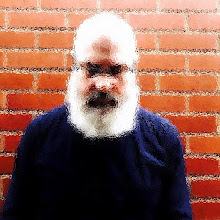
Robin Maugham
Robin Maugham born 17 May 1916 (d. 1981)
Robin Maugham was an author of short stories, novels, non-fiction, plays, and screenplays; an officer in World War II; a barrister-at-law; and 2nd Viscount Maugham of Hartfield. His success was not without struggle. In the preface to his first autobiography Escape from the Shadows Maugham describes the three shadows of his life: his uncle William Somerset Maugham, his father Viscount Frederic Herbert Maugham, and the guilt he experienced due to the 'strict upper-middle class moral convictions' that declared his homosexual desires to be perverse.
Robin Maugham was born Robert Cecil Romer Maugham. Maugham described his childhood as lonely, with the exception of an imaginary friend, Tommy. Throughout his autobiographical works, Maugham speaks frankly about the troubles he experienced because of his attraction to men.
He spent most of his youth in boarding schools, beginning with Highfield School, Eton, and Trinity Hall, Cambridge. Both sides of his family practiced law, and Maugham was urged to follow the family tradition. His interest in law was less than enthusiastic; he found writing, painting, and music more pleasurable. He left Cambridge in 1937, signed up for the Inns of Court Regiment and became a judge's marshal. In April 1939, Maugham became the private secretary to the Director of the National Service Campaign. As part of this assignment, Maugham worked with Winston Churchill, creating a relationship that lasted until just before Churchill's death. When war was declared in September 1939, Maugham entered as a trooper in the Inns of Court Regiment.
Maugham served in World War 2 from 1939 to 1945, first with the 8th Army in North Africa and later with the Middle East Intelligence Centre. During a 1942 battle he was hit in the head with a shell fragment. This caused him to have blackouts, but the severity was never enough to have the shrapnel removed. However, due to this injury he was released from duty in 1945 and was unable to resume his law practice.
Maugham's short story, The 1946 Ms, had been published by the War Facts Press in 1943 and was his first published work. Convoy, a journal bridging the gap between military and civilian life during World War II, was created by and edited by Maugham for seven issues beginning in 1944. When his father died in 1958, Maugham became the 2nd Viscount Maugham of Hartfield. In 1960 he gained a seat in the House of Lords.
After his first published work in 1943, Maugham wrote novels, short stories, plays, travel books, dramatic works, a biography of his family, two autobiographies, and film scripts. His writing has been compared to that of his uncle in their use of 'exotic locales', though Robin is much more frank in his writing regarding sexuality and sexual guilt, particularly in his first autobiography. Writer, editor, and journalist Peter Burton met Maugham in 1968 and helped with the revision and rewriting of several novels, as well as several articles and reviews. Burton worked as a writer and editor for Gay News from 1972 to 1982. During this time, he also worked with Maugham on many projects and compiled Maugham's bibliography. Burton discusses the many aspects of their relationship in Parallel Lives.
Maugham was also assisted in his writing by his partner William Lawrence, who worked as his personal assistant for the last 11 years of his life, and is the copyright holder of Robin Maugham's estate.
 Maugham's best known work is probably The Servant, which was notably adapted for the screen by Harold Pinter and directed by Joseph Losey in 1963. The film starred James Fox, Dirk Bogarde, Sarah Miles and Wendy Craig.
By 1981, Maugham's health had deteriorated. Diabetes and his abuse of alcohol, in addition to other physical problems, ended his life two months shy of his 65th birthday, on March 13, 1981.
Labels: Alcoholics, Lawyers, Military Men, Novelists, Photographers, Screenwriters, Writers
posted by Peter Jacobs at 12:01 am
4 comments