Sunday, April 10, 2011

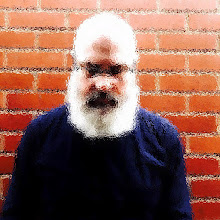
Montague Summers

Montague Summers born 10 April 1880 (d. 1948)

Augustus Montague Summers was an eccentric English author and clergyman. He is known primarily for his 1928 English translation of the medieval witch hunter's manual, the Malleus Maleficarum, as well as for several studies on witches, vampires, and werewolves, in all of which he professed to believe.

Montague Summers was the youngest of the seven children of an affluent banker and justice of the peace in Clifton, Bristol. Summers was educated at Clifton College before studying theology at Trinity College, Oxford with the intention of becoming a curate in the Church of England. He continued his religious training at Lichfield Theological College and became a deacon in 1908, but he apparently never proceeded to higher orders, probably because of accusations of sexual impropriety with young boys. Summers was for a while part of the circle of the so-called Uranian poets, who celebrated ancient Greco-Roman pederasty. His first book, Antinous and Other Poems appeared in 1907 and was dedicated to this subject matter.

Summers worked for several years as an English and Latin teacher at various schools before adopting writing as his full-time employment. He was interested in the theatre of the seventeenth century, particularly that of the English Restoration, and edited the plays of John Dryden and William Congreve among others. He was one of the founder members of The Phoenix, a society that performed those neglected works, and was elected a fellow of the Royal Society of Literature in 1916.

Summers also joined the growing ranks of English men of letters interested in medievalism, Catholicism, and the occult. In 1909 he converted to Catholicism and shortly thereafter he began passing himself off as a Catholic priest and styling himself the 'Reverend Alphonsus Joseph-Mary Augustus Montague Summers', even though he was never a member of any Catholic order or diocese. His biographer Father Brocard Sewell asserts that he was ordained a deacon in the Church of England in 1908, and thus was properly addressed as 'Reverend' in any case.

Summers wrote hagiography (on Saint Catherine of Siena) and lives of writers such as Jane Austen before turning to the occult, for which he is best remembered. In 1928 he published the first English translation of Heinrich Kramer's and James Sprenger's Malleus Maleficarum (The Hammer of Witches), a fifteenth century Latin text on the hunting of witches. This work followed his History of Witchcraft and Demonology (1927) and The Geography of Witchcraft (1928). He then turned to vampires, producing The Vampire: His Kith and Kin (1928) and The Vampire in Europe (1929), and later to werewolves with The Werewolf (1933). Summers's work on the occult is notorious for his unusual and old-fashioned writing style, his display of erudition, and his purported belief in the reality of the subjects he treats. Of more lasting value were his seminal works on Gothic literature: The Gothic Quest: a History of the Gothic Novel (1938), A Gothic Bibliography (1940) and his collection of Gothic Horror stories in The Supernatural Omnibus (1931) and Victorian Ghost Stories (1936). Summers also edited an incomplete edition of two of the seven obscure Gothic novels, known as the Northanger Horrid Novels, mentioned by Jane Austen in her Gothic parody Northanger Abbey. Summers was instrumental in rediscovering these lost books, which some had supposed were an invention of Jane Austen herself.

Summers cultivated his reputation for eccentricity. The Times wrote he was 'in every way a "character" and in some sort a throwback to the Middle Ages.' His biographer, Brocard Sewell, paints the following portrait of Summers: 'During the year 1927, the striking and somber figure of the Reverend Montague Sommers in black soutane and cloak, with buckled shoes - a la Louis Quatorze - and shovel hat could often have been seen entering or leaving the reading room of the British Museum, carrying a large black portfolio bearing on its side a white label, showing in blood-red capitals, the legend "VAMPIRES".'

While his friend Aleister Crowley adopted the persona of a modern-day witch, Summers played the part of the learned Catholic witch-hunter.

Summers was a member of the Order of Chaeronea, a secret society for homosexuals founded in 1897 by George Ives.

He died at his home in Richmond, Surrey. An autobiography The Galanty Show was published posthumously in 1980, though much is left unrevealed about his somewhat mysterious life.

Labels: , , , ,

Wednesday, February 16, 2011

John Balance

John Balance born 16 February 1962 (d. 2004)

John Balance - first name later spelled Jhon and Jhonn; born Geoff Burton, later Rushton following his mother's remarriage, in Mansfield, England, was the founder of the experimental music group Coil, along with lover Peter Christopherson. They met while working together as members of Psychic TV.

He was responsible for vocals, lyrics, chants, synthetics and various esoteric sound-making instruments and devices. Outside of Coil he collaborated with Nurse With Wound, Death In June, Psychic TV, Current 93, Thighpaulsandra, and produced a couple of Nine Inch Nails remixes. His early work and wide-ranging collaborations made him one of the most influential figures in the industrial, experimental minimalist and neofolk music scenes.

Balance was considered by many to be one in a long line of magicians and occultists such as Brion Gysin, John Dee, William Burroughs, Aleister Crowley and Austin Osman Spare. He drew on the works of Crowley, Dee, Spare, Ex-Velvet Underground member/mystical poet/percussionist Angus Maclise, poet/painter William Blake and Surrealist painter/sculptor Max Ernst for inspiration and guidance. He blended belief systems such as Shamanism, Christianity, Buddhism, Paganism, Hermeticism and Gnosticism and imbued Coil's vast output with a magickal current designed to have a functionally transcendent effect on listeners. He employed magick devices such as sigils in and around the music to create the sense of an otherworldly 'presence'. Balance's musical concepts were a kind of sonic alchemy, combining the mechanics of avant electronic music and archaic synthesizers with the physics of magick and mysticism. This would define much of Coil's sound.

He had long struggled with alcoholism, which was cited as one of the major contributing factors to the breakup of his long-standing relationship with Industrial Records co-founder Peter Christopherson, and was a recurring theme in his later musical work. He died after apparently losing his balance [sic] and tipping over the banisters at his home while drunk. Peter Christopherson - they remained good friends after their split - was watching TV in another room in the house and heard the crash. Balance was rushed to hospital, but he did not regain consciousness. His condition deteriorated over the next few hours, and at 9.20 pm on 13 November 2004 he was pronounced dead.

Labels: , , , ,

Thursday, February 03, 2011

Kenneth Anger

Kenneth Anger born 3 February 1927

Kenneth Anger is an American underground avant-garde film-maker and author.

Born in Santa Monica, California as Kenneth Wilbur Anglemyer, as a child he played the child prince in the 1935 version of A Midsummer Night's Dream and attended dancing school with Shirley Temple.

He gained fame and notoriety from the publication of the French version of Hollywood Babylon in Paris in 1958, a tell-all book of the scandals of Hollywood's rich and famous. (The US version wasn't published until 1974.)

He became fascinated with the supernatural and Aleister Crowley (as well as becoming an adherent of Crowley's religion of Thelema) sometime in his late teens and many of his films reflect occult themes. He began making films around age 11, but his early films were mostly destroyed. His first film to see distribution was Fireworks, filmed in Los Angeles in 1947, which gained the attention of Jean Cocteau, who then invited him to go to Paris. While most of his films are short subject (ranging from 3.5 minutes to 30 minutes) mood pieces, in 1955 he made a documentary film of the ruins of Crowley's Thelema abbey in Cefalù, Sicily, which has since been lost.

Anger was one of America's first openly gay filmmakers, and certainly the first whose work addressed homosexuality in an undisguised, self-implicating manner. He developed a close friendship with Dr Alfred Kinsey of the Institute for Sex Research. Anger would later recall that Kinsey was his first customer after Kinsey purchased a copy of Fireworks when they first met in 1947. Anger eventually helped Kinsey build his film archive. The Anger Collection includes correspondence between the two men, as well as letters to and from former Institute director John Bancroft. Anger would later speak openly of his participation in Kinsey's research, including being filmed masturbating.

During the late 1960s he associated with The Rolling Stones, Mick Jagger and convicted first degree murderer Bobby Beausoleil of the Charles Manson family, who starred in Anger's 1969 film Invocation of My Demon Brother.

Kenneth Anger had a widely publicised spat with Led Zeppelin guitarist Jimmy Page over the Lucifer Rising soundtrack. Anger claimed Page took three years to deliver the music, and the final product was only 25 minutes of droning and was useless. Anger also accused Page of 'having an affair with the White Lady' and being too strung out on drugs to complete the project. Page countered claiming he had fulfilled all his obligations, even going so far as to lend Anger his own film editing equipment to help him finish the project. Page's music was dumped eventually and replaced by music written by Beausoleil, completed in 1980 from prison.

For 20 years from the early eighties, Anger released no new material. In the new millennium he has since returned to filmmaking. He also performs as Technicolor Skull with Brian Butler.

In a scene in John Waters's 2000 movie Cecil B. Demented, the characters are introducing themselves and each one shows the name of an independent director tattooed on his/her arm. One of the characters has Kenneth Anger.

Anger makes an appearance in the 2008 feature documentary by Nik Sheehan about Brion Gysin and the Dreamachine entitled FLicKeR.

In 2009 his work was featured in a retrospective exhibition at the P.S. 1 Contemporary Art Center in New York

Anger has finished writing Hollywood Babylon III, but has not yet published it, fearing severe legal repercussions if he did so.


Labels: , , , ,

Saturday, February 27, 2010

Derren Brown

Derren Brown born 27 February 1971

Derren Victor Brown is a British magician, psychological illusionist and sceptic of paranormal phenomena.

After studying German and Law at the University of Bristol , Derren Brown started out as a traditional conjurer specialising in close magic before moving into stage hypnotism and eventually into television on Channel 4, where he has produced several controversial series using a combination of 'magic, suggestion, psychology, misdirection and showmanship'.

Using his knowledge and skill he appears to be able to predict and influence people's thoughts with subtle suggestion, manipulate the decision making process and read the subtle physical signs or body language that indicate what a person is thinking. His sometimes disturbing shows have included Derren Brown's Mind Control, Russian Roulette, Seance, Messiah and The Heist. He often uses his skills to debunk religous, supernatural and paranormal beliefs.

He has written several books on magic and tricks of the mind and regularly takes his show on tour.

Brown had been in the spotlight for several years before revealing himself to be gay in an interview in a Sunday newspaper supplement in September 2007.

Derren Brown - Official Website

Labels: ,

Sunday, October 12, 2008

Aleister Crowley

Aleister Crowley born 12 October 1875 (d. 1947)

Aleister Crowley, born Edward Alexander Crowley (the first syllable is pronounced like the bird) was an English occultist, prolific writer, mystic, hedonist, aficionado of chess and mountain climbing, and sexual revolutionary.

His interests and accomplishments were wide-ranging — he was a chess master, mountain climber, poet, painter, astrologer, drug experimenter, and social critic. He is perhaps best known today for his occult writings, especially The Book of the Law, the central sacred text of Thelema. Crowley was also an influential member in several occult organizations, including the Golden Dawn, the A∴A∴, and Ordo Templi Orientis.

Crowley gained much notoriety during his lifetime, and was famously dubbed 'The Wickedest Man In the World'.

His father, Edward Crowley, once maintained a lucrative family brewery business and was retired when Aleister Crowley was born. Both of his parents were Darbyites, members of the most extreme wing of the Protestant sect known as the Exclusive Brethren.

He grew up in a staunchly religious household. His father, after retiring from his daily duties as a brewer, took up the practice of preaching at a fanatical pace. Daily Bible studies and private tutoring were mainstays in 'Alick's' childhood; however, after his father's death, his mother's efforts at indoctrinating her son in the Christian faith only served to provoke his scepticism. As a child, his constant rebellious behaviour displeased his devout mother to such an extent she would chastise him by calling him 'The Beast' (from the Book of Revelation), an epithet that Crowley would later happily adopt for himself. He objected to the labelling of what he saw as life's most worthwhile and enjoyable activities as 'sinful'.

In 1895, he went to Trinity College, Cambridge after schooling at the public school Malvern College. His three years at Cambridge were happy ones, due in part to coming into the considerable fortune left by his father. Throughout this period, he maintained a vigorous sex life, which was largely conducted with prostitutes and girls he picked up at local pubs and cigar shops, but eventually extended into homosexual activities in which he played the passive role.

In December of 1896, following an event that he describes in veiled terms, Crowley decided to pursue a path in occultism and mysticism. By the next year, he began reading books by alchemists and mystics, and books on magic. [read more about this extraordinary man]

Labels: , ,