Sunday, May 22, 2011

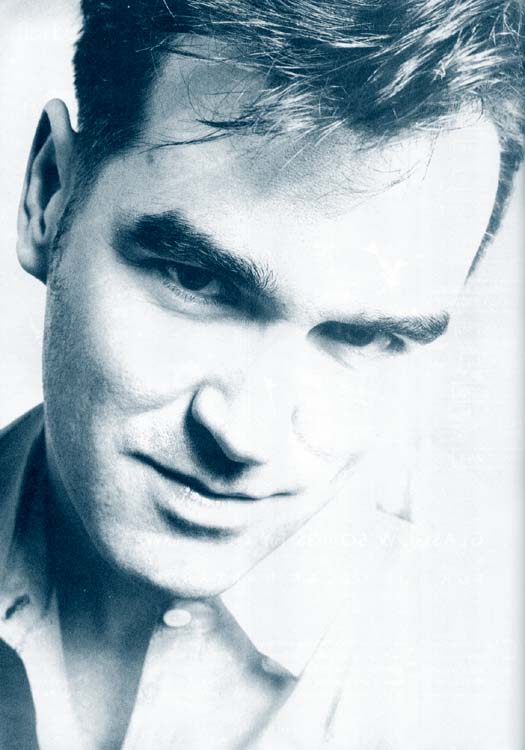
Morrissey

Morrissey born 22 May 1959

"I don't recognise such terms as heterosexual, homosexual, bisexual, and I think it's important that there's someone in pop music who's like that. These words do great damage, they confuse people and they make people feel unhappy, so I want to do away with them."

"Artists aren't really people. And I'm actually 40 per cent papier mache."

"I lost myself to music at a very early age, and I remained there."

Labels: , , , ,

Monday, May 02, 2011

Lorenz Hart

Lorenz Hart born 2 May 1895 (d. 1943)

Lyricist Lorenz Hart is, with his musical partner Richard Rodgers, one of the greatest American songwriters of all-time.

His best-loved lyrics include Bewitched, Bothered & Bewildered, Blue Moon, My Funny Valentine and Where Or When.

Hart was born in Harlem to Jewish immigrant parents. He attended Columbia University, where a friend introduced him to Rodgers [pictured left with Hart], and the two joined forces to write songs for a series of amateur and student productions. They continued working together until Hart's death in 1943, along the way producing scores for a series of hit shows and making a substantial contribution to the Great American Songbook.

The partnership was instinctive and comradely, and ideas were worked out at great speed, Rodgers providing the melodies to fuel Hart's invention. Hart was a sophisticated perfectionist as a wordsmith, but endearingly disorganised as a person; Rodgers, the more methodical and business-like one, would take charge and handle all negotiations.

Hart struggled with his homosexuality in an era when such a lifestyle was socially unacceptable and with alcoholism, which eventually contributed to his death. Hart also suffered great emotional turmoil toward the end of his life. His personal problems were often the cause of friction between him and Richard Rodgers, and in fact led to a brief breakup in 1943, at which time Rodgers started working with Oscar Hammerstein II.

Rodgers and Hart teamed up one last time for a revival of one of their earlier hit shows, but within days, Hart died of pneumonia from exposure.

Labels: , , ,

Friday, April 29, 2011

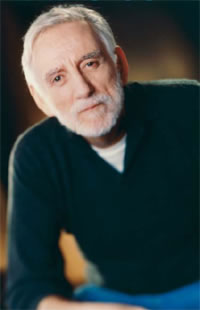
Rod McKuen

Rod McKuen born 29 April 1933

Rod McKuen is a bestselling American poet, composer and singer, instrumental in the revitalisation of popular poetry in the late 1960s and early 1970s.

Born in Oakland, California, he ran away from home at an early age to avoid an alcoholic stepfather and after a series of drifter jobs throught the West and a spell with the army in Korea, began to find an audience with his poetry in the 1950s, eventually appearing with Beat poets such as Jack Kerouac and Allen Ginsberg.

After moving to New York in 1959, he found great success in the 1960s with his poetry and songs. He spent much time in France working with and translating the work of his friend Jacques Brel.

In the late 1960s, McKuen managed to capture in verse the feelings of the student generation in opposition to the Vietnam war and his readings were attended like rock concerts.

He has written many hundreds of songs, including two albums for Frank Sinatra, and collaborated with many including Henry Mancini and John Williams. He has sold millions of albums and written orchestral and film music - his scores for The Prime of Miss Jean Brodie (1969) and A Boy Named Charlie Brown (1970) were Oscar nominated.

A major spell of clinical depression in the 1980s made him withdraw from the limelight. He has long since returned to activity but in a more low-key way and now making full use of the Internet.

Always a performer with a social conscience, he has gone from fighting the Vietnam war and apartheid and on to work for AIDS awareness.

Rod McKuen has a partner of 45 years standing.

"It doesn't matter who you love, or how you love, but that you love." - Rod McKuen

Labels: , , ,

Friday, April 22, 2011

Simon Napier-Bell

Simon Napier-Bell born 22 April 1937

London-born Simon Napier-Bell has undertaken many jobs in the music industry, including manager, producer, songwriter, journalist and author. But he is best-known as manager, particularly of The Yardbirds, John's Children, Marc Bolan, Tyrannosaurus Rex, Japan, London, Wham! and Blue Mercedes.

After becoming involved in music at school and heading off the the United States and Canada to become a professional musician, after two years Napier-Bell decided he wanted to pursue other directions.

When he returned to England he worked as an assistant film editor. With a thorough knowledge of music, he soon progressed to being a music editor and landed the job of working with Burt Bacharach on What’s New Pussycat, re-editing the score Burt had written for it. Later, he also scored, wrote and edited music for Clive Donner's Here We Go Round The Mulberry Bush.

In 1966, Dusty Springfield approached Vicki Wickham and Simon Napier-Bell to write English lyrics for a song she’d heard at the Sanremo Festival. The result was You Don't Have to Say You Love Me, which became Dusty’s first number one.

His friend Vicki Wickham, who booked all the acts for the TV show Ready Steady Go, persuaded him to move into the music management. He started by putting together an act of his own – Nicky Scott & Diane Ferraz – a boy from London and a girl from the West Indies. The inter-racial mix was a first for the British music business.

On the back of the publicity Napier-Bell generated for Scott and Ferraz, The Yardbirds asked him if he would manage them. Napier-Bell then co-produced the Yardbirds’ first studio album. He then oversaw the entry of Jimmy Page into the group and produced the group’s next single, Happenings Ten Years Time Ago, considered one of the most avant-garde rock records of the time.

Napier-Bell went on to manage John's Children, who were known more for their ability to shock than for their music. Napier-Bell then teamed up with ex-comedian Ray Singer to produce records for various artists including the Scaffold (a group which included Paul McCartney's brother, Mike McGear), Peter Sarstedt, Forever More (who became The Average White Band) and other lesser known acts. He also spent a year in Australia where he discovered and produced John Paul Young.

Following this, Napier-Bell worked in Spain and South America for two years, managing one of Spain’s biggest stars, Junior, with whom he co-wrote several Spanish hits, in particular one of the biggest selling Spanish language singles of the seventies, Perdoname.

In 1976, Napier-Bell came back to London and returned to management with two new groups, London, a group in the then-current punk vein, and Japan [pictured]. London was a short lived project but Japan involved him for the next seven years. Napier-Bell persevered with them through five lean years to eventually help make them one of the most influential groups of the early eighties, both musically and fashion-wise.

He then teamed up with manager Jazz Summers and together they took on the management of Wham!. The group had already had three hit singles in the UK but wanted to terminate their contract with their record company. Napier-Bell and Summers led them through four months of legal complications (during which they were unable to record), and finally settled the case by signing a new contact with CBS.

Napier-Bell spent eighteen months travelling backwards and forwards to China negotiating for Wham! to become the first ever Western pop artist to play in communist China. They eventually played a concert there in April 1985 at the Worker's Stadium in Beijing.

At the end of 1985, Wham! ended its relationship with Napier-Bell and Summers when George Michael left Wham! for a solo career. Napier-Bell went on to manage the duo Blue Mercedes, who had one worldwide hit, I Want To Be Your Property (1987). Napier-Bell also arranged for the defunct pop group Boney M to reform and had all their old tracks remixed by Stock Aitken Waterman. The result was an album that stayed at number one in the French charts for four months but sold little elsewhere.

Following this, Napier-Bell teamed up with another manager, Sir Harry Cowell, and they took on the management of two once major groups looking to revive their careers – Asia and Ultravox. Asia fared better than Ultravox but eventually Napier-Bell gave up on both of them. After taking time out to write Napier-Bell chose to go back to management, this time working in Russia. Initial success in Russia was not followed up with success in the rest of the world.

When Japan broke up, Napier-Bell wrote his first book, You Don’t Have To Say You Love Me, about his experiences in the music business in the 1960s. When he ceased managing Asia and Ultravox he wrote another book, Black Vinyl White Powder, about the British music business which was received with favourable reviews. In March 2005 he published another book, I’m Coming To Take You To Lunch, the story of how he took Wham! to China.

Simon Napier-Bell - official website

Labels: , , ,

Monday, April 11, 2011

Michael Callen

Michael Callen born 11 April 1955 (d. 1993)

Michael Callen was a singer, songwriter, composer, author, and AIDS activist. He was a significant architect of the response to the AIDS crisis in the United States.

First diagnosed with 'Gay related immune deficiency' (GRID) in 1982, Callen quickly became a leader in the response to the epidemic, coining the phrase 'people with AIDS' (PWAs) in contrast to the then current 'AIDS victims'. He was a founding member of the People with AIDS Coalition among other organisations, and he testified before the President's Commission on AIDS and both houses of Congress.

In 1983, Callen co-authored the book How to Have Sex in an Epidemic: One Approach, which outlined the tenets of safe(r) sex. In 1990, he wrote Surviving AIDS, which received an Honorable Mention from the American Medical Writers Association.

He was frequently seen on television talking about AIDS. Appearances included Nightline, Good Morning America, 20/20, and The Phil Donahue Show. He wrote for several newspapers and magazines, including the Village Voice, The New York Native, and Outweek; some of his articles are collected in Surviving and Thriving with AIDS, published by the People with AIDS Coalition in 1988.

In the early 80s, Callen was in a gay and lesbian four-piece band called Lowlife, playing piano and keyboards, singing, yodelling, twirling a baton, and dancing.

He was a well-loved singer and songwriter in the US gay community. He was a founding member of the gay male a cappella singing group, The Flirtations, with whom he recorded two albums. He also had a solo album, Purple Heart (Significant Other Records, 1988), which a review in The Advocate called, 'the most remarkable gay independent release of the past decade'. During the last year of his life, Michael worked furiously to record over 40 tunes; Legacy, a 2-CD album of 29 of them, was posthumously released by Significant Other Records in 1996.

In partnership with Oscar winner Peter Allen and Marsha Melamet, he wrote his most enduring song, Love Don't Need a Reason, which he sang frequently at gay pride and AIDS-related events around the country.

In 1993 he appeared in the films Philadelphia (as part of The Flirtations) and Zero Patience (as a singing transvestite virus, Miss HIV).

Callen died of AIDS-related complications in Los Angeles, California, at the age of 38.

Labels: , , , ,

Tuesday, April 05, 2011

Joe Meek

Joe Meek born 5 April 1929 (d. 1967)

Joe Meek (born Robert George Meek in Newent, Gloucestershire) was a pioneering English record producer and songwriter acknowledged as one of the world's first and most imaginative independent producers. His most famous work was The Tornados' hit Telstar (1962), which became the first record by a British group to hit #1 in the US Hot 100. It also spent five weeks atop the UK singles chart, with Meek receiving an Ivor Novello Award for this production as the Best-Selling single of 1962.

Meek's innovative sonic concept album I Hear A New World (1960) is regarded as a watershed in modern music, although it was shelved for decades.

A stint in the Royal Air Force as a radar operator, spurred a life-long interest in electronics and outer space. From 1953 he worked for the Midlands Electricity Board. He used the resources of his company to develop his interest in electronics and music production, including acquiring a disc-cutter and producing his first record.

He left the electricity board to work as a sound engineer at Radio Luxembourg. He made his breakthrough with his work on Ivy Benson's Music for Lonely Lovers. His technical ingenuity was first shown on the Humphrey Lyttelton jazz single Bad Penny Blues (1956).

Despite not being able to play a musical instrument or write notation, Meek displayed a remarkable facility for producing successful commercial recordings. To compose, he was dependent on musicians, who would transcribe his (or: recordings of his) singing. He worked on 245 singles, of which 45 were major hits (top fifty or better).

He pioneered studio tools such as artificial multi-tracking on one- and two-track machines, close miking, direct input of bass guitars, the compressor, and effects like echo and reverb, as well as sampling. Unlike other producers, his search was for the 'right' sound rather than for a catchy musical tune, and throughout his brief career he single-mindedly followed his quest to create a unique 'sonic signature' for every record he produced.

At a time when studio engineers were still wearing white coats and assiduously trying to maintain clarity and fidelity, Meek was producing everything on the three floors of his 'home' studio and was never afraid to distort or manipulate the sound if it created the effect he was seeking. For John Leyton's hit song Johnny Remember Me he placed the violins on the stairs, the drummer almost in the bathroom, and the brass section on a different floor entirely.

Meek was one of the first producers to grasp and fully exploit the possibilities of the modern recording studio. His innovative techniques - physically separating instruments, treating instruments and voices with echo and reverb, processing the sound through his fabled home-made electronic devices, the combining of separately-recorded performances and segments into a painstakingly constructed composite recording - comprised a major breakthrough in sound production. Up to that time, the standard technique for pop, jazz and classical recordings alike was to record all the performers in one studio, playing together in real time, a legacy of the days before magnetic tape, when performances were literally cut live, directly onto disc.

Meek was obsessed with the occult and the idea of 'the other side'. He would set up tape machines in graveyards in a vain attempt to record voices from beyond the grave. In particular, he had an obsession with Buddy Holly and other dead rock and roll musicians.

His efforts were often hindered by his paranoia (Meek was convinced that Decca Records would put hidden microphones behind his wallpaper in order to steal his ideas), drug use and attacks of rage or depression. His then-illegal homosexuality put him under further pressure; he had been charged with 'importuning for immoral purposes' in 1963 and was consequently subjected to blackmail.

In January of 1967, police in Tattingstone, Suffolk, discovered a suitcase containing the mutilated body of Bernard Oliver, an alleged rent boy who had previously associated with Meek. According to some accounts, Joe became concerned that he would be involved in the investigation when the London police stated that they would be interviewing all known homosexuals in the city.

On February 3, 1967, the eighth anniversary of Buddy Holly's death, Meek killed his landlady Violet Shenton and then himself with a single-barrelled shotgun that he had confiscated from his protegé, former Tornados bassist and solo star Heinz Burt at his Holloway Road home/studio (Meek had flown into a rage and taken it from him when he informed Meek that he used it while on tour to shoot animals). Meek had kept it under his bed, along with the shells. As the gun had been registered to Burt, he was questioned intensively by police, before being eliminated from their enquiries.

A blue plaque has since been placed at the location of the studio to commemorate Meek's life and work.

Although he turned down opportunities to work with David Bowie, The Beatles and Rod Stewart, Meek did work with a host of other artists including Gene Vincent, Billy Fury, Petula Clark, Shirley Bassey, Tommy Steele and many more.

Labels: , , , ,

Friday, March 25, 2011

Elton John

Elton John born 25 March 1947

Sir Elton Hercules John, CBE (born Reginald Kenneth Dwight) is an English pop/rock singer, composer and pianist.

In a career spanning five decades, Elton John has sold more than 250 million records, making him one of the most successful musicians of all time. Elton was one of the dominant commercial forces in the rock world during the 1970s.

His success had a profound impact on popular music, and contributed to the continued popularity of the piano in rock and roll. Key musical elements in Elton's success included his melodic gifts matched with the contributions of his most significant lyricist partner Bernie Taupin, his rich tenor and gospel-chorded piano, aggressive string arrangements, and his flamboyant fashion sense and on-stage showmanship. He has also successfully diversified his talents into co-writing a number of Broadway and West End musical theatre productions including The Lion King, Aida and Billy Elliot, as well as the less successful Lestat.

He continues to be a major public figure, and has been heavily involved in the fight against AIDS since the late 1980s. He was inducted into the Rock and Roll Hall of Fame in 1994 and was knighted in 1998, and has remained an enduringly successful artist. Elton continues to be a champion for lesbian, gay, bisexual and transgender social movements.

Elton has had a complicated personal history in both his sexual orientation, as well as personal battles with drugs, depression, bulimia and spending.

In a 1976 Rolling Stone interview he announced that he was bisexual. He stated his belief that everyone is bisexual to a degree.

Elton married German recording engineer Renate Blauel on Valentine's Day, 1984, but they divorced four years later. He later renounced his bisexuality and came out as a homosexual instead.

He met his partner David Furnish, a former advertising executive and now film maker, in 1993. Furnish helped John overcome his drug addiction. On 21 December 2005, they entered into a civil partnership. A low-key ceremony with only their parents in attendance was held at the Guildhall, Windsor, followed by a lavish party at their Berkshire mansion.

Their son Zachary Jackson Levon Furnish-John was born 25 December 2010 in California via a surrogate. Ingrid Sischy (and her partner Sandy Brant) and Lady Gaga were named Zachary's godmothers respectively. Elton himself has many godchildren. These include Sean Ono Lennon, Elizabeth Hurley's son Damian Charles and David and Victoria Beckham's son Brooklyn.

Within the music industry, Elton is sometimes known as 'Sharon', a nickname originally given to him by good friend Rod Stewart. In return, Elton calls Rod 'Phyllis'.

In 2008, Billboard magazine ranked him as the most successful male solo artist on 'The Billboard Hot 100 Top All-Time Artists' (Third overall, behind only The Beatles and Madonna).

Labels: , , , , , ,

Saturday, March 12, 2011

Bruz Fletcher

Bruz Fletcher born 12 March 1906 (d. 1941)

Bruz Fletcher was an American singer, songwriter and novelist who enjoyed brief success during the so-called Pansy Craze in the 1930s.

After a successful career as a songwriter and nightclub performer in Hollywood in the 1930s the police began a clampdown on gay performers and venues which made it increasingly difficult for Bruz Fletcher and similar artists to find work or perform; it is widely believed that this frustration contributed to Fletcher's suicide in 1941. As a songwriter he was a master of writing coded lyrics concealing a queer undercurrent.

He left behind a catalogue of intelligent and witty songs and a few records. There is an excellent detailed biography of Bruz Fletcher, his life and career at the Bruz Fletcher Project - link below.

Labels: , , , ,

Wednesday, March 02, 2011

Lou Reed

Lou Reed born 2 March 1942 (d. 2013)

Lou Reed was an influential American rock singer-songwriter and guitarist. He first came to prominence as the guitarist and principal singer-songwriter of The Velvet Underground (1965-1973).

An enduring but complicated figure whose shadow stretches back five decades to the very beginnings of the American rock underground, Lou Allen Reed was born on Long Island to a middle-class, suburban family - a family with whom he soon found himself at odds, as they were unable to accept his unconventional attitudes and sexually ambiguous behaviour. During his teen years, they went so far as to have him confined in a mental hospital, where he was forced to endure electro-shock treatments and drug therapy as a means to ward off any nascent homosexual tendencies; somehow Reed managed to emerge from this ordeal with his attitudes intact, and, despite his parents' disapproval, continued to pursue his musical interests.

Highly influenced by R&B and early rock music, Reed performed with a number of different bands during his high school years, making his first recording as a member of the doo-wop ensemble The Shades. After high school he moved on to Syracuse University, where his interests broadened to include free jazz and other more experimental forms of music. It was at this time that Reed decided to pursue a career as a writer.

After completing his studies at Syracuse, Reed moved to New York City and took a job as a songwriter at Pickwick Records. His hit-making duties proved less than rewarding, and he soon joined forces with fellow disillusioned employee John Cale to try and create some music that was more worthwhile. Initially assuming the name The Warlocks, the two spent short periods working with various other musicians as The Primitives and The Falling Spikes before finally enlisting guitarist Sterling Morrison and drummer Angus MacLise and becoming The Velvet Underground in 1965. Later in the year MacLise quit and was replaced by Maureen Tucker, at which time the band began performing in local clubs and cafés; not long afterwards they came to the attention of art prankster Andy Warhol, who, intrigued by their unconventional approach, offered to assume management duties for the band.

Warhol subsequently integrated the Velvets into his multimedia project The Exploding Plastic Inevitable, adding German vocalist Nico to the line-up and sending them out on a tour of the US and Canada in 1966. Later in the year, the band's debut was recorded within the space of one or two days; the album was eventually released by MGM in early 1967, sporting a Warhol-designed peelable banana as its cover. The strange mix of styles - and particularly the controversial subject matter dealt with in Reed's lyrics - resulted in an extremely mixed reception for the album, with sales being far from brisk. By the following year both Warhol and Nico were shed, and the band enlisted The Mothers of Invention's producer Tom Wilson to create their second album White Light/White Heat. Public and critical interest remained elsewhere. By this time, the relationship between Reed and Cale had entirely deteriorated, and Cale was fired from the band before sessions for a third album were organised.

After bringing in Doug Yule to replace Cale, Reed recorded two more albums with the Velvets in a markedly different stylistic vein: The Velvet Underground (1969) and Loaded (1970) - although a considerable amount of material not contained on these albums was also generated during this period (most of which would eventually surface in the mid-80s on the collections VU and Another View). The personal and professional dynamics of the group remained unstable, however, and in August of 1970 Reed made the decision to quit just prior to the release of Loaded. The next year was spent away from the music industry, living in his parents' house on Long Island and working for his father's accounting firm; in 1971 a contract with RCA finally initiated the launch of his solo career, and an eponymous album followed in 1972. Primarily featuring Velvets-era material, the release accordingly received the same lack of interest that had plagued his previous band.

In the hopes of avoiding the dismal response given to his first solo effort, Reed enlisted the help of long-standing Velvets fans David Bowie and Mick Ronson to create his second offering, Transformer (1972). Given a thorough glam makeover by the pair, the album featured one of his most commercially successful songs (Walk On The Wild Side) and at last provided a bit of forward momentum to his floundering career. Regardless of his new-found popularity, the subject matter of Reed's songs remained as uncompromising as ever - a fact that was abundantly evident on the follow-up release Berlin (1973), a concept album that explored the disintegrating lives of two drug addicts. This oscillation between commercial success and commercial suicide continued throughout the rest of his 70s output: the live collection Rock N Roll Animal (1974) reviving the enthusiasm generated by Transformer, followed by the blatantly mainstream Sally Can't Dance (1974) and the extreme, formless feedback assault of Metal Machine Music (1975). Upbeat pop was then shamelessly indulged on Rock And Roll Heart (1976), only to be discarded in favour of the the raw punk of Street Hassle (1978).

With the arrival of the 1980s, Lou Reed at last managed to gain control of his self-destructive personal habits, with the result that his recorded output became far less erratic. The strong critical momentum generated in the first half of the decade by The Blue Mask (1982), Legendary Hearts (1983) and New Sensations (1984) served to cement his standing as a major American songwriter once and for all, and this status was further reinforced by later releases such as New York (1989) and Magic And Loss (1992).

The 80s even witnessed a temporary reconciliation between Reed and his former bandmate John Cale, brought about by the death of Andy Warhol in 1987. The pair initially renewed their partnership in order to commemorate their former producer with the 1990 collection Songs For Drella, but by 1993 a full-scale reunion of the Velvet Underground had been organised. Not surprisingly, the reunion only managed to survive a brief European tour before the relationship between Reed and Cale once again hit the skids, and the death of Sterling Morrison in 1995 brought an end to the possibility of any future band revivals.

In distinct contrast to his years with the Velvet Underground, in the 90s and 00s Reed found himself an established and widely-respected member of the music industry. What would prove to be an enduring relationship with performance artist Laurie Anderson was started in the early 90s, with some musical cross-pollination resulting. During this same period, a relationship of a different nature was also established with theatre director Robert Wilson, initiated with the collaborative production Time Rocker (1996) and resuming for the Edgar Allan Poe-derived POE-Try in 2001. The Raven, a recorded version of the latter project featuring readings by Anderson, David Bowie, Steve Buscemi, Willem Dafoe, Amanda Plummer and several others was eventually released in 2003, and closely followed by the live document Animal Serenade in 2004.

In 2007 Reed rather unexpectedly began performing and touring a mixed media performance of his 1973 Berlin album. Reed continued to record and tour new work and revisit his previous work alone and in collaboration, now a highly respected, influential and established music veteran.

In April 2013, Reed underwent a liver transplant. Afterwards, he claimed on his website to be 'bigger and stronger' than ever. On October 27, 2013, Reed died at the age of 71.

Labels: , , , , ,

Saturday, January 15, 2011

Ivor Novello

Ivor Novello born 15 January 1893 (d. 1951)

David Ivor Davies, better known as Ivor Novello, was a Welsh composer, singer and actor who became one of the most popular British entertainers of the early 20th century.

He first became well known as a result of the song, Keep the Home Fires Burning, which he composed during World War I. After the war, he appeared on stage in the West End, in musical shows of his own devising, the best known being The Dancing Years (1939). Novello starred in two early films directed by Alfred Hitchcock, The Lodger (1927) and Downhill (1927). He later went to Hollywood and appeared in numerous successful films, but the stage remained his first love and the medium for his major successes.

Novello wrote his musical shows in the style of operetta, and was one of the last major composers in this form. He generally composed his music to the librettos of Christopher Hassall.

During World War II, Novello was sentenced to eight weeks in prison (he served four) for misuse of petrol coupons, a serious offence in wartime Britain. This downfall from his luxurious lifestyle completely broke his spirit, and he was never the same man after his release. However, he continued to appear on stage until the day before his sudden death from a coronary thrombosis on March 6, 1951, aged 58.

Novello was well known for some of his more glamorous affairs. For 35 years, he was the lover of the British actor Bobbie Andrews, and he had an affair with the British poet and writer Siegfried Sassoon. It is alleged that Sir Winston Churchill had once been to bed with Novello - later describing the experience as 'musical'.

The Ivor Novello Award, a prize awarded for songwriting, is awarded each year by the record industry to song writers and arrangers as well as the performing artistes.

In 2005 The Strand Theatre in London, above which Novello lived for many years, was renamed the Novello Theatre. On 27 June 2009, a statue of Novello was unveiled outside the Wales Millennium Centre in Cardiff Bay. Plaques detailing some of his best-known songs are fitted to the pedestal, along with a dedication to Novello.

Labels: , ,

Saturday, September 25, 2010

Robert Wright

Robert Wright born 25 September 1914 (d. 2005)

Robert C. Wright, born Daytona Beach, Florida, was an American writer of musical theatre.

Throughout his career he worked exclusively with his partner, the writer George Forrest, all their musicals being joint works. Most of their famous works were classical music adapted for the musical stage. They are best known for the musical Kismet (1953) based on the music of Alexander Borodin and Song of Norway (1944) based on the work of Grieg.

Prior to their career in musical theatre, the pair were contract songwriters at MGM and were Oscar-nominated three times for their songs, when their contract ended in 1942, they turned to the stage.

Forrest's death in 1999 brought to an end a loving and creative partnership of over seven decades. Wright and Forrest's professional career included work in film, television, radio, the cabaret circuit, and most notably the stage, rightfully acknowledged when they were given the 1995 ASCAP/Richard Rodgers Award for their contributions to American musical theatre.

Labels: , ,

Sunday, September 05, 2010

Freddie Mercury


Freddie Mercury born 5 September 1946 (d. 1991)

Freddie Mercury was the king of Queen. I first heard Queen in 1973 when the debut single Seven Seas of Rhye was released. I knew they were something different as soon as I heard them. I bought and loved Killer Queen and Now I'm Here when they were released and of course Bohemian Rhapsody is now musical history.

Queen were the group that made me grow up musically. I loved them. I instinctively understood their music and I adored and played to death their early albums - Queen, Queen II, Sheer Heart Attack, A Night At the Opera, A Day At the Races, News of the World, Jazz - eagerly bought as soon as they came out when I was at school.

With the 1980s, their music lost much of its magic, power and mystery for me. They were the biggest band in the world, and I still liked them but I no longer loved them with a passion and even stopped buying their records, although with The Miracle and Innuendo, they seemed to be returning to form.

But one Sunday morning in November 1991, Freddie Mercury was on the front of the Sunday papers - he had issued a press statement confirming that he had AIDS. Suddenly there was a reason for their lack of touring, for his frail and gaunt appearance, the heavy make-up he appeared to wear in videos. I was very upset by this news but worse was to come. The following day, I woke up to the news that Freddie was dead. Like many others, I was devastated and remained so for days. Freddie's death still has the power to touch me even now. Documentaries about Freddie and Queen can still prompt tears. Queen made some dreadful records, especially later, and did some terribly naff things - I particularly wish now that Brian and Roger would stop - but when they were good, they were unbelievably good and genuinely changed the face of rock music.

Freddie Mercury was one of the most technically accomplished singers ever to perform in popular music, making Queen's songs notoriously difficult to cover well. Freddie also wrote some of the most wonderful music I have ever heard and I will always treasure my love of early-Queen. Side two of Queen II still gives me the shivers, Bohemian Rhapsody can still get me when I'm in the right mood.

Incredibly, had he lived. Freddie Mercury would now have been in his sixties. I can't imagine that because my Freddie is as he is pictured above - so beautiful, exotic and amazing.

Labels: , , , ,

Wednesday, September 01, 2010

Babydaddy

Babydaddy born 1 September 1976

Scott Hoffman, known by his stage name Babydaddy, is the bearded multi-instrumentalist and lyricist for the American band, Scissor Sisters.

He was born in Houston, Texas to a Jewish family. Hoffman attended Columbia University, where he studied writing and music production, and subsequently worked in the field of dance music. He had previously met Jake Shears - then still known as Jason Sellards - through a childhood friend, and Hoffman asked Shears to provide vocals for his tracks. When Scott moved to New York to study writing at Columbia, the duo officially joined forces and took stage names to become the first two members of Scissor Sisters in 2001. At the time, the band was just a combination of Babydaddy’s music and Jake’s vocal and visual performances.

The band logo was designed by Babydaddy, who has since said that 'it was sort of the first couple of days, and we decided to record music, and Jake had the name on the tip of his tongue. He told it to me, and I made the logo the next day. It was sort of done and made sense. And then we performed.'

Since then, the band has grown and recruited further members, in the process expanding its original musical style to cover rock, disco and dance music and becoming hugely successful in the UK and Europe - and much less so in their native US.

Babydaddy plays a number of instruments including keyboards, guitar, bass and the banjo, and is, along with Shears, the main lyricist for the band. He also wrote the hit single I Believe In You for Kylie Minogue with Jake Shears.

Babydaddy is considered a bear or cub by many members of the gay community due to his husky frame, beard and friendly demeanor. He became a sex-symbol for other bear admirers after the launch of the Scissor Sisters' first album Scissor Sisters. He has even acknowledged this status by stating 'Jake gets a lot of attention just by virtue of being the lead singer, but when the boys want a little beef, they come to me.'

Labels: , , ,

Sunday, August 01, 2010

Lionel Bart

Lionel Bart born 1 August 1930 (d. 1999)

Lionel Bart was an English composer of songs and musicals, best known for Oliver!

Bart was born Lionel Begleiter the youngest of seven surviving children in East London to Galician Jews, and grew up in Stepney. His father worked as a tailor in a garden shed in London E1. The family had escaped the pogroms in Galicia, which was then part of the Austrian Empire.

Lionel later changed his name to Bart derived from the name of the silk screen printing firm he and one John Gorman created (G & B Arts, for Gorman and Begleiter) after completing his National Service.

As a young man he was quite an accomplished painter. When Lionel Bart was six years old a teacher told his parents that he was a musical genius. His parents gave him an old violin, but he did not apply himself and the lessons stopped.

At the age of 16 he obtained a scholarship to St Martin's School of Art but he was expelled for 'mischievousness', and he gave up his ambition to be a painter. However, he took jobs in silk-screen printing works and commercial art studios. He never learned to read or write musical notation; this did not stop him from becoming a highly significant personality in the development of British rock and pop music.

He started his songwriting career in amateur theatre at The International Youth Centre in 1952 and at London's Unity Theatre the following year. While at Unity he was talent spotted by Joan Littlewood and so joined Theatre Workshop.

He first gained widespread recognition through his songwriting, which includes the hits Livin' Doll (written for Cliff Richard) and several hits including Little White Bull (for Tommy Steele). In 1957, he won three Ivor Novello awards, a further four in 1958, and two in 1960.

He wrote the theme song for the 1963 James Bond movie From Russia With Love.

His first professional musical was the 1959 Lock Up Your Daughters, based on an 18th century play by Henry Fielding. Following that, Fings Ain't Wot They Used T'Be produced by Joan Littlewood's Theatre Workshop, was notable for encouraging the use of authentic Cockney accents on the London stage.

Oliver! (1960), based on Dickens' Oliver Twist was a huge hit from the very beginning, and has sustained its popularity to the present day. The musical spawned such song hits as As Long As He Needs Me (a smash for Shirley Bassey) and Consider Yourself. In 1968 it was made into a film which won several Oscars, including best film.

Bart's next two musicals, Blitz! (1962) and Maggie May (1964), had respectable West End runs but Twang! (1965) was a notorious flop and La Strada (1969), which opened on Broadway in New York City, closed after only one performance. Bart used his personal finances to try to rescue them, selling his rights to others of his works, including Oliver!, in order to generate capital. By 1972, Bart was bankrupt. He turned to drink, and a twenty-year period of depression ensued, from which he ultimately recovered, attending Alcoholics Anonymous.

He continued writing songs and themes for films, but his only real success in his later years was Happy Endings, a 1989 advertising jingle for Abbey National.

In 1986 Bart received a special Ivor Novello Award for his life's achievement. Cameron Mackintosh, who owned half the rights to Oliver!, revived the musical at the London Paladium in 1994 in a version rewritten by Lionel Bart. Cameron Mackintosh gave Lionel a share of the production royalties.

Although Lionel Bart was known to be gay by those in the theatre world he was often publicly romantically linked with Judy Garland or Alma Cogan - a dead giveaway to a practiced eye.

Bart died in 1999 after a long hard struggle with cancer.

A musical play based on Bart's life and using his songs, It's a Fine Life was staged at the Queen's Theatre, Hornchurch in 2006.

I'd Do Anything, a TV talent show to cast the roles of Oliver and Nancy for a new Cameron Mackintosh West End production of Oliver! was a huge ratings hit for the BBC in 2008 and the ensuing production enjoyed a successful two-year run in the West End.

Labels: , , , ,

Saturday, July 31, 2010

George 'Chet' Forrest

George Forrest born 30 July 1915 (d. 1999)

Born George Forrest Chichester Jr and also known professionally as Chet Forrest, Brooklyn-born George Forrest was a writer of musical theatre. Throughout his career, he worked exclusively with his musical and life partner Robert Wright.

Most of their famous works were classical music adapted for the musical stage. They are best known for the musical Kismet (1953) based on the music of Alexander Borodin, which won the 1954 Tony for Best Musical and Song of Norway (1944) based on the work of Grieg. Prior to their career in musical theatre, the pair were contract songwriters at MGM and were Oscar-nominated three times for their songs; when their contract ended in 1942, they turned to the stage.

Forrest's death in 1999 brought to an end a loving and creative partnership of over seven decades. Wright and Forrest's professional career included work in film, television, radio, the cabaret circuit, and most notably the stage, rightfully acknowledged when they were given the 1995 ASCAP/Richard Rodgers Award for their contributions to American musical theatre.

Robert Wright died in 2005.

Labels: , ,

Thursday, July 22, 2010

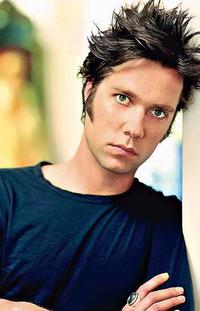
Rufus Wainwright

Rufus Wainwright born 22 July 1973

Singer and songwriter Rufus Wainwright has built a successful career with witty lyrics and rich melodies that have earned him comparisons to Cole Porter and George Gershwin. Wainwright cites Al Jolson, Edith Piaf, and Nina Simone as artists who were among his early inspirations.

Wainwright comes from a distinctly musical family. His father is American folk-singer and humorist Loudon Wainwright III, and his mother is Canadian folk-singer and songwriter Kate McGarrigle. Born in Rhinebeck, New York, Rufus Wainwright grew up in Montreal, where his mother made her home after his parents separated when he was three and subsequently divorced. His sister Martha is also a singer songwriter.

At the age of fourteen Wainwright discovered that he was gay and came out publicly. He has consistently been forthright about his sexual orientation.

His self-titled first album came out in 1998. His sophisticated tunes were compared to the work of Harry Nilsson and George Gershwin. Rolling Stone magazine named him the best new artist of the year. He also resisted suggestions by his record company bosses that he play down his sexuality, which, even today, is unusual.

Wainwright's second album, Poses (2001), showed him maturing as a musician and was well received by both critics and his fans. In the same year, he contributed songs to the films I Am Sam, Shrek and Moulin Rouge, which brought him to a wider audience.

While his career was flourishing, his personal life was troubled. He became addicted to alcohol and drugs, including methamphetamines. In addition, he was depressed. He took to meeting men over the internet and engaging in loveless affairs. To break this dangerous pattern, Wainwright went into rehab and therapy. Upon his recovery, he plunged back into his work, creating new material for the albums Want One ( 2003) and Want Two (2004), which have seen him break through internationally to a yet wider audience, although he has still to break through fully into the mainstream.

Wainwright is a singer with complete security of intonation, even over a dense accompaniment. In addition to being a pianist, he can also play the guitar, often switching between the two instruments when performing live. While some of his songs feature just Wainwright with his piano, many songs are accompanied by various instruments and backing vocals, some songs even by a symphony orchestra, displaying rather complex layering and harmonies with an operatic feel. Wainwright is an avid opera fan, and the influences on his music are evident, as well as his love of Franz Schubert's Lieder. Some of Wainwright's songs have been described as 'Popera' (Pop Opera) or 'Baroque Pop'.

In June 2006 Wainwright played a pair of sell-out shows at New York's Carnegie Hall where he recreated Judy Garland's entire 1961 performance with special guests. He recreated this performance at the London Palladium in 2007.

His album Release The Stars was released in May 2007. His first opera Prima Donna, a four-handed story of a day in the life an opera diva with a libretto in French, premiered at the Manchester International Festival in 2009 to mixed reviews. A sixth studio album was released in spring 2010.

Labels: , , ,

Saturday, July 10, 2010

Neil Tennant

Neil Tennant born 10 July 1954

Neil Francis Tennant (born in North Shields, Tyne and Wear, England) is an English musician, who, with his colleague Chris Lowe, makes up the successful pop duo, Pet Shop Boys.

As a child, Neil attended St Cuthbert's Grammar School, an all-boys' Catholic school in Newcastle-Upon-Tyne. (Sting went to the same school.) Neil's songs This Must Be The Place I Waited Years To Leave and It's A Sin refer to his early life in Catholic school and the strict Catholic upbringing there. It's A Sin caused controversy with its implicit criticism of Catholic education.

In 1975, having completed a degree in history at North London Polytechnic (now London Metropolitan University), Neil worked briefly as an editor for Marvel UK, the UK branch of Marvel Comics. He was responsible for anglicising the dialogue of Marvel's catalogue to suit British readers, and for indicating where women needed to be redrawn more decently for the British editions! In 1977, he moved to Macdonald Educational Publishing and, later, ITV Books. In 1982 he joined the now-defunct British pop magazine Smash Hits, where he rose to Assistant Editor.

At Smash Hits, an opportunity arose for him to go to New York to interview The Police. Whilst there, Tennant arranged to meet Bobby Orlando, a producer who both he and Lowe admired. Tennant mentioned that he was writing songs in his spare time and Orlando agreed to record some tracks with him and Lowe at a later date. Orlando subsequently produced the Pet Shop Boys' first single West End Girls.

The longevity of Pet Shop Boys' career is generally attributed to their ability to create melodic pop/dance music with intelligent lyrics and striking musical and visual style. The duo are one of the most consistently successful duos in pop music, particularly in Europe. Since 1986, they have had 39 top thirty singles in the UK including four number ones.

Although Tennant avoided the issue of homosexuality in the 1980s, preferring his lyrics to be ambiguous, shortly after the release of 1993's Very he publicly 'came out' in Attitude, a UK gay lifestyle magazine.

Labels: , ,

Friday, July 09, 2010

Marc Almond

Marc Almond born 9 July 1957

Marc Almond (born Peter Mark Sinclair Almond in Southport, Lancashire) is a popular English singer, songwriter and recording artist, who originally found fame as half of the seminal synthpop/New Wave duo Soft Cell.

Almond has recorded albums solo, as well as with his band Marc Almond and the Willing Sinners, and as a member of Marc and the Mambas alongside The The's Matt Johnson, and Annie Hogan, with whom Almond would later collaborate on his solo records. In addition, he has also collaborated with a wide range of artists including Antony and the Johnsons, Jools Holland, Kelli Ali of the Sneaker Pimps, Neal X (on the albums Fantastic Star and Open All Night), Marie France, Agnes Bernelle, P J Proby, Nico, Lydia Lunch, Nick Cave, Gene Pitney on the #1 UK single Something's Gotten Hold of My Heart, Siouxsie Sioux, Foetus (aka. J G Thirlwell), Jimmy Somerville, Psychic TV, Coil, Sally Timms of the Mekons, King Roc, John Cale and David Johansen of The New York Dolls and German band Rosenstolz.

Almond initially shot to fame in the early 80s as one half of synth duo Soft Cell, whose combination of drama and peep show sleaze set to an electronic beat gave them hits such as the legendary Tainted Love (UK #1), Bedsitter (UK #3), Torch (UK #2), Say Hello Wave Goodbye (UK #3), Soul Inside (UK # 16), What? (UK #3) and the club hit Memorabilia.

Although Soft Cell disbanded in 1984 just before the release of their third album, This Last Night In Sodom, the duo reunited in 2001 for live shows and in 2002 released a new album entitled Cruelty Without Beauty, from which the single The Night (UK #39) was taken.

His solo singles have enjoyed mixed chart success. The biggest hits have been cover versions: the aforementioned 1989 #1 duet with Gene Pitney and another near chart-topper in 1991 with David McWilliams' The Days of Pearly Spencer, which peaked at #4 in the UK. In 1985, he duetted with Jimmy Somerville and Bronski Beat on a cover of Donna Summer's I Feel Love (Medley) and it hit #3. The highest UK positions his self-penned singles have reached so far have been Stories of Johnny (#23 in 1985), Tears Run Rings (#28 in 1988) and Adored and Explored (#25 in 1995).

His work runs the gamut from electronica and dance music to French chanson, traditional piano ballads, and Russian romance songs, as exhibited on his 2003 album Heart on Snow. Influences include David Bowie, a childhood hero of his, as well as early 60s Northern Soul and disco. Other major influences have been Scott Walker from the Walker Brothers and Jacques Brel, 12 of whose songs Almond reworked in English for his 1989 album Jacques.

Almond's own lyrics are a creative expression of what he sees and are not to be confused with his own life. He also operates a record label, Blue Star Music, on which he has released many of his solo and collaborative records in the UK. In 1999, he received attention and accolades for his autobiography, entitled Tainted Life, which confronts details of his early life, creative ventures, his sexuality, and drug addiction, for which he was hospitalised in 1994. Almond wrote the autobiography without a ghost writer, and his publishers subsequently commissioned him to write a travel book, In Search of the Pleasure Palace: Disreputable Travels, whose publication in 2004 was accompanied by a book-signing tour.

On 17 October 2004, Almond was critically injured in a motorcycle accident in which he was a pillion passenger in London. Although the initial prognosis was considered poor, he was discharged from Royal London Hospital in November 2004 and was said to be making a "remarkable" recovery.

In 2005, he continued his recovery, did some DJ gigs all over Europe and guested at the Meltdown Festival in London in June 2005, hosted by Patti Smith. Almond contributed two songs to this night of Brecht music, Bilbao Song and What Keeps a Man Alive. In October, November and December 2005, Almond went on tour with Jools Holland and his Rhythm & Blues Orchestra, singing two songs during the shows, Say Hello Wave Goodbye and Tainted Love, which had a new arrangement done by Holland. 2006 saw Almond concentrate on recording, making few public appearances, though he did headline the Manchester Gay Pride Festival in August of that year.

In 2007 Almond released a new album of cover songs, Stardom Road. The album also includes one new self-penned song, Redeem Me (Beauty Will Redeem the World), his first composition since the near-fatal motorbike accident. Marc also appears on the 2006 album Black Ships Ate the Sky by experimental band Current 93. He is also working on a DVD compilation of all his promotional video clips as well as his 'last ever' self-penned album, tentatively titled Dining with Panthers, which is due to be completed in 2008.

Almond made his return to the London stage for a three-night run at the historic Wilton's Music Hall from May 4-6 2007. These were his first full-length UK shows since his accident. He had been warming up with shows in Barcelona, Athens and Moscow. He performed further live dates in the UK in 2007, including a Radio special broadcast on BBC Radio 2, and a 50th birthday concert at Shepherd's Bush Empire in London on July 9th 2007.

Almond currently lives in the Bermondsey area of South East London. In his autobiography he describes previously living in Earls Court, in a converted church in Chelsea and most memorably in Soho's Berwick Street, where he lived in a flat overlooking the Raymond Revue Bar.

In June 2010, Almond released Varieté, his first studio album of self-penned songs in almost a decade. Almond has stated this will be his last fully self-penned album. He also announced a new concert tour to celebrate his 30 years in music.

Labels: , , ,

Thursday, July 01, 2010

Fred Schneider

Fred Schneider born 1 July 1951

Fred Schneider, born in Newark, New Jersey, is best known as the frontman of the rock band The B-52's, of which he is a founding member.

Schneider is well-known for his quirky sprechgesang, to which he adds a distinctive swish.

The B-52's were formed by Cindy Wilson and Kate Pierson with drummer Keith Strickland, guitarist Ricky Wilson (Cindy's older brother) and vocalist Fred Schneider after a drunken night at a Chinese restaurant and played their first gig in 1977 at a St Valentine's Day party for friends.

The B-52's sound is marked by the vocals and lush harmonies of Wilson and Pierson, and the generally monotone or spoken-word vocals of Schneider.

The band's quirky take on the New Wave sound of their era was a combination of dance and surf music set apart by the unusual guitar tunings used by Ricky Wilson. Their costume thrift-store chic set them apart as well. The band made a great impression with their early singles Rock Lobster, Private Idaho and Planet Clair and their eponymous debut album in 1979. Wild Planet followed in 1980, followed by a mix album, an EP and a third album, Whammy! in 1983.

In October 1985, the band were devastated by the death of guitarist Ricky Wilson, from what was originally reported to be cancer, but was later revealed to be AIDS. The band's recently-completed album Bouncing Off the Satellites (1986) went un-toured and unpromoted as the band went into an extended hiatus. However, the B-52's returned in 1989 with the album Cosmic Thing, which proved to be their biggest international success, spawning the worldwide hit Love Shack.

Subsequent releases have been less successful and sporadic, and various band members have undertaken solo projects and collaborations with artists ranging from R.E.M to Iggy Pop and Sophie Ellis Bextor. But the B-52's continue.

Fred Schneider has released two solo albums, but neither of these albums were as successful as any of the albums created by The B-52's.

The B-52's hold a fairly unique position in rock music in that all the founding male members of the band were gay.

Labels: , ,

Friday, June 25, 2010

Labi Siffre

Labi Siffre born 25 June 1945

Singer, songwriter, playwright and poet Labi Siffre was born to a Barbadian/Belgian mother and Nigerian father in London.

He is probably best known for his two biggest hit songs It Must Be Love (1971) later covered by Madness, and the Ivor Novello award-winning anti-Apartheid song (Something Inside) So Strong (1987).

In recent years he has concentrated on expressing himself through theatre and poetry, although he released an album of new material in 2006.

He met his partner, Peter Lloyd, in 1964 and in December 2005, after more than 40 years together they became civil partners.

Official site

Labels: ,