Wednesday, March 02, 2011

Lou Reed

Lou Reed born 2 March 1942 (d. 2013)

Lou Reed was an influential American rock singer-songwriter and guitarist. He first came to prominence as the guitarist and principal singer-songwriter of The Velvet Underground (1965-1973).

An enduring but complicated figure whose shadow stretches back five decades to the very beginnings of the American rock underground, Lou Allen Reed was born on Long Island to a middle-class, suburban family - a family with whom he soon found himself at odds, as they were unable to accept his unconventional attitudes and sexually ambiguous behaviour. During his teen years, they went so far as to have him confined in a mental hospital, where he was forced to endure electro-shock treatments and drug therapy as a means to ward off any nascent homosexual tendencies; somehow Reed managed to emerge from this ordeal with his attitudes intact, and, despite his parents' disapproval, continued to pursue his musical interests.

Highly influenced by R&B and early rock music, Reed performed with a number of different bands during his high school years, making his first recording as a member of the doo-wop ensemble The Shades. After high school he moved on to Syracuse University, where his interests broadened to include free jazz and other more experimental forms of music. It was at this time that Reed decided to pursue a career as a writer.

After completing his studies at Syracuse, Reed moved to New York City and took a job as a songwriter at Pickwick Records. His hit-making duties proved less than rewarding, and he soon joined forces with fellow disillusioned employee John Cale to try and create some music that was more worthwhile. Initially assuming the name The Warlocks, the two spent short periods working with various other musicians as The Primitives and The Falling Spikes before finally enlisting guitarist Sterling Morrison and drummer Angus MacLise and becoming The Velvet Underground in 1965. Later in the year MacLise quit and was replaced by Maureen Tucker, at which time the band began performing in local clubs and cafés; not long afterwards they came to the attention of art prankster Andy Warhol, who, intrigued by their unconventional approach, offered to assume management duties for the band.

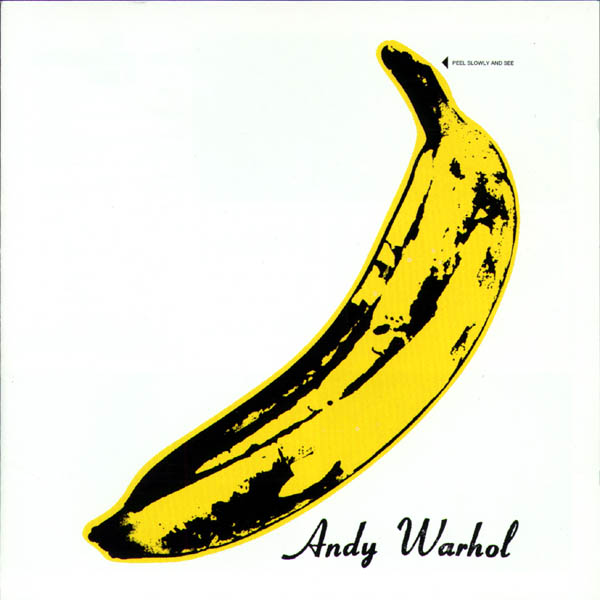
Warhol subsequently integrated the Velvets into his multimedia project The Exploding Plastic Inevitable, adding German vocalist Nico to the line-up and sending them out on a tour of the US and Canada in 1966. Later in the year, the band's debut was recorded within the space of one or two days; the album was eventually released by MGM in early 1967, sporting a Warhol-designed peelable banana as its cover. The strange mix of styles - and particularly the controversial subject matter dealt with in Reed's lyrics - resulted in an extremely mixed reception for the album, with sales being far from brisk. By the following year both Warhol and Nico were shed, and the band enlisted The Mothers of Invention's producer Tom Wilson to create their second album White Light/White Heat. Public and critical interest remained elsewhere. By this time, the relationship between Reed and Cale had entirely deteriorated, and Cale was fired from the band before sessions for a third album were organised.

After bringing in Doug Yule to replace Cale, Reed recorded two more albums with the Velvets in a markedly different stylistic vein: The Velvet Underground (1969) and Loaded (1970) - although a considerable amount of material not contained on these albums was also generated during this period (most of which would eventually surface in the mid-80s on the collections VU and Another View). The personal and professional dynamics of the group remained unstable, however, and in August of 1970 Reed made the decision to quit just prior to the release of Loaded. The next year was spent away from the music industry, living in his parents' house on Long Island and working for his father's accounting firm; in 1971 a contract with RCA finally initiated the launch of his solo career, and an eponymous album followed in 1972. Primarily featuring Velvets-era material, the release accordingly received the same lack of interest that had plagued his previous band.

In the hopes of avoiding the dismal response given to his first solo effort, Reed enlisted the help of long-standing Velvets fans David Bowie and Mick Ronson to create his second offering, Transformer (1972). Given a thorough glam makeover by the pair, the album featured one of his most commercially successful songs (Walk On The Wild Side) and at last provided a bit of forward momentum to his floundering career. Regardless of his new-found popularity, the subject matter of Reed's songs remained as uncompromising as ever - a fact that was abundantly evident on the follow-up release Berlin (1973), a concept album that explored the disintegrating lives of two drug addicts. This oscillation between commercial success and commercial suicide continued throughout the rest of his 70s output: the live collection Rock N Roll Animal (1974) reviving the enthusiasm generated by Transformer, followed by the blatantly mainstream Sally Can't Dance (1974) and the extreme, formless feedback assault of Metal Machine Music (1975). Upbeat pop was then shamelessly indulged on Rock And Roll Heart (1976), only to be discarded in favour of the the raw punk of Street Hassle (1978).

With the arrival of the 1980s, Lou Reed at last managed to gain control of his self-destructive personal habits, with the result that his recorded output became far less erratic. The strong critical momentum generated in the first half of the decade by The Blue Mask (1982), Legendary Hearts (1983) and New Sensations (1984) served to cement his standing as a major American songwriter once and for all, and this status was further reinforced by later releases such as New York (1989) and Magic And Loss (1992).

The 80s even witnessed a temporary reconciliation between Reed and his former bandmate John Cale, brought about by the death of Andy Warhol in 1987. The pair initially renewed their partnership in order to commemorate their former producer with the 1990 collection Songs For Drella, but by 1993 a full-scale reunion of the Velvet Underground had been organised. Not surprisingly, the reunion only managed to survive a brief European tour before the relationship between Reed and Cale once again hit the skids, and the death of Sterling Morrison in 1995 brought an end to the possibility of any future band revivals.

In distinct contrast to his years with the Velvet Underground, in the 90s and 00s Reed found himself an established and widely-respected member of the music industry. What would prove to be an enduring relationship with performance artist Laurie Anderson was started in the early 90s, with some musical cross-pollination resulting. During this same period, a relationship of a different nature was also established with theatre director Robert Wilson, initiated with the collaborative production Time Rocker (1996) and resuming for the Edgar Allan Poe-derived POE-Try in 2001. The Raven, a recorded version of the latter project featuring readings by Anderson, David Bowie, Steve Buscemi, Willem Dafoe, Amanda Plummer and several others was eventually released in 2003, and closely followed by the live document Animal Serenade in 2004.

In 2007 Reed rather unexpectedly began performing and touring a mixed media performance of his 1973 Berlin album. Reed continued to record and tour new work and revisit his previous work alone and in collaboration, now a highly respected, influential and established music veteran.

In April 2013, Reed underwent a liver transplant. Afterwards, he claimed on his website to be 'bigger and stronger' than ever. On October 27, 2013, Reed died at the age of 71.

Labels: , , , , ,

Tuesday, February 22, 2011

Billy Name

Billy Name born 22 February 1940

Billy Linich, known as Billy Name and more recently Billy Goat, is an American photographer, artist, filmmaker, lighting designer, and the main archivist of the Warhol era from 1964-70.

His brief romance and subsequent close friendship with Andy Warhol fostered substantial collaboration on Warhol's most influential work, including his films, paintings and sculpture. Linich became Billy Name among the coterie known as the Warhol Superstars, and he is considered one of the most significant. He was responsible for 'silverizing' Warhol's New York studio the Factory, where he lived until 1970.

When Andy Warhol decided, during the last months of 1963, that he was too busy making films to take pictures at The Factory (and, besides, the camera was too complicated and it had too many buttons), he turned the task over to Billy Name. Prior to his association with Andy, in the late 1950s and early 1960s, Linich had been involved in theatrical lighting design.

Within a short time, Linich became a permanent fixture at the Factory, having taken up residence in the back of the studio at 231 East 47th Street during his trademark silvering of its interior from January to April 1964. With the gift of Andy’s 35-mm single-lens reflex Honeywell Pentax camera and the operating manual in hand, Billy Name taught himself the technical aspects of photography. He had soon converted one of the Factory’s bathrooms into a darkroom where he mastered the methods of processing and developing film. These newly acquired skills, combined with his background in lighting, his innate sense of artistry and his desire to experiment, resulted in the production of an intensive body of work that captured for posterity his 'silver years' at the Factory (1963-70).

Billy Name’s close friendship with Andy Warhol and his role as a trusted player in the making of Warhol’s artistic environment gave him the opportunity to focus his keen eye on the scene at the Factory, created by a core group of participants who largely improvised before the camera’s eye, evolving a lively, cutting-edge mise-en-scene. Billy contributed immensely to this atmosphere, as his understanding of theatre and lighting was important as was the essential look itself of the transformed space and silvered walls of the factory. The unique position that Billy assumed gives his photographs a particular immediacy, intimacy and knowledge.

Billy Name left the Factory in early 1970 because he felt 'isolated' and thought he should 'find out what was going on the world'. He felt that Paul Morrissey and Fred Hughes had pretty much taken over the operations and that Warhol didn't 'need' him anymore.

Billy Name lives in his native New York state and continues to do photography. As one of the key survivors of the classic Factory era, he is regularly sought out for documentaries and interviews.

Billy Name - Official Website


Labels: , ,

Saturday, February 19, 2011

Jackie Curtis

Jackie Curtis born 19 February 1947 (d. 1985)

John Holder Jr, better known as Jackie Curtis, was a famous transgendered film star, poet and playwright.

Curtis was born in New York City, and later died there of a drug overdose. He spent part of his life living and performing as a man (sometimes adopting a James Dean persona) and sometimes as a woman.

While living and performing in drag, she would typically wear lipstick, glitter around the eyes and in her frizzed-out red hair, and a dress, frequently ripped and torn, as were her stockings. This unique style, a combination of trash and glamour which Curtis pioneered in the late 1960s when frequenting such high profile nightclubs as Max's Kansas City, has prompted assertions that Jackie inspired the Glam Rock persona of the 1970s.

'Jackie Curtis is not a drag queen. Jackie is an artist. A pioneer without a frontier,' Andy Warhol said of his associate. Primarily a stage actor, Curtis debuted at the age of 17 in Tom Eyen's play Miss Neferititi Regrets. Curtis began to write his own plays immediately after this experience, often featuring famous transsexuals, such as his friend Candy Darling and, later, Holly Woodlawn, both of whom appeared in his productions which enjoyed successful runs Off-Off-Broadway and were well-reviewed in New York. Curtis's work is representative of the Theatre of the Ridiculous.

As writer and lead actress some of her plays include: Glamour, Glory and Gold, which also starred Candy Darling and Melba LaRose Jr; Amerika Cleopatra which featured Harvey Fierstein; Femme Fatale, with Patti Smith, Jayne County (at that time billed as Wayne County) and Penny Arcade; and Heaven Grand In Amber Orbit with Holly Woodlawn, produced by John Vaccaro's Playhouse of the Ridiculous in 1970.

These plays caught the attention of Andy Warhol and his director Paul Morrissey, who cast Jackie and Candy in Flesh (1968) and, with the addition of Holly Woodlawn, in Women in Revolt (1971); a hilarious spoof of the women's liberation movement in which all the female leads are played by transsexuals and transvestites. Warhol films directed by Morrissey were made in a completely improvised. Morrissey gave the actors the basic idea of the scene and line suggestions and then simply let the camera roll.


Apart from acting, Curtis also showed talent in poetry and singing. In 1974 Curtis and Woodlawn appeared in the successful and critically acclaimed Cabaret in the Sky at the New York Cultural Center. A CD of songs by Paul Serrato from the Curtis musicals Lucky Wonderful and Vain Victory, including the love ballad Who Are You which Curtis sang (as a man) to Candy Darling, was released in 2004.

Curtis was also the 'Jackie' in Lou Reed's song Walk On The Wild Side, which was about the 'superstars' Reed knew from Andy Warhol's studio The Factory. The verse speaks of his drug addiction and fascination with James Dean: '...Jackie is just speeding away - Thought she was James Dean for a day... then she just had to crash, valium would have helped that bash...'

Jackie Curtis made two more movies during the 1980s. Drug addiction, however, had taken control of Curtis's life, eventually leading to his death.

In 2004, a film based on Curtis's life, Superstar in a Housedress, brought Jackie Curtis back to the limelight, exposing some little known facts about the performer to the public.

Curtis's influence on a number of people, friends and associates such as Holly Woodlawn, Joe Dallesandro and Penny Arcade, and observers such as David Bowie, is noted in the film. As well, Jayne County writes of Jackie as being '...the biggest influence on me at this time.' Whether her influence was in the realm of style, with her use of glitter that predated the glam rockers, or her ripped and torn dresses and stockings that predated punk, employing the use of performance both on and off stage and screen; or in the more traditional arts of playwriting and poetry, both attest to her critique of glamour, fame and pop culture in America that she explored in several mediums. However, it was perhaps her bravery in gender transgressions that is Jackie Curtis's legacy.

Labels: , , , , , ,

Friday, August 06, 2010

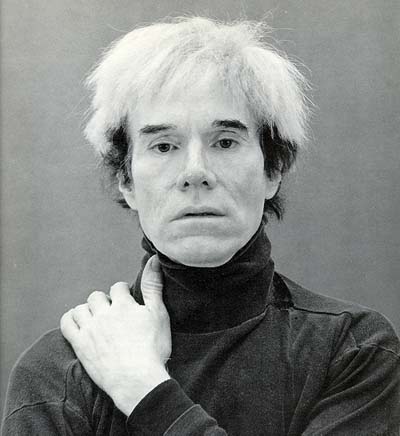
Andy Warhol

Andy Warhol born 6 August 1928 (d. 1987)

Andrew Warhola, known as Andy Warhol, was an American artist of Slovak origin and a central figure in the movement known as pop art. After a successful career as a commercial illustrator, Warhol became famous worldwide for his work as a painter, an avant-garde film-maker, a record producer, an author, and a public figure known for his membership in wildly diverse social circles that included bohemian street people, distinguished intellectuals, Hollywood celebrities and wealthy aristocrats.

A controversial figure during his lifetime (his work was often derided by critics as a hoax, or 'put-on'), Warhol has been the subject of numerous retrospective exhibitions, books, feature and documentary films since his death in 1987.

Warhol coined the phrase 15 minutes of fame, which refers to the fleeting condition of celebrity that attaches to an object of media attention, then passes to some new object as soon as the public's attention span is exhausted.

Warhol is best known for his extremely simple, larger-than-life, high-contrast colour paintings, silk-screen prints of packaged consumer products, everyday objects - such as Campbell's Soup cans, poppies and the banana appearing on the cover of the album The Velvet Underground and Nico (1967) - and for his stylised - and much pastiched - portraits of twentieth century celebrity icons - such as Marilyn Monroe, Elvis Presley, Jacqueline Kennedy Onassis and Elizabeth Taylor.

He was also a highly influential and innovative film-maker, although his work, largely controlled by his estate and commercially unavailable, has been little seen in recent years.

In many of his efforts Warhol has taken the position of a producer or director, rather than a creator. From an artist he gradually became the person that determined the direction and was the public face of a company, having a staff of sorts to do the actual labour involved in his products. He would coin an idea and oversee its execution, his Factory evolved from an atelier into an office.

In this respect Warhol talked about 'Art Business' and 'Business Art', and how he thought business was the best type of art. This was a radical new stance, as artists had always presented themselves as flamboyant, individual, visionary outsiders - commenting on the normal part of society, but never really being a part of it. And receiving appreciation for that position on the basis of their idealism, rare talents and personalities. Warhol and other pop-artists helped redefine the artist's position as professional, commercial, popular; a logical and valuable part of society. He did this using methods, imagery and talents that were (or at least seemed to be) available to everyone. Perhaps that has been the most meaningful result of (his) Pop Art: a philosophical and practical incorporation of art into society, art as a product of society.

Warhol died in New York City from a routine gallbladder surgery at the age of 58. Warhol was afraid to enter hospitals and see doctors, so he had delayed having his recurring gallbladder problems checked.

Warhol was one of the first major homosexual American artists to be open about his sexuality. Many people think of Warhol as 'asexual' and merely a 'voyeur', but these notions have been debunked by biographers, explored by other members of the factory scene such as Bob Colacello (in his book Holy Terror: Andy Warhol Up Close), and by scholars. The question of how his sexuality informed Warhol's work and shaped his relationship to the art world is a major subject of scholarship on the artist, and is an issue that Warhol himself addressed in interviews, in conversation with his contemporaries, and in his publications.

Throughout his career, Warhol produced erotic photography and drawings of male nudes. Many of his most famous works (portraits of Liza Minnelli, Judy Garland, Elizabeth Taylor, and films like My Hustler, Blow Job, and Lonesome Cowboys) draw from gay underground culture and/or openly explore the complexity of sexuality and desire. Many of his films premiered in gay porn theatres. That said, some stories about Warhol's development as an artist revolve around the obstacle his sexuality initially presented as he tried to launch his career. The first works that he submitted to a gallery in the pursuit of a career as an artist were homoerotic drawings of male nudes. They were rejected for being too openly gay.

To an extent, the evolution of his Pop style can be traced to the years when Warhol was first dismissed by the inner circles of the New York art world and thus created his own.

Labels: , , , , ,

Wednesday, December 31, 2008

Joe Dallesandro

Joe Dallesandro born 31 December 1948

Joseph Angelo (Joe) Dallesandro is an American actor and Warhol icon.

Joe Dallesandro was known for his voluptuous physical beauty, flesh-baring film appearances, and openness about his bisexuality. Although he never became a major mainstream star, Dallesandro is generally considered to be the most famous male sex symbol of American underground films of the 20th century. According to biographer Michael Ferguson, Dallesandro was 'the first openly eroticized male sex symbol of the movies to walk naked across the screen'. As well as beauty, his on-screen presence has an enigmatic quality. This derives from what often seems (especially in his appearance in several Warhol films) a bored or surly withholding, and almost comical physical inertia.

As a teenager, Dallesandro supported himself by nude modelling - including sessions for Bob Mizer's Athletic Model Guld and Bruce of Los Angeles - and prostitution, and appeared in at least one gay porn film.

Dallesandro met Andy Warhol and Paul Morrissey in 1967 while they were in the midst of shooting The Loves of Ondine, and they cast him in the film on the spot.

Dallesandro was the obvious choice for the part of a teenage hustler in Flesh, where he had several nude scenes. To a large extent, it was because of him that Flesh became an internationally successful film. Dallesandro became the most popular of the Warhol stars. He quickly drew a devoted cult following that savoured his long sandy hair, distinctively muscular physique, large, thick penis (which is often directly alluded to in the Warhol films), and his utter unselfconsciousness in baring these attributes on camera.

Dallesandro also appeared in Lonesome Cowboys, Trash, Heat, Andy Warhol's Frankenstein and Andy Warhol's Dracula, also directed by Morrissey. These last two films were shot in Europe, and, after the films were completed, Dallesandro chose not to return to the US. He continued to star in films made mainly in France and Italy for the rest of the decade, returning to America in the 1980s. He made several movies without Warhol and Morrissey, and is known for his portrayal of 1920s gangster Lucky Luciano in Francis Coppola's The Cotton Club. He also appeared as a religious zealot in Cry Baby by John Waters.

Dallesandro has a famous tattoo on his upper right arm that reads 'Little Joe', and was portrayed as the money-minded 'Little Joe' in Lou Reed's hit 1972 song Walk on the Wild Side, which was about the characters Reed knew from Warhol's studio, The Factory. A Warhol photograph of the large crotch bulge of Dallesandro's tight blue jeans graces the famous cover of the Rolling Stones album Sticky Fingers.

The Smiths would later use a still photograph of Dallesandro from the film Flesh as the cover of their eponymous debut album.

John Waters has praised him as, 'A wonderful actor who forever changed male sexuality on the screen'. He is considered an underground film and gay culture icon, and still has a large cult following.

Dallesandro has been married three times and has two sons. He currently manages a hotel in the heart of Hollywood, where he lives with his cat Booky. He has said: 'I've lived such a full life. I've had such great things. There were some hardships, but overall everything has been great.'

Joe Dallesandro - official site

Labels: , , , ,

Monday, November 24, 2008

Candy Darling

Candy Darling born 24 November 1944* (d. 1974)

Candy Darling was a pre-op transsexual Warhol superstar who starred in Andy Warhol's films Flesh (1968) and Women in Revolt (1971).

Candy Darling was born James Lawrence Slattery in Forest Hills, New York, son of a bookkeeper at Manhattan's Jockey Club and a father who was described as a violent alcoholic. There is some conjecture around Candy's year of birth. According to former Warhol associate, Bob Colacello, Candy was born in 1946, while IMDb has listed her year of birth as 1948. Her friend, roommate, and posthumous editor, Jeremiah Newton, states that she was born in 1944.

Early years - as a male - were spent in Massapequa Park, Long Island, New York where he and his mother had moved after his parents divorced. His half-brother Warren, from his mother's first marriage, left home for the US military, leaving Jimmy as the only child; Warren later denied his connection to Candy/Jimmy.

Jimmy spent much of his childhood absorbing the influences of US television and old Hollywood movies, from which he learned to impersonate his favourite actors and actresses - his favorite being Joan Bennett and Kim Novak. He claimed to have 'learned about the mysteries of sex from a salesman in a local children's shoe store' and finally revealed an inclination towards cross-dressing when his mother confronted him about local rumours which described him dressed as a girl frequenting a local gay bar called The Hayloft. In response Jimmy left the room and reappeared in full drag. His mother later said that, 'I knew then... that I couldn't stop Jimmy. Candy was just too beautiful and talented.'

Late at night Candy would often take a cab (thereby avoiding the attention of neighbours she would receive if she walked) a short distance to the Long Island Rail Road station for the train to Manhattan. Once there, she referred to her modest home in Massepequa Park as her 'country house' and hung out in Greenwich Village, meeting people through the circle of Seymour Levy on Bleecker Street.

Her first assumed name was Hope Slattery. Candy adopted this name sometime in 1963/1964 after she started going to gay bars in Manhattan and making visits to a doctor on Fifth Avenue for hormone injections. Jackie Curtis claimed that Candy adopted the name from a well-known Off-Off Broadway actress named Hope Stansbury, with whom she lived with for a few months in an apartment behind the Caffe Cino so he could study her. Holly Woodlawn remembers that Candy's name evolved from Hope Dahl to Candy Dahl and then to Candy Cane. In her autobiography, Woodlawn recalled that Candy had adopted the last name of Darling because a friend of hers affectionately called 'Candy, darling' so often that it finally stuck.

Before they actually met in 1967, Candy saw Andy Warhol at the after-hours club called The Tenth of Always. Candy was with Jackie Curtis, who invited Warhol to the play she had written and directed called Glamour, Glory and Gold.

It wasn't long before Warhol invited Candy to appear in one of his movies. She was given a short comedic scene in Flesh (1968) with Jackie Curtis and Joe Dallesandro. After Flesh, Candy was cast in a central role in Women In Revolt (1971). She played a Long Island socialite drawn into a woman's liberation group called PIGS (Politically Involved Girls) by a character played by Jackie Curtis.

Women in Revolt was first shown at the first Los Angeles Filmex as Sex. Later it was shown as Andy Warhol's Women, an homage to George Cukor. Unable to get a distributor for the film, Warhol rented out a small cinema in New York and launched the film with a celebrity preview on February 16, 1972. After the screening there was a dinner in Candy's honor at the restaurant, Le Parc Perigord on Park Avenue at 63rd Street, followed by a party at Francesco Scavullo's townhouse round the corner, where they watched disastrous TV reviews of the movie.

Candy Darling went on to appear in other independent films. She also appeared in Klute (as an extra in the disco scene) with Jane Fonda and Lady Liberty with Sophia Loren. Her attempt at cracking the mainstream movie circuit - by campaigning for the leading role in Myra Breckinridge (1970) - led to rejection and bitterness.

Theatre credits include two Jackie Curtis plays - Glamour, Glory and Gold (1967) and Vain Victory: The Vicissitudes of the Damned (1971) and Tennessee Williams' play, Small Craft Warnings, at the invitation of Williams himself. She also starred in the 1973 Off-Broadway revival of The White Whore and the Bit Player, a 1964 play by Tom Eyen. Darling's character, a Hollywood actress known only as 'the Whore', was based on Marilyn Monroe [pictured].

Candy succumbed to leukemia and pneumonia on 21 March 1974, aged about 29. She allegedly developed leukemia as a result of the hormones she had been taking, the long-term results of which had not been sufficiently studied. In a letter written on her deathbed and intended for Andy Warhol and his followers, Darling said, 'Unfortunately before my death I had no desire left for life ... I am just so bored by everything. You might say bored to death. (D)id you know I couldn't last. I always knew it. I wish I could meet you all again.'

Her funeral was attended by huge crowds; Gloria Swanson was remembered for saluting Darling's coffin. The New York Times honoured her request that her obituary should appear on the front page of that newspaper.


She is the subject of The Velvet Underground's song Candy Says and was one of several Warhol associates mentioned in Lou Reed's Walk on the Wild Side.

Peter Hujar's photo, 'Candy Darling on her Deathbed' was used by Antony and the Johnsons for the cover of their 2005 Mercury Music Prize winning album I Am a Bird Now. [pictured above]

An image of her, taken from Women In Revolt, was also featured on the front cover of the 1989 single Sheila Take a Bow by The Smiths. This was in keeping with lead singer Morrissey's penchant for using photographs of sometimes obscure cultural icons on the band's record sleeves.

Labels: , , , , , ,

Friday, November 14, 2008

Jack Smith

Jack Smith born 14 November 1932 (d. 1989)

Jack Smith was an American film-maker, actor, and pioneer of underground cinema. He is generally acclaimed as a founding father of American Performance Art, and has been critically recognised as a master photographer, though his photographic works are rare and remain generally unknown.

Born in Columbus, Ohio, when he was seven his father died in a fishing accident off the Gulf Coast after his family had moved to Texas. Jack, his sister and mother lived in trailer parks until his mother remarried in approximately 1945 and the family moved to Wisconsin. When he graduated from high school in Kenosha, his parents gave him his first movie camera (8mm), which was stolen from him shortly thereafter.

He left home and moved to Chicago in 1951 and then to Los Angeles in 1952 where he begun making a 16mm film later titled Buzzards Over Baghdad. He moved to New York the following year, in 1953, where he worked as an office boy and took film classes at the City College of New York. Smith became involved in the underground film scene after moving to New York.

Smith was one of the first proponents of the aesthetics which came to be known as 'camp' and 'trash', using no-budget means of production (e.g. using discarded colour reversal film stock) to create a visual cosmos heavily influenced by Hollywood kitsch, orientalism and drag culture. His style influenced the film work of Andy Warhol as well as the early work of John Waters, and all three of them were part of the 1960s Gay Arts Movement.

Smith has also been referenced by artists such as Laurie Anderson, Cindy Sherman and Mike Kelley, filmmakers David Lynch and Matthew Barney, photographer Nan Goldin, musicians John Zorn, Lou Reed and David Byrne, and theatre director Robert Wilson.

The most famous (and arguably the most notorious) of Smith's productions is Flaming Creatures (1962) [pictured left]. Flaming Creatures features an Arabian harem of erotically possessed creatures amid a wild bacchanalia that blurs all gender and sexual norms. Banned in 22 states of the US and four countries, the film was subject to an obscenity case that famously reached the US Supreme Court. The scandal around Flaming Creatures, made the artist determined never to complete another film. Smith would later assert the discourse about censorship and sexuality that was generated prevented audiences from appreciating its intended humour.

The movie is basically a travesty on Hollywood B movies and tribute to actress Maria Montez, who starred in many such productions. However, authorities considered some scenes to be pornographic, copies of the movie were confiscated at the premiere and it was subsequently banned (technically, it still is to this day). Despite not being viewable, the movie gained some notoriety when footage was screened during Congressional hearings and right-wing politician Strom Thurmond mentioned it in anti-porn speeches.

Smith's next movie Normal Love was the only work in Smith's oeuvre with an almost conventional length (120 mins), and featured a whole host of underground stars, including Mario Montez, Diane di Prima, Tiny Tim, Francis Francine, Beverley Grant, John Vaccaro, and others. The rest of his productions consists mainly of short movies, many of them never to be screened in a cinema, but to feature in performances and constantly re-edited to fit the stage needs (including Normal Love).

Apart from his own work Smith has also worked as an actor himself. He played the lead in Andy Warhol's unfinished film Batman Dracula, Ken Jacobs' Blonde Cobra, and appeared in several theatre productions by Robert Wilson.

He also worked as a photographer and founded the Hyperbole Photographic Studio in New York. In 1962 he released The Beautiful Book, a collection of pictures of New York artists, which has since been republished.

After his last film, No President (1967), Smith created performance and experimental theatre work until his death on September 25, 1989 from AIDS-related pneumonia.

Until recently, Smith's archive was co-managed by New York performance artist and former Warhol superstar Penny Arcade, alongside the film historian J Hoberman via their corporation The Plaster Foundation Inc. In January 2004, the New York Surrogate Court ordered Hoberman and Arcade to return Smith's archive to Smith's legal heir, his surviving sister Sue Slater, after hearing Hoberman et al's unsuccessful arguments that the Plaster Foundation should own Smith's work. As of October 2006, Hoberman et al had yet to surrender Smith's archive, citing claims for monies due to them from the estate for time and expenses associated with managing the archive.

Profile on warholstars.org

Labels: , , , ,

Sunday, October 26, 2008

Holly Woodlawn

Holly Woodlawn born 26 October 1946

Holly Woodlawn (born Haroldo Santiago Franceschi Rodriguez Danhakl) is a transvestite and former Warhol superstar, who appeared in his movies Trash (1970) and Women in Revolt (1972).

Born in Juana Diaz, Puerto Rico, she adopted the name Holly as an homage to the heroine of Breakfast at Tiffany's and in 1969 added the surname from a sign she saw on an episode of I Love Lucy.

She met Andy Warhol in the Factory at a screening of Flesh. Through him she met Jackie Curtis, who cast Woodlawn in her play Heaven Grand in Amber Orbit in the autumn of 1969. In October she was assigned a bit role in Trash, but so impressed director Paul Morrissey that she was given a larger role.

In May 1971, Woodlawn replaced Candy Darling at the La Mama Theatre, New York in a production of Vain Victory written and directed by Jackie Curtis. She was arrested and briefly incarcerated in Puerto Rico after being caught shoplifting.

By 1976 the work had dried up, and Woodlawn moved to San Francisco. She returned to New York later in the year and had a brief revival after appearing on Geraldo Rivera's talk show before being jailed again in 1977 for not fulfilling a previous probation obligation. She was released on the appeal of politician Ethan Geto, who helped organise a benefit for her.

Woodlawn continued to make cameo appearances in plays and films such as Billy's Hollywood Screen Kiss throughout the 1980s and 1990s. After Warhol's death, she was a frequently requested commentator on his life and influence. She currently resides in West Hollywood.

Woodlawn began performing in cabaret shows in sold-out New York and Los Angeles performances in the early 2000s.

Like so many of Warhol's Factory, she is mentioned in Lou Reed's Walk On The Wild Side: 'Holly came from Miami FLA, / hitch-hiked her way across the USA, / plucked her eyebrows on the way, / shaved her legs, and then he was a she...'

Labels: , , , ,