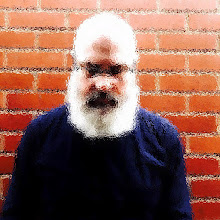
Leigh Bowery
 Leigh Bowery born 26 March 1961 (d. 1994)
Leigh Bowery born in Sunshine, a suburb of Melbourne, Australia was a performance artist, club creature, and clothing designer.
After attending Melbourne High School, and having abandoned his home in Australia and a fashion course there he had a colourful exhibitionist career following his arrival in London in 1980, making a name for himself by dramatic performances of dance, music and simple exhibitionism, while wearing bizarre and very original outfits of his own design. He was frequently seen performing in Taboo, a fashionable night club he operated, (after years brightening the doorways of other people's events) near Leicester Square and is frequently identified as a key influence on the style of the New Romantic music movement that was popular in Britain during the early 1980s. Though perhaps he is more properly placed within the context of 'The Cult With No Name' as the activities of the pansexual set of young Londoners had already been dubbed.
 A large man, he used his costumes to exaggerate his size and the effects were frequently overpowering and unforgettable for those who encountered him, the more so because of his confrontational style. A wallflower he was not.
In the late 1980s, Bowery collaborated as a dancer with the post-Punk ballet dancer Michael Clark, after having been his costume-designer for a number of years. He also participated in multi-media events like I Am Kurious Oranj and the play Hey, Luciani, with Mark E. Smith and The Fall.
 In 1988 he had a week-long show in Anthony d'Offay's prestigious Dering Street Gallery in London's West End, in which he lolled on a chaise longue behind a two-way mirror, primping and preening in a variety of outfits while visitors to the gallery looked on. The insouciance and audacity of this overt queer narcissism captivated gallery goers, critics and other artists. Bowery's exquisite appearance, silence and intense self-absorption was further accentuated by his own recordings of random and abrasive traffic noises which were played for the show's duration. The very intimate and private was flung in the face of the public complete with a 'Street Life' sound track, hinting perhaps at something still darker. In some outfits he appears like some strange roadside creature, like a cat that finally got the cream (of art world attention), in others he is the 'Satan's Son' that he would whisper, years later, on his deathbed.
 The difficulty of engaging in such an hedonistic and wilfully original life and artistic practice without independent financial means has long been the curse of the both the innovator and bohemian. For all his art world exposure and contacts it seems peculiar now that no-one suggested to Bowery that he might adopt the very viable strategy of Gilbert and George - an earlier generation's living sculpture - and derive an income from selling images of himself rather than rely on occasional commissions, modelling work for Lucian Freud, or design consultancy for Rifat Ozbek. In the later years of his life the advantages of having an independent income started to become more obvious and Bowery looked to music, in the form of art rock/pop group Minty, to possibly provide this independent income stream. 'I have a profile,' he confided to flatmate and fellow Australian Anne Holt, 'But I have no money.' Minty he hoped would provide a solution to this crux.
He outraged the London gay scene with a performance at SMact, a short lived SM Night at Bar Industria. Using Nazi costumes with a lesbian friend named Barbara, they turned concentration camp experimentation into SMart. The readers of Capital Gay, the London weekly newspaper, turned on fellow performer Berkley, who had played the victim, and Barbara and Leigh weathered the storm. He was after all, 'the punk of the eighties' and longtime darling of the international avant garde.
In 1993 Leigh formed Raw Sewage with Sheila Tequila and Stella Stein. They performed in 18" platforms at the Love Ball in Amsterdam, but the collaboration ended in dramas. Leigh went on to appear as 'Madame Garbo' in The Homosexual (or the difficulty of sexpressing oneself) by Copi at Bagleys Warehouse in London's King's Cross.
 During 1994 Leigh performed the Fete worse than death in Hoxton Square, Leigh and Nicola Bateman (later, Nicola Bowery) showed their classic 'Birth Show' in which Leigh gives birth to Nicola, using a specially designed harness which holds her upside down to his belly under his costume.
In November 1994 Minty began a two week show at London's Freedom Cafe, watched by the young Alexander McQueen but it was too much for Westminster City Council who closed the show down after only one night.
He married his long-term female companion Nicola Bateman on May 13, 1994, only months before his death from AIDS-related illness at UC Hospital London on New Year's Eve 1994, after a five week battle that only a handful of friends were informed about. 'Tell them I've gone pig farming in Bolivia' is one reported death bed pronouncement which is illustrative of the gallows humour and dark irony that can be traced in much of his work.
Glimmers of the influences of film maker John Waters and artist Andy Warhol can be seen in his keen appreciation of bad taste, truly outlandish self presentation and a deep desire to shock and confuse. 'I want to be the Andy Warhol of London' he once said. 'Dressed-up' he was obviously 'Modern Art on legs' (as Boy George commented), but in daytime attire the badly-fitting, obvious, disturbing wigs are a nod to Warhol's self-presentation strategies that has thus far seemed invisible to both critics and friends alike.
He became known to a wider audience by appearing in a Post-Modernist/Surrealist series of television and cinema and commercials for the Pepe jeans company, MTV London and other commissions such as stage work for rock band U2. He also appeared regularly in articles, vox pops and as cover star in London's i-D magazine. Tired brands in need of fresh ideas tended to covet his dazzling originality.

 Bowery was painted in a series of nude portraits by Lucian Freud [above and left], and travelled internationally to the opening events of his exhibitions. This modelling work provided him with an income of sorts for a period and he certainly relished Freud's connections to the British establishment, though it seems strange now that such an explosively original and inventive artist like Bowery would subordinate himself to the likes of Freud.
 Bowery received posthumous exposure in the form of the West End and Broadway musical, Taboo starring Boy George, which transferred to Broadway after running for 16 months in London - Bowery was played by Boy George [pictured as Bowery] and subsequently Matt Lucas. Bowery's career is described more straightforwardly in a 2002 documentary The Legend of Leigh Bowery, directed by Charles Atlas.
Labels: Australians, Death from HIV/Aids, Designers, Leftfield/Avant-Garde, Performance Artists
posted by Peter Jacobs at 12:01 am
1 comments