Tuesday, May 17, 2011

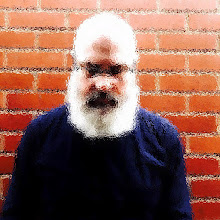
Howard Ashman

Howard Ashman born 17 May 1950 (d. 1991)

Howard Ashman was an American playwright and lyricist.

Howard Ashman first studied at Boston University and Goddard College and then went on to achieve his master's degree from Indiana University in 1974. He collaborated with Alan Menken on several films, notably animated features for Disney, Ashman writing the lyrics and Menken composing the scores.

Ashman, born Howard Elliott Ashman in Baltimore, Maryland was the artistic director of the WPA Theater in New York. He first worked with Alan Menken on a 1979 musical adapted from Kurt Vonnegut's God Bless You, Mr. Rosewater. They also collaborated on Little Shop of Horrors with Ashman as director, lyricist, and librettist.

Ashman was director, lyricist and bookwriter for the 1986 Broadway musical, Smile (music by Marvin Hamlisch). Along with Menken, Ashman was the co-recipient of two Grammy Awards, two Golden Globes and two Oscars. His second Academy Award in 1992 was awarded posthumously for Best Song and was accepted by his partner, Bill Lauch.

He succumbed to complications from AIDS at the age of 40 in New York, during the making of both Beauty and the Beast and Aladdin. The song Proud of Your Boy from Aladdin was cut from the movie after the mother was taken out of the story. Ashman and Menken had finished the songs for Beauty and the Beast, but Tim Rice was brought in to finish the Aladdin songs with Menken.

He was posthumously named a Disney Legend in 2001. Beauty and the Beast was dedicated to him, 'To our Friend Howard, who gave a mermaid her voice and a beast his soul, we will be forever grateful. Howard Ashman 1950-1991'

Labels: , , , , , , , ,

Monday, May 02, 2011

Lorenz Hart

Lorenz Hart born 2 May 1895 (d. 1943)

Lyricist Lorenz Hart is, with his musical partner Richard Rodgers, one of the greatest American songwriters of all-time.

His best-loved lyrics include Bewitched, Bothered & Bewildered, Blue Moon, My Funny Valentine and Where Or When.

Hart was born in Harlem to Jewish immigrant parents. He attended Columbia University, where a friend introduced him to Rodgers [pictured left with Hart], and the two joined forces to write songs for a series of amateur and student productions. They continued working together until Hart's death in 1943, along the way producing scores for a series of hit shows and making a substantial contribution to the Great American Songbook.

The partnership was instinctive and comradely, and ideas were worked out at great speed, Rodgers providing the melodies to fuel Hart's invention. Hart was a sophisticated perfectionist as a wordsmith, but endearingly disorganised as a person; Rodgers, the more methodical and business-like one, would take charge and handle all negotiations.

Hart struggled with his homosexuality in an era when such a lifestyle was socially unacceptable and with alcoholism, which eventually contributed to his death. Hart also suffered great emotional turmoil toward the end of his life. His personal problems were often the cause of friction between him and Richard Rodgers, and in fact led to a brief breakup in 1943, at which time Rodgers started working with Oscar Hammerstein II.

Rodgers and Hart teamed up one last time for a revival of one of their earlier hit shows, but within days, Hart died of pneumonia from exposure.

Labels: , , ,

Friday, April 08, 2011

Fred Ebb

Fred Ebb born 8 April 1935* (d. 2004)

Fred Ebb was a musical theatre lyricist who had many successful collaborations with composer John Kander.

Born in Manhattan to a Jewish family, Ebb worked during the early 1950s bronzing baby shoes and as a trucker's assistant, and he also was employed in a department store credit office and at a hosiery company. In 1955, he graduated from New York University with a bachelor’s degree in English Literature, and two years later, he earned his Master’s from Columbia University. His first professional writing experience was with Phil Springer, together they wrote a number of successful songs.

On his first theatrical writing job he did songs with Norman Martin for the revue Put It in Writing. He also worked with composer Paul Klein in the late 1950s, contributing songs to the Broadway revue From A to Z. With Klein, Ebb wrote his first book musical, Morning Sun. Originally, Bob Fosse was attached as director. Fosse eventually withdrew from the project, and the show was unsuccessful.

Music publisher Tommy Valando introduced Ebb to Kander in 1962. After a few songs such as My Coloring Book, Kander and Ebb wrote a stage musical, Golden Gate, that was never produced. However, the quality of the score convinced producer Harold Prince to hire them for their first professional production, the George Abbott-directed musical Flora the Red Menace. Although it won star Liza Minnelli a Tony Award, the show closed quickly.

Their second collaboration, Cabaret, was considerably more successful, running for nearly three years. Directed by Prince and based on the John Van Druten play I Am a Camera (which, in turn, was based on the writing of Christopher Isherwood), the musical starred Jill Haworth as Sally Bowles, Lotte Lenya as Fraulein Schneider and Joel Grey as the emcee. It won eight of the 11 Tony Awards for which it was nominated, including Best Musical and Best Score. Adapted into a film by Bob Fosse, it won numerous Academy Awards, though not Best Picture. It was revived twice on Broadway, first in 1987 with Grey reprising his role and again in 1998 in a long-running revival, originally starring Alan Cumming as the emcee and Natasha Richardson as Sally Bowles, a production transfered from the West End, where it has since been revived again in 2006.

Their next few works were less successful: The Happy Time ran for less than a year. Zorba, directed by Prince, also ran less than a year, though it was more successful in its 1983 revival; and 70, Girls, 70, which was originally intended as an off-Broadway production, closed after 35 performances.

In 1972, he wrote the television special, Liza with a Z. In 1974, Kander, Ebb and Fosse, contributed to Liza (concert), a concert for Minnelli on Broadway. In 1975, the team wrote the score to Funny Lady, the sequel to Funny Girl.

Chicago (1975) had mixed reviews but ran for more than two years. Starring Chita Rivera, Jerry Orbach and Gwen Verdon in her last Broadway role, it suffered from a cynical attitude, which contrasted with the record-breaking popularity of A Chorus Line. Though rumours of a film production directed again by Fosse were heard, the show did not seriously resurface until 1996, when it was revived as part of the Encores! series. A huge hit, the minimalist production transferred to Broadway and is still running. Chicago has also been running in the West End for ten years. A film version was eventually produced (in 2002) and won Best Picture at the Academy Awards.

Ebb himself wrote the book for Shirley MacLaine’s Broadway solo revue in 1976. The following year, Kander and Ebb worked with Minnelli and Martin Scorsese twice: first, in the film New York, New York, which had them write what is perhaps their best-known song, the title track; and, again in The Act, a musical about a fictional nightclub act. It ran for under ten months. After contributing a song to Phyllis Newman’s one woman musical, the team wrote Woman of the Year, which starred Lauren Bacall and won the team their second Tony Award for Best Score.

The Rink (1984) teamed Kander and Ebb again with Minnelli and Rivera. Following the closure of the show after six months, Kander and Ebb would not produce new material, save for a song in Hay Fever in 1985, for nine years. In 1991, the revue And The World Goes 'Round opened off-Broadway, which brought Karen Ziemba, Susan Stroman and Scott Ellis to the attention of the theatre community. The team’s musical adaptation of Kiss of the Spider Woman opened in 1993, starring Chita Rivera. Reunited with director Harold Prince, the show ran for more than two years and won them their third and last Tony Award for best score.

The team’s last original work on Broadway opened in 1997. Steel Pier brought together Ziemba, Ellis and Stroman and though the show was nominated for 11 Tonys, it won none and closed after two months. It is perhaps most notable for its introduction of Kristin Chenoweth to the Broadway stage. In 1997, Ebb reworked lyrics to Richard Rodgers' melody for the television production of Cinderella. Two decades earlier, Ebb refused the opportunity to write the musical Rex with Rodgers.

Ebb died of a heart attack at his home in New York City on September 11, 2004.

At the time of his death, Ebb was working on a new musical with Kander, Curtains: A Backstage Murder Mystery Musical Comedy. The project had already lost its librettist, Peter Stone, who died in 2001. The show's orchestrator, Michael Gibson, also died while the project was underway. Coincidentally, the show is about a series of deaths during the production of a Broadway musical. Kander continued working on the project with a new librettist Rupert Holmes, writing new lyrics when necessary. The musical had its world premire in Los Angeles on July 2006, opening to positive reviews. The show transferred to Broadway in February 2007.

At its 2007 ceremony, the Drama Desk honored Kander & (the late) Ebb with a special award for '42 years of excellence in advancing the art of the musical theatre.'

Despite the 'polymorphous perverse' nature of their shows, both Kander and Ebb were reticent about discussing their homosexuality, preferring to let the songs speak for themselves but in 2003, Kander (who has lived for 26 years with one man, a choreographer and teacher) implicitly addressed rumours concerning the nature of his non-professional relations with Ebb by describing the latter to interviewer Jeffrey Tallmer as 'his 40-year partner in creativity but never in domesticity, much less romance.'

*Fred Ebb's actual birth year is a source of mystery and confusion but is somewhere between 1928 and 1936.

Labels: , , ,

Tuesday, March 22, 2011

Stephen Sondheim

Stephen Sondheim born 22 March 1930

Stephen Sondheim is probably the greatest post-war writer of Broadway musicals.

Having been rescued from a lonely childhood and encouraged as a boy by his neighbourhood friend's father, Oscar Hammerstein II, and studied music at Williams College, his career took off when, aged 26, he was asked to write the lyrics for Leonard Bernstein's West Side Story. The following year he was writing lyrics for Jule Styne's songs for Gypsy. His first attempt as a composer & lyricist was A Funny Thing Happened On The Way To The Forum (1962) and a hit.

His work is hard to categorise. He is gay but has rarely created a gay character; his range of subjects is diverse; he has mastered many different musical styles, each new project is a new challenge; he is rarely formulaic. Lyrically he is as intelligent, witty and ironic as his music is audacious, in the style of his gay predecessors Noel Coward, Lorenz Hart or Cole Porter. His shows however, generally reject traditional notions of love and romance and neither do they reflect the gay culture which has emerged and become mainstream during his career, although ironically, his work has contributed much to that culture and become part of the gay musical tapestry - songs such as: Somewhere, Losing My Mind, Being Alive, Send In The Clowns...

His greatest shows include: Company (1970), Follies (1971), A Little Night Music (1973), Pacific Overtures (1976), Sweeney Todd (1979), Into The Woods (1987), Sunday In The Park With George (1984), Assassins (1991), Passion (1994) & Getting Away With Murder (1996).

He has won seven Tonys, an Academy Award, eight Grammys and a Pulitzer Prize, multiple Drama Desk and other theatre awards. His shows are regularly revived and many of his songs are now standards covered by a diverse range of artists. In 2008 he was awarded a special Tony Award for Lifetime Achievement in the Theatre.

2010 marks the 80th birthday of this Broadway and songwriting legend, and many events, benefits and tributes are planned to celebrate this landmark.

Sondheim.com

Labels: , , , , , , ,

Saturday, July 10, 2010

Jerry Herman


Jerry Herman born 10 July 1931

Jerry Herman (born Gerald Herman in New York City) is an American composer/lyricist of the Broadway musical theatre He composed the scores for the hit Broadway musicals Hello, Dolly!, Mame, and La Cage aux Folles.

Raised by musically-inclined parents, Herman learned to play piano at an early age, and the three frequently attended Broadway musicals. His summers were spent in the Berkshire Mountains at Stissing Lake Camp, which was run by his parents, both teachers. It was there that he first became involved in theatrical production, as director of Finian's Rainbow and A Tree Grows in Brooklyn.

At the age of seventeen, Herman was introduced to Frank Loesser who, after hearing material he had written, urged him to continue composing. He left the Parsons School of Design to attend the University of Miami, which had a leading theatre departments. (The university's theatre, the Jerry Herman Ring Theatre, is named for him.)

After graduation, Herman moved to New York City, where he produced the off-Broadway revue I Feel Wonderful, which was comprised of material he had written at the University of Miami. It opened at the Theatre de Lys in Greenwich Village on October 18, 1954 and ran for forty-eight performances. It was his only show his mother was able to see; shortly after it opened, she died of cancer at the age of forty-four, and Herman spent the next year in deep mourning, seriously depressed.

In an attempt to break loose from his grief, Herman eventually collected enough original material to put together a revue called Nightcap in 1958. Choreographed by friend Phyllis Newman, and with a cast that included Charles Nelson Reilly (who later co-starred in Hello, Dolly!), it opened at a tiny New York City jazz club called the Showplace. Critical raves and glowing word-of-mouth kept the show running for two years.

In 1960, Herman made his Broadway debut with the revue From A to Z, which featured contributions from newcomers Woody Allen and Fred Ebb as well. That same year producer Gerard Oestreicher approached him after seeing a performance of Parade, and asked if he would be interested in composing the score for a show about the founding of the state of Israel. The result was his first full-fledged Broadway musical, Milk and Honey in 1961. It received respectable reviews and ran for 543 performances.

In 1964, producer David Merrick united Herman with Carol Channing [pictured] for a project that was to become one of his most successful, Hello, Dolly!. The original production ran for 2,844 performances, the longest running musical for its time, and was later revived three times. Although facing stiff competition from Funny Girl, Hello, Dolly! swept the Tony Awards that season, winning 10, a record that remained unbroken for 37 years, until The Producers won 12 Tonys in 2001.

In 1966, Herman's next musical was the smash hit Mame starring Angela Lansbury, which introduced a string of Herman standards.

Although not commercial successes, Dear World (1969) starring Angela Lansbury, Mack & Mabel (1974) starring Robert Preston and Bernadette Peters, and The Grand Tour (1979) starring Joel Grey are noted for their interesting concepts and their melodic, memorable scores. Herman considers Mack & Mabel his personal favourite score. Both Dear World and Mack & Mabel have developed a cult following among Broadway aficionados.

In 1983, Herman had his third mega-hit with La Cage aux Folles starring George Hearn and Gene Barry, which broke box-office records at the Palace Theatre and earned Herman yet another Tony Award for Best Musical. From its score came the gay anthem I Am What I Am and the rousing sing-a-long The Best of Times.

Many of Jerry Herman's showtunes have become pop standards.

Herman is the only composer/lyricist in history to have three musicals run more than 1500 performances on Broadway: Hello, Dolly! (2,844), Mame (1,508), and La Cage aux Folles (1,761). His work is honoured by a star on the Hollywood Walk of Fame, at 7090 Hollywood Boulevard.

Labels: , , , ,

Sunday, February 28, 2010

William Finn

William Finn born 28 February 1952

William Alan Finn is an award-winning American composer and lyricist, especially of musicals.

William Finn grew up in Natick, Massachusetts with his parents, brother and sister. He majored in music at Williams College in Williamstown, Massachusetts. He lives with his life partner in New York City and Pittsfield, MA, where he is an independent composer and writer. He is also 'Adjunct Faculty Composer/Lyricist' at NYU.

Finn is a heavily autobiographical textwriter (he always writes his own lyrics); his topics are the gay and Jewish experiences in contemporary America, and very often conflict, loyalty, family, belonging, sickness, healing, and loss.

Finn is especially well noted for his work on what was to become a trilogy of short musical shows off-broadway. In Trousers, March of the Falsettos, and Falsettoland all chronicle the lives of the character Marvin, his ex-wife Trina, his boyfriend, Whizzer, his psychiatrist, Mendel, and his son, Jason.

With James Lapine, Finn penned a musical loosely based on his near-death experience following brain surgery, exploring the role of music in his life and recovery. The musical's main character is a man who has what may be terminal brain cancer. The show, A New Brain, starred Malcolm Gets, Kristin Chenoweth and Chip Zien, and premiered at Lincoln Center. The UK premiere was at the Edinburgh Fringe Festival in 2005.

Falsettos, the combination of the latter two parts of his Marvin Trilogy (March of the Falsettos and Falsettoland), opened on Broadway in April 1992, and ran for 486 performances. It won the 1992 Tony Awards for Best Music and Lyrics and for Best Book, the latter shared with James Lapine.

More recently, Finn scored another Broadway success with The 25th Annual Putnam County Spelling Bee, for which he wrote both music and lyrics. The show won two Tony Awards in 2005; one for Best Book of a Musical, and another for the Best Performance by a Featured Actor in a Musical, and toured the United States in 2006.

Two musical revues of Finn's music have been produced in the last decade. Infinite Joy, in which the composer played the piano and sang along with an all-star cast, contained several songs from shows that were unfinished, and some that were cut from previous shows. Elegies: A Song Cycle is a series of songs the composer wrote in memoriam of loved ones now gone, and in response to the September 11, 2001 attacks. A third musical revue, Make Me a Song, which was conceived and directed by Rob Ruggiero, premiered at Hartford's Theaterworks in the summer of 2006, opened off-Broadway in November 2007, and closed in December 2007 after 54 performances.

His long-in-development show, The Royal Family of Broadway, which tells the story of a girl from a family of great Broadway actors who contemplates leaving show business and getting married, has apparently been shelved, according to William Finn's personal notes for Make Me A Song and Playbill magazine.

Labels: , , , , ,