Thursday, May 26, 2011

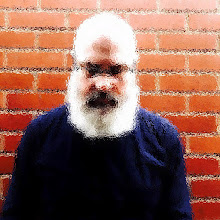
Reg Bundy

Reg Bundy aka HIH Regina Fong born 26 May 1945 (d. 2003)

Reginald Sutherland Bundy was a British dancer, actor and television presenter best-known for his drag as HIH (Her Imperial Highness) Regina Fong.

Reginald Bundy was originally trained as a dancer. He worked on numerous West End shows as a dresser and eventually in the 1970s became a dancer in a variety of stage musicals. He also appeared in a dancing role in Bryan Forbes' film The Slipper and the Rose (1976).

In the early 1980s he teamed up with Rosie Lee (Roy Powell) & Gracie Grab it all (Graham) to form the now legendary drag trio The Disappointer Sisters, who performed across the London pubs and clubs.

Bundy first developed Regina Fong in 1985, and quickly achieved a regular spot at the Black Cap gay pub in Camden Town, London and also the Royal Vauxhall Tavern. The Fong character was a Russian princess who had escaped to Britain following the Russian Revolution, a conceit which formed the basis of Bundy's show The Last of the Romanoffs, which premiered at the Edinburgh Festival and later ran at the Bloomsbury Theatre in London - 'Her Imperial Highness was born to the Imperial Russian family of Saint Petersburg in 1905, but was almost immediately hidden away on the orders of the Czar due to her startling mane of red hair.'

Regina's stage act entailed audience participation, and used a variety of songs, jingles, and sound effects, and was one of the regular hosts of London’s Lesbian and Gay Pride Festival.

Bundy appeared in the Edinburgh and London productions of playwright Neil Bartlett's A Vision of Love Revealed in Sleep and Night After Night, and also appeared in the BBC Radio Four adaptation of Night After Night.

His act, alongside that of other true originals, and close friends, like Lily Savage and Adrella, was instrumental in the rehabilitation of drag as a significant part of gay culture, where once it had been banished to the non-PC margins by critics who deemed it as irretrievably misogynist.

In 1993, Reg Bundy appeared at the Criterion Theatre in London alongside Kim Criswell, James Dreyfus, Sean Mathias, and Simon Fanshawe, in Elegies for Angels, Punks and Raging Queens, a verse and musical celebration of lives lost to AIDS.

Throughout his career, he devoted endless evenings to hosting charity events to raise money for emerging AIDS charities.

And perhaps one of the greatest measures of his ability came when, alongside the likes of Ian McKellen, Stephen Fry and other luminaries, he showed he was easily able to hold the attention of the audience in the vast auditorium of the Albert Hall at the annual Equality Show to raise funds for the lesbian and gay campaigning organisation Stonewall.

Reg Bundy - and HIH Regina Fong, the last of the Romanoffs - died of cancer on 15 April 2003, aged 56.

Labels: , , , , , , ,

Saturday, March 12, 2011

Bruz Fletcher

Bruz Fletcher born 12 March 1906 (d. 1941)

Bruz Fletcher was an American singer, songwriter and novelist who enjoyed brief success during the so-called Pansy Craze in the 1930s.

After a successful career as a songwriter and nightclub performer in Hollywood in the 1930s the police began a clampdown on gay performers and venues which made it increasingly difficult for Bruz Fletcher and similar artists to find work or perform; it is widely believed that this frustration contributed to Fletcher's suicide in 1941. As a songwriter he was a master of writing coded lyrics concealing a queer undercurrent.

He left behind a catalogue of intelligent and witty songs and a few records. There is an excellent detailed biography of Bruz Fletcher, his life and career at the Bruz Fletcher Project - link below.

Labels: , , , ,

Monday, January 10, 2011

Craig Russell

Craig Russell born 10 January 1948 (d. 1990)

Russell Craig Eadie, known by his stage name of Craig Russell, was a Canadian female impersonator.

His impersonations included Carol Channing, Bette Davis, Mae West, Barbra Streisand, Tallulah Bankhead, Marlene Dietrich, Bette Midler, Anita Bryant, Peggy Lee and Judy Garland. While performing, he always spoke and sang in the voices of the celebrities he was impersonating.

His three-octave vocal range was such that his impersonations could do full justice to vocal talents such as Streisand, and he could even perform male-female duets - such as Ella Fitzgerald and Louis Armstrong - with both voices in the correct pitch and key.

As a female impersonator, Russell attempted genuine verisimilitude, but he also added a great deal of his own personality and comic sensibility.

He was one of the last of the school that actually sang or spoke live in the voices of the ladies he impersonated.

As a teenager, Russell became president of Mae West's fan club, and briefly worked and lived in Los Angeles as West's secretary. He eventually returned to Toronto, where he moved in with Margaret Gibson and worked as a hairdresser while pursuing his career as a stage performer. By 1971, he was a regular performer in Toronto gay clubs and had a burgeoning international following.

Russell fathered one child, a daughter, who was born in 1973 in Toronto. Father and daughter developed a relationship in the years prior to his death.

In 1977, Russell starred in the film Outrageous!, based on a short story written by Gibson about their time as roommates; one of the first North American films with a gay theme to receive widespead distribution.

After Russell's success in Outrageous!, he was able to play much larger and more prestigious venues than he had previously. He performed in Las Vegas, Hollywood, Berlin, London, and Paris. He even had a one-man, off-Broadway show entitled A Man and His Women (1977).

But at the peak of his success, Russell became unable to cope with the pressures of fame. His substance abuse and psychological problems increasingly affected his performances and his career suffered.

Although he publicly identified as gay rather than bisexual, Russell married his close friend Lori Jenkins in 1982.

In 1987, Russell starred in the sequel to Outrageous!, appropriately titled Too Outrageous!

Russell remained married to Lori until his death in 1990 of a stroke related to complications from AIDS.

Craig was cremated and laid to rest in Port Perry, Ontario.

Labels: , ,

Wednesday, August 11, 2010

Ray Bourbon

Ray Bourbon born 11 August 1892 (d. 1971)

If a good deal of mystery surrounds the life and career of Ray Bourbon so many years after his death in 1971, it is probably due to the fact that Bourbon excelled at generating numerous conflicting stories about himself.

He claimed, at various times, to have been born Hal Wadell in Texarkana, TX in 1892, Ramon Icarez in or near Chihuahua, TX in 1898, and the son of Franz Joseph of Austria and Louisa Bourbon. Many 'facts' regarding Bourbon's early life­, his claim to birth of Bourbon royalty, his claim to an education at Tulane Medical School in New Orleans, his claim to have been Pancho Villa's notorious 'Señora Diablo'­ are all unsubstantiated and probably products of Bourbon's own active imagination.

He claimed to have begun in the theatre in England in 1913, and this may well be true. He returned to the US by 1917 and, as Rae Bourbon, supposedly won a Photoplay contest and was awarded a studio contract as first prize. He would say later that he worked in several silent films, and it is reported that he appeared under the name Ramon Icarez as a fire dancer at the opening of the Los Angeles Coliseum in 1923.

By the mid-20s, Bourbon was working with Bert Sherry as the vaudeville team of 'Bourbon and Sherry' and later toured with the Martin Sisters. In 1932, he was working full-time as a female impersonator at such clubs as Jimmy's Back Yard in Hollywood and Tait's in San Francisco. (At this last club, in May 1933, his Boys Will Be Girls review was raided by police during a live radio broadcast.)

In the later 30s and early 40s he headlined at the Rendezvous in Los Angeles and starred in his own revue, Don't Call Me Madam. His Insults of 1944, which began at the Playtime Theatre in Los Angeles in January of that year, caught the attention of Mae West during its New York production in May, 1944 at La Vie Parisienne. She cast him in her 1944 production of Catherine Was Great and in her 1948 production of Diamond Lil.

Throughout the 50s and 60s Bourbon entertained at hundreds of clubs throughout the US and released dozens of albums, certainly the most prolific female impersonator to have done the latter. His appearances are still fondly remembered by many who saw him when he toured in big and small towns all over the country, providing many isolated gay men with a glimpse of the loose-knit urban Gay community of the pre-Stonewall era.

Ray’s comedy was, at once, highbrow and lowbrow, overtly gay and covertly subversive. There is evidence that he had relationships with both men and women, was married twice, and fathered at least one son. In his memoirs, Ray discusses his sexual attractions and relationships to both genders with equal enthusiasm, but never called himself gay or bisexual. He worked on stage in and out of drag. Bourbon was probably cashing in on the news of Christine Jorgensen when he claimed to have had a sex change in 1956 (almost certainly not true).

After a once quite successful career, by the late 1960s Bourbon had fallen on hard times. In 1968, Bourbon was barely eking out a living, travelling through Texas and working at the Jewel Box Revue in Kansas City. During this time he was implicated in the murder of the owner of a Dog Kennel where Bourbon had lodged a collection of some 70 dogs. The circumstances alone beg many questions, but Bourbon was convicted as the mastermind of the killing along with two conspirators. The 78-year-old Bourbon was given a 99-year sentence. He died a short time later, on January 19, 1971 in the Howard County Texas prison, while penning his unfinished memoirs Daddy Was a Lady.

Don't Call Me Madam - The Life and Work of Ray Bourbon

Labels: , , , , , ,

Wednesday, June 30, 2010

Gene Malin

Gene Malin born 30 June 1908 (d. 1933)

Gene Malin was an American actor, emcee, and drag performer during the Jazz Age. He was arguably the first openly gay performer in Prohibition-era Speakeasy culture, and started the so-called Pansy Craze.

Gene Malin, also known by his stage name Jean Malin, was born Victor Eugene James Malin in Brooklyn to working class Polish/Lithuanian parents. He had 2 brothers and 2 sisters. One brother became a police officer, and the other worked for a sugar refinery, but Gene had other inclinations early on. As a teenager, Gene was already winning prizes for his costumes at the elaborate Manhattan Drag Balls of the 1920s. By his late teens, Malin had worked as a chorus boy in several Broadway shows but was considered too effeminate. Around the same period, Malin worked at several Greenwhich Village clubs as a drag performer, most notably the Rubaiyat.

Several columnists noted his talent and in 1930 (at age 22) Malin was booked at Louis Schwartzs' elegant Club Abbey at 46th and 8th Ave. It was at this point that Malins' career and fate took a most interesting turn. Although Malin was at times assisted by 'Helen Morgan Jr', a popular drag artist of the day, he did not appear in drag himself. The crux of his act was not to impersonate women, but to appear as an openly gay male. Here he moved on stage and amongst the audience members as a Tuxedo clad, elegant, witty, wisecracking Emcee (the Master of Ceremonies). He still often resorted to a broad exaggerated swishing image and the many other such 'Pansy acts' that followed often had a tone of a straight Vaudeville man doing an exaggerated impersonation of an effeminate 'Pansy'. Perhaps the joke had several levels - as the performer was often a gay man doing his impression of a straight man doing his impression of a gay man. In doing so, Malin and other such performers as Karl Norman and Ray Bourbon ignited a 'Pansy Craze' in New York’s speakeasies and later in other cities as well.

Malin became the top earner of Broadway for a time. After headlining numerous New York Clubs, he took his act to Boston and ultimately to the West Coast. While in Hollywood, he appeared in several films, usually as the stock character of a witty limp-wristed sales assistant.

In the early hours of August 10, 1933, Gene Malin was killed in a freak accident. He had just performed a 'farewell performance' at the Ship Cafe in Venice, California. He piled into his sedan car with roommate Jimmy Forlenza and comedic actress Patsy Kelly. It seems that Malin confused the gears and the car lurched in reverse and went off a pier into the water. Malin was instantly killed (pinned under the steering wheel) the other two were seriously hurt, but miraculously survived. Malin was only 24 years of age at the time of his death.

Although many in his audience probably saw him as one more oddity, in a short span of time Gene Malin had made history. Alas, little survives beyond a couple of recordings, and a very few film appearances and photos.

Malin left behind two recordings, released posthumously and pressed in a single royal blue shellac 78, That's What's the Matter With Me and I'd Rather Be Spanish Than Mannish; the latter can be heard here.

Strangely, he was married briefly; his wife was Lucille (or Fay) Helman who was later a notorious madam in Manhattan who was convicted in 1936 and 1942 of sending prostitutes across state lines.They married in Los Angeles in 1931 and applied for a Mexican divorce the year he was killed.

Labels: , , , ,

Tuesday, December 16, 2008

Sir Noel Coward

Noel Coward born 16 December 1899 (d. 1973)

Sir Noel Peirce Coward was an English actor, playwright, and composer of popular music.

Born in Teddington, Middlesex to a middle-class family, he began performing in the West End at an early age.

A student at the Italia Conti Academy stage school, Coward’s first professional engagement was on 27 January 1911, in the children’s play, The Goldfish. After this appearance, he was sought after for children’s roles by other professional theatres.

At the age of fourteen he was the lover of Philip Streatfield, a society painter who took him in and introduced him to high society before his untimely death due to disease during WWI.

He was featured in several productions with Sir Charles Hawtrey, a Victorian actor and comedian, whom Coward idolised and to whom he virtually apprenticed himself until he was twenty. It was from Hawtrey that Coward learned comic acting techniques and playwriting. He was drafted briefly into the British Army during World War I but was discharged due to ill health. Coward appeared in the D. W. Griffith film Hearts of the World (1918) in an uncredited role. He found his voice and began writing plays that he and his friends could star in while at the same time writing revues.

Coward's insights into the class system can be traced back to London life in World War I, when thousands of troops passed through the capital every day, and gay officers and other-ranks would meet together with civilians in dozens of highly-secret clubs.

Much of Coward's best work came in the late 1920s and early 1930s. Enormous (and enormously popular) productions such as the full-length operetta Bitter Sweet (1929) and Cavalcade (1931), a huge extravaganza requiring a very large cast, gargantuan sets and an exceedingly complex hydraulic stage, were interspersed with finely-wrought comedies such as Private Lives (1930), in which Coward himself starred alongside his most famous stage partner Gertrude Lawrence, and the black comedy Design for Living (1932), written for Alfred Lunt and Lynn Fontanne.

Coward again partnered Lawrence in Tonight at 8:30 (1936), an ambitious cycle of ten different short plays which were randomly 'shuffled' to make up a different playbill of three plays each night. One of these short plays, Still Life, was later expanded into the 1945 David Lean film Brief Encounter. He was also a prolific writer of popular songs, and a lucrative recording contract with HMV allowed him to release a number of recordings which have been extensively reissued on CD. Coward's most popular hits include the romantic, I'll See You Again and Dear Little Cafe, as well as the comic Mad Dogs and Englishmen, The Stately Homes of England and (Don't Put Your Daughter on the Stage) Mrs Worthington.

The outbreak of World War II in 1939 saw Coward working harder than ever. When the second World War started, Noel had only just left Paris. He took time off from writing to perform for the troops, but after was eager to return. Alongside his highly-publicised tours entertaining Allied troops, Coward was also engaged by the British Secret Service MI5 to conduct intelligence work. He was often frustrated by criticism he faced for his ostensibly glamorous lifestyle; criticised for apparently living the high life while his countrymen suffered, he was unable to defend himself by revealing details of his work for the Secret Service.

He also wrote and released some extraordinarily popular songs during the war (the most famous of which are London Pride and Don't Let's Be Beastly To The Germans). He complained to his frequent painting companion, Winston Churchill, that he felt he wasn't doing enough to support the war effort. Churchill suggested he make a movie based on the career of Captain Lord Louis Mountbatten. The result was a naval film drama, In Which We Serve, which Coward wrote, starred in, composed the music for and co-directed with David Lean. The film was immensely popular on both sides of the Atlantic and Coward was awarded an honorary Oscar.

The 1940s also saw Coward write some of his best plays. The social commentary of This Happy Breed and the intricate semi-autobiographical comedy-drama Present Laughter (both 1939) were later combined with the hugely successful black comedy Blithe Spirit (1941) to form a West End triple-bill in which Coward starred in all three simultaneous productions. Blithe Spirit went on to break box-office records for a West End comedy not beaten until the 1970s, and was made into a film directed by David Lean.

Coward's popularity as a playwright declined sharply in the 1950s with the coming of the new realist school. Despite this, he still managed to maintain a high public profile, continuing to write (and occasionally star in) moderately successful West End plays and musicals, performing an acclaimed solo cabaret act in Las Vegas (recorded for posterity and still available on CD), and starring in films such as Bunny Lake is Missing, Around the World in 80 Days, Our Man in Havana, Boom!, and The Italian Job.

After starring in a number of American TV specials in the late 50s, Coward left the UK for tax reasons in the late 1950s and moved to the Caribbean, settling first in Bermuda and then in Jamaica, where he remained for the rest of his life.

The late 1960s saw a revival in his popularity, with several new productions of his 1920s plays and a number of revues celebrating his music; Coward himself dubbed this comeback 'Dad's Renaissance'.

By now suffering from severe arthritis and bouts of memory loss (which affected his work on The Italian Job), Coward retired from the theatre. He was knighted in 1970, and died in Jamaica in March 1973 of natural causes at the age of 73. He is buried in Firefly Hill, Jamaica.

As well as over fifty published plays and many albums' worth of original songs, Coward also wrote comic revues, poetry, several volumes of short stories, a novel (Pomp and Circumstance, 1960), and three volumes of autobiography. Books of his song lyrics, diaries and letters have also been published.

He was also a spirited painter, and a volume containing reproductions of some of his artwork has also been published.

He was a valued friend of Vivien Leigh, Judy Garland, Princess Margaret and Queen Elizabeth, the Queen Mother. He was a close friend of Ivor Novello and Winston Churchill.

As a gay man, Coward never married. He enjoyed a lengthy relationship with the stage and film actor, Graham Payn, for almost thirty years until the end of Coward's life. Payn later edited the collection of his diaries published in 1982. He was also connected to composer Ned Rorem with details of their relationship published in Rorem's Diaries. Coward also had a long-term relationship with the Queen's uncle, Prince George, Duke of Kent (1902-42).

Coward refused to acknowledge his homosexuality, wryly stating, 'There is still a woman in Paddington Square who wants to marry me, and I don't want to disappoint her.'

Labels: , , , , , , ,