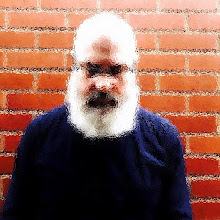
Harry Hay
born 7 April 1912 (d. 2002)
Harry Hay was a political activist who is recognised as one of the principal founders of the gay liberation movement. He dedicated his life to the cause of equality and respect for gay people.
Hay was born in the seaside town of Worthing, Sussex, England where he grew up until his parents emigrated to California in 1919.
Hay spent summers growing up working on cattle ranches, where he was introduced to the tenets of Marxism through fellow ranch hands who were members of the Industrial Workers of the World (Wobblies). They taught him Marxist philosopy and gave him books and pamphlets written by Karl Marx. He also learned about men having sex with other men through the stories of those same ranch hands, who told him of violent assaults on miners who attempted to touch men with whom they shared quarters. In 1922, Hay joined a boys' club called the Western Rangers. Through the Rangers, Hay was first exposed to Native American spirituality when he witnessed members of the Hopi tribe performing rituals and, later, performing traditional dances for the group.
Even though he didn't fully understand what he was feeling, Harry Hay claimed to have been aware of his sexual orientation at a very young age; at age 11 he was secretly reading
Edward Carpenter, thrilled to realise that he was not alone.
In 1926, Hay met and had sex with a sailor named Matt. Through Matt, a decade his senior, he was introduced to the concept of homosexual men as a world-wide 'secret brotherhood'. Hay would later build on this idea, in combination with a Stalinist definition of nationalist identity, to argue that homosexuals constituted a 'cultural minority'.
Drawn to drama and music, encouraged by his mother - his mining engineer father was exasperated by his son's 'artistic' leanings, Hay came out as a gay man in his first year in college and had several affairs with fellow students. In 1932, illness forced him to leave college and he began finding work as an actor in minor roles, bit parts and stunt work. Whilst appearing in a play in 1933, he met a fellow actor,
Will Geer - famous many years later as Grandpa Walton in
The Waltons. The two had many interests in common and soon became lovers. Will Geer encouraged Hay's leftist political views and introduced him to the Communist party. He became a member and began to work in political theatre and learned about political strategies. However the Communist Party condemned homosexuality, causing Hay to distance himself from his gay friends and attempt heterosexuality. In 1938 he eventually married, as did Geer. His wife, Anita Platky, was a dedicated party member and the couple adopted two baby girls.
However, Hay found it difficult to deny his homosexuality and began to socialise with other gay men and have affairs. In 1951, he divorced - his wife
and the Communist Party.
In 1950, Hay met with four others - his then lover, fashion designer
Rudi Gernreich, Robert Hull, a student of Hay's and two friends, Charles Rowland and Dale Jennings. Together they formed the Mattachine Society - the name and idea came from Hay's study of medieval music. The Mattachines were a secret society of monks who, masked and costumed, performed satire and social parody in defiance of the Holy Roman Church. The men continued to meet always in secret and in fear of the police in case their organisation were discovered. Membership grew, Hay modelling the development of the movement on historical models of secret societies.

In 1952, Jennings was arrested for allegedly soliciting a police officer. Hay bailed him, and the Mattachine Society established the Citizens' Committee to Outlaw Entrapment in Jenning's defence. The case was eventually dismissed as the jury couldn't agree a decision, but this was a something of a victory at the time and membership rapidly grew. However, the society had begun to attract attention in the press.
In 1953, the society faced a schism with its founder as the newer majority favoured assimilation as a strategy, whereas Hay wanted to celebrate the uniqueness of gay people. They also didn't wish to be perceived as a Marxist-influenced organisation in the
McCarthy era. Hay reluctantly disassociated himself from his movement. Hay was eventually called in front of the Un-American Activities Committee in 1955, but despite his fear, he survived unscathed.
The wilderness years followed. Hay found himself excluded from the movement he had done so much to found. His relationship with Gernreich ended. He had other relationships but failed to find lasting love until 1963 when he met an unhappily married engineer named
John Burnside. The two soon became lovers, moved in together and remained together for life.
In the 1965, Hay and Burnside founded a gay and lesbian collective, the Circle of Loving Companions, and in 1966 joined the North American Conference of Homophile Organizations (NACHO). Harry Hay became a leading member in California of the new gay movement, as the Gay Liberation Front (GLF) was formed in the wake of the Stonewall riots in 1969. But in 1970, the couple moved to New Mexico where they remained politically active and Hay pursued an interest in Native American cultures. His study of spiritualism merged with his beliefs about gay consciousness and experience, and in 1978 he founded the Radical Faeries - a gay and lesbian spiritual movement founded on Native American and New Age philosophy.
As the 20th Century came to a close, Harry Hay belated began to be recognised and revered as one of the founding fathers of the movement for gay equality. A biography was published in 1990 -
The Trouble With Harry Hay by
Stuart Timmons, his writings were collected and published in 1996 and he was the subject of an Emmy-nominated documentary
Hope Along the Wind: The Life of Harry Hay. (2002)
In 1999 Burnside moved the couple to San Francisco as Hay was suffering from lung cancer. He was cared for in a hospice and by members of the Radical Faeries. He died on October 24, 2002 with his partner of 40 years John Burnside and his Radical Faeries at his bedside.
Tell my people I want them to be happy and strong. And free. And contributive. And to fly.
Harry Hay to Stuart Timmons shortly before his death.
Labels: Activists, Death from cancer, Mattachine Society
 John Paul Hudson born 28 April 1929 (d. 2002)