Thursday, May 12, 2011

Edward Lear

Edward Lear born 12 May 1812 (d. 1888)

Although a talented illustrator and painter, Edward Lear is best known for his nonsense verse. His poetry demonstrates a defining love of eccentricity, verbal invention and poetic delight in the sound of words. His best known poem is The Owl & The Pussycat.

He enjoyed poor health most of his life, suffering from epilepsy, asthma, bronchitis, and in later life, partial blindness. Although there a few clues in some of his work, the clearest indications of his attraction to other men are in his letters and diaries of the 1850s-70s. However, his lack of any relationships beyond mere longing and the nature of his verse and ironically sad life have encouraged some critics to see him as a shy heterosexual or completely unsexual.

Labels: , , , , ,

Tuesday, May 10, 2011

Léon Bakst

Léon Bakst born 10 May 1866 (d. 1924)

Léon Nikolayevich Bakst was a Russian painter and scene- and costume-designer who revolutionised the arts he worked in.

Léon Bakst was born as Lev (Leib) Rosenberg in Grodno (currently Belarus) in a middle-class Jewish family. After graduating from gymnasium (school), he studied at St Petersburg Academy of Arts as a non-credit student, working part-time as a book illustrator.

On his first exhibition (1889) he took the name of Bakst based on his maternal grandmother's family name, Baxter -  Rosenburg was considered too Jewish and not good for business. At the beginning of the 1890s he exhibited his works with the Society of Watercolourists. During 1893-1897 he lived in Paris, where he studied at the Académie Julian while still visiting St Petersburg often. After the mid-1890s he became a member of the circle of writers and artists formed by Sergei Diaghilev and Alexandre Benois, which later became the Mir Iskusstva art movement.

In 1899, he co-founded with Sergei Diaghilev the influential periodical World of Art. His graphics for the World of Art magazine brought him fame.

He continued easel painting as well producing portraits of Filipp Malyavin (1899), Vasily Rozanov (1901), Andrei Bely (1905) [pictured left], Zinaida Gippius (1906). He also worked as an art teacher for children of Grand Duke Vladimir Alexandrovich. In 1902 he took a commission from Tsar Nicholas II to paint Meeting of Russian sailors in Paris.

In 1898 he showed his works in the Diaghilev-organised First exhibition of Russian and Finnish Artists; in World of Art exhibitions, as well as the Secession in Munich, exhibitions of the Union of Russian Artists, etc.

After the end of the decade of the 1900s, Bakst worked mostly as a stage-designer. Bakst designed settings for Greek tragedies, and in 1908 made a name as a stage and costume designer for Diaghilev with the Ballets Russes (Cleopatra 1909, Shakherezada 1910, Carnaval 1910, Narcissus 1911, Daphnis et Chloé 1912). For this work, Bakst was to make a massive contribution in changing the visual vocabulary of theatre and dance.

During his visits to St Petersburg he taught in Zvantseva's school. One of his students was Marc Chagall (1908-1910).

In 1914 Bakst was elected a member of the Imperial Academy of Arts.

In 1918 he severed  his ties with Diaghilev and the Ballets Russes. He died in 1924 in Paris from lung problems.

Top right: Self-portrait by Leon Bakst. Bottom left: Portrait of Leon Bakst by Amadeo Modigliani


Design by Léon Bakst for Phedre and Theseus in 1923

Labels: , , , , , , ,

Sunday, May 08, 2011

Tom of Finland

Tom of Finland born 8 May 1920 (d. 1991)

Tom of Finland (born Touko Laaksonen in Kaarina, Finland) was a fetish artist notable for his stylised homoerotic art and his influence on late twentieth century gay culture.

Over the course of four decades he produced some 3,500 illustrations, mostly featuring men with exaggerated primary and secondary sex traits: heavily muscled torsos, limbs, buttocks and improbably large penises. Tight or partially removed clothing showed off these traits, with penises often visible as distinct bulges in tight trousers or prominently displayed for the viewer. His drawings frequently feature two or more men either immediately preceding or during explicit sexual activity.

Touko Laaksonen made his first erotic drawings in his youth, but none of them are known to exist; Laaksonen said that he had at first kept his drawings hidden, but then destroyed them 'at least by the time I went to serve the army'. His drawings were based on images of masculine Finnish labourers he had seen from an early age. Finland, however, soon became embroiled in the Winter War with the USSR, and then formally involved in World War 2, and Laaksonen was conscripted into the Finnish Army. He served as an anti-aircraft officer, holding the rank of a second lieutenant. He later attributed his fetishistic interest in uniformed men to encounters with men in army uniform at this time. After the war, Laaksonen returned to civilian life and worked in the advertising industry as a commercial graphic artist, continuing to create erotic drawings for his own pleasure on the side.

In 1956, Laaksonen submitted some of his homoerotic drawings to the influential American magazine Physique Pictorial for publication under the pseudonym Tom. The editor of the magazine changed the name to Tom of Finland.

Laaksonen's work soon came to the attention of the gay community at large, and by 1973, he was both publishing erotic comic books and infiltrating the mainstream art world. He was best known for works that focused on homomasculine archetypes such as lumberjacks, motorcycle policemen, sailors, businessmen, bikers, and leathermen. His most prominent comic series are the Kake comics, which included these archetypal characters in abundance.

Exhibitions of Laaksonen's work began in the 1970s and in 1973 he gave up his full-time job at the Helsinki office of international advertising firm McCann-Erickson.

In 1979, Laaksonen founded the Tom of Finland Company to collect and distribute his work. This company exists to the present day, and has expanded into a non-profit foundation dedicated to collecting, preserving, and exhibiting homoerotic artwork.

Before his death, Laaksonen was the subject of the Finnish documentary Daddy and the Muscle Academy - The Art, Life, and Times of Tom of Finland which includes interviews with the artist. The European art publisher Taschen has published various collections of his work including three 'Retrospective' Anthologies and the complete Kake comics

Many of his drawings are based on photographs, but none are exact reproductions of them. The photographic inspiration is used, on the one hand, to create lifelike, almost moving images, with convincing and active postures and gestures whilst, on the other hand, Laaksonen exaggerates physical features and presents his ideal of masculine beauty and sexual allure, combining realism with fantasy.

Arguably Laaksonen's work revived and commercialised an underground leather counter-culture which emerged after World War 2 and reached its height in the late 1970s and early 1980s before the emergence of AIDS in the gay community.


The apparel, styling, and demeanour adopted by large numbers of gay men during that period appear to be derived directly from his work. Although the prevalence of this 'look' has declined since the mid-1980s - except in the leather and S&M scene - Laaksonen's work continues to be used extensively in gay publications, bars, clubs, and online communities who associate with its erotic subject matter. The combination of cap, leather jacket, and moustache became known in the pop culture of Western world as a visual stereotype of gay men.


Tom of Finland Foundation

Labels: , , , ,

Tuesday, April 26, 2011

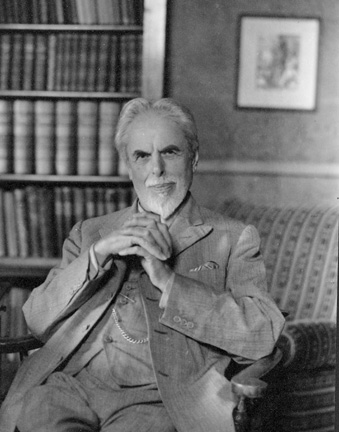
Charles Shannon

Charles Shannon born 26 April 1865 (d. 1937)

Charles Haslewood Shannon, English artist, was born at Sleaford in Lincolnshire, the son of the Rev Frederic Shannon.

He attended the Lambeth school of art, and was subsequently considerably influenced by his friend and partner Charles Ricketts and by the example of the great Venetians. In his early work he was addicted to a heavy low tone, which he abandoned subsequently for clearer and more transparent colour. He achieved great success with his portraits and his Giorgionesque figure compositions, which are marked by a classic sense of style, and with his etchings and lithographic designs.

The Dublin Municipal Gallery owns his circular composition The Bunch of Grapes and The Lady with the Green Fan (portrait of Mrs Hacon). His Study in Grey is at the Munich Gallery, a Portrait of Mr Staats Forbes at Bremen, and a Souvenir of Van Dyck at Melbourne. One of his most remarkable pictures is The Toilet of Venus in the collection of Lord Northcliffe. Several of his portrait works are on display in the National Portrait Gallery in London.

Shannon taught himself lithography, realising that lithography could be used for original artistic expression, not merely as a means of reproducing images. Shannon's skill was such that he was described as 'one of the most gracefully accomplished and scholarly lithographers of the day'. He is regarded in particular as the master of lithographic portraiture.

Complete sets of his lithographs and etchings have been acquired by the British Museum and the Berlin and Dresden print rooms. He was awarded a first-class gold medal at Munich in 1895 and a first-class silver medal in Paris in 1900.

Shannon and Ricketts founded The Dial, a magazine, which had five issues from 1889 to 1897, and the Vale Press, named after their house, The Vale, in Chelsea, London. The pair came to the attention of Oscar Wilde with the publication of their magazine. He visited them at their home and they become great friends. Ricketts and Shannon were among the few to remain faithful to Wilde when he was disgraced.

Throughout their careers Shannon and Ricketts were collectors of art and over time built up a valuable collection. Charles Shannon was particularly interested in Japanese art and they bought a number of Hokusai drawings. In their joint will they left their collection to public bodies such as the Fitzwilliam Museum in Cambridge and the British Museum.

Charles Shannon was elected as an Associate of the Royal Academy in 1911 and a full member in 1920.

In January 1929 Shannon was re-hanging some pictures on the staircase of his studio when he fell and hit his head on the marble floor. From then on he was a physical and mental invalid, and unable to recognise and communicate with Charles Ricketts. Charles Ricketts died of a heart attack two years later, and Charles Shannon lived for a further six years.

Shannon and Ricketts spent their entire adults lives together but were very discreet as a couple. It is generally accepted that Charles Ricketts was a homosexual but there are those who believe that Shannon was bisexual. One particular friendship with a woman caused an anxious Ricketts to record in his diary his fears that Shannon might marry.

Labels: , , , , ,

Wednesday, March 23, 2011

J C Leyendecker

J C Leyendecker born 23 March 1874 (d. 1952)

Born in Germany - his family moved to Chicago when he was 7 - Joseph Christian Leyendecker was one of the most successful commercial artists of the 20th century.

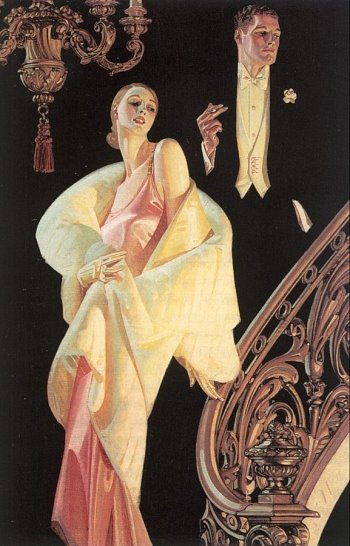
His incredible drawing and painting ability, illuminated by his gay sexuality, brought a new aesthetic into advertising, bringing it very much into the new century. His work as a magazine illustrator and his vibrant, body conscious advertising usually for high-end luxury brands, created the prototype for the male sex symbol, his early work pre-dating the cinema, in the time before photography dominated the media.

His most successful campaign was for the Arrow shirt company, and his Arrow collar man [pictured] became the very epitome of American manliness, prosperity & style, at one time getting more fanmail and proposals of marriage than Rudolph Valentino it is claimed. What his legion of fans did not realise was that their idol, Leyendecker's model was in fact his lover, Charles Beach.

Always declining fine art commissions, Leyendecker preferred to work as an illustrator and commercial artist. He was incredibly successful and well-known. His work helped define the visual look of America as much as the cinema up until World War II. His influence on Norman Rockwell can be clearly seen too. So financially successful was he that in 1914 he was able to commision a mansion in New Rochelle, where he lived until his death in 1952.

And Charles Beach? He and Leyendecker were together for over 50 years, his role encompassing model, husband, cook & business manager. Despite Leyendecker's fame, his life is not so well-known now because he lived discreetly; it would also appear that on his death Beach destroyed most of Leyendecker's remaining work, diaries and documents. Leyendecker shunned photography as an art form and few photos exist or have survived of them. Charles Beach died shortly after Leyendecker also in 1952.

If you enter the name J C Leyendecker on Google images, you can see how exquisite, stylish and iconic his work was, and you can see how his work influenced the photographic advertising campaigns which have subsequently replaced his beautiful illustrations. It's worth the look.

For more about J. C. Leyendecker's life and career


Labels: ,

Tuesday, February 08, 2011

Ralph Chubb

Ralph Chubb born 8 February 1892 (d. 1960)

Ralph Nicholas Chubb was an English poet, printer, and artist. Heavily influenced by Whitman, Blake, and the Romantics, his work was the creation of a highly intricate personal mythology, one that was anti-materialist and sexually revolutionary.

Ralph Chubb attended St Albans School and Cambridge before becoming an officer in the First World War. He served with distinction but developed neurasthenia, and he was invalided out in 1918. From 1919 to 1922 Chubb studied at the Slade School of Art in London. It was there that he met Leon Underwood and other influential artists. He went on to contribute several articles and poems for Underwood's magazine, The Island. Although his work was displayed at the Royal Academy of Art, his paintings did not sell. He moved with his family to the village of Curridge, near Newbury in Berkshire. He began to devote his artistic talents to the printed works which would remain his chief labour in life.

His books were created in several chief phases. His typeset books of the 1920s were modest, exhibiting Chubb's talent for woodcutting and his quaint, visually inspired poetry. Even at this early stage, Chubb's lifelong obsession with adolescent males was beginning to become apparent. He expands upon this theme more explicitly in An Appendix, a pederastic and spiritualist manifesto duplicated from a cursive manuscript. An Appendix was the first of his printed works to be printed in his own hand; he soon followed this with the first of his opulent lithographic books, The Sun Spirit. Throughout the 1930s, Chubb's books became more elaborate and visually intriguing. Water Cherubs crystallises Chubb's aesthetic of the youthful male form, and The Secret Country unfolds like an illuminated manuscript, recounting stories of Chubb's family and his journeys among the Romani of the New Forest in Hampshire.

Chubb's printing press was interrupted by the war, but in 1948 he entered into the third period of his career with two massive volumes: The Child Of Dawn and Flames of Sunrise. Each page of these two volumes is crowded with obscure digressions on Chubb's mythology and drawings of symbolic significance. Briefly summarised, Chubb's vision was a prophecy of the redemption of 'Albion', or England, by the boy-god Ra-el-phaos, of whom Ralph claimed himself to be the prophet and herald.

Other themes run through all of Chubb's work. He was forever haunted by the memory of a young chorister at St Albans who disappeared from Chubb's life just as he had summoned up the courage to speak to him. Similarly, a brief sexual relationship with another boy when Ralph was 19 seemed to serve as a template for future visions of paradise. Chubb's books become progressively more self-involved and paranoid. Seeking to articulate his pederastic desires, he created a personal mythology which explained everything in terms only he could understand. Nonetheless, Chubb's work is of fascinating psychological significance; each of the various angels, knights, seers, and boy-gods in his dream world represents an aspect of his introspective and persecuted self.

Failing in health and facing continuing legal and financial difficulties, Ralph Chubb abandoned his controversial works in the mid-50s, and began to collect and reprint his early poems and childhood memories. Treasure Trove and The Golden City (published posthumously) are devoid of the usual profusion of naked, sensual youths, but instead offer a glimpse into his youthful imagination, and some of his most charming poetry. In the final years of his life he donated his remaining volumes to the national libraries of Britain. He died peacefully at Fair Oak Cottage in Hampshire and was buried next to his parents at the Kingsclere Woodland Church.

None of the editions of Chubb's books exceed more than 200 copies, and some of his lithographed masterworks exist in only 30 or 40 copies, of which a mere 6 or 7 are meticulously hand-coloured by Chubb.

Labels: , , ,

Saturday, August 21, 2010

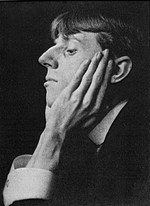
Aubrey Beardsley

Aubrey Beardsley born 21 August 1872 (d 1898)

Born in Brighton to a genteel but nearly destitute family, Aubrey Beardsley was a musical and artistic prodigy as a child who went on in his short life to become a highly original and influential illustrator, one of the greatest of the Symbolists.

He was educated at the Bristol Grammar School and later, with the encouragement of Pre-Raphaelite painter Sir Edward Burne-Jones, attended night classes at the Westminster School of Art. Although he absorbed a number of influences, including that of the Pre-Raphaelites, Beardsley was largely self-taught.

In 1892, the young artist received his first commission, an invitation to illustrate an edition of Thomas Malory's Morte D'arthur for the publisher J M Dent. The assignment entailed over 300 illustrations and chapter heads, which the artist executed in a mock-medieval, Pre-Raphaelite style.

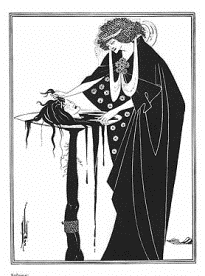
In 1893, as he was working on the Dent commission, he met Oscar Wilde, with whom he would be associated for the rest of his life, at least in the public's imagination. Beardsley was invited by Wilde's publisher to illustrate the English edition of Salome. When it was published in 1894, both the play and the witty, provocative - blatantly erotic - illustrations created a sensation.

That same year Beardsley became famous as the art editor of The Yellow Book, a new arts and letters periodical. Although Wilde never actually contributed to the magazine, it was widely assumed to be an organ for the aesthetic ideas that the playwright espoused. Beardsley's stunning black-and-white drawings, title-pages, and covers helped make the new quarterly a great success. But The Yellow Book also quickly became a site of the fin de siècle culture wars, a target of moralists concerned about the influence of the decadent movement on English society and art. One detractor described Beardsley's designs for the periodical as 'Diseased, weird, macabre, and sinister.'

In the context of the growing notoriety of Wilde and his circle, this may be seen as an attack on the newly visible homosexual subculture that emerged at the end of the nineteenth century. The culture wars culminated in Wilde's prosecution and conviction for gross indecency in 1895. One casualty of the reaction triggered by the Wilde trials of 1895 was Beardsley himself. He was summarily fired from his job as art editor of The Yellow Book. He had been too closely associated with Wilde for the publisher's comfort and his art too erotic and perverse for the new mood of conformity prompted by Wilde's conviction.

Beardsley however continued to find work as an illustrator and created many more beautiful illustrations. Unfortunately, Beardsley had been plagued by ill-health and bouts of tuberculosis since childhood and he died in the South of France, where he had gone in search of a better climate for his increasingly frail health. He was just 25.

Considering the brevity of his life, Beardsley's achievement is astonishing. A highly original creator, he transformed the art of illustration and profoundly influenced artists of his own and subsequent generations.

Labels: , , ,

Sunday, July 18, 2010

Laurence Housman

Laurence Housman born 18 July 1865 (d. 1959)

Laurence Housman was the younger brother of the popular poet A E Housman, who was also a homosexual. Laurence first studied to be a book illustrator and illustrated a number of volumes, notably Christina Rossetti's Goblin Market, and he also published several volumes of poetry and a number of novels, but he is best remembered as a playwright and social reformer.

He was one of the most censored playwrights of his time due to his, then scandalous, depiction of Biblical characters and members of the Royal family, and many were only able to be performed privately until theatrical censorship rules began to ease.

A committed socialist and pacifist, he co-founded the Men's League for Women's Suffrage in 1907. A prolific writer with around a hundred published works to his name, his output covers all kinds of literature from socialist and pacifist pamphlets to children's stories. He wrote an autobiography, The Unexpected Years (1937), and edited his brother's posthumous poems revealing his brother's sexuality and assembling and publishing two generous volumes of his brother's poems.

Labels: , ,

Thursday, June 24, 2010

Rex Whistler

Rex Whistler born 24 June 1905 (d. 1944)

Rex Whistler, Reginald John 'Rex' Whistler. English Artist, designer and illustrator.

Rex Whistler was the son of Henry and Helen Frances Mary Whistler. He was sent to board at Haileybury in May 1919 where he began to show a precocious talent for art, providing set designs for play productions and giving away sketches to prefects in lieu of 'dates' (a punishment unique to Haileybury, similar to 'lines' but whereby offenders are required to write out long, set lists of historical dates).

After Haileybury the young Whistler was accepted at the Royal Academy but disliked the regime there and was 'sacked for incompetence'. He then proceeded to study at the Slade School of Art where he met The Honourable Stephen Tennant, soon to become one of his best friends and a model for some of the figures in his works. Through Tennant, he later met the poet Siegfried Sassoon and his wife Hester, to both of whom Whistler became very close.

Upon leaving the Slade he burst into a dazzling career as a professional artist. His work encompassed all areas of art and design. From West End theatre to book illustration (including works by Evelyn Waugh and Walter de la Mare, and perhaps most notably, for Gulliver's Travels) and mural and trompe l'oeil painting. Paintings at Port Lympne, Plas Newydd [detail below] and Dorneywood amongst others, show his outstanding talent in this genre.

During his time at Plas Newydd he may well have become the lover of the daughter of the 6th Marquess of Anglesey, the owner of the house who had commissioned him to undertake the decorative scheme. Whistler and Lady Caroline Paget are known to have become very close friends and he painted numerous portraits of her, including a startling nude. Whether this painting was actually posed for or whether it was how Rex imagined her naked is a matter of debate.


His most noted work during the early part of his career was for the Cafe at the Tate Gallery completed in 1927 when he was only 22. He was commissioned to produced posters and illustrations for Shell Petroleum and the Radio Times. He also made designs for Wedgwood china based on drawings he made of the Devon village of Clovelly. Whistler's elegance and wit ensured his success as a portrait artist among the fashionable and he painted many members of London society, including Edith Sitwell, Cecil Beaton and the other members of the set which he belonged to and which became known as the 'Bright Young Things'.

When war broke out, though he was 35, he was eager to join the army. He was commissioned into the Welsh Guards as Lieutenant 131651. His artistic talent, far from being a stumbling block to his military career, was greatly appreciated and he was able to find time to continue some of his work, including a notable self portrait in uniform now in the National Army Museum [pictured left]. In 1944 he was sent to France following the D-Day Landings.

In July he was with the 2nd (Armoured) Battalion in Normandy as the invasion force was poised to break out of the salient east of Caen. On a hot and stuffy 18 July his tank, after crossing a railway line, drove over some felled telegraph wires beside the railway, which became entangled in its tracks. He and the crew got out to free the tank from the wire when a German machine gunner opened fire on them, preventing them from getting back into their tank. Whistler dashed across an open space of 60 yards to instruct its commander to return the fire. As he climbed down from the tank a mortar bomb exploded beside him and killed him instantly, throwing him into the air. He was the first fatality suffered by the Battalion in the Normandy Campaign. The two free tanks of his troop carried out their dead commander's orders before returning to lay out his corpse beside a nearby hedge, after first having removed his personal belongings. Whistler's neck had been broken, but there was not a mark on his body. The troop was then immediately called away to act as infantry support. When that evening permission was obtained to locate and bury Rex Whistler, they found that this had already been done by an officer of the Green Jackets, a regiment in which Whistler's younger brother, Laurence (an acclaimed glass engraver and poet) was serving.

Later the body of Rex Whistler was moved to a grave in the Banneville-la-Campagne War Cemetery in Calvados, about two miles from the place where he was killed on his first day in action. His grave can still be found there today in the immaculately kept Military Cemetery.

Because he died relatively young and his art was more decorative than 'serious' and is far from fashionable now, there is little evidence either way on Rex Whistler's sexuality. However, he moved in very 'artistic' circles, never married and many of his closest friends certainly were gay - and most of his work is decidedly camp, draw your own conclusions.

Photograph of Rex Whistler by Cecil Beaton

Labels: , , , ,

Thursday, December 25, 2008

John Minton

John Minton born 25 December 1917 (d. 1957)

Francis John Minton was a British painter and illustrator of landscapes, portraits, and figures, as well as a theatrical designer. He was born in Cambridge.

Minton was a boarder at Reading School from 1932 to 1935. He studied art at St John's Wood School of Art from 1935 to 1938, served in the war, but was demobbed in 1943, whereupon he worked full-time as a painter, illustrator, and teacher of art. He painted scenes of Britain, both its attractive countryside and its decayed cities, and later travelled overseas for new subjects.

During the 1940s and early 1950s he become a central figure within the Soho art scene. He enjoyed early success as a painter and was associated in the 1940s with the English Neo-Romantics. By the early 1950s he had become the most admired and influential illustrator of his day.

The increasing popularity of abstract painting at the expense of figurative work exacerbated his personal problems. He took his own life, in 1957, with an overdose of drugs.

Minton is perhaps best remembered today by the portrait of him painted by Lucian Freud [pictured above right].

Minton's illustrations can be seen in a number of works by Elizabeth David.

He was also a talented musician during the jazz revival.

[pictured Rotherhithe from Wapping, 1946 by John Minton]

Labels: , , , ,

Thursday, October 02, 2008

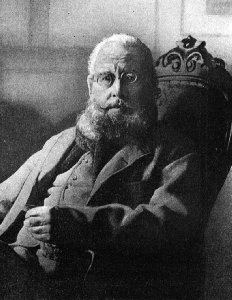
Charles Ricketts

Charles Ricketts born 2 October 1866 (d. 1931)

Charles De Sousy Ricketts was an English artist and designer, best known for his work as a book designer and typographer from 1896 to 1904 with the Vale Press, and his work in the theatre as a set designer.

He was born in Geneva to a French mother and an English father. He grew up mainly in France and Italy. He began his studies in art at the City and Guilds Technical Art School in Lambeth, in 1882, after both his parents had died.

There he met Charles Shannon, painter and lithographer, who would be his lifelong partner in both his artistic and personal life. Choosing to settle in England rather than abroad, they founded The Dial, a magazine, which had five issues from 1889 to 1897, and the Vale Press, named after their house, The Vale in Chelsea, London.

Ricketts was one of two illustrators of Oscar Wilde's work, the other being Aubrey Beardsley who worked on Salomé. He and Shannon were friends and supporters of Wilde.

It was in the work of the Vale Press that Ricketts would find his talents were best employed.

After 1902, he became a more serious painter and sculptor. He also wrote on art, was a collector, and became a member of the Royal Academy in 1928. He designed sets for plays by Wilde, Bernard Shaw and Cecil Lewis; and also the revived Savoy Operas of the 1920s.

In January 1929 Shannon fell while hanging a picture. He never completely recovered his health or senses and remained an invalid until his death in 1937. Charles Ricketts died of heart failure in 1931.

[Painting of Charles Ricketts and Charles Shannon by Jacques-Emile Blanche]

Labels: , , , ,