Friday, May 13, 2011

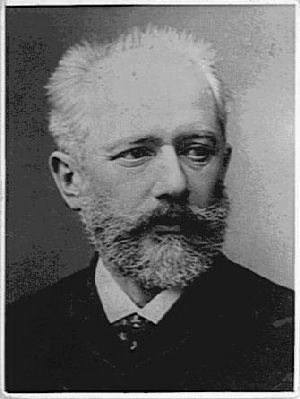
Modest Ilyich Tchaikovsky

Modest Ilyich Tchaikovsky born 13 May 1850 (d. 1916)

Modest Ilyich Tchaikovsky was a Russian dramatist, opera librettist and translator.

Modest Ilyich was the younger brother of the composer Pyotr Ilyich Tchaikovsky. He graduated from the School of Jurisprudence with a degree in law. Like many graduates of this school (including his brother) he was homosexual and lived relatively openly with the poet Aleksey Apukhtin and then with another boyfriend, Kolya Konradi.

Tchaikovsky chose to dedicate his entire life to literature and music. He wrote plays, translated sonnets by Shakespeare into Russian and wrote librettos for operas of his brother, as well as other composers such as Eduard Nápravník, Arseny Koreshchenko, Anton Arensky and Sergei Rachmaninov. Being the nearest friend of his brother, he became his first biographer, and also the founder of Tchaikovsky's museum in Klin.

Labels: , , , , ,

Tuesday, May 10, 2011

Léon Bakst

Léon Bakst born 10 May 1866 (d. 1924)

Léon Nikolayevich Bakst was a Russian painter and scene- and costume-designer who revolutionised the arts he worked in.

Léon Bakst was born as Lev (Leib) Rosenberg in Grodno (currently Belarus) in a middle-class Jewish family. After graduating from gymnasium (school), he studied at St Petersburg Academy of Arts as a non-credit student, working part-time as a book illustrator.

On his first exhibition (1889) he took the name of Bakst based on his maternal grandmother's family name, Baxter -  Rosenburg was considered too Jewish and not good for business. At the beginning of the 1890s he exhibited his works with the Society of Watercolourists. During 1893-1897 he lived in Paris, where he studied at the Académie Julian while still visiting St Petersburg often. After the mid-1890s he became a member of the circle of writers and artists formed by Sergei Diaghilev and Alexandre Benois, which later became the Mir Iskusstva art movement.

In 1899, he co-founded with Sergei Diaghilev the influential periodical World of Art. His graphics for the World of Art magazine brought him fame.

He continued easel painting as well producing portraits of Filipp Malyavin (1899), Vasily Rozanov (1901), Andrei Bely (1905) [pictured left], Zinaida Gippius (1906). He also worked as an art teacher for children of Grand Duke Vladimir Alexandrovich. In 1902 he took a commission from Tsar Nicholas II to paint Meeting of Russian sailors in Paris.

In 1898 he showed his works in the Diaghilev-organised First exhibition of Russian and Finnish Artists; in World of Art exhibitions, as well as the Secession in Munich, exhibitions of the Union of Russian Artists, etc.

After the end of the decade of the 1900s, Bakst worked mostly as a stage-designer. Bakst designed settings for Greek tragedies, and in 1908 made a name as a stage and costume designer for Diaghilev with the Ballets Russes (Cleopatra 1909, Shakherezada 1910, Carnaval 1910, Narcissus 1911, Daphnis et Chloé 1912). For this work, Bakst was to make a massive contribution in changing the visual vocabulary of theatre and dance.

During his visits to St Petersburg he taught in Zvantseva's school. One of his students was Marc Chagall (1908-1910).

In 1914 Bakst was elected a member of the Imperial Academy of Arts.

In 1918 he severed  his ties with Diaghilev and the Ballets Russes. He died in 1924 in Paris from lung problems.

Top right: Self-portrait by Leon Bakst. Bottom left: Portrait of Leon Bakst by Amadeo Modigliani


Design by Léon Bakst for Phedre and Theseus in 1923

Labels: , , , , , , ,

Saturday, May 07, 2011

Peter Ilych Tchaikovsky

Peter Ilyich Tchaikovsky born 7 May 1840 (d. 1893)

Peter Ilych Tchaikovsky was a Russian composer of the Romantic era.
Peter (or Pyotr) Ilyich Tchaikovsky is a composer whose music has made an indelible impression on the world, yet many things seemed to be stacked against him. His mother died from Cholera when Tchaikovsky was only 14 years old and this great loss affected the boy deeply. As a boy and also in later life, he suffered from various neuroses and experienced periods of deep depression. Although he learned the piano as a boy, Tchaikovsky was initially to study law and his first profession was as a clerk performing administrative functions. It was only at the age of 23 that he made a career change and decided to study composition at the new St Petersburg Conservatory.

His success there led to a post at the (also new) Moscow Conservatory with Nicholas Rubenstein (the brother of Anton Rubenstein who had established the St Petersburg Conservatory). Although Tchaikovsky's music is now universally admired across the world, he wasn't always to receive a warm reception in his native Russia and a poor critical reception to his works understandably contributed to his periods of depression. For example, his first Piano Concerto which is now instantly recognisable and a firm favourite with concert goers was initially dedicated to Nicholas Rubenstein. He didn't like the work and Tchaikovsky felt devastated. The dedication was changed but years later Rubenstein changed his mind and was to play the work regularly.

The image that history has left us of Tchaikovsky is of a solitary figure who often worked in isolation. When in later life he accepted invitations to conduct, he felt homesick and longed to return home. For a while Tchaikovsky struck up a curious relationship with a woman called Nadezhda van Meck who became his benefactor, and her regular funding and letters of encouragement allowed him to compose without the constant worry of earning a living and he resigned from the Moscow Conservatory to concentrate on composition. The relationship was curious because the two never met.

Undoubtedly a major contributor to the composer's bouts of depression was his homosexuality. This is not surprising since at that time in Russia, the state considered certain acts to be crimes carrying the death penalty. At one stage Tchaikovsky married a female admirer, perhaps to conceal his true nature, but the marriage was a disaster. It broke up within a short period of time, and Tchaikovsky suffered a breakdown and attempted suicide. It is not surprising that some of Tchaikovsky's music is full of sadness and despair. What is surprising perhaps is that much of his music is bright and happy.

Tchaikovsky was never a total recluse. He met many other composers and musicians of the day. In his native Russia he certainly knew several members of the Russian Nationalist School and for a while was inspired by their musical thinking. These composers - Rimsky-Korsakov, Balakirev, Borodin, Mussorgsky - sought to compose and promote music which emphasised its Russian origins using folk music and other traditions, and largely shunning the music being composed in other parts of the world. Tchaikovsky's music might seem very Russian to modern ears, but his fellow countrymen detected traces of European influence. It is true that his music has a broader appeal, characterised by beautiful melodies, inventive orchestration, and a 'heart on sleeve' emotional warmth and engagement. Indeed his music was more popular abroad than in his native country, and perhaps this was the cause of some initial resentment back home.

In time Tchaikovsky's music became more accepted in Russia. When his former benefactor stopped his allowance after 13 years, he was soon the beneficiary of funding from the Russian government. He even overcame his previous reluctance both to travel and to conduct. He travelled abroad to conduct his own music in European cities and in the US to great success. However his life was to end in tragedy. The official story is that he contacted Cholera (the same disease which had struck his mother years before) by carelessly drinking a glass of unboiled water, though a later story suggested that he committed suicide. Shortly before he died, Tchaikovsky had completed his 6th Symphony. The premier was not a great critical success, but the piece's mood of deepest despair seems prophetic.

Tchaikovsky has left us a wealth of great music including Symphonies and Concertos, some Operas and many shorter works. He is particularly remembered for his story-telling music, including Romeo and Juliet and the evocative free-flowing ballet music for Swan Lake, The Nutcracker and Sleeping Beauty.

The importance of Tchaikovsky's homosexuality and its consequences on the personal expression in his compositions cannot be underestimated. Tchaikovsky's gayness in itself has been known to the West for at least 75 years, gathered from the composer's own writings as well as those of his brother Modest, who was also gay. More debatable is how well he accepted his sexuality or was comfortable with it.

Tchaikovsky

Labels: , , ,

Saturday, April 02, 2011

Serge Lifar

Serge Lifar born 2 April 1905 (d. 1986)

Born in Kiev, Sergei Mikhailovich Serdkin was the last of Sergei Diaghilev's dancer-lovers. He used his looks, charisma and talent, fuelled by his fierce ambition to become one of the greatest dancers and choreographers of the 20th century.

He enrolled in the Kiev Opera Ballet at age 15, and in 1923, Diaghilev asked Bronislava Nikinska, his ballet teacher, to provide her five best students for the Ballet Russes. Nijinska, who was not keen on Lifar, did not select him but one of the five dropped out and Lifar lept at his chance.

Some say that Diaghilev was instantly drawn to the handsome 18 year-old dancer, others suggest that Lifar made sure Diaghilev noticed him, but his charm, persistance, whatever, paid off and he joined the list of Diaghilev star dancers/lovers in the footsteps of Nijinsky, Leonide Massine & Anton Dolin. This meant he was cast in leading roles and encouraged to choreograph, as Diaghilev had done before.

Given an inch of acclaim, Lifar kept taking so much that even the world-devouring Diaghilev became exasperated at his extreme ambition and self-promotion. By that point, however, Lifar was indispensable as a star and the only choice for plum roles such as Apollo in Balanchine's history-making Apollon musagète (1928) and the title role in Balanchine's The Prodigal Son (1929).

Lifar's own first ballet, Renard (1929, to a score by Igor Stravinsky), though energetic and athletic, proved to be no masterpiece. His later work, however, demonstrated that he had learned much from Diaghilev, Balanchine, and Stravinsky.

He was at Diaghilev's bedside when he died in 1929, but the maestro's death left the Ballet Russes in chaos. However, Lifar was invited to star in a production at the Paris Opera Ballet, to be choreographed by George Balanchine, but his illness saw Lifar taking his place and he successfully went on to become ballet master and director of the Paris Opera Ballet until 1957 - although he was accused of collaborating with the German High Command during the Occupation of Paris and banished between 1944 and 1947.

In Paris, he maintained the Diaghilev tradition, reviving not only Ballet Russes classics, but the fortunes of French ballet itself, developing the profile of male dancers and employing great choreographers - Balanchine, Massine and Frederick Ashton.

He remained a major figure in international ballet for the rest of his life and was, with Boris Kochno, Diaghilev's last love, the last of the line from the great Diaghilev. He died in Switzerland in 1986.

Labels: , , , ,

Friday, April 01, 2011

Nikolai Gogol

Nikolai Gogol born 1 April 1801 (d. 1852)

Born in the Ukraine to small-time nobility, Gogol moved to St Petersburg in 1828. There he taught and wrote a number of short stories set in St Petersburg and Ukrainian folk-tales, and began to enjoy sporadic success as a writer. In 1836 he produced the satirical farce The Inspector General in 1836, which caused much controversy and he fled to Rome.

He spent the next 5 years in Germany and Italy and produced the first volume of his best known work, Dead Souls. Seeking a spiritual regeneration to match that of his main character and continue the novel, he subjected himself to a strict regime of prayer and fasting, but only succeeded in nervous collapse and burnt his work. He spent the next seven years attempting to continue the novel, but became even more influenced by Orthodox Christianity, fell under the influence of a priest named Father Matthew Konstantinovski, who viewed his literary work - and his confessed homosexuality - as an abomination and prescribed abstinence from food and sleep to cleanse his 'inner filth'. Gogol again burnt his work and, despite the efforts of his friends, died of starvation... He was 43.

His work was a major influence on Dostoevsky and later, 20th Century Russian authors. Complex and original, his work, which uses elements of the fantastic and grotesque, social realism and humour, is permeated by his repressed homosexuality, especially in the fear of marriage that is a constant theme throughout.

Labels: ,

Saturday, March 19, 2011

Sergei Diaghilev

Sergei Diaghilev born 19 March 1872 (d. 1929)

Sergei Diaghilev was a Russian impressario and founder of the Ballet Russes. He is one of the most significant artistic figures of the early 20th century.

In 1905 he staged an exhibition of Russian portrait painting in St Petersburg, and the following year took a major exhibition of Russian art to Paris. He went on to present concerts of Russian music and opera in Paris, and this lead to the invitation which prompted him to create the Ballet Russes - with the most exciting young Russian dancers, among them Anna Pavlova and Vaslav Nijinsky. They were an instant success.

Diaghilev's contribution to the artistic growth and richness of his era was his dedication to the notion of 'total theatre', which saw him bring together not only the finest dancers, but commission exciting new music from Claude Debussy, Maurice Ravel, Erik Satie, Richard Strauss, Sergei Prokofiev, Francis Poulenc, Ottorino Respighi and Igor Stravinsky; he sought design contributions from Jean Cocteau, Pablo Picasso, Leon Bakst. He took ballet and made it exciting, cutting edge and gave it massive popular appeal - the Ballet Russes had a wide cultural effect. He fathered the rebirth of ballet through supporting pioneering choreography to dynamic and challenging new music, with astonishingly original set designs and costumes - erotic and exotic.

Initially choreographed by Michel Fokine, Diaghilev encouraged his lover and star dancer to choreograph for the Ballet Russes, and Vaslav Nijinsky duly rewrote the visual vocabulary of dance. Lovers from 1909 until 1913, when Nijinsky married and was briefly exiled, they were the most celebrated gay couple of their age.

Diaghilev had a series of relationships with his younger star dancers, but each was loving and long-term, and each was encouraged to grow artistically and each went on to make a huge contribution to ballet as choreographers and artistic directors. He not only loved them for their youth and beauty but in each he identified and nurtured their genius: Leonide Massine - one of the greatest 20th century choreographers; Anton Dolin - great British dancer; Serge Lifar - later director of the Paris Opera Ballet; and Boris Kochno - his last love who became an associate director of the Ballet Russes.

Other members of the Ballet Russes went on to found great ballets in the US and England - George Balanchine, Ninette de Valois, Marie Rambert.

Although he could be possessive and controlling, he inspired love and admiration, as his lovers' autobiographies bear witness. Stories that he corrupted Nijinsky and contributed to his mental illness are an innacurate re-write of history. Diaghilev created a massive gay-friendly international organisation of incredible creativity and influence, passionately committed to excellence and modernism; and his sexual relationships with men were central to that creative force. In fact, the enduring and fantastically creatively productive link between gay men and ballet - as performers, creators and audience - can be traced directly to Diaghilev.

He died in Venice, Italy in 1929 of complications from diabetes. Lifar, Kochno, and friends Coco Chanel, Misia Sert & Baroness Catherine d'Erlanger were at his bedside.

Labels: , , ,

Thursday, March 17, 2011

Rudolph Nureyev

Rudolph Nureyev born 17 March 1938 (d. 1993)

Rudolph Nureyev was the greatest male ballet dancer of his generation - and one of the two most significant of the 20th Century - the other being Nijinsky.

Born on a train somewhere in Siberia in 1938, he was a small, sensitive, somewhat deprived boy, bullied and tormented by the other children. But he had a flair for folk-dancing, and was discovered, taught and encouraged by two exiled ballerinas living in Ufa. His father was less than pleased on his return from the Second World War to discover his son studying ballet - picture a Russian Billy Elliot. His natural ability and an unshakeable self-belief gave him his escape.

Aged 17, he found himself enrolled at the Leningrad Ballet School, where he was brilliant and difficult. In 1958, following graduation he became a soloist with the Kirov Ballet. Having always struggled with the confining rules of the Soviet way of life, he fell foul of the Soviet security regulations while on tour with the Kirov Ballet in Paris in 1961, and rather than be sent back to the USSR, slipped his minders at the airport in Paris and sought political asylum in France - his 'great leap to freedom'.

Tried and convicted of treason in his absence, he spent the rest of his life fearing kidnap or assassination, for his defection had made headlines around the world and a superstar of the young Nureyev. His family, friends and teachers back home paid the price for his freedom.

His physical beauty, extraordinarily athletic and sexual dance persona, and bags of Russian charm, made him a leading light in the glittering world of international cafe society. But his passport to lasting success was the way he transformed the role of the male ballet dancer, much as Nijinsky had done years before - the solo male again became electric and thrilling.

He became a soloist with the London Royal Ballet, the Chicago Opera Ballet and the Paris Opera Ballet, as well as forming his own touring companies and achieving great success as an artistic director and choreographer - particularly re-energising the established classics such as Giselle, Swan Lake, The Nutcracker and Romeo & Juliet.

His partnership with Margot Fonteyn [pictured] made both their stars burn brighter. His dancing career was long and he toured the world extensively, raising the profile of ballet and his own central role as its most shining star.

Nureyev's other significance was his openness about his own sexuality - ballet was ironically very closeted because of its effeminate image. Because he made no effort to appear heterosexual and yet was an incredibly athletic and male performer, he was able to explore and express roles without restrictions, which gave a depth not only to his performances but to the range of artistic expression for other male dancers. This openness however, may have had much to do with his extreme arrogance and super-sized ego.

Famously well-endowed, his sexual life was the stuff of legend - the gay playboy of the western world. But he also enjoyed several long-term relationships - he spent the early 60s involved with an older Danish dancer named Eric Bruhn (1928-1986) but their relationship had suffered from something of a 'Star Is Born' nature as Nureyev's career rocketed and Bruhn became an alcoholic. In the 1970s, he had a long relationship with Wallace Potts, a director and archivist; and in 1978 he met a young dancer named Robert Tracy, who moved into his New York apartment and stayed for fourteen years until he was evicted, complaining that he had been treated `like a lackey'.

In 1983, Nureyev was diagnosed with HIV. Rudolph Nureyev died of an Aids-related illness in Paris in April, 1993.

Leaving nothing to Robert Tracy (who took legal action and won), he left the bulk of his fortune to establish foundations to promote dance and medical research.

Rudolph Nureyev Foundation
Rudolph Nureyev - The Life

Top Photo of Rudolph Nureyev and nude photo by Richard Avedon. Second photo: RUDOLPH NUREYEV, ROYAL BALLET SCHOOL, LONDON, 1963 by SNOWDON

Labels: , , ,

Saturday, March 12, 2011

Vaslav Nijinsky

Vaslav Nijinsky born 12 March 1890 (d. 1950)

Probably the greatest male ballet dancer of all time, Nijinsky's two greatest achievements, assisted by his impresario lover Sergei Diaghilev, were to bring the role of the male dancer to the fore, and to revitalise a world of classical ballet which had entered a period of decline.

Born in Kiev, Ukraine to Polish dancer parents, he was admitted to the St Petersburg Imperial School of Ballet aged 10, where he received an excellent general education as well as a thorough grounding in classical ballet. He was a brillant student and on graduation joined the Imperial Ballet as a soloist in 1907.

He had two love affairs with two Russian noblemen, Prince Pavel Dmitrievitch Lvov and Count Tishkievitch but then he met Sergei Diaghilev and joined the Ballet Russes - history was in the making. He went with the company to Paris in 1909 and became an international star.

Diaghilev used all his considerable skill and flair to create ballets which showcased his star and lover's incredible sensuality, athleticism and charisma, such as Petrushka, Daphnis & Chloe and Le Spectre de la Rose . He also gave Nijinsky the freedom and encouragement to choreograph to his own extraordinary vision. He created four ballets in all - L'Apres-midi d'un faune (1912) , Le Sacre du Printemps (Rite of Spring) (1913), Jeux (1913) and Till Eulenspiegel (1916) - each so technically innovative that Nijinsky could be credited with creating modern dance. His ballets were equally groundbreaking for their explorations of sexuality and sensuality.

In 1913 he married a young Hungarian woman, Romola Pulszky, who had travelled throughout Europe in pursuit of her dieu de la danse, whilst on tour in Buenos Aires. Devastated by his betrayal, Diaghilev dismissed his star from the company leaving Nijinsky stranded with wife and child and no career - furthermore, it was the First World War and Nijinsky was a Russian citizen in Hungary, and technically a prisoner of war.

Diaghilev attempted a reconciliation with Nijinsky, inviting him to rejoin the Ballet Russes on more than one occasion, but relations between the two former lovers and Nijinsky's wife frustrated every attempt to recreate his former success.

In the later years of the First World War signs of Nijinsky's mental illness became increasingly obvious to his wife and colleagues. In 1919 he suffered a mental breakdown. Increasingly unhappy with his marriage, his ruined career, and a world in turmoil, Romola committed him to a mental institution where he was diagnosed with schizophrenia and subjected to years of drugs and experimental shock treatment. He became a broken man and spent the rest of his life drifting between institutions, even having to be rescued from one asylum when the Nazis began to inter the mentally ill. He died in London in 1950.

Some people are just too beautiful and extraordinary for life.


Labels: , , , ,

Sunday, January 23, 2011

Sergei Eisenstein

Sergei Eisenstein born 23 January 1898 (d. 1948)

Sergei Mikhailovich Eisenstein was a revolutionary Soviet film director and film theorist noted in particular for his silent films Strike, Battleship Potemkin and Oktober. His work vastly influenced early film makers owing to his innovative use of and writings about montage.

Eisenstein was a pioneer in the use of montage, a specific use of film editing. He believed that editing could be used for more than just expounding a scene or moment, through a 'linkage' of related scenes. Eisenstein felt the 'collision' of shots could be used to manipulate the emotions of the audience and create film metaphors.

His many articles and books explain these methods in detail. He was one of the earliest theorists of the young film medium. His impact on film makers in the 1920s was enormous and his theories continue to be taught in film schools to this day.

In his initial films, Eisenstein did not use professional actors. His narratives eschewed individual characters and addressed broad social issues, especially class conflict. He used stock characters, and the roles were filled with untrained people from the appropriate class backgrounds.

Eisenstein's vision of Communism brought him into conflict with officials in the ruling regime of Joseph Stalin. Like a great many Bolshevik artists, Eisenstein envisioned the new society as one which would subsidise the artist totally, freeing them from the confines of bosses and budgets, thus leaving them absolutely free to create.

Eisenstein's popularity and influence in his own land waxed and waned with the success of his films and the passage of time. The Battleship Potemkin (1925) was acclaimed critically worldwide and popular in the Soviet Union. But it was mostly his international critical renown which enabled Eisenstein to direct The General Line (aka Old and New), and then October (aka Ten Days That Shook The World) as part of a grand 10th anniversary celebration of the October Revolution of 1917. The critics of the outside world praised them, but at home, Eisenstein's focus in these films on structural issues such as camera angles, crowd movements and montage, brought him - along with likeminded others - under fire within the Soviet film community forcing him to issue public articles of self-criticism and commitments to reform his cinematic visions to conform to socialist realism's increasingly specific doctrines.

Chafing under the constraints of Stalinism, Eisenstein accepted offers to work abroad, which led to unfulfilled projects in the United States and to the spectacular debacle of Que Viva Mexico!, which was never completed, taken over by the producers, and edited into three separate films.

Eisenstein returned to the Soviet Union in 1935, where he continued the spiral of falling out of and back into favour with the Stalinist regime. His remaining films - Bezhin Meadow [1937]; Alexander Nevsky [1939]; Ivan the Terrible, Part I [1942]; Ivan the Terrible, Part II: The Boyars' Plot [1946]; and the surviving fragment of Ivan the Terrible, Part III [1947] - were marked with the tensions of the political turmoil in which Eisenstein was embroiled.

Eisenstein's personal life was also chaotic. He married twice in response to political pressure, but his marriages were never consummated. His unexpurgated diaries, published as Immortal Memories, are filled with accounts of his infatuations with many young men, including his assistant, Grigori Alexandrov.

Often his infatuations (as in the case of Alexandrov) were with young heterosexual men, whom he would educate and assist in their careers. His drawings, exhibited during the centenary of his birth, include many illustrations of homosexual activity.

Despite his difficulties with censorship and other problems, Eisenstein created a remarkable legacy. His films reveal his continued commitment to experimentation in form. Nevsky, his first sound film, contains spectacular scenes, most notably the Battle on the Ice, as well as the incomparably thrilling film score of Sergei Prokofiev.

Ivan the Terrible, an intensely Expressionistic study of political power and corruption, with immense sets, voluminous costumes, and amazingly hyperbolic lighting, represents a contrast to this earlier work. It was not dynamically edited, but relied on extended long takes, in which dialogue, sound effects, and music were crucial. Ivan the Terrible pointed to new operatic possibilities in motion pictures.

From Strike to Ivan, Eisenstein's career always excited controversy - much of his work was either destroyed or confiscated - but he remains one of the most important filmmakers in history, the exemplar of the true intellectual artist.

Eisenstein suffered a hemorrhage and died at the age of 50. An unconfirmed legend in film history states that Russian scientists preserved his brain and it supposedly was much larger than a normal human brain, which the scientists took as a sign of genius.

Labels: , , ,

Monday, January 03, 2011

Boris Kochno


Boris Kochno born 3 January 1904 (d. 1990)

Boris Kochno was a Russian poet, dancer and librettist.

He was a lover of Karol Szymanowski while a schoolboy of fifteen in Elisavetgrad (now Kirovohrad) in 1919, where he received as a gift a Russian translation of the chapter The Symposium from Efebos, the composer's unpublished novel on male love. Szymanowski also dedicated four love poems to the youth.

In 1920 he became Sergei Diaghilev's secretary, librettist, and eventually main collaborator. They were also lovers until Diaghilev's death in 1929 at 57. Kochno wrote the libretto of Mavra (1921), the Fâcheux (1924), La Chatte (1927) and of le Fils prodigue(1929). He also had an affair with Cole Porter in 1925, with whom he carried on a lengthy correspondence.

Upon Diaghilev's death he and Serge Lifar tried but failed to hold the Ballets Russes together. The two inherited part of Diaghilev's archives and collections, which Kochno completed and part of which was acquired by the Bibliothèque Nationale de France. His later career included a position as Monte Carlo ballet director, where he became an influential figure in post-WWII French ballet. In 1933 he co-founded, together with George Balanchine, the short-lived company Les Ballets 1933, which made its debut that summer at the Théâtre des Champs-Élysées. At the end of WWII, Kochno entered into collaboration with Roland Petit, with whom he founded the Ballets des Champs-Élysées.

There are a number of published works by him. One, Diaghilev and the Ballets Russes, is a record of the Diaghilev era. The other, Christian Bérard, is a scrapbook of reminiscences about, and art of, his former friend and collaborator.

Labels: , , , ,

Tuesday, September 21, 2010

Pavel Tchelitchew

Pavel Tchelitchew born 21 September 1898 (d. 1957)

Pavel Tchelitchew was a Russian-born surrealist painter.

Tchelitchew was born near Moscow on the estate of his aristocratic family. He was educated by a series of French, German, and English governesses, who encouraged his interest in the arts.

His father, a follower of Tolstoyian principles, supported his desire to become a painter. In spite of his father's liberal views, however, the family was expelled from its property in 1918 following the revolution of 1917.

Tchelitchew joined the White army, and the family fled to Kiev, which was not yet under Communist control. While in Kiev he continued his studies and produced his first theatre designs.

By 1920 he was in Odessa, escaping the advancing Red armies. He went on to Berlin via Istanbul. There he met Allen Tanner, an American pianist, and became his lover. In 1923 they moved to Paris and Tchelitchew began painting portraits of the avant-garde and homosexual elite. His work was much admired and bought by Gertrude Stein.

In addition to becoming an accomplished painter, he also became one of the most innovative stage designers of the period and designed ballets for Diaghilev and the Ballets Russes in Paris.

His first US show was of his drawings, along with other artists, at the newly-opened Museum of Modern Art in 1930.

In 1934, he moved from Paris to New York City with his then partner, writer Charles Henri Ford. He and Ford were at the centre of a social world of wealthy, artistic homosexuals, such as Lincoln Kirstein, for whom he also designed ballets. He also designed for Balanchine's fledgling American Ballet.

From 1940 to 1947, he provided illustrations for the Surrealist magazine View, edited by Ford and writer and film critic Parker Tyler.

Tchelitchew's critical reputation declined in the 1950s and 1960s along with the decline of interest in figurative art.

In 1952 Tchelitchew became a US citizen, but shortly afterwards moved to Frascati, Italy. He suffered a heart attack in 1956 and died on July 31, 1957 in Rome, with Ford by his bedside.

[Centre picture: Charles Henri Ford reads as Tchelitchew paints Peter Watson's portrait]

Labels: , , , , ,

Monday, August 09, 2010

Leonide Massine

Leonide Massine born 9 August 1896 (d. 1979)

Born in Moscow, Leonide Massine was a Russian ballet dancer and choreographer.

Massine studied dance at the Bolshoi Theatre School. From 1915 to 1921, he was principal choreographer of Sergei Diaghilev's Ballet Russes, creating new work with composers such as Erik Satie and Stravinsky with sets and costumes by the likes of Picasso and Matisse. Following Nijinsky's departure, he became one of the principal male leads for the Ballet, as well as another of Diaghilev's string of prodigiously gifted lovers.

After Diaghilev's death, Massine kept the flame of the Ballet Russes burning through his involvement with the Ballet Russe de Monte Carlo - one of two ballet companies to rise from the ashes of Diaghilev's genius. He is established as one of the most important choreographers of the 20th century.

Massine appeared in two Powell and Pressburger ballet films The Red Shoes (1948) and The Tales of Hoffman (1952). He died in Cologne aged 82.

Labels: , , , ,

Sunday, November 23, 2008

Romain de Tirtoff (Erté)

Romain de Tirtoff (Erté) born 23 November 1892 (d.1990)

Romain de Tirtoff (pseudonym Erté, a French pronunciation of initials RT) was a French artist and designer.

Tirtoff was born as Roman Petrovich Tyrtov in St Petersburg, Russian Empire to a very distinguished family. His father Pyotr Ivanovich Tyrtov was a Fleet Admiral.

Erté discovered a love of costuming through the ballet. By his teens, he was sketching his own designs and at age 20 ventured to Paris to pursue a career as a designer. This decision was made over strong objections of his father, who wanted Romain to continue a family tradition and to become a marine officer. Romain assumed the pseudonym to avoid disgracing the family. He first drew attention for his costumes for Mata Hari and in 1915 he got his first significant contract with Harper's Bazaar magazine.

Between the two world wars, Erté designed spectacular scenery and costumes for the ballet, opera, theatre, and music-hall. His work on the Ziegfeld Follies, the Folies-Bergère, and shows at the Casino de Paris and the London Palladium is considered some of his best. But Erté's imagination stretched far beyond clothing. He designed everything from fabric, linens, and furniture to handbags, watches, and perfume bottles.

Erté is perhaps most famous for his elegant fashion designs which capture the art deco period in which he worked. His delicate figures and sophisticated, glamorous designs are instantly recognisable, and his ideas and art influence fashion into the 21st century.

Although Erté continued to work extensively throughout the 1950s and 1960s, it was not until the Art Deco revival of the 1970s and 1980s that his work again became fashionable, particularly in the United States. Many of his lithographs became popular posters.

By far his best known image is Symphony in Black [pictured], depicting a tall, slender woman draped in black holding a thin black dog. This influential image has been reproduced and copied countless times.

In 1975, he published a memoir, Things I Remember: An Autobiography. While discreet, the book is frank about the number and nature of his romantic liaisons, including descriptions of the homosexual demi-monde of 1920s Paris.

Vigorous and working until the end, Erté died on April 21, 1990 at the age of 97. His unique vision and genuine talent have made him a lasting fashion icon.

Labels: , ,

Monday, October 06, 2008

Mikhail Kuzmin

Mikhail Kuzmin born 6 October 1872 (d. 1936)

Mikhail Alekseevich Kuzmin was a Russian writer and translator.

Kuzmin was initially attracted to theatre and music. He developed his interest in theatre early in life, attending operettas in Saratov, near Yaroslavl, where he was born. Kuzmin became a member of Nikolai Rimsky-Korsakov's music composition class at the St Petersburg Conservatory in 1891, completing three years of the seven-year program, while also learning German and Italian.

During his life, Kuzmin translated writing not only from German and Italian, but also from English, French, Greek, and Latin, including works by Apuleius, Aubrey Beardsley, Lord Byron, and Johann Goethe, as well as 110 of William Shakespeare's sonnets and 9 of his plays.

In 1904, the homosexual Georgy Vasilevich Chicherin (1872-1936) introduced Kuzmin to Mir iskoustva (The World of Art), an artistic circle centred primarily on Sergei Diaghilev, best known for making the Ballets Russes a major influence in the European art world, and for his relationship with the dancer Vaslav Nijinsky.

The group attracted Kuzmin because of its theatrical concerns, its Art Nouveau aesthetic, and its relation to Symbolism. Mir iskoustva also appealed to Kuzmin because of its large homosexual membership and its penchant for dandyism.

Kuzmin's first publications appeared in 1905 in Zelenyi sbornik (Green Miscellany), including the homosexual and idealist play Istoriia rytsaria d'Alessio (The History of the Knight d'Alessio). His literary career gained noticeable momentum when the Moscow Decadent and Symbolist Valeri Bryusov published twelve of Kuzmin's 'Aleksandriiskie pesni' (Alexandrian Songs) and his novel Kril'ya (Wings, 1906) in the journal Vesy (The Scales, 1904-1909). Wings was published separately in 1907.

The Alexandrian poems constitute the first major body of Russian free verse to be published. They contain lush descriptions of male beauty and a steady flow of mystical, orientalist imagery reflecting the author's travels in Egypt and Italy in the mid-1890s.

Dealing with love for young men, as described by various male and female narrators, the Alexandrian songs make up the last section of Kuzmin's first published collection of verse, Seti (Nets, 1908), which was compiled on Bryusov's request.

Wings is Kuzmin's most popular prose work, having been published in numerous editions. A sympathetic depiction of gayness, the novel narrates the relationship between the adolescent Vanya and the older, urbane Larion Dmitrievich Stroop, who helps the younger man acknowledge and accept his homosexuality.

In the ten years following the initial success of Wings, Kuzmin wrote a number of literary and theatrical works, including the plays Opasnaia predostorozhnost (Dangerous Precaution, 1907), complete with gender transgressions and a concluding affirmation of homosexual love, and Venetsianskie bezumtsy (The Venetian Madcaps, 1915), which, like many of Kuzmin's works, depicts a woman interfering in male-male affections.

The publication of Kuzmin's essay 'O prekrasnoi yasnosti' (On Beautiful Clarity) in 1910 led many of Kuzmin's contemporaries to affiliate the author with the newly formulated poetic movement of Acmeism, which countered Symbolist obscurity with clarity, economy, and precision. Though he states in his personal writings that he saw Acmeism to be an obtuse and passing fad.

In 1910, Kuzmin met his first major love, the poet Vsevolod Knyazev. In the same year, he published Kuranty lyubvi (The Carillon of Love), a collection of poems written in the style of eighteenth-century pastorals and set to music by Kuzmin himself. Two years later, he published Osennie ozera (Lakes in Autumn), possibly the work by him that most idealises homosexuality.

Knyazev committed suicide in 1913, and Kuzmin met Yury Yurkun, also a poet, soon after. The two men lived together with Yurkun's mother, and they were joined, for a short while, by Yurkun's wife, Olga Arbenina. Kuzmin and Yurkun's relationship lasted until Kuzmin's death.

After the Communist government came to power in 1917, Kuzmin sat on the Praesidium of the Association of Artists in Petrograd, and worked as an official translator under Maxim Gorky. He also helped found the daily Zhizn iskuostva (The Life of Art) in 1918 and worked as one of its editors.

He published two more collections of verse at this time, Ekho (Echo, 1921) and Paraboly (Parabolas, 1922), as well as two chapters of Roman Wonders (1922), which is set in the reign of Marcus Aurelius and which he felt was his finest work of prose.

Ultimately, however, Kuzmin's writing fell into political disfavour, with Leon Trotsky stating, in his Literature and Revolution (1924), that Kuzmin's books were disreputable and useless.

Kuzmin's final great work was Forel' razbivaet led (The Trout Breaks the Ice, 1929), a poem sequence in often highly imagistic and symbolic form that focuses predominantly on one man's idealiszed, and ultimately reciprocated, love for another. The sequence is also characterised by an economy of language, an aesthetic sensitivity, and decadent characters.

When Kuzmin read sections of the sequence in his last public performance in 1928, the gate-crashing crowd of homosexuals and other supporters showered the writer with flowers. Knyazev appears in the sequence as the 'stripling with a bullet through his brain', and Yurkun appears as Mister Dorian, an allusion to Oscar Wilde's novel, The Picture of Dorian Gray.

Kuzmin died in 1936 of pneumonia, two years before Yurkun and many other writers were arrested under the Stalinist regime and shot.

Labels: , , ,