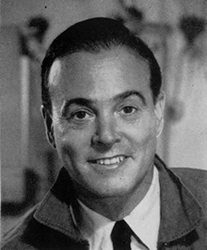
Mikhail Kuzmin
born 6 October 1872 (d. 1936)
Mikhail Alekseevich Kuzmin was a Russian writer and translator.
Kuzmin was initially attracted to theatre and music. He developed his interest in theatre early in life, attending operettas in Saratov, near Yaroslavl, where he was born. Kuzmin became a member of Nikolai Rimsky-Korsakov's music composition class at the St Petersburg Conservatory in 1891, completing three years of the seven-year program, while also learning German and Italian.
During his life, Kuzmin translated writing not only from German and Italian, but also from English, French, Greek, and Latin, including works by Apuleius,
Aubrey Beardsley, Lord Byron, and Johann Goethe, as well as 110 of William Shakespeare's sonnets and 9 of his plays.
In 1904, the homosexual Georgy Vasilevich Chicherin (1872-1936) introduced Kuzmin to Mir iskoustva (The World of Art), an artistic circle centred primarily on
Sergei Diaghilev, best known for making the Ballets Russes a major influence in the European art world, and for his relationship with the dancer
Vaslav Nijinsky.
The group attracted Kuzmin because of its theatrical concerns, its Art Nouveau aesthetic, and its relation to Symbolism. Mir iskoustva also appealed to Kuzmin because of its large homosexual membership and its penchant for dandyism.

Kuzmin's first publications appeared in 1905 in
Zelenyi sbornik (Green Miscellany), including the homosexual and idealist play
Istoriia rytsaria d'Alessio (The History of the Knight d'Alessio). His literary career gained noticeable momentum when the Moscow Decadent and Symbolist Valeri Bryusov published twelve of Kuzmin's 'Aleksandriiskie pesni' (Alexandrian Songs) and his novel
Kril'ya (Wings, 1906) in the journal
Vesy (The Scales, 1904-1909).
Wings was published separately in 1907.
The Alexandrian poems constitute the first major body of Russian free verse to be published. They contain lush descriptions of male beauty and a steady flow of mystical, orientalist imagery reflecting the author's travels in Egypt and Italy in the mid-1890s.
Dealing with love for young men, as described by various male and female narrators, the Alexandrian songs make up the last section of Kuzmin's first published collection of verse,
Seti (Nets, 1908), which was compiled on Bryusov's request.
Wings is Kuzmin's most popular prose work, having been published in numerous editions. A sympathetic depiction of gayness, the novel narrates the relationship between the adolescent Vanya and the older, urbane Larion Dmitrievich Stroop, who helps the younger man acknowledge and accept his homosexuality.
In the ten years following the initial success of
Wings, Kuzmin wrote a number of literary and theatrical works, including the plays
Opasnaia predostorozhnost (Dangerous Precaution, 1907), complete with gender transgressions and a concluding affirmation of homosexual love, and
Venetsianskie bezumtsy (The Venetian Madcaps, 1915), which, like many of Kuzmin's works, depicts a woman interfering in male-male affections.
The publication of Kuzmin's essay 'O prekrasnoi yasnosti' (On Beautiful Clarity) in 1910 led many of Kuzmin's contemporaries to affiliate the author with the newly formulated poetic movement of Acmeism, which countered Symbolist obscurity with clarity, economy, and precision. Though he states in his personal writings that he saw Acmeism to be an obtuse and passing fad.

In 1910, Kuzmin met his first major love, the poet Vsevolod Knyazev. In the same year, he published
Kuranty lyubvi (The Carillon of Love), a collection of poems written in the style of eighteenth-century pastorals and set to music by Kuzmin himself. Two years later, he published
Osennie ozera (Lakes in Autumn), possibly the work by him that most idealises homosexuality.
Knyazev committed suicide in 1913, and Kuzmin met Yury Yurkun, also a poet, soon after. The two men lived together with Yurkun's mother, and they were joined, for a short while, by Yurkun's wife, Olga Arbenina. Kuzmin and Yurkun's relationship lasted until Kuzmin's death.
After the Communist government came to power in 1917, Kuzmin sat on the Praesidium of the Association of Artists in Petrograd, and worked as an official translator under Maxim Gorky. He also helped found the daily
Zhizn iskuostva (The Life of Art) in 1918 and worked as one of its editors.
He published two more collections of verse at this time,
Ekho (Echo, 1921) and
Paraboly (Parabolas, 1922), as well as two chapters of
Roman Wonders (1922), which is set in the reign of Marcus Aurelius and which he felt was his finest work of prose.
Ultimately, however, Kuzmin's writing fell into political disfavour, with Leon Trotsky stating, in his
Literature and Revolution (1924), that Kuzmin's books were disreputable and useless.
Kuzmin's final great work was
Forel' razbivaet led (The Trout Breaks the Ice, 1929), a poem sequence in often highly imagistic and symbolic form that focuses predominantly on one man's idealiszed, and ultimately reciprocated, love for another. The sequence is also characterised by an economy of language, an aesthetic sensitivity, and decadent characters.
When Kuzmin read sections of the sequence in his last public performance in 1928, the gate-crashing crowd of homosexuals and other supporters showered the writer with flowers. Knyazev appears in the sequence as the 'stripling with a bullet through his brain', and Yurkun appears as Mister Dorian, an allusion to Oscar Wilde's novel,
The Picture of Dorian Gray.
Kuzmin died in 1936 of pneumonia, two years before Yurkun and many other writers were arrested under the Stalinist regime and shot.
Labels: Poets, Russians, Translators, Writers
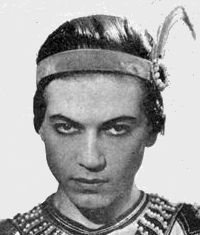 Serge Lifar born 2 April 1905 (d. 1986)
 He enrolled in the Kiev Opera Ballet at age 15, and in 1923, Diaghilev asked Bronislava Nikinska, his ballet teacher, to provide her five best students for the Ballet Russes. Nijinska, who was not keen on Lifar, did not select him but one of the five dropped out and Lifar lept at his chance.
 He was at Diaghilev's bedside when he died in 1929, but the maestro's death left the Ballet Russes in chaos. However, Lifar was invited to star in a production at the Paris Opera Ballet, to be choreographed by George Balanchine, but his illness saw Lifar taking his place and he successfully went on to become ballet master and director of the Paris Opera Ballet until 1957 - although he was accused of collaborating with the German High Command during the Occupation of Paris and banished between 1944 and 1947.