Thursday, April 21, 2011

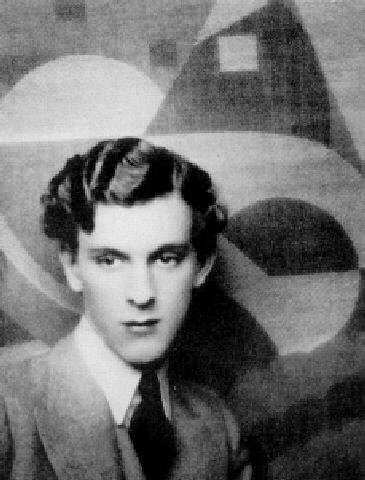
Stephen Tennant

Stephen Tennant born 21 April 1906 (d. 1987)

Stephen James Napier Tennant was a British aristocrat known for his decadent lifestyle. It is said, albeit apocryphally, that he spent most of his life in bed.

Born in England, the youngest son of a Scots peer, Lord Glenconner. His mother was the former Pamela Wyndham and a cousin of Lord Alfred Douglas (1870-1945), Oscar Wilde's lover. Tennant's eldest brother Edward 'Bim' Tennant was killed in WWI.

During the 1920s and 30s, Tennant was an important member - the 'Brightest', it is said - of the 'Bright Young Things'. His friends included Rex Whistler, Cecil Beaton, the Sitwells, Lady Diana Manners and the Mitford girls. He is widely considered to be the model for Cedric Hampton in Nancy Mitford's novel Love in a Cold Climate; one of the inspirations for Lord Sebastian Flyte in Waugh's Brideshead Revisited, and a model for the Hon. Miles Malpractice in some of his other novels.

When he was nineteen, Tennant became the lover of the poet Siegfried Sassoon. Prior to this he had proposed to a friend, the novelist Elizabeth Bowen, but had been rejected. (allegedly Tennant discussed plans with Bowen about bringing his Nanny with them on their honeymoon.) His relationship with Sassoon, however, was to be his most important: it lasted some four years before Tennant off-handedly put an abrupt end to it. Sassoon was reportedly depressed afterwards for 3 months, until he got into a short-lived and unhappy marriage.

For most of his life, Tennant tried to start or finish a novel - Lascar. It is popularly believed that he spent the last 17 years of his life in bed at his family manor at Wilsford, Wiltshire, which he had redecorated by Syrie Maugham. Though undoubtedly idle, he was not truly lethargic: he made several visits to the United States and Italy, and struck up many new friendships, despite his later reputation as a recluse. This became increasingly true only towards the last years of his life. Yet even then, his life was not uneventful: he became landlord to V S Naipaul who immortalised Tennant in his novel The Enigma of Arrival.

When Tennant died in 1987, he had far outlived most of his contemporaries.

'The Bright Young Things' at Wilsford: William Walton, Cecil Beaton, Hon Stephen Tennant, Rex Whistler, Georgia Sitwell, Zita Jungman and Teresa Jungman, 1927

Labels: , ,

Sunday, January 30, 2011

Howard Overing Sturgis

Howard Overing Sturgis born 30 January 1855 (d. 1920)

Howard Overing Sturgis was an American expatriate socialite and occasional novelist.

Sturgis was born in London to a rich and well-connected New England merchant family. Russell Sturgis, Howard's father, was a partner at Barings Bank in London, where he and his wife, Julia, were noted figures in society, entertaining such guests as Henry Adams, William Makepeace Thackeray, and Henry James, who became an intimate friend and mentor to Howard.

Sturgis was a delicate child, closely attached to his mother, and fond of such girlish hobbies as needlepoint and knitting, which he continued to practice throughout his life. He attended Eton and Cambridge, and, after the death of his parents, purchased a house in the country, Queen's Acre, called Qu'acre, where Howdie (as Sturgis was known to his coterie of friends) and his much-younger lover William Haynes-Smith (called 'the Babe') frequently and happily entertained a wide circle of friends, from androgynous boys from Eton to literary heavyweights such as James and Edith Wharton. He was the subject of a memorable sketch by E M Forster.

In 1891 Sturgis published his first novel, Tim: A Story of School Life, based on his unhappy days at Eton, which was followed, in 1895, by All That Was Possible, an epistolary novel written from the perspective of a retired actress. Both books went into several printings. Nearly ten years passed before Sturgis published his 'masterpiece', Belchamber, which was successful neither with the public nor with his friends - a bad review from his mentor James was especially galling. He was not to write again apart from a few short stories.

Labels: ,

Thursday, January 13, 2011

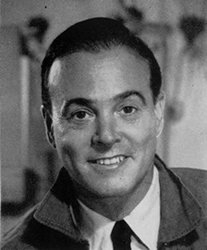
Oliver Messel

Oliver Messel born 13 January 1904 (d. 1978)

Oliver Hilary Sambourne Messel was an English artist and one of the foremost stage designers of the 20th century.

Messel was born in London, the second son of Lieutenant-Colonel Leonard Messel and Maud, the only daughter of Linley Sambourne, the eminent illustrator and contributor to Punch magazine. He was educated at Hawtreys, a boarding preparatory school in Kent, Eton — where his classmates included Harold Acton, and Brian Howard — and at the Slade School of Fine Art, University College.

After completing his studies, he became a portrait painter and commissions for theatre work soon followed, beginning with his designing the masks for a London production of Serge Diaghilev's ballet Zephyr et Flore (1925). Subsequently, he created masks, costumes, and sets — many of which have been preserved by the Theatre Museum, London — for various works staged by C. B. Cochran's revues through the late 1920s and early 1930s. He socialised with London society's most glamorous and celebrated figures, including Noel Coward, Peter Watson and his one-time love rival Cecil Beaton.

In 1953, he was commissioned to design the decor for a suite at London's elegant Dorchester Hotel, one in which he would be happy to live himself. The lavishly ornate Oliver Messel Suite combines baroque and rococo styles with modernist sensibility and a considerable dose of fantasy. The suite, along with other suites that he designed in the Dorchester, are preserved as part of Britain's national heritage. It was restored in the 1980s by many of the original craftsmen, overseen by Messel's nephew, Lord Snowdon (Anthony Armstrong-Jones), the former husband of Princess Margaret.

Oliver Messel came from a wealthy, well-connected family and when his nephew, Anthony Armstrong-Jones married HRH Princess Margaret, a life-long relationship with the British royalty began. Messel was later to design Princess Margaret’s home on Mustique Island in The Grenadines. In 1959, Messel, exhausted by a demanding theatre season and recurring arthritis, retreated to Barbados and the lush beauty of the eastern Caribbean. He was 55 and at the peak of a career in which he had dazzled three decades of theatre-goers with his fantastic, romantic and inspired stage sets and costumes. The warmth, colour and vibrancy of the tropics seemed to liberate new sources of energy and imagination, leading him to what would eventually become a whole new career in designing, building and transforming homes. Not content to rest there, he also designed many furnishings for these homes, particularly for outdoor use.

Messel bought an existing house called Maddox, a simple bay house perched above a small beach on the St James coast. With the help of his companion Riis-Hansen and a Barbadian staff, he gradually transformed it using all the trademarks of his theatrical design: slender Greek columns, flattened arches, white-on-white interiors splashed with bright spots of colour, elaborate plaster mouldings - an easy mix of baroque and classical. It was his use of the materials and traditions of island architecture that was truly innovative. Wealthy friends clamoured for Messel to design houses for them, both on Barbados and Mustique He designed and supervised the renovations of many houses. He designed and built Mango Bay from scratch and was commissioned by the Barbados government to restore the old British officers' Garrison headquarters in Queens Park, creating an elegant adaptation of it to a theatre and art gallery.

He would probably have gone on to do much more on Barbados, but was lured away by his friend Colin Tennant, Baron Glenconner and his private island home, Mustique. Glenconner commissioned Messel to design all the houses built on the island. Between 1960 and 1978 Messel created some 30 house plans, of which over 18 have so far been built - a tangible and lasting tribute to his genius. But Barbados remained his first island love and his home, and he died there in 1978, at the age of 74.

One lasting legacy is that his preferred light sage green shade of paint, now known as 'Messel Green' by paint companies in the Caribbean, has been immortalised as many property owners choose this colour for the it’s quintessential Caribbean-ness.

Labels: , , , ,

Monday, July 05, 2010

Harold Acton

Harold Acton born 5 July 1904 (d. 1994)

Sir Harold Mario Mitchell Acton KBE was an Anglo-Italian writer, scholar and dilettante who is probably most famous for being believed, incorrectly, to have inspired the character of Anthony Blanche in Evelyn Waugh's novel Brideshead Revisited (1945). Waugh himself wrote, 'The characters in my novels often wrongly identified with Harold Acton were to a great extent drawn from Brian Howard.'

Acton was born into a prominent Anglo-Italian family. He claimed that his great-great-grandfather was Commodore Sir John Acton, who was prime minister of Naples under Ferdinand IV, and grandfather of the Roman Catholic historian John Acton. However, the basis of this has been disputed.

His father was the art collector Arthur Acton, his mother Hortense Mitchell, heiress to a prominent Chicago banking family. The Mitchell fortune allowed Arthur to buy the remarkable Villa La Pietra on the hills of Florence, where Harold lived all his life.

Acton's own works include Memoirs of an Aesthete and The Bourbons of Naples, 1734-1825, a gossipy history of the Bourbon rulers of the Kingdom of Naples in the 18th century. He also wrote Peonies and Ponies, the most popular satirical book about the clash between European and Chinese culture.

In 1974 he was named a Knight Commander of the British Empire (KBE). When he died he left Villa La Pietra to New York University.

Following Acton's death at the age of 89, DNA testing revealed the existence of a half-sister, whose heirs have gone to court to challenge Acton's $500 million bequest to New York University.

Acton was buried at the Cimitero Evangelico degli Allori in the suburbs of Florence.

Labels: , , ,

Tuesday, September 30, 2008

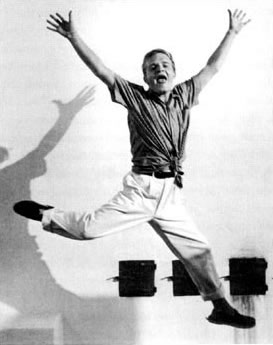
Truman Capote

Truman Capote born 30 September 1924 (d. 1984)

Truman García Capote was an American writer whose non-fiction, stories, novels and plays are recognised literary classics. He is best known for In Cold Blood (1966) and the novella Breakfast at Tiffany's (1958). At least 20 films and TV dramas have been produced from Capote novels, stories and screenplays.

Capote stood at just over 5'4" and was openly gay in a time when it was common among artists, but rarely talked about.

Capote was well known for his distinctive, high-pitched voice (often said to have a lisp, which is untrue), his offbeat manner of dress and his fabrications. He claimed to know intimately people he had in fact never met, such as Greta Garbo. He professed to have had numerous liaisons with men thought to be heterosexual, including, he claimed, Errol Flynn. Many photographic images of Capote, especially those from the 1950s, are now iconic.

He travelled in eclectic circles, hobnobbing with authors, critics, business tycoons, philanthropists, Hollywood stars, theatrical celebrities, royalty and members of high society, both in the US and abroad. Part of his public persona was a long-standing rivalry with writer Gore Vidal. Apart from his favorite authors (Willa Cather, Isak Dinesen), Capote had faint praise for other writers.

A short story published in Esquire in the 1970s, part of his never completed work Answered Prayers (published as an 'unfinished novel' after his death) - conceived as an American version of Proust's Remembrance of Things Passed - alienated most of his celebrity acquaintances, who recognised thinly veiled versions of themselves in the story.

He has recently been brought back into public consciousness through the 2005 Oscar-winning film Capote featuring a multiple award-winning star turn by Philip Seymour Hoffman. Another film about Capote starring Toby Jones, with Sandra Bullock as his close friend Harper Lee, called Infamous was released in 2006.

Truman Capote [Wikipedia]

Labels: , ,

Sunday, September 28, 2008

Denham Fouts

Denham Fouts born 1914* (d. 1949)

Denham Fouts was an American prostitute, socialite and literary muse. He served as the inspiration for characters by Truman Capote, Gore Vidal, Christopher Isherwood and Gavin Lambert.

From Jacksonville, Florida, he was the son of a baker. In 1926, 12 year-old Fouts submitted a letter to Time Magazine, protesting the abuse of animals in the making of movies. In his teens, Fouts was sent north by his father to Washington, having asked the boy's uncle, who was the president of Safeway, to give him a job. Fouts later left for Manhattan, working for a time as a stock boy and attracting a good deal of attention. Fouts was 'thin as a hieroglyph, he had dark hair, light brown eyes, and a cleft chin', and Glenway Wescott considered him 'absolutely enchanting and ridiculously good-looking'.

He became the companion of a series of wealthy male and female patrons. His friends, who called him Denny, included Christopher Isherwood, Brion Gysin, Glenway Wescott, Truman Capote, George Platt Lynes, Jane and Paul Bowles, Cyril Connolly, and Michael Wishart. Something of a mythic figure, Isherwood called him 'the most expensive male prostitute in the world' and Capote considered him the 'Best-Kept Boy in the World'. Fouts was an opium addict, and at one time boyfriend of arts patron Peter Watson.

In 1938, Fouts introduced Brion Gysin to Jane and Paul Bowles, later shocking them by 'shooting flaming arrows from his hotel window onto the busy Champs Élysées below', having spent some time in Tibet, learning archery. Fouts' occasionally outrageous behavior made some uncomfortable. Michael Shelden remarked that Fouts' '"Deep South" charm masked a volatile, sometimes nasty temper. There were rumours about his past and tales of erratic, dangerous behaviour.'

During World War II, Watson sent Fouts to the US for his safety. He met Christopher Isherwood in Hollywood in August of 1940. Isherwood's guru, Swami Prabhavananda, refused to accept Fouts as a disciple despite his interest in Vedanta. Isherwood, nonetheless, had Fouts move in with him in the summer of 1941 to 'lead a life of meditation'. This period is described in Isherwood's Down There on a Visit, where Fouts is represented as the character Paul.

Some time into the war, Fouts, who was a conscientious objector, was drafted for the Civilian Public Service Camp. He later completed his high school diploma, studied medicine at UCLA and then settled in Europe. While in Paris, he sent a blank cheque to Truman Capote with only the word 'come' written on it, after becoming enamoured of the Harold Halma photograph of Capote on the original back dust jacket of Other Voices, Other Rooms. Capote rejected the cheque, but accepted his offer to visit, and would spend hours with the Fouts in his dark apartment on the Rue de Bac, talking and listening to Fouts' stories.

Fouts was the lover of numerous notable figures, including Prince Paul I of Greece (later King) and, allegedly, French actor Jean Marais.

Fouts spent much of his later life dissolute, spending time 'in bed like a corpse, sheet to his chin, a cigarette between his lips turning to ash. His lover would remove the cigarette just before it burned his lips.' Fouts died in 1949 in Rome at the age of 35 of a heart attack, and his body was buried in Protestant Cemetery. It is said that he died on the toilet, and his death year has also been reported as 1948.

Gay author and screenwriter Gavin Lambert's 1966 roman-à-clef Norman's Letter is about Fouts.

*actual birthday unknown

Labels: , ,