Thursday, April 21, 2011

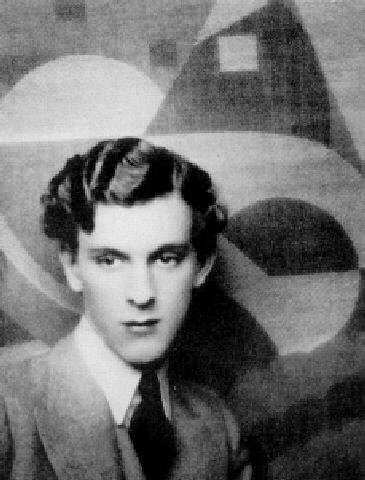
Stephen Tennant

Stephen Tennant born 21 April 1906 (d. 1987)

Stephen James Napier Tennant was a British aristocrat known for his decadent lifestyle. It is said, albeit apocryphally, that he spent most of his life in bed.

Born in England, the youngest son of a Scots peer, Lord Glenconner. His mother was the former Pamela Wyndham and a cousin of Lord Alfred Douglas (1870-1945), Oscar Wilde's lover. Tennant's eldest brother Edward 'Bim' Tennant was killed in WWI.

During the 1920s and 30s, Tennant was an important member - the 'Brightest', it is said - of the 'Bright Young Things'. His friends included Rex Whistler, Cecil Beaton, the Sitwells, Lady Diana Manners and the Mitford girls. He is widely considered to be the model for Cedric Hampton in Nancy Mitford's novel Love in a Cold Climate; one of the inspirations for Lord Sebastian Flyte in Waugh's Brideshead Revisited, and a model for the Hon. Miles Malpractice in some of his other novels.

When he was nineteen, Tennant became the lover of the poet Siegfried Sassoon. Prior to this he had proposed to a friend, the novelist Elizabeth Bowen, but had been rejected. (allegedly Tennant discussed plans with Bowen about bringing his Nanny with them on their honeymoon.) His relationship with Sassoon, however, was to be his most important: it lasted some four years before Tennant off-handedly put an abrupt end to it. Sassoon was reportedly depressed afterwards for 3 months, until he got into a short-lived and unhappy marriage.

For most of his life, Tennant tried to start or finish a novel - Lascar. It is popularly believed that he spent the last 17 years of his life in bed at his family manor at Wilsford, Wiltshire, which he had redecorated by Syrie Maugham. Though undoubtedly idle, he was not truly lethargic: he made several visits to the United States and Italy, and struck up many new friendships, despite his later reputation as a recluse. This became increasingly true only towards the last years of his life. Yet even then, his life was not uneventful: he became landlord to V S Naipaul who immortalised Tennant in his novel The Enigma of Arrival.

When Tennant died in 1987, he had far outlived most of his contemporaries.

'The Bright Young Things' at Wilsford: William Walton, Cecil Beaton, Hon Stephen Tennant, Rex Whistler, Georgia Sitwell, Zita Jungman and Teresa Jungman, 1927

Labels: , ,

Sunday, February 20, 2011

William Lygon, 7th Earl Beauchamp

William Lygon, 7th Earl Beauchamp born 20 February 1872 (d. 1938)

William Lygon, 7th Earl Beauchamp KG, KCMG, PC, British politician, succeeded his father as Earl Beauchamp in 1891, and was mayor of Worcester at age 23. A progressive in his ideas, he was surprised to be offered the post of Governor of New South Wales in May 1899. Though good at the job, he was unpopular in the colony, and Beauchamp returned to Britain in 1900, where he joined the Liberal Party.

Beauchamp was Lord Steward of the Household to King Edward VII and was made a Privy Counsellor in 1906. He served in the Liberal Government as Lord President of the Council from June to November 1910, First Commissioner of Works from 1910 to 1914, Lord President again from 1914 to 1915, and was Liberal Leader in the House of Lords from 1924, supporting the failing party with his substantial fortune.

Beauchamp was made Lord Lieutenant of Gloucestershire in 1911, carried the Sword of State at the coronation of King George V, was made Lord Warden of the Cinque Ports in 1913 and a Knight of the Garter in 1914.

He was also Chancellor of London University, a Six Master (Governor of RGS Worcester) and Captain of the Honourable Corps of Gentlemen-at-Arms.

In 1931, he was 'outed' as homosexual (despite his 7 children) to the King and Queen by his violently-Tory brother-in-law, the Duke of Westminster, who hoped to ruin the Liberal Party through Beauchamp. Homosexuality was a criminal offence at the time, and the King was horrified, infamously observing, 'I thought men like that shot themselves'.

To those in the know Beachamp was notorious for his weakness for footmen, and his children would warn their male friends to lock their doors at night if they stayed at Madresfield, the family estate. His second son, Hugh Lygon, was a close friend, probably a lover, of Evelyn Waugh, and is generally accepted to be one of the main inspirations for Sebastian Flyte in Waugh's novel Brideshead Revisited.

There was no public scandal, but Lord Beauchamp resigned all his offices, except Lord Warden of the Cinque Ports, and went into exile on the Continent. He died of cancer in New York City, aged 66.

Lord Beauchamp is generally supposed to have been the model for Lord Marchmain (who was also outed by his brother-in-law) in Brideshead Revisited.

Labels: , , , ,

Jacques d'Adelswärd-Fersen

Jacques d'Adelswärd-Fersen born 20 February 1880 (d. 1923)

Baron Jacques d'Adelswärd-Fersen was a French aristocrat, a novelist and poet. In 1903, after a scandal involving Parisian schoolboys had made him a persona non grata in the salons and dashed his marriage plans, he took up residence in Capri, where he lived with his longtime boyfriend and 'secretary', Nino Cesarini [pictured below, photographed by Guglielmo Plüschow], until his death in 1923.

D'Adelswärd-Fersen's grandfather had founded a steel empire, which was profitable enough that it made d'Adelswärd-Fersen exceedingly wealthy when he inherited at age 22. Consequently, he was much sought-after in the higher circles, as families hoped to marry him to one of their daughters.

Apart from joining the military, d'Adelswärd-Fersen had already travelled extensively and published some poems. At around this time, his homosexual leanings became apparent to him, which are also relatively clearly addressed in his poetry. Unfortunately for him, he was not sexually interested in adult men (which at the time in France would not have brought him into legal trouble) but in teenage boys between about 15 and 17 years old. This inclination eventually caused his undoing in French society.

In 1903, accusations surfaced that the Baron had held Black Masses in his house at 18 Avenue de Friedland. Supposedly these orgiastic feasts were attended by local Parisian schoolboys and involved sexual misconduct between the Baron and the boys. He was charged with indecent behavior with minors and served a six-month prison sentence, was fined 50 francs and lost his civil rights for five years.

The scandal bears some similarities with the trial of Oscar Wilde in 1895, who also experienced great social degradation after a public trial finding him guilty of 'gross indecency with other male persons'. Perhaps d'Adelswärd-Fersen was lucky in that his feasts were also attended by other notable figures of Parisian high society, which more or less forced the court to drop some charges to minimise the impact of the scandal.

After his marriage plans were foiled, d'Adelswärd-Fersen remembered the island of Capri from his youth and decided to build a house there.

Lord Lyllian, published in 1905, is one of d'Adelswärd-Fersen's novels and perhaps his most important work, satirising the scandal around himself in Paris, with touches of the Oscar Wilde affair thrown in for good measure.

The hero, Lord Lyllian, departs on a wild odyssey of sexual debauchery, is seduced by a character that seems to resemble Oscar Wilde, falls in love with girls and boys, and is finally killed by a boy. The public outcry about the supposed Black Masses is also charicatured. The work is an audacious mix of fact and fiction, including four characters that are alter egos of d'Adelswärd-Fersen himself.

Akademos. Revue Mensuelle d'Art Libre et de Critique was d'Adelswärd-Fersen's short-lived attempt at publishing a monthly journal promoting pederastic love. When the premiere issue of Akademos came out in 1909, it was the first publication of its kind in the French language. Thematically, it trod somewhat similar ground as the German journal Der Eigene, published between 1896 and 1931 by Adolf Brand. This is not a coincidence, as d'Adelswärd-Fersen studied the German publications that tried to push for the social acceptance of homosexuality before launching Akademos. Also, he corresponded with both Brand and Magnus Hirschfeld.

D'Adelswärd-Fersen frequently organised parties in his splendid villa, to which all the intellectuals and 'eccentric' travellers staying on the island of Capri were invited. The Baron lived for twenty years on the island; his death there, possibly through suicide, is thought to have been caused by an overdose of cocaine. His ashes are kept in Capri’s non-catholic cemetery.

Labels: , , ,

Saturday, February 12, 2011

Prince Philip of Eulenburg

Prince Philip of Eulenburg born 12 February 1847 (d. 1921)

Philip Frederick Alexander, Prince of Eulenburg and Hertefeld, Count of Sandels, was a politician and diplomat of imperial Germany in late 1800s and early 1900s.

Count Philip of Eulenburg was born at Königsberg, Prussia in 1847. He became a close friend of Kaiser Wilhelm II, who was two years his junior, prior to Wilhem’s accession to the imperial throne. Eulenburg entered the diplomatic corps in 1877, becoming Prussia's ambassador to Bavaria and, subsequently, Germany's amabassador to Austria-Hungary.

Upon the accession of his friend Wilhelm to the thrones of Prussia and Germany, count Eulenburg assumed an unofficial position of immense influence, and among other things, was instrumental in the appointment of Bernhard von Bülow as head of the foreign office in 1897. Wilhelm II had long desired the appointment of 'his own Bismarck' - a powerful chancellor who would enact the Kaiser's will - and Eulenburg was the first to suggest Bülow for this role.

In 1900, count Philip was created Prince of Eulenburg and Hertefeld, and to continue his wife's otherwise soon-to-be-extinguishing comital name, also Count of Sandels.

Count Philip of Eulenburg married at Stockholm on 20 November 1875 Augusta Sandels, daughter of the last Count Sandels. Sources say that he continued his 'individual' lifestyle also after the marriage. They had eight children.

Although he was married, Eulenburg was connected in homosexual liaisons with members of the Kaiser’s inner circle, including count Kuno von Moltke, the military commander of Berlin. The public exposure of these liaisons in 1907 led to the Harden-Eulenburg Affair. In 1908, Eulenburg was placed on trial for perjury due to his denial of his homosexuality; the trial was repeatedly postponed due to Eulenburg’s claim of poor health.

With many of his closest advisors discredited by accusations of homosexuality, the Kaiser came to rely more on his military leaders. Prussian militarism culminated in Germany's involvement in the disastrous First World War in which over 3 million German men were killed and an additional 4 million wounded.

Eulenburg died in 1921.

Princess Sophie, Duchess in Bavaria, the current Hereditary Princess of Liechtenstein, is one of Philip Eulenburg's descendants, as are Sophie's children, of whom one son will succeed on the throne of Liechtenstein.

Eulenburg-Hertefeld, Philipp, Prince zu (1857-1921) - lgbtq encyclopedia

Labels: , , ,

Thursday, February 03, 2011

Francis Douglas, Viscount Drumlanrig

Pictured with his brother Lord Alfred Douglas [left]
Francis Douglas, Viscount Drumlanrig born 3 February 1867 (d. 1894)

Francis Archibald Douglas, Viscount Drumlanrig was a Scottish nobleman and politician, the eldest son of the 9th Marquess of Queensberry.

He was educated at Harrow School and later served as a private secretary to the Liberal politician Lord Rosebery. Thanks to Rosebery's patronage, on 22 June 1893 he was raised to the Peerage of the United Kingdom as Baron Kelhead, of Kelhead in the County of Dumfries. This provided him with a seat in the House of Lords.

Drumlanrig's father served in Parliament from 1872 to 1880 as a representative peer, but in 1880 he refused, as an atheist, to take the religious oath of allegiance to the Queen. He was not allowed to take his seat and was never again chosen as representative peer by the Scottish nobles. His son's accession to Parliament as the 1st Baron Kelhead precipitated a bitter dispute between them and also between Queensberry and Lord Rosebery, who became Prime Minister in 1894.

In October 1894, eighteen months after his ennoblement, Drumlanrig died in what may have been a hunting accident or suicide. He was unmarried and his younger brother Lord Percy Douglas became heir to his father's titles.

It was speculated at the time, and evidence suggests that Drumlanrig may have had a homosexual relationship with Rosebery, and further, that Queensberry had threatened to expose the Prime Minister's supposed proclivities if his government did not vigorously prosecute Oscar Wilde in the affair stemming from Wilde's relationship with Francis Douglas's younger brother Lord Alfred Douglas. Rosebery was, by most accounts, happily married until the death of his wife in 1890, though gossip that Rosebery was homosexual or bisexual was indeed widespread. Queensberry believed that, as he phrased it to Lord Alfred in a letter, 'Snob Queers like Rosebery' had corrupted his sons, and held the Prime Minister indirectly responsible for Drumlanrig's death.

Labels: , , , , ,

Friday, September 24, 2010

Horace Walpole

Horace Walpole born 24 September 1717 (d. 1797)

Horatio Walpole, 4th Earl of Orford, more commonly known as Horace Walpole, was a politician, writer, architectural innovator and namesake of his cousin Horatio Nelson.

He was born in London, the youngest son of British Prime Minister Robert Walpole. He was educated at Eton College and King's College, Cambridge. His homosexuality revealed itself early, and he is believed to have had affairs with the poet Thomas Gray, and with Henry Fiennes Clinton, 9th Earl of Lincoln (later 2nd Duke of Newcastle). Gray accompanied Walpole on the Grand Tour, but they quarrelled, and Walpole returned to England in 1741 and entered parliament. He was never politically ambitious, but remained an MP even after the death of his father in 1745 left him a man of independent means.

Following his father's politics, he was a devotee of King George II and Queen Caroline, siding with them against their son, Frederick, Prince of Wales, about whom Walpole wrote spitefully in his memoirs.

Walpole's home, Strawberry Hill, near Twickenham, was a fanciful concoction of neo-Gothic which began a new architectural trend. In 1764, he published his Gothic novel, The Castle of Otranto, setting a literary trend to go with the architecture. Strawberry Hill is undergoing a major restoration project.

From 1762 on, he published his Anecdotes of Painting in England. His memoirs of the Georgian social and political scene, though heavily biased, are a useful primary source for historians. In one of the numerous letters, from January 28, 1754, he coined the word serendipity which he said was derived from a 'silly fairy tale' he had read, The Three Princes of Serendip. He also authored the often-quoted epigram, 'Life is a comedy to those who think and a tragedy to those who feel'.

His father was created Earl of Orford in 1742. Horace's elder brother, Robert Walpole, 2nd Earl of Orford (c.1701–1751), passed the title on to his son George Walpole, 3rd Earl of Orford (1730–1791). When George died 'unmarried', Horace Walpole became the 4th Earl of Orford. When Horace Walpole died in 1797 the title became extinct.

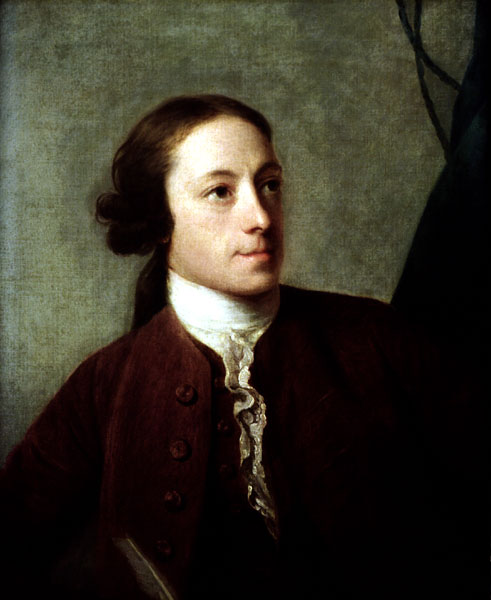
[Painting Horace Walpole, Fourth Earl of Orford (1717-1797), ca 1759 by Allan Ramsay (1713-1784)]

Labels: , , ,

Sunday, September 12, 2010

Philippe I, Duke of Orléans

Philippe I, Duke of Orléans born 12 September 1640 (d. 1701)

Philippe I, Duc d'Orléans was the second son of Louis XIII of France and Anne of Austria, and thus the younger brother of Louis XIV of France. He was known as Monsieur at the French court, Monsieur becoming the traditional name of the King's eldest brother from 1660. He was born at St Germain-en-Laye.

In 1661, he was made Duke of Orléans, and married his first cousin Henrietta Anne Stuart, sister of Charles II of England, also known as 'Minette'.

Traditionally, in the French court, a king's younger son was not given significant responsibility, and Philippe was no exception. His mother discouraged him from traditionally male pursuits such as arms and politics, and encouraged him to wear dresses, make-up, and to enjoy traditionally feminine pursuits. This was part of Queen Anne's effort to distract Philippe from challenging his older brother's rule and position.

As an adult, Monsieur continued to enjoy wearing feminine clothing and fragrances, but also proved to be a brave and competent commander in the field. He fought with distinction in the 1667 promenade militaire against Flanders during the War of Devolution, though he hastened back to his life at court immediately after victory was assured. Monsieur resumed military command in 1672, and in 1677 won a great victory at the Battle of Cassel and took St Omer. Louis XIV, it was said, was jealous of his brother's success, therefore Monsieur never commanded an army again.

Monsieur's favorites, invariably handsome young men, dominated contemporary and historical commentary about his role at court, particularly one man who shared his princely rank and much of his life: Philip of Lorraine-Armagnac was three years younger than Philip of Orléans. Handsome, brutal and devoid of scruples, he was the great love of Monsieur's life. He was also the worst enemy of Monsieur's two wives...

As greedy as a vulture, this cadet of the French branch of the house of Lorraine had, by the end of the 1650s, hooked Monsieur as though harpooning a whale. The young prince loved him with a passion that worried Madame Henrietta and the court bishop, Cosnac, but the King understood that, thanks to the attractive face and sharp mind of the good-looking cavalier, he would have his way with his brother.

Under these circumstances it is no surprise that Monsieur's first marriage was unhappy. In January 1670 his wife prevailed upon the King to imprison the chevalier, first near Lyon, then in the Chateau d'If, and finally banish him to Rome. But by February Monsieur's protests and pleas persuaded the King to restore him to his brother's entourage. The death of the Duchess in the following June was popularly attributed to poison, although there was little evidence for Monsieur to have perpetrated such a deed, whereas some of his mignons had earned her enmity and she theirs — and were suspected.

Subsequently, Monsieur's confidante the Princess Palatine Anna Gonzaga arranged his second marriage to her husband's niece, Elisabeth Charlotte, daughter of Charles Louis, Elector Palatine of the Rhine [pictured]. 'Liselotte' converted to Roman Catholicism before entering France in November 1671.

Whereas Monsieur's first wife had been known for beauty, charm and wit, no one accused Liselotte of those graces, and some said that this lack explained why she fared better with Monsieur (who personally took charge of her toilette for public occasions) than did his first wife. She gave him his only surviving son. She also became known for her brusque candour, upright character, lack of vanity, and prolific foreign correspondence about the daily routine and frequent scandals of Versailles. Her letters record how willingly she gave up sharing Monsieur's bed at his request after their children's births, and how unwillingly she endured the presence of his mignons in their household, which caused the couple to quarrel. But she frequently acknowledged that Monsieur's treatment of her was less offensive than the importunities his entourage made at her expense, and the lack of protection he afforded her and their children against the hostile intrigues she believed were directed at her by spiteful courtiers.

Monsieur failed to stand up to Louis XIV's insistence on marrying his daughter Françoise Marie de Bourbon (Mademoiselle de Blois) to Monsieur's son and heir, Philippe d'Orléans in February 1692. But when, years later, the King rebuked him for his son's indifference toward her, Monsieur defended his son with such vehemence that a footman felt obliged to enter the King's chamber to warn the royal brothers that their argument was being overheard by the entire court. Monsieur is the only man known to have raised his voice to the adult Louis XIV, though he did not live to see the King again.

Monsieur was an art collector and perhaps also a shrewd investor. Monsieur enjoyed court life, gambling, chasing young men, and ceremony. Despite the fact that his debts and dalliances often cost the King, the brothers spent much time together. Orléans' loyalty was never in question; he raised the standard of fraternal fidelity in a dynasty in which the Frondes had established princely rebellion as a tradition. His unabashed effeminacy probably deprived him of the credit he deserved among his countrymen and in history. Louis XIV, however, seems to have fully appreciated their relationship, as he treated Monsieur, publicly and privately, with respect and leniency.

He died at Saint-Cloud in 1701 of an apoplectic fit brought on by his heated argument with the King.

Labels: ,

Monday, October 20, 2008

Edward Douglas-Scott-Montagu, 3rd Baron Montagu of Beaulieu

Edward Douglas-Scott-Montagu, 3rd Baron Montagu of Beaulieu born 20 October 1926

Edward John Barrington Douglas-Scott-Montagu, 3rd Baron Montagu of Beaulieu is a British Conservative politician known for founding the National Motor Museum.

Montagu was born in London, and inherited his Peerage in 1929 at the age of two, when his father John Walter Edward Douglas-Scott-Montagu, 2nd Baron Montagu of Beaulieu was killed in an accident. He attended St Peter's Court School and Ridley College in Canada, Eton College and New College, Oxford. He served in the Grenadier Guards including in Palestine before the end of the British Mandate.

On coming of age Montagu immediately took his seat in the House of Lords and swiftly made his maiden speech on the subject of Palestine. His interest in historic cars led him to open the National Motor Museum on his estate at Beaulieu, Hampshire in 1952.

Montagu knew from an early stage of life that he was bisexual, and while attending Oxford was relieved to find others with similar feelings. In a 2000 interview Lord Montagu stated, 'My attraction to both sexes neither changed nor diminished at university and it was comforting to find that I was not the only person faced with such a predicament. I agonised less than my contemporaries, for I was reconciled to my bisexuality, but I was still nervous about being exposed.'

In 1954 Montagu was imprisoned for twelve months for consensual homosexual offences along with Michael Pitt-Rivers and Peter Wildeblood.

On the August Bank Holiday weekend in 1953 Edward Montagu and film director Kenneth Hume took two boy scouts to a beach hut at Beaulieu for a bathe. Edward Montagu had reported the loss of a camera to the police and the purpose of the visit to the beach hut had originally been to look for the camera. When the police arrived they took more interest in what had been happening and the boy scouts said that they had been indecently assaulted in the beach hut.

Edward Montagu was charged with an unnatural offence and an indecent assault and his trial took place at Winchester Assizes in December 1953. Edward Montagu was acquitted on the more serious charge of committing an unnatural offence but the jury disagreed on the lesser charge of indecent assault. The Director of Public Prosecutions decided that Edward Montagu and Kenneth Hume should be tried again on the charge of indecent assault.

Michael Pitt-Rivers and Peter Wildeblood were arrested three weeks after the end of the first Montagu/Hume trial. Their premises were searched without a warrant. They were charged with several specific indecency charges with two RAF men, Edward McNally and John Reynolds, at the beach hut near Beaulieu and also at the Pitt-Rivers estate in Dorset. They were also accused of conspiring with Edward Montagu to commit these offences. This would prejudice the chances of Edward Montagu's aquittal at his re-trial. Unlike other defendants in the trial Montagu continued to protest his innocence.

Fifty years on, in an interview with the Mail on Sunday Lord Montagu acknowledged his bisexuality, but maintains that his guilt was mainly by association [with Peter Wildeblood], and that the police were seeking a high-profile prosecution as part of their government sponsored crackdown on homosexuals.

The trial was a consequence of concern in the early 1950s about the increasing 'incidence' of homosexuality but caused a backlash which led to the Wolfenden Report which recommended legalisation.

Following the trial and his imprisonment, Montagu quietly returned to his life and went on to marry twice, declining, generally, to speak publicly about the issue.

Montagu founded The Veteran And Vintage Magazine in 1956 and continued to develop the museum, making a name for himself in tourism. He was Chairman of the Historic Houses Association from 1973 to 1978 and Chairman of English Heritage from 1984 to 1992.

Lord Montagu on the court case which ended the legal persecution of homosexuals - this interview with the Mail on Sunday on 15 July 2007 is the first time Lord Montagu has spoken of the events that led to his conviction fifty years before.

The story of Lord Montagu's trial and unwitting role in the history of decriminalisation in England was told in a 2007 Channel 4 drama-documentary, A Very British Sex Scandal.

Labels: , , ,

Friday, August 22, 2008

László Almásy

László Almásy born 22 August 1895 (d. 1951)

Count László Ede Almásy de Zsadány et Törökszentmiklós was an Hungarian aristocrat, motorist, desert researcher, aviator, Scout-leader and soldier who also served as the basis for the protagonist in Michael Ondaatje's 1992 novel The English Patient and the movie based on it.

Almásy was born in Borostyánkő in the Austrian-Hungarian monarchy (modern-day Bernstein in Austria), into a non-titled Hun noble family. He was educated by a private tutor in Eastbourne from 1911 to 1914. During World War I, he served with the Austro-Hungarian Imperial and Royal Aviation Troops. He returned after the war to join Eastbourne Technical Institute while lodging again at the same address from November 1921 to June 1922. He was a member of the pioneering Eastbourne Flying Club.

After the war, Almásy continued to support King Karl of Austria, and, on two occasions, drove him to Budapest when he tried to get his throne back. It may be that Karl bestowed him unofficially with the title of count that Almásy only used outside of Hungary.

After 1921, Almásy worked as a representative of an Austrian car firm Steyr Automobile in Szombathely, and won many car races in their colours. He also organised hunting trips in Egypt for visiting Europeans. During his drive from Egypt to Sudan along the Nile in 1926, he developed an interest in the area and later returned there to drive and hunt. He also demonstrated Steyr vehicles in desert conditions in 1929 with two Steyr lorries and led his first expedition to the desert.

In 1932, he left to find the legendary Zerzura, the Oasis of the Birds, with three Britons, Sir Robert Clayton, Commander Penderel and Patrick Clayton, who were sponsored by Prince Kemal el Din. The expedition used both cars and a plane. They discovered prehistoric rock art sites in Uweinat and Gilf Kebir, and Almasy claimed that in 1933 he found the third valley of Zerzura in Wadi Talh.

He also discovered the magyarab tribe in Nubia, who speak Arabic but believe that they are the descendants of Hungarian soldiers who served in the army of Turkey in the 16th century.

Almásy had succeeded in turning into a serious explorer. Almásy, was given the nickname Abu Ramla (Father of the Sands) by his Bedouin friends. However, in the mid-1930s, the time for research and adventure was drawing to a close. In 1932 his former sponsor Clayton died — not from a crash-landing as described in The English Patient — but of an infection from a desert fly contracted in the Gilf Kebir region. However, Clayton's wife did die one year later (1933) in a mysterious plane crash.

Almásy recorded some of his adventures in the book Az ismeretlen Szahara (The Unknown Sahara), first published in 1934 in Budapest. The German edition, under the title Unbekannte Sahara. Mit Flugzeug und Auto in der Libyschen Wüste (The Unknown Sahara. By Airplane and Car in the Libyan Desert), was published five years later (1939) by Brockhaus in Leipzig. It contains accounts of his most sensational discoveries like the one of the Jebel Uweinat (the highest mountain of the Eastern Sahara desert), of the rock paintings in the Gilf Kebir and of the lost oasis of Zerzura.

Almasy's role in relation to the Gilf Kebir was not that of a discoverer. The Bedouins already knew it was there, but tended to avoid the caves except when searching for stray livestock, attributing the cave paintings inside to unpredictable spirits. Egyptian Prince Kemal ed Din wrote an article about Gilf Kebir for National Geographic in 1921. What Almásy did was to map and enter each cave and draw the paintings inside.

In the following years, Almásy led archaeological and ethnographical expeditions with the German ethnographer Leo Frobenius. He also worked in Egypt at Al Maza airfield as a flying instructor. After the outbreak of World War II in 1939, he had to return to Hungary. The British suspected that he was a spy for the Italians — and vice versa. In fact he was a Hungarian who worked for which ever colonial power offered him the best surveying contract. Hungary formally joined the Axis powers by signing the Tripartite Pact in November of 1940.

The Abwehr (German military intelligence service) recruited him in Budapest. As a Hungarian reserve officer, he was assigned to the Luftwaffe as a Hauptmann (captain) and assigned to the Afrika Korps. In 1941–1942, he worked with the German troops of Erwin Rommel using his desert experience and led military missions, including Operation Salaam, to infiltrate two German spies through enemy lines in a manner similar to the allied Long Range Desert Group. This was not a covert operation: Almásy and his team wore German uniforms, although they used American vehicles with German crosses surreptitiously incorporated as part of the vehicles camoflage pattern. Almásy delivered the German (Abwehr) agents Hans Eppler and Peter Stanstede to Cairo in the same way. Rommel subsequently promoted Almásy to major.

The details of Almásy's role in World War II are likely to remain unclear. For delivering spies, he received the Iron Cross (Eisernes Kreuz) from Rommel. He was, however, never a spy nor a Nazi.

The real Almásy was a far cry from the character portrayed by Ralph Fiennes in the film based on Michael Ondaatje's novel, a dashing explorer who falls in love with another man's wife while working with the Royal Geographical Society in North Africa, and who helps the Nazis only as a way to be united with his love.

In real life he was an intrepid explorer, but he was also a homosexual who wrote passionate letters to a young German officer he tried to help avoid going to the Russian front. And he was a monarchist, obsessed with the idea of returning the Hapsburgs to the throne even when it was clear the empire was beyond redemption.

After the end of the desert war, Almásy relocated to Turkey where he became involved in a plan to cause an Egyptian revolt which never materialised. He then returned to Budapest where with his contacts from the Roman Catholic Church he helped save the lives of several Jewish families at a time when Jews were being sent to concentration camps.

After the war he was arrested in Hungary and ended up in a Soviet prison. After Communists took over in Hungary, Almásy was tried for treason in the Communist People's Court but was eventually acquitted. He escaped the country reputedly with the aid of British intelligence and they spirited him into British occupied Austria and were chased by a KGB 'hit squad' until they got him on a aeroplane to Cairo. They bribed Hungarian Communist officials to enable his release. He returned to Egypt at the invitation of King Faruk and became the technical director of the newly founded Desert Institute. He could not continue directing expeditions into the desert to search for King Cambyses' 'Lost Army' of history, the legendary Persian King whose army of 10,000 men had apparently vanished in the 'Sand Sea' that Almásy so loved.

Almásy became ill in 1951 during his visit in Austria. He died of dysentery in a hospital in Salzburg, where he was then buried. The epitaph on his grave, erected by Hungarian patriots in 1995, honours him as a 'Pilot, Saharaforscher und Entdecker der Oase Zarzura' (Pilot, Sahara Explorer, and Discoverer of the Zerzura Oasis).

Labels: , , ,