Wednesday, April 13, 2011

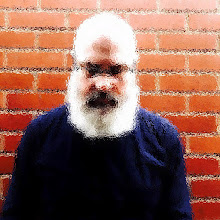
Pierre Molinier

Pierre Molinier born 13 April 1900 (d. 1976)

Pierre Molinier was a painter, photographer and 'maker of objects'. He was born in Agen (France) and lived his life in Bordeaux. He began his career by painting landscapes, but his work turned towards a fetishistic eroticism early on.

Molinier began to take photographs at the age of 18, and started his erotic production around 1950. With the aid of a wide range of specially made 'props' – dolls, various prosthetic limbs, stiletto heels, corsetry, dildos and an occasional confidante – Pierre Molinier used his own body as the basis for surreal and fantastic distortions of the human form, blurring sexuality and gender and ultimately producing a large body of photographic work. Most of his photographs, photomontages, are self-portraits of himself as a woman.

By combining costume, props, photography and photomontage he stepped beyond mere photographic representation of himself and his models to create a bizarre and distorted world of gender-confused fetishism and auto-eroticism.

He began a correspondence with André Breton and sent him photographs of his paintings. Later Breton integrated him into the Surrealist group. Breton organised an exhibition of Molinier's paintings in Paris, in January-February 1956.

In 1976, as his health began to decline, Pierre Molinier lay on his bed in front of a mirror, masturbated and committed suicide by shooting himself. The staging of his death initially led police to suspect he had been murdered but it seems that his death was Molinier's final creative act.

Pierre Molinier's enigmatic photographs influenced European and North American body artists in the early 1970s and continue to engage artists, critics, and collectors today.

Labels: , , , ,

Tuesday, September 21, 2010

Pavel Tchelitchew

Pavel Tchelitchew born 21 September 1898 (d. 1957)

Pavel Tchelitchew was a Russian-born surrealist painter.

Tchelitchew was born near Moscow on the estate of his aristocratic family. He was educated by a series of French, German, and English governesses, who encouraged his interest in the arts.

His father, a follower of Tolstoyian principles, supported his desire to become a painter. In spite of his father's liberal views, however, the family was expelled from its property in 1918 following the revolution of 1917.

Tchelitchew joined the White army, and the family fled to Kiev, which was not yet under Communist control. While in Kiev he continued his studies and produced his first theatre designs.

By 1920 he was in Odessa, escaping the advancing Red armies. He went on to Berlin via Istanbul. There he met Allen Tanner, an American pianist, and became his lover. In 1923 they moved to Paris and Tchelitchew began painting portraits of the avant-garde and homosexual elite. His work was much admired and bought by Gertrude Stein.

In addition to becoming an accomplished painter, he also became one of the most innovative stage designers of the period and designed ballets for Diaghilev and the Ballets Russes in Paris.

His first US show was of his drawings, along with other artists, at the newly-opened Museum of Modern Art in 1930.

In 1934, he moved from Paris to New York City with his then partner, writer Charles Henri Ford. He and Ford were at the centre of a social world of wealthy, artistic homosexuals, such as Lincoln Kirstein, for whom he also designed ballets. He also designed for Balanchine's fledgling American Ballet.

From 1940 to 1947, he provided illustrations for the Surrealist magazine View, edited by Ford and writer and film critic Parker Tyler.

Tchelitchew's critical reputation declined in the 1950s and 1960s along with the decline of interest in figurative art.

In 1952 Tchelitchew became a US citizen, but shortly afterwards moved to Frascati, Italy. He suffered a heart attack in 1956 and died on July 31, 1957 in Rome, with Ford by his bedside.

[Centre picture: Charles Henri Ford reads as Tchelitchew paints Peter Watson's portrait]

Labels: , , , , ,

Wednesday, September 08, 2010

Alfred Jarry

Alfred Jarry born 8 September 1873 (d. 1907)

Alfred Jarry was a French writer born in Laval, Mayenne, France, not far from the border of Brittany; he was of Breton descent on his mother's side.

Best known for his play Ubu Roi (1896), which is often cited as a forerunner to the theatre of the absurd, Jarry wrote in a variety of genres and styles. He wrote plays, novels, poetry, essays and speculative journalism. His texts present some pioneering work in the field of absurdist literature.

A precociously brilliant student, Jarry enthralled his classmates with a gift for pranks and troublemaking.

At the lycée in Rennes when he was 15, he led of a group of boys who devoted much time and energy to poking fun at their well-meaning, obese and incompetent physics teacher, a man named Hébert. Jarry and a classmate wrote a play they called Les Polonais and performed it with marionettes in the home of one of their friends. The main character, Père Heb, was a blunderer with a huge belly; three teeth (one of stone, one of iron, and one of wood); a single, retractable ear; and a misshapen body. In Jarry's later work Ubu Roi, Père Heb would develop into Ubu, one of the most monstrous and astonishing characters in French literature.

At 17 Jarry passed his baccalauréat and moved to Paris to prepare for admission to the École Normale Supérieure. Though he was not admitted, he soon gained attention for his original poems and prose-poems. A collection of his work, Les minutes de sable mémorial, was published in 1893.

That same year, both his parents died, leaving him a small inheritance which he quickly spent.

Jarry had meantime discovered the pleasures of alcohol, which he called 'my sacred herb' or, when referring to absinthe, the 'green goddess'. A story is told that he once painted his face green and rode through town on his bicycle in its honour (and possibly under its influence).

Drafted into the army in 1894, his gift for turning notions upside down defeated attempts to instill military discipline. The sight of the small man in a uniform much too large for his less than 5-foot frame—the army did not issue uniforms small enough—was so disruptively funny that he was excused from parades and marching drills. Eventually the army discharged him for medical reasons. His military experience eventually inspired the novel, Days and Nights.

Jarry returned to Paris and applied himself to drinking, writing, and the company of friends who appreciated his witty, sweet-tempered, and unpredictable conversation. This period is marked by his intense involvement with Remy de Gourmont in the publication of L'Ymagier, a luxuriously produced 'art' magazine devoted to the symbolic analysis of medieval and popular prints. Symbolism as an art movement was in full swing at this time and L'Ymagier provided a nexus for many of its key contributors. Jarry's play Caesar Antichrist (1895) drew on this movement for material. This is a work that bridges the gap between serious symbolic meaning and the type of critical absurdity with which Jarry would soon become associated. Using the biblical Book of Revelation as a point of departure, Caesar Antichrist presents a parallel world of extreme formal symbolism in which Christ is resurrected not as an agent of spirituality but as agent of the Roman Empire that seeks to dominate spirituality. It is a unique narrative that effectively links the domination of the soul to contemporaneous advances in the field of Egyptology such as the 1894 excavation the Narmer Palette, an ancient artifact used for situating the rebus - use of symbols to represent abstract or difficult ideas - within hermeneutics - the study of theories to interpret texts.

The spring of 1896 saw the publication, in Paul Fort's review Le Livre d'art, of Jarry's 5-act play Ubu Roi — the rewritten and expanded Les Polonais of his school days. Ubu Roi's savage humour and monstrous absurdity, unlike anything thus far performed in French theatre, seemed unlikely to ever actually be performed on stage. However, impetuous theater director Aurélien-Marie Lugné-Poe took the risk, producing the play at his Théâtre de l'Oeuvre.

On opening night (December 10, 1896), with traditionalists and the avant-garde in the audience, King Ubu (played by Firmin Gémier) stepped forward and intoned the opening word, 'Merdre!' (Shittr'). A quarter of an hour of pandemonium ensued: outraged cries, booing, and whistling by the offended parties, countered by cheers and applause by the more forward-thinking contingent. Such interruptions continued through the evening. At the time, only the dress rehearsal and opening night performance were held, and the play was not revived until 1907. [picture from a 1964 production of Alfred Jarry's Ubu Roi]

The play brought fame to the 23-year-old Jarry, and he immersed himself in the fiction he had created. Gémier had modelled his portrayal of Ubu on Jarry's own staccato, nasal vocal delivery, which emphasised each syllable (even the silent ones). From then on, Jarry would always speak in this style. He adopted Ubu's ridiculous and pedantic figures of speech; for example, he referred to himself using the royal we, and called the wind 'that which blows' and the bicycle he rode everywhere 'that which rolls'.

Jarry moved into a flat which the landlord had created through the unusual expedient of subdividing a larger flat by means of a horizontal rather than a vertical partition. The diminutive Jarry could just manage to stand up in the place, but guests had to bend or crouch. Jarry also took to carrying a loaded pistol. In response to a neighbour's complaint that his target shooting endangered her children, he replied, 'If that should ever happen, ma-da-me, we should ourselves be happy to get new ones with you' (though he was not at all inclined to engage with females in the manner implied).

Living in worsening poverty, neglecting his health, and drinking excessively, Jarry went on to write what is often cited as the first cyborg sex novel, The Supermale, which is partly a satire on the Symbolist ideal of self-transcendence.

Unpublished until after his death, his fiction Exploits and Opinions of Dr Faustroll, pataphysician (Gestes et opinions du docteur Faustroll, pataphysicien) describes the exploits and teachings of a sort of antiphilosopher who, born at age 63, travels through a hallucinatory Paris in a sieve and subscribes to the tenets of 'pataphysics'. 'Pataphysics deals with 'the laws which govern exceptions and will explain the universe supplementary to this one'. In 'pataphysics', every event in the universe is accepted as an extraordinary event.

In his final years, he was a legendary and heroic figure to some of the young writers and artists in Paris. Guillaume Apollinaire, André Salmon, and Max Jacob sought him out in his truncated apartment. After his death, Pablo Picasso, fascinated with Jarry, acquired his pistol and wore it on his nocturnal expeditions in Paris, and later bought many of his manuscripts as well as executing a fine drawing of him.

Jarry lived in his 'pataphysical' world until his death in Paris on November 1, 1907 of tuberculosis, aggravated by drug and alcohol use. It is recorded that his last request was for a toothpick. He was interred in the Cimetière de Bagneux, near Paris.

Labels: , , , ,

Saturday, August 14, 2010

Horst P Horst

Horst P Horst born 14 August 1908 (d. 1999)

Horst P Horst, born Horst Paul Albert Bohrmann, and most often known as just Horst was a photographer best known for his photographs of women and fashion taken while working for Vogue.

Horst was born in Weißenfels-an-der-Saale, Germany. His father was a successful merchant. In his teens, he met dancer Eva Weidemann at the home of his aunt's, and this aroused his interest in avant-garde art. In the late 1920s, Horst studied at Hamburg Kunstgewerbeschule, leaving there to go to Paris to study under the architect Le Corbusier.

While in Paris, he befriended many people in the art community and attended many galleries. In 1930 he met Vogue photographer Baron George Hoyningen-Huene, a half-Baltic, half-American nobleman, and became his lover. He travelled to England with him that winter. While there, they visited photographer Cecil Beaton, who was working for the British edition of Vogue. In 1931, Horst began his association with Vogue, publishing his first photograph in the French edition of Vogue in November of that year.

His first exhibition was hung in La Plume d'Or in Paris in 1932. It was reviewed by Janet Flanner in The New Yorker, and this review, which appeared after his exhibit was over, made Horst instantly famous. Horst made a portrait of Bette Davis the same year, the first in a series of celebrities he would photograph during his life.

Horst rented an apartment in New York in 1937, and while residing there met Coco Chanel, whom Horst called 'the queen of the whole thing'. He would photograph her fashions for three decades.

He met Valentine Lawford, British diplomat in 1938 and they would live together as a couple until Horst's death. They adopted and raised a son, Richard J Horst, together.

In 1940, Horst applied for United States citizenship. In 1942 he passed an Army physical, and joined the Army on July 2, 1943. On October 21 he received his United States citizenship as Horst P Horst. He became an Army photographer, with much of his work printed in the forces' magazine Belvoir Castle. In 1945 he photographed United States President Harry S Truman, with whom he became friends, and he photographed every First Lady in the post-war period at the invitation of the White House.

In 1947, Horst moved into his house in Oyster Bay, New York. He designed the white stucco-clad building himself, the design inspired by the houses that he had seen in Tunisia during his relationship with Hoyningen-Huene.

Horst is best known for his photographs of women and fashion, but is also recognised for his photographs of interior architecture, still lifes, especially ones including plants, and environmental portraits. One of the great iconic photos of the twentieth century is 'The Mainbocher Corset' with its erotically charged mystery, captured by Horst in Vogue’s Paris studio in 1939. His work frequently reflects his interest in Surrealism and his regard of the ancient Greek ideal of physical beauty.

His method of work typically entailed careful preparation for the shoot, with the lighting and studio props (of which he used many) arranged in advance. His published work uses lighting to pick out the subject; he frequently used four spotlights, often one of them pointing down from the ceiling. Only rarely do his photos include shadows falling on the background of the set. Horst rarely, if ever, used filters. While most of his work is in black & white, much of his colour photography includes largely monochromatic settings to set off a colourful fashion. He photographed a number of interiors designed by Robert Denning and Vincent Fourcade of Denning & Fourcade and often visited their homes on Manhattan and Long Island. After making the photograph, Horst generally left it up to others to develop, print, crop, and edit his work.

In the 1960s, encouraged by Vogue editor Diana Vreeland, Horst began a series of photos illustrating the lifestyle of international high society. The articles were written by his partner, Valentine Lawford. From this point until nearly the time of his death, Horst spent most of his time travelling and photographing. In the mid-1970s, he began working for House & Garden magazine as well as for Vogue.

He died at his home in Palm Beach Gardens, Florida, at 93 years of age.

Horst P Horst - official website

Labels: , ,

Tuesday, August 10, 2010

René Crevel

René Crevel born 10 August 1900 (d. 1935)

René Crevel was born in Paris to a bourgeois family and was a writer associated with the surrealist movement.

He studied English at the University of Paris, and in 1921 met Andre Breton - the principal founder and theorist of early surrealism - and joined the movement - from which he was excluded in 1925, possibly due to Breton's antipathy towards homosexuality; although many gay artists and writers are associated with surrealism, there was a broad anti-homosexual streak within the Surrealist movement.

It was largely during this period that he wrote most of his published works.

In 1926, he was diagnosed with tuberculosis. The 1929 exile of Leon Trotsky inspired him to rejoin the surrealists; faithful to Andre Breton, he attempted to bring the communists and surrealists closer together.

Faced with a worsening of his tuberculosis, in 1935 he turned on the gas stove in his Paris apartment and ended his life. He was 35.

Labels: , ,

Monday, July 05, 2010

Jean Cocteau

Jean Cocteau born 5 July 1869 (d. 1963)

Jean Cocteau was a prolific poet, novelist, critic, essayist, artist, and film maker.

Paris cafes, boulevards, theatres, salons, galleries, and lovers provided Cocteau a lifetime of education and entertainment. The ballet brought him into contact with Nijinsky and Sergei Diaghilev, who in 1912 demanded of the youth: 'Astonish me.'

Taking this advice to heart, Cocteau began an unending quest for the new. He met and worked with Amedeo Modigliani, Guillaume Apollinaire, Max Jacob, Pablo Picasso, Igor Stravinsky, Erik Satie, Andre Gide and a host of other literary, artistic, and musical innovators. By the 1950s he had managed to be part of four avant-gardes

As a young man, Cocteau had sought collaborations with older men such as Eduoard de Max or Igor Stravinsky but soon he found what he called his 'enfants', a series of younger lovers and collaborators.

In 1937, Jean Marais, a young actor, joined Cocteau, who spurred him to become a matinee idol of French cinema. Marais, who allowed himself to be moulded in Cocteau's image, inspired the writer to become a filmmaker and scriptwriter. Today, Cocteau is best remembered for his cinema. He has been recognised as a pioneer in film - he was significant in introducing Surrealism - a word coined to describe his Ballet Russes work Parade (1917) - into film and later was an influence on French New Wave cinema, and his films continue to inspire viewers and other film-makers.

Cocteau is best known for Les enfants terribles (1929), his 1948 play Les parents terribles, his film of Beauty and the Beast (1946) and his stylish and iconic line drawings.

He struggled with an opium addiction for most of his adult life - searching for a higher consciousness - and was openly gay, though he had a few brief and complicated affairs with women. He died from a heart attack aged 74, within a few hours of hearing of the death of his friend, Edith Piaf.

Labels: , , , , ,