Saturday, May 14, 2011

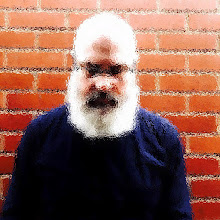
Magnus Hirschfeld

Magnus Hirschfeld born 14 May 1868 (d. 1935)

Magnus Hirschfeld was a prominent German-Jewish physician, sexologist, and gay rights pioneer.

Hirschfeld developed the theory of a third, 'intermediate sex' between men and women. He was interested in the study of a wide variety of sexual and erotic urges, at a time when the early notions of sexual identity was still being formed. His scientific work extended that of Karl Heinrich Ulrichs and influenced Havelock Ellis and Edward Carpenter.

As a young man he had lived in Paris and worked as a journalist. His subsequent career successfully found a balance between medicine and writing. After several years as a general practitioner in Magdeburg, in 1896 he issued the anonymous pamphlet Sappho and Socrates, on homosexual love.

In 1897, Hirschfeld founded the Scientific Humanitarian Committee with Adolf Brand, Benedict Friedlaender and other leaders of Der Eigene, a homosexual campaign and publication. The group aimed to undertake research to defend the rights of homosexuals and to repeal Paragraph 175, the section of the German penal code that since 1871 had criminalised homosexuality. They argued that the law encouraged blackmail, and the motto of the Committee, 'Justice through science', reflected Hirschfeld's belief that a better scientific understanding of homosexuality would eliminate hostility toward homosexuals. He was a tireless campaigner and became a well-known public figure.

Within the group, some of the women, as well as Friedlaender, scorned Hirschfeld's analogy that homosexuals are like cripples. They argued that society might tolerate or pity cripples, but never treat them as equals. They also disagreed with Hirschfeld's (and Ulrichs's) view that male homosexuals were by nature womanish — Brand, Friedlaender and others would later leave the Scientific-Humanitarian Committee and form their another group, Gemeinschaft der Eigenen, which argued that male-male love is a simple aspect of virile manliness rather than a special condition.

However, the Scientific-Humanitarian Committee, under Hirschfeld's leadership, managed to gather over 5,000 signatures from prominent Germans for a petition to overturn Paragraph 175. Signatories included Albert Einstein, Hermann Hesse, Thomas Mann, Rainer Maria Rilke and Leo Tolstoy, but no one admitted publicly to being homosexual themselves.

The bill was brought before the Reichstag in 1898, but was only supported by a minority from the Social Democratic Party of Germany, prompting a frustrated Hirschfeld to consider the controversial strategy of 'outing' — that is, forcing some of the prominent law-makers who had remained silent out of the closet. The bill continued to come before parliament, and eventually began to make progress in the 1920s before the takeover of the Nazi party obliterated any hopes for reform.

In 1921 Hirschfeld organised the First Congress for Sexual Reform, which led to the formation of the World League for Sexual Reform. Congresses were held in Copenhagen (1928), London (1929), Vienna (1930), and Brno (1932).

Hirschfeld was both quoted and caricatured in the press as a vociferous expert on sexual manners, receiving the epithet 'the Einstein of Sex'. He saw himself as a campaigner and a scientist, investigating and cataloging many varieties of sexuality, not just homosexuality. He coined the word 'transvestism', for example.

Hirschfeld co-wrote and acted in the 1919 film Anders als die Andern (Different From the Others), where actor Conrad Veidt played possibly the first homosexual character ever written for cinema. The film had a specific gay-rights law reform agenda — Veidt's character is blackmailed by a lover, eventually coming out rather than continuing to make the blackmail payments, but his career is destroyed and he is driven to suicide.

In 1919, under the more liberal atmosphere of the newly founded Weimar Republic, Hirschfeld was given a former royal palace for his new Institut für Sexualwissenschaft (Institute for Sexual Research) in Berlin. His Institute housed his immense library on sex and provided educational services and medical consultations. People from around Europe visited the Institute to gain a clearer understanding of their sexuality. Christopher Isherwood writes about his and Auden's visit to the Institute in his book Christopher and His Kind. They were visiting Francis Turville-Petre, a friend of Isherwood's who was staying there. The Institute also housed the Museum of Sex, an educational resource for the public which is reported to have been visited by school classes.

Hirschfeld's work continues to be controversial. Critics have claimed that some of his financial support came from closeted but prominent German homosexuals whom he blackmailed. Though he was immensely popular in some circles, in others he was reviled. Gatherings at which he spoke came under attack from anti-gay groups: in one such instance in 1921, his skull was fractured and he was left lying in the street.

Others complain that his belief that homosexuality was, at root, hormonal opened the door for others who were seeking a 'cure' for homosexuality.

When the Nazis took power, one of their first actions, on May 6, 1933, was to destroy the Institut and burn the library. The press-library pictures & archival newsreel film of Nazi book-burnings seen today are often pictures of Hirschfeld's library ablaze. Fortuitously, at that time Hirschfeld was away from Germany on a world speaking tour.

He never returned to Germany, dying in exile in Nice of a heart attack on his 67th birthday in 1935. He is buried there.

Labels: , , , , , ,

Saturday, March 19, 2011

Sir Richard Burton

Sir Richard Burton born 19 March 1821 (d. 1890)

Captain Sir Richard Francis Burton KCMG FRGS was an English explorer, translator, writer, soldier, orientalist, ethnologist, linguist, poet, hypnotist, fencer and diplomat. He was known for his travels and explorations within Asia and Africa as well as his extraordinary knowledge of languages and cultures. According to one count, he spoke twenty-nine European, Asian, and African languages.

Burton's best-known achievements include travelling in disguise to Mecca, making an unexpurgated translation of The Book of the Thousand Nights and a Night (the collection is more commonly called The Arabian Nights in English) and the Kama Sutra and journeying with John Hanning Speke to discover the Great Lakes of Africa in search of the source of the Nile. He was a prolific author and wrote numerous books and scholarly articles about subjects including travel, fencing and ethnography.

He was a captain in the army of the East India Company serving in India (and later, briefly, in the Crimean War). Following this he was engaged by the Royal Geographical Society to explore the east coast of Africa and led an expedition which discovered Lake Tanganyika. In later life he served as British consul in Fernando Po, Damascus and, finally, Trieste. He was a Fellow of the Royal Geographical Society and was awarded a knighthood (KCMG) in 1886. Burton was considered a controversial figure in his day and, while some considered him a hero, others considered him a scoundrel.

Firstly, in a society where sexual repression was the norm, Burton's writing was unusually open and frank about his interest in sex and sexuality. His travel writing is often full of details about the sexual lives of the inhabitants of areas he travelled through and many of these details would have been shocking to the average Victorian. Burton's interest in sexuality led him to make measurements of the penis lengths of the inhabitants of various regions, which he includes in his travel books. He also describes sexual techniques common in the regions he visited, often hinting that he had participated, hence breaking both sexual and racial taboos of his day.

Allegations of homosexuality 'dogged' Burton throughout most of his life, a particularly serious accusation as it was a criminal offence in Victorian England. Biographers disagree on whether or not Burton ever experienced homosexual sex (he never directly admits to it in his writing but he would hardly be expected to). These allegations began in his army days when General Sir Charles James Napier requested that Burton go undercover to investigate a male brothel reputed to be frequented by British soldiers. It has been suggested that Burton's detailed report on the workings of the brothel may have led some to believe he had been a customer. His later writings on the subject of pederasty and the fact that he and his wife, Isabel, remained childless gave further ground for speculation.

Burton was a heavy drinker at various times in his life and also admitted to taking both hemp and opium. Friends of the poet Algernon Swinburne blamed Burton for leading him astray, holding Burton responsible for Swinburne's alcoholism and interest in the works of the Marquis de Sade.

He died after suffering a heart attack in Trieste in 1890. His wife ordered a marble monument for him shaped like a tent, in which he had spent so much of his life.

Sir Richard F Burton - glbtq encyclopedia

Labels: , , , , , ,

Wednesday, February 02, 2011

Havelock Ellis

Havelock Ellis born 2 February 1859 (d. 1939)

Henry Havelock Ellis was a British doctor, sexual psychologist and social reformer.

Ellis was born at Croydon, then a small town south of London. His father was a sea captain, his mother, the daughter of a sea captain, and many other relatives lived on or near the sea. At seven years of age his father took him on one of his voyages, during which he called at Sydney, Callao and Antwerp. After his return Ellis went to a fairly good school, the French and German College near Wimbledon, and afterward attended a school in Mitcham.

In April 1875 he left London on his father's ship for Australia, and soon after his arrival in Sydney obtained a position as a master at a private school. It was discovered that he had had no training for this position and so he became a tutor for a family living a few miles from Carcoar. He spent a year there, doing a lot of reading, and then obtained a position as a master at a grammar school in Grafton. The headmaster had died and Ellis carried on the school for that year, but was too young and inexperienced to do so successfully.

At the end of the year, he returned to Sydney and, after three months training, was given charge of two government part-time elementary schools, one at Sparkes Creek and the other at Junction Creek. He lived at the school house on Sparkes Creek for a year - the most eventful year of his life as he was afterwards to call it: 'In Australia I gained health of body; I attained peace of soul; my life task was revealed to me; I was able to decide on a professional vocation; I became an artist in literature . . . these five points covered the whole activity of my life in the world. Some of them I should doubtless have reached without the aid of the Australian environment, scarcely all, and most of them I could never have achieved so completely if chance had not cast me into the solitude of the Liverpool Range.'

Ellis returned to England in April 1879. He had decided to take up the study of sex and felt his first step must be to qualify as a medical man. He studied medicine at St Thomas's Hospital, but never had a regular medical practice. He joined The Fellowship of the New Life in 1883, meeting other social reformers Edward Carpenter and George Bernard Shaw.

In November 1891, at the age of 32, and still a virgin, Ellis married the English writer and proponent of women's rights, Edith Lees. From the beginning, their marriage was unconventional (Edith Ellis was openly lesbian), and at the end of the honeymoon, Ellis went back to his bachelor rooms in Paddington, while she lived at Fellowship House. Their 'open marriage' was the central subject in Ellis's autobiography, My Life.

According to Ellis in My Life, his friends were much amused at his being considered an expert on sex considering the fact that he suffered from impotence until the age of 60, when he discovered that he was able to become aroused by the sight of a woman urinating. Ellis named the interest in urination 'Undinism' but it is now more commonly called Urolagnia.

His Sexual Inversion, the first English medical text book on homosexuality, co-authored with John Addington Symonds, described the sexual relations of homosexual men and boys, something that Ellis did not consider to be a disease, immoral, or a crime. The work assumes that same-sex love transcends age as well as gender taboos, as seven of the twenty one examples are of intergenerational relationships. A bookseller was prosecuted in 1897 for stocking it. Although the term itself is attributed to Ellis, he writes in 1897, '"Homosexual" is a barbarously hybrid word, and I claim no responsibility for it.' Other psychologically important concepts developed by Ellis include autoerotism and narcissism, both of which were later taken on by Sigmund Freud.

Ellis's magnum opus was Studies in the Psychology of Sex (7 vols., 1897-1928). Until 1935 his work was legally available only to the medical profession.

Ellis was a supporter of eugenics. He served as vice-president to the Eugenics Education Society.

The last years of his life Ellis spent in retirement near Ipswich, in Suffolk. Ellis died on July 8, 1939 in Hintlesham, Suffolk. Havelock Ellis's library was purchased by Yale University in 1941. The Papers of Havelock Ellis are held at the University of Birmingham Special Collections.

Labels: , , , , ,

Saturday, September 11, 2010

Marc-André Raffalovich

Marc-André Raffalovich born 11 September 1864 (d. 1934)

Marc-André Raffalovich was a French poet and writer on homosexuality best known today for his patronage of the arts and for his life-long relationship with John Gray.

Raffalovich's was born in a rich Jewish family, which moved from Odessa to Paris in 1863. He went up to study in Oxford in 1882 before settling down in London and opening a salon in the 1890s. Oscar Wilde attended, calling the event a saloon rather than a salon. This is where Raffalovich met the love and companion of his life, John Gray.

In 1894, Raffalovich started to contribute on the subject of homosexuality (unisexualité, as he called it) to the Archives de l'Anthropologie Criminelle, a prestigious revue founded in Lyon by Alexandre Lacassagne, a pioneer criminologist and professor of Forensic Medicine. He soon became recognised as an expert in the field, engaging in correspondence with other researchers throughout Europe.

His magnus opus, Uranisme et unisexualité: étude sur différentes manifestations de l'instinct sexuel was published in 1896. In 1897, he started working on Annales de l'unisexualité, and les Chroniques de l'unisexualité with the aim of cataloguing everything published on the subject of homosexuality. These have proved useful to historians up to this day.

In 1896, under the influence of John Gray, Raffalovich converted to Catholicism and joined the terciary order of the Dominicans as brother Sebastian. At the same time Gray became a priest and was sent to Edinburgh. Raffalovich followed and settled down nearby, paying for the cost of Gray's new church.

There is a close link between Raffalovich's views on homosexuality and his Catholic beliefs. He had moved on from the contemporary vision of homosexuality as a 'third sex' to consider it simply as an expression of human sexuality. He made the distinction between the born and the chosen inverts. The former only is worth considering while the latter is mired in vice and perversion.

He drew however a difference with heterosexuality based on the idea of vice and virtue. While a heterosexual's destiny is to marry and start a family, a homosexual's duty is to overcome and transcend his desires with artistic pursuits and spiritual and even mystical friendships.

These views led him to clash with Magnus Hirschfeld and the members of the Scientific Humanitarian Committee, accusing them of being propagandists for moral dissolution and of wanting to destroy whole generations. He even supported Paragraph 175 as a way to prevent total moral chaos.

His attempt to reconcile his homosexuality and his Catholic beliefs pushed him further into his criticism of the early gay liberation movement and in 1910, he finally stopped commenting altogether on the subject which had had such a place in his life. He focused on his Edinburgh salon and his support of young artists.

He died in 1934, the same year as his life-long companion John Gray.

Labels: , , ,

Saturday, August 28, 2010

Karl Heinrich Ulrichs

Karl Heinrich Ulrichs born 28 August 1825 (d. 1895)

Karl Heinrich Ulrichs - the first modern theorist of homosexuality - is seen today as a pioneer of modern lesbian, gay, bisexual and transgender movements.

Ulrichs was born in Aurich (Kingdom of Hannover), Germany in 1825. His father, an architect in the civil service of Hannover, died when Ulrichs was ten years old. Ulrichs and his mother then lived with her father, a Lutheran superintendent.

His first homosexual experience was in 1839 at the age of fourteen, in the course of a brief affair with his riding instructor. After studying law in Göttingen and Berlin, Ulrichs joined the civil service of Hannover in 1848. In 1854, however, his homosexual activity came to the attention of his superiors. He resigned in order to avoid being disciplined, for although homosexual acts were not then illegal in Hannover, as a civil servant he could be dismissed.

Ulrichs then earned his living as a reporter for the important Allgemeine Zeitung (Augsburg) and as secretary to one of the representatives to the German Confederation in Frankfurt. He also received a small inheritance from his mother on her death in 1856.

Using the pseudonym Numa Numantius he published in 1864-1865 five booklets under the collective title Forschungen über das Rathsel der mannmännlichen Liebe (Researches on the Riddle of Male-Male Love). They set forth a biological theory of homosexuality, the so-called third sex theory, which he summed up in the Latin phrase anima muliebris virili corpore inclusa (a female psyche confined in a male body).

Ulrichs coined the term Urning for the male subject of this condition; he variously called the female counterpart Urningin, Uranierin, Urnin, and Urnigin. (The term "homosexual," coined by Karl Maria Kertbeny, first appeared in 1869.)

Using his real name in his next booklet, Ulrichs described his appearance at a Congress of German Jurists in Munich, where on August 29, 1867, he urged repealing the anti-homosexual laws. He was shouted down and not allowed to finish, but this was the first time that a self-acknowledged Urning/homosexual spoke out publicly for his cause. Thus Ulrichs was not only the first theorist of homosexuality, but also the first homosexual to 'come out' publicly.

Ulrichs's series of twelve booklets continued until 1879. His goal was to free people like himself from the legal, religious, and social condemnation of homosexual acts as unnatural, and for this he invented a new terminology that would refer to the nature of the individual and not to the acts performed.

Ulrichs's impact on sexology was more significant for directing medical researchers' attention to the subject of homosexuality than for changing their view of it. Richard von Krafft-Ebing, for example, whose book Psychopathia sexualis (1886) established the medical view of homosexuality, was first interested in the subject by Ulrichs's writings.

Twice imprisoned for his public protests against the invasion and annexation of Hannover by Prussia in 1866, Ulrichs fought not only for the equal rights of homosexuals, but also for the rights of ethnic and religious minorities, as well as for the rights of women, including unwed mothers and their children.

But his one-man campaign against the legal oppression of homosexuals was unsuccessful. Indeed, the harsh Prussian anti-homosexual law was extended to the unified Germany in 1872.

Ulrichs left Germany in 1880 for voluntary exile in Italy, where he devoted the last years of his life to promoting Latin as an international language through the publication of a little Latin journal (Alaudae) written entirely by himself. He died on July 14, 1895 in Aquila, Italy.

Ulrichs's original biological theory of homosexuality has since been abandoned, but for more than a century some form of biological determinism has prevailed, both in the popular mind and in scientific circles; it has been adopted by both homosexual liberationists and their enemies.

Ulrichs will be best remembered for his courageous stand for the equal rights of all and, as Magnus Hirschfeld wrote, 'as one of the first and noblest of those who have striven with courage and strength in this field to help truth and charity gain their rightful place'.

Labels: , ,