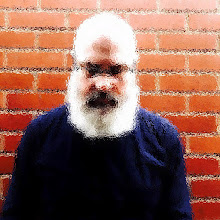
Sunday, January 30, 2011

Jack Spicer

Jack Spicer born 30 January 1925 (d. 1965)

Jack Spicer was an American poet often identified with the San Francisco Renaissance.

Spicer was born in Los Angeles and spent most of his writing life in San Francisco. He spent the years 1945 to 1955 at the University of California, Berkeley, where he began writing, doing work as a research linguist, and publishing some poetry. During this time he searched out fellow poets, but it was through his alliance with Robert Duncan and Robin Blaser that Spicer forged a new kind of poetry, and together they referred to their common work as the Berkeley Renaissance. The three, who were all rumoured to be gay, also educated younger poets in their circle about their 'queer genealogy', Rimbaud, Lorca, and other gay writers. Spicer's poetry of this period is collected in One Night Stand and Other Poems (1980). His Imaginary Elegies, later collected in Donald Allen's The New American Poetry 1945-1960 anthology, were written around this time.

In 1954, he co-founded the famous Six Gallery, the scene of the famous October 1955 Six Gallery reading that launched the West Coast Beat movement. In 1955, Spicer moved to New York and then to Boston, where he worked for a time in the Rare Book Room of Boston Public Library. Blaser was also in Boston at this time, and the pair made contact with a number of local poets, including John Wieners.

He returned to San Francisco in 1956 and started working on After Lorca. This book represented a major change in direction for two reasons. Firstly, he came to the conclusion that stand-alone poems were unsatisfactory and that henceforth he would compose serial poems. In fact he wrote to Blaser that 'all my stuff from the past (except the Elegies and Troilus (his then unpublished play)) looks foul to me.' Secondly, in writing After Lorca, he began to practice what he called 'poetry as dictation'.

In 1957, Spicer ran a workshop called Poetry as Magic at San Francisco State College. He also participated in, and sometimes hosted, Blabbermouth Night at a literary bar called The Place. This was a kind of contest of improvised poetry and encouraged Spicer's view of poetry as being dictated to the poet.

Spicer's view of the role of language in the process of writing poetry was probably the result of his knowledge of modern pre-Chomskian linguistics and his experience as a research linguist at Berkeley. In the legendary Vancouver lectures he elucidated his ideas on 'transmissions' (dictations) from the outside, using the comparison of the poet as crystal set or radio receiving transmissions from outer space, or Martian transmissions. Although seemingly far-fetched, his views had a strong basis in contemporary linguistic theory. As such, Spicer is acknowledged as a precursor and early inspiration for the Language poets. However, many working poets today list Spicer in their succession of precedent figures.

Spicer died as a result of his alcoholism. Since the posthumous publication of The Collected Books of Jack Spicer (first published in 1975), his popularity and influence has steadily risen, affecting poetry throughout the United States, Canada, and Europe.

Labels: , ,

Wednesday, May 18, 2011

Robin Blaser

Robin Blaser born 18 May 1925 (d. 2009)

Robin Francis Blaser was a noted author and poet in both the United States and Canada.

Born in Denver, Colorado, Blaser grew up in Idaho, and came to Berkeley, California in 1944. There he met Jack Spicer and Robert Duncan, becoming a key figure in the so-called San Francisco Renaissance of the 1950s and early 1960s. He moved to Canada in 1966, joining the faculty of Simon Fraser University; in his later years he held the position of Professor Emeritus and lived in British Columbia with his partner of 30+ years, David Farwell.

In June of 1995, for Blaser's 70th birthday, a conference was held in Vancouver, Canada to pay tribute to his contribution to Canadian poetry. The conference was attended by poets from Canada, the US and around the world.

Robin Blaser was also well known as the editor of The Collected Books of Jack Spicer, which includes Blaser's essay 'The Practice of Outside'. The 1993 publication The Holy Forest represents his collected poems to that date. In 2006, Blaser received a special Lifetime Recognition Award given by the trustees of the Griffin Trust for Excellence in Poetry, which also awards the annual Griffin Poetry Prize.

Blaser died of a brain tumour on May 7, 2009, in Vancouver, at age 83.

Labels: , , , ,

Wednesday, January 19, 2011

Stan Persky

Stan Persky born 19 January 1941

Stan Persky is a naturalised Canadian poet, writer, media commentator and philosophy lecturer.

Persky was born in Chicago, Illinois. As a teenager, he made contact with and received encouragement from Jack Kerouac, Allen Ginsberg and other writers of the Beat Generation. Persky served in the United States Navy, and then settled in San Francisco, California in the early 1960s, becoming part of a group of writers that included Jack Spicer, Robert Duncan, Robin Blaser and George Stanley - known as the San Francisco Renaissance.

In 1966, Persky moved to Vancouver, Canada, and attended the University of British Columbia, receiving degrees in anthropology and sociology. He became a Canadian citizen in 1972. During the 1960s and '70s, he was prominent as a student and civic activist and journalist.

After university, Persky worked at Vancouver Mental Patients Association and the Canadian Broadcasting Corporation before becoming a college lecturer in the sociology department at Northwest College in Terrace, British Columbia. He has subsequently taught political studies and philosophy in various Canadian universities. Since 1990, in addition to living in Vancouver, he has resided part-time in Berlin, Germany.

He worked as a media commentator for the CBC, a literary columnist for The Globe and Mail and The Vancouver Sun, and has written for various magazines, journals and periodicals. Stan Persky is a long-time Vancouver public intellectual and literary activist.

Stan Persky's website

Labels: , , ,

Friday, January 07, 2011

Robert Duncan

Robert Duncan born 7 January 1919 (d. 1988)

Robert Duncan was an American poet who spent most of his career in and around San Francisco. Though associated with any number of literary traditions and schools, Duncan is often identified with the New American Poetry and Black Mountain poets. Duncan's mature work emerged in the 1950s from within the literary context of Beat culture and today he is also identified as a key figure in the San Francisco Renaissance.

Duncan was born in Oakland, California as Edward Howard Duncan Jr. His mother had died in childbirth and his father could not manage a small baby by himself while raising Robert's older brothers and sisters, so in 1920 he was adopted by Edwin and Minnehaha Symmes, a family of devout Theosophists. They renamed him Robert Edward Symmes; it was only in 1941 that he formed the composite of his previous names and became Robert Edward Duncan.

At age three, Duncan was injured in an accident on the snow which resulted in his becoming cross-eyed and seeing double. His adoptive status, his religious parents and his double vision were key influences in his early writing.

After his adopted father's death in 1936, Duncan started studying at the University of California, Berkeley. He began writing poems inspired in part by his left wing politics and acquired a reputation as a bohemian. Duncan thrived as storyteller, poet, and fledgling bohemian, but by his sophomore year he had begun to drop classes and had quit attending obligatory military drills.

In 1938, he briefly attended Black Mountain College, but left after a dispute with faculty on the subject of the Spanish Civil War. He spent two years in Philadelphia and then moved to Woodstock, New York, to join a commune run by James Cooney.

Duncan’s name figures prominently in the history of pre-Stonewall gay culture, particularly with the publication of 'The Homosexual in Society'. While in Philadelphia, Duncan had a relationship with a male instructor he had first met in Berkeley. In 1941 he was drafted and declared his homosexuality to get discharged. In 1943, he had his first heterosexual relationship. This ended in a short, disastrous marriage. In 1944, he published 'The Homosexual in Society', an essay in which he compared the plight of homosexuals with that of African Americans and Jews.

Duncan returned to San Francisco in 1945. He returned to Berkeley to study Medieval and Renaissance literature and cultivated a reputation as a shamanistic figure in San Francisco poetry and artistic circles. He also became friends with fellow poets Jack Spicer and Robin Blaser, plus novelist Philip K. Dick.

From 1951 until his death, he lived with the artist Jess Collins, increasingly influenced by the pleasures of gay domestic harmony. Before then, Duncan began a relationship with Robert De Niro Sr, the father of famed actor Robert De Niro, shortly before DeNiro Sr broke up with his wife, artist Virginia Admiral.

In the early 1950s he started publishing in Cid Corman's Origin and the Black Mountain Review and in 1956 he spent a time teaching at the Black Mountain College. These connections were instrumental in getting some of the Black Mountain poets involved in the San Francisco Renaissance.

During the 1960s, Duncan achieved considerable artistic and critical success with three books: The Opening of the Field (1960), Roots and Branches (1964) and Bending the Bow (1968). These are generally considered to be his most significant works.

Labels: , ,