A L Rowse
 A L Rowse born 4 December 1903 (d. 1997)
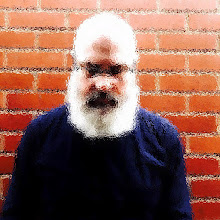
Alfred Leslie Rowse, CH FBA, known professionally as A L Rowse and to his friends and family as Leslie, was a prolific British historian. He is perhaps best known for his poetry about Cornwall and his work on Elizabethan England. He was also a Shakespearean scholar and biographer. He developed a widespread reputation for irascibility and intellectual arrogance.
Alfred Leslie Rowse was born in Tregonissey near St Austell, Cornwall. His parents were poor and semi-illiterate but despite his humble origins, he won a place at St Austell Grammar School (now Poltair School) and then a scholarship to Christ Church, Oxford in 1921.
Rowse had planned to study English literature, having developed an early love of poetry, but was persuaded to read history. Although he had the reputation of a 'watopotumus' he was a popular under-graduate and made many friendships that lasted for life. He graduated with first class honours in 1925 and was elected a Fellow of All Souls College the same year, the first such Fellow from a working-class background. In 1929, he was awarded his Master of Arts degree, and in 1927 was appointed lecturer at Merton College, where he stayed until 1930. In 1931, he contested the parliamentary seat of Penryn and Falmouth for the Labour Party, but was unsuccessful and became a lecturer at the London School of Economics.
In the general election of 1935 he again proved unsuccessful, and chose to continue his career at Oxford becoming Sub-Warden of All Souls College. In 1952, he failed in his candidacy for election as Warden and shortly afterwards began his regular trips to The Huntington Library in California where for many years he was a Senior Research Fellow. He received a doctorate from Oxford University in 1953. After delivering the British Academy's 1957 Raleigh Lecture on History about Sir Richard Grenville's place in English history he became a Fellow of the Academy in 1958.
Rowse published around 100 books. He became a celebrated author and lecturer from the 1940s and travelled widely, especially in the United States. He also published many popular articles in newspapers and magazines in Great Britain and the United States. His brilliance was widely recognised, and his knack for the sensational, as well as his academic boldness (which some considered to be irresponsible carelessness), sustained his reputation. He was also a dedicated bibliophile and wrote poetry, mostly autobiographical, for the whole of his life. His collected poems A Life were published in 1981.
In his later years, Rowse moved increasingly towards the political right, and many considered him to be part of the Tory tradition by the time he died. One of A L Rowse's life-long themes in his books and articles was his condemnation of the National Government's policy of appeasement in the 1930s and the economic and political consequences for Great Britain of fighting a second war with Germany. Another was his horror at the degradation of standards in modern society.
Rowse, who was openly gay, also wrote on the subject of human sexuality in his controversial book Homosexuals In History (1977).
Despite his academic and social success, he remained proud of his Cornish roots. He retired from Oxford in 1973 to Trenarren House, his Cornish home, from where he remained active as writer, reviewer and conversationalist until immobilised by a stroke the year before his death. His ashes are buried in the Campdowns Cemetery, Charlestown near St Austell. There is a commemorative plaque to him in Truro Cathedral and a memorial stone on Black Head, overlooking St Austell Bay almost within sight of Trenarren.
Labels: Academics, Historians, Poets, Writers
posted by Peter Jacobs at 12:01 am




0 Comments:
Post a Comment
<< Home