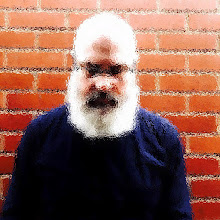
Sir Osbert Sitwell
 Osbert Sitwell born 6 December 1896 (d. 1969)
Sir Francis Osbert Sacheverell Sitwell, 5th Baronet, was an English writer. His elder sister was Dame Edith Sitwell and his younger brother was Sir Sacheverell Sitwell; like them he devoted his life to art and literature.
He grew up in the family seat at Renishaw Hall, Derbyshire, and at Scarborough, and went to Eton College from 1906 to 1909. In 1911 he joined the Sherwood Rangers but, not cut out to be a Cavalry officer, transferred to the Grenadier Guards at the Tower of London from where, in his off-duty time, he could frequent theatres, art galleries and the like.
 Late in 1914 this civilised life was exchanged for the trenches of France near Ypres. It was here that he wrote his first poetry — 'Some instinct, and a combination of feelings not hitherto experienced united to drive me to paper.' 'Babel' was published in The Times 11 May 1916. In the same year, he began literary collaborations and anthologies with his brother and sister as a literary clique generally called the Sitwells.
When Sacheverell annoyed his brother by marrying, the troika broke up. Osbert settled into an almost lifelong homosexual relationship, but always remained close to Edith.

In 1918 he left the Army with the rank of Captain and devoted himself to poetry, art criticism and controversial journalism. He published two books of poems: Argonaut and Juggernaut (1919) and At the House of Mrs Kinfoot (1921).
His first work of fiction, Triple Fugue, was published in 1924, and visits to Italy and Germany produced Discursions on Travel, Art and Life (1925). His first novel, Before the Bombardment (1926) was well reviewed, but the following two were not. A collection of short stories Open the Door (1940), his fifth novel A Place of One's Own (1940), his Selected Poems (1943) and a book of essays Sing High, Sing Low (1944) were reasonably well received.
When his father died in 1943, and he succeeded to the baronetcy, he started an autobiography that would run to five volumes. The first volume, Left Hand, Right Hand proved to be his best work to date.
Sitwell, as his autobiography bears out, was familiar with almost everyone 'in society', and was a friend of Queen Elizabeth, the wife of King George VI. At the time of the abdication of King Edward VIII he wrote a poem, 'Rat Week', attacking those 'friends' of the King who deserted him when his alliance with Mrs Simpson became common knowledge in England. This was published anonymously, and caused some scandal. (The manuscript is in the library of Eton College).
His health began to fail in the 1950s, and his output faltered. He received many awards in the 1950s and in 1962 completed a postscript to his autobiographies Tales my Father Taught Me. His last book Pound Wise was published the following year. His almost inseparable sister broke down and died in 1964. Osbert lived on, with much pain and discomfort, till 1969, still rich from other sources, but no longer from his writing; he had ceased to be counted among the great authors of the age.
At the time of his death, Sitwell had been suffering from Parkinson's disease for several years, and he died on 4 May 1969 at Montegufoni, a castle near Florence.
posted by Peter Jacobs at 12:01 am




0 Comments:
Post a Comment
<< Home