Friday, May 06, 2011

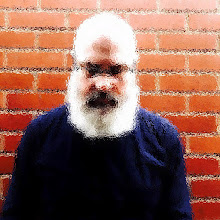
Man Parrish

Man Parrish born 6 May 1958

Man Parrish is considered to be a pioneering electronic music producer and performer. He became an underground music scene icon in the 1980s and 1990s and is considered to be one of the most important and influential figures in American electronic dance music, according to The New York Times.

Although he produced only a handful of tracks of renown and disappeared into obscurity almost as quickly as he had emerged from it, Man Parrish is nonetheless one of the most important and influential figures in American electronic dance music. Helping to lay the foundation of electro, hip-hop, freestyle, and techno, as well as the dozens of sub-genres to splinter off from those, Parrish introduced the aesthetic of European electronic pop to the American club scene by combining the plugged-in disco-funk of Giorgio Moroder and the man-machine music of Kraftwerk with the beefed-up rhythms and cut'n'mix approach of nascent hip-hop. As a result, tracks like Hip-Hop Be Bop (Don't Stop) and Boogie Down Bronx were period-defining works that provided the basic genetic material for everyone from Run-DMC and the Beastie Boys to Autechre and Andrea Parker - and they remain undisputed classics of early hip-hop and electro to this day.

A native New Yorker, Parrish was a member of the extended family of glam-chasers and freakazoids that converged nightly with Andy Warhol's at the legendary nightclub Studio 54 club. His nickname, Man, first appeared in Warhol's Interview magazine, and his early live shows at Bronx hip-hop clubs were spectacles of lights, glitter, and pyrotechnics that drew as much from the Warhol mystique as from the Cold Crush Brothers.

Influenced by the electronic experiments of his good friend and co-writer Klaus Nomi and Brian Eno as well as by Kraftwerk, Parrish together with 'Cool' Raul Rodriguez recorded their best-known work in a tiny studio sometimes shared with Afrika Baambaata, whose own sessions with Arthur Baker and John Robie produced a number of classics equal to Parrish's own.

What distinguished Hip-Hop Be Bop was its lack of vocals and the extremely wide spectrum of popularity it gained in the club scene, from ghetto breakdance halls to uptown clubs like Danceteria and the Funhouse. After he discovered a pirated copy of his music being played by a local DJ at the infamous Anvil club, Parrish found his way to the offices of the Importe label and signed his first deal. He released his self-titled LP shortly after, and the album went on to sell over 2 million copies worldwide. He was signed to Electra Records and managed by David Bowie's notorious manager Tony De Fries and the infamous Main Man Ltd management team. Tony De Fries had managed the careers of David Bowie, New York Dolls, Mott the Hoople, Mick Ronson and Dana Gillespie to name a few.

Following a period of burn-out that followed, Parrish recorded and remixed tracks for Michael Jackson, Boy George, Gloria Gaynor, and Hi-NRG group Man2Man, among others, and served as manager for the Village People and Crystal Waters and others. While Parrish's subsequent material has achieved nowhere near the success or creative pitch of his earlier work, he continues to record from his Brooklyn studio and is a frequent DJ at New York's eclectic night spots and SM clubs. He is main DJ and co founder for a circuit party called Hustlerball which has parties in many cities worldwide. He also has several adult websites and online businesses which keep him busy as a webmaster, and 'jack of all trades'.

Labels: , , ,

Friday, January 21, 2011

Mel Cheren

Mel Cheren born 21 January 1933 (d. 2007)

Mel Cheren was an entrepreneur, record company founder and nightclub boss, often acknowledged as the Godfather of Disco.

Mel Cheren played a crucial role in the evolution of dance music. In the mid-Seventies, while working at Scepter Records, he introduced the 12-inch single and the instrumental B-side, which enabled DJs to mix and loop tracks and build the excitement on the dancefloor. He was also one of the prime movers behind the Paradise Garage, the New York nightclub famed for employing the DJ Larry Levan.

In 1976, Cheren co-founded the equally influential West End Records. The label sparked off the house music movement in Detroit and also scored several hits in the UK, most notably with Hot Shot by Karen Young (1978), Don't Make Me Wait by the Peech Boys and Do It to the Music by Raw Silk (both 1982), and Another Man by Barbara Mason in 1984.

Born in Everett, Massachusetts in 1933, Cheren started as an office clerk at ABC-Paramount Records in New York in 1960, progressed to sales rep and eventually became head of production. In 1970, he joined Scepter and was an early mover in the New York disco scene with acts like B.T. Express.

After Scepter folded in 1976, Cheren and his colleague Ed Kushins launched West End Records with Sesso Mato, a disco version of the soundtrack from an Italian comedy. The following year, Cheren provided the financial backing for his partner Michael Brody to open the Paradise Garage in Greenwich Village.

Since it was a private rather than a licensed club and didn't sell alcohol, the Paradise Garage could stay open all night and became the streetwise alternative to Studio 54. It also boasted the biggest dance-floor and the best sound system in New York, and hosted appearances by Grace Jones, Madonna, New Order, Phyllis Hyman, Colonel Abrams and Gwen Guthrie during its lifetime. In a notoriously faddish city and industry, the Paradise Garage managed to stay open until 1987.

West End became a very collectable label, in particular tracks like (Everybody) Get Dancin' by the Bombers from 1979 and the much-sampled Heartbeat by Taana Gardner from 1981. After a lengthy hiatus between 1985 and 1998, Cheren bought Kushins out and West End Records was reactivated. In 2001, the DJs Kenny 'Dope' Gonzalez and Little Louie Vega compiled a non-stop mastermix double-CD to celebrate the label's 25th anniversary. 'We were on the cutting edge without realising it,' Cheren said, looking back. 'I've always heard we had a special sound, but 'til today I still don't know what that was . . . If I liked a song, we would put it out.'

In addition to his role in music history, Cheren became a dedicated AIDS awareness activist. Seeing the impact of the epidemic at first hand, Cheren became actively involved with the Gay Men's Health Crisis (GMHC) in 1982. During that year, he donated his building in Chelsea rent-free to GMHC for use as their headquarters, until they moved into larger quarters in 1984.

Cheren's philanthropic efforts remained an integral part of his life and in 1987 he formed 24 Hours For Life, a not-for-profit organisation of media and music professionals which produced fundraising events for AIDS relief and education.

In 2000, Cheren published an autobiography entitled My Life and the Paradise Garage: Keep On Dancin', calling it 'the story of my gay generation, the world we built, and the world we lost'. One of the themes of the book was the devastation caused to the New York disco scene by the AIDS epidemic, to which Mel Cheren himself finally fell victim on 7 December 2007 at the age of 74.

Labels: , , , , ,

Monday, September 06, 2010

Sylvester

Sylvester James born 6 September 1948 (d. 1988)

Sylvester James was an American disco and soul musician, and a gay drag performer. He mostly performed using only his first name, Sylvester. Known for singing in falsetto (despite a rich baritone voice), he is also considered one of the first Hi-NRG artists. He was raised by his grandmother, the jazz singer Julia Morgan. Sylvester was the first 'male diva' of disco.

Sylvester James was born in Los Angeles, California. Living in San Francisco in the 1960s, he performed in a musical production called Women of the Blues, then joined a short-lived group of drag performance artists called The Cockettes in the early 1970s. (Divine was a member of the group as well.) Sylvester can be seen in the Cockettes' outrageous short film Tricia's Wedding, lampooning the wedding of President Nixon's daughter Tricia, and in an eponymous 2002 documentary about the group.

In 1972, Sylvester supplied two cuts to Lights Out San Francisco, an album compiled by the KSAN radio station and released on the Blue Thumb label. In 1973, Sylvester & his Hot Band released two rock-oriented albums on Blue Thumb (their self-titled debut was also known as 'Scratch My Flower', due to a gardenia-shaped scratch-and-sniff sticker adhered to the cover). He signed as a solo act to Fantasy Records in 1977, working with the production talents of legendary Motown producer Harvey Fuqua.

Sylvester soon met his frequent collaborator Patrick Cowley. Cowley's synthesiser and Sylvester's voice proved to be a magical combination, and pushed Sylvester's sound in an innovative new dance-oriented direction; his second solo album, Step II (1978), unleashed two disco classics: You Make Me Feel (Mighty Real), and Dance (Disco Heat). By this time both his live shows and recordings also recognisably featured the back-up vocals of Two Tons O' Fun: future Weather Girls Martha Wash and Izora Rhodes. 1979 brought three Billboard awards and an appearance in the movie, The Rose, starring Bette Midler.

Moving to Megatone Records in 1982, Sylvester and Patrick Cowley quickly landed a Hi-NRG classic with Do You Wanna Funk? He was close friends with other Megatone artists Linda Imperial and Jeanie Tracy. Sylvester was also very close to the legendary Patti LaBelle.

Later pressure from the label to 'butch up' his image would result in him attending meetings in full-on drag. A drag photo shoot, which he staged and presented to label heads as a gag (calling it his 'new album cover') would later grace the cover of Immortal after Sylvester died; it was the label's way of paying tribute to his spirit.

In 1985, one of his dreams came true as he was summoned to sing back-up for Aretha Franklin on her Who's Zoomin' Who comeback album. His sole Warner Bros. album was Mutual Attraction in 1986; a single from the album, Someone Like You, featured original cover art by Keith Haring.

Like so many others, including Patrick Cowley before him, Sylvester died of complications from AIDS in San Francisco on December 16, 1988. He was 40 years old. His good friend Jeanie Tracy took care of Sylvester during his last days.

On September 20, 2004 Sylvester's anthem record, You Make Me Feel (Mighty Real), was inducted into the Dance Music Hall of Fame. A year later, on September 19, 2005, Sylvester himself was inducted into the Dance Music Hall of Fame for his achievement as an artist.

In 2005, a biography written by Joshua Gamson and titled The Fabulous Sylvester: The Legend, The Music, The 70s in San Francisco was published.

You Make Me Feel (Mighty Real) is definitely one of the greatest dance records ever made and a personal favourite.

Labels: , , ,

Tuesday, July 20, 2010

Larry Levan

Larry Levan born 20 July 1954 (d. 1992)

Larry Levan (born Lawrence Philpot) stands at the crossroads of disco, house and garage. He was the legendary DJ who for more than 10 years held court at the New York City night club Paradise Garage.

The club has been described as the prototype of the modern dance club, because it was entirely focused on dancing, and was the first to put the DJ at the centre of attention. He developed a cult following, who referred to his sets as 'Saturday Mass'. Quite a number of today's most successful producers and DJs credit their first exposure to Larry's music at the Paradise Garage as a moment that changed their lives forever and inspired their whole careers. François Kevorkian goes so far as to credit Larry with introducing the dub aesthetic into dance music and being the first DJ to play a very eclectic and open-minded mix of music. Ironically, this - and his excessive drug use - meant that he dropped out of favour for a period as seamless beat matching became the norm.

Levan was, with Frankie Knuckles, guest DJ during the opening weeks of London's Ministry of Sound nightclub.

Larry was openly gay and got his start in clubs such as The Gallery and The Continental Baths.

Among the records that received Levan's touch are the remix of Ain't Nothin' Goin On But The Rent by Gwen Guthrie, Heartbeat by Taana Gardner, and Don't Make Me Wait by the Peech Boys, a group that Levan formed and was part of.

The re-opened West End Records - which came out of the Paradise Garage - has released a two disc live recording of a Levan DJ set, as well as a compilation of popular Levan productions.

He died in 1992 of endocarditis.

In September 2004, Levan was inducted into the Dance Music Hall of Fame for his outstanding achievement as a DJ.

Labels: , ,

Tuesday, June 22, 2010

Ian Levine

Ian Levine born 22 June 1953

Ian Levine is an English songwriter, producer, and DJ. He's also a well-known (and sometimes controversial) fan of the long-running television show Doctor Who. He was born in Blackpool, England.

Levine is most noted for his work in the music genres of pop, soul, disco, and Hi-NRG. He and songwriting partner Fiachra Trench were among the main figures in the development of the Hi-NRG style, writing and producing So Many Men So Little Time by Miquel Brown, and High Energy by Evelyn Thomas. During the 1980s and 1990s he mixed a huge amount of dance-pop hits including the Pet Shop Boys, Erasure, Kim Wilde, Bronski Beat, Bananarama, Tiffany, Dollar, Hazell Dean and founded his own groups: Seventh Avenue and Bad Boys Inc. He also wrote and produced for the highly successful UK boy band Take That and The Pasadenas. He has written and produced many TV themes.

Earlier in his career he was an influential disc jockey at the Blackpool Mecca, and became an avid collector of soul, R&B, and Northern Soul records. In the mid-1970s he also embraced disco, and would ultimately be influential as a producer in the genre's evolution into Hi-NRG.

Levine was also a resident DJ at the legendary London gay disco Heaven.

He is also a serious comic book collector and a committed Doctor Who obssessive. Sad.

Labels: , , ,

Monday, December 08, 2008

Dan Hartman

Dan Hartman born 8 December 1950 (d. 1994)

Dan Hartman was an American singer, songwriter and record producer.

Born Dan Earl Hartman in Harrisburg, Pennsylvania, Hartman joined his first band, The Legends, at the age of 13, with his brother David. Hartman played keyboards and wrote much of the band's music. The band released several records but none were hits. He joined the Edgar Winter Group and played on three of their albums; Dan wrote the band's second biggest pop hit Free Ride in 1972. He launched a solo career in 1976. A re-recorded version Free Ride was used in the Movie Mighty Morphin Power Rangers: The Movie in 1995

In 1978 Hartman reached number-one in the US with the single Instant Replay. This was followed by his second US chart topper Relight My Fire (1979). Both tracks, which are considered by many to be anthems of the disco era, were worldwide hits.

He was back in the charts again with the top-10 single I Can Dream About You from the Streets of Fire soundtrack in 1984. Hartman was featured as a bartender in the video, which received heavy rotation on MTV; in the video, his vocals were convincingly lip-synched by Stoney Jackson, an African-American actor. Hartman then scored a third US number-one single, We Are The Young.

During the next decade he worked as a songwriter and producer, and collaborated with such artists as Tina Turner, Dusty Springfield, Joe Cocker, Bonnie Tyler, Paul Young, James Brown, Nona Hendryx and Steve Winwood.

He died at age 43 in Westport, Connecticut from a brain tumour caused by AIDS. Only after Hartman's death did his homosexuality become public knowledge. At the time of his death, his music was enjoying a revival; a cover version of his song Relight My Fire became a British number-one hit for Take That and Lulu. Sales of Hartman's solo recordings, group efforts, production, songwriting and compilation inclusions exceed 50 million records worldwide.

Labels: , , , , ,

Sunday, October 19, 2008

Patrick Cowley

Patrick Cowley born 19 October 1950 (d. 1982)

Patrick Joseph Cowley was a Disco and Hi-NRG dance music composer and recording artist. He recorded in a similar style to Giorgio Moroder, and is often credited with pioneering electronic dance music.

Born in Buffalo, Cowley moved to San Francisco in 1971, beginning an intensive study of the synthesiser. Working at the City Disco as a light technician, he met Sylvester (originally of the Cockettes, a gay theatre group), who was there performing. They began to collaborate, and Cowley's aggressive synthesiser style became associated with Sylvester. Their club-dancing fan base responded enthusiastically to hits like You Make Me Feel (Mighty Real), Dance (Disco Heat), and their most successful single, Do You Wanna Funk.

Cowley's own hits included Menergy in 1981, a frank celebration of the gay club sex scene, and Megatron Man. In 1982, Patrick Cowley became the DJ at the 'Menergy' parties at The EndUp in San Francisco. He also wrote and produced the dance single Right on Target for San Francisco artist Paul Parker, which reached #1 on the Hot Dance Music/Club Play chart. Cowley also did a 15+ minute long remix of Donna Summer's I Feel Love, which is now a collector's item.

His final album, Mind Warp, was composed as he felt the increasing effects of HIV infection - although at that time the disease was newly emerging, barely identified and doctors had no real idea why he and so many others were becoming so ill - and its songs reflect his increasing detachment from conventional reality as the disease progressed. He finished the album from a wheelchair between hospital stays.

Cowley only released three solo albums, but groups including the Pet Shop Boys and New Order cite Cowley's style as a major influence.

Patrick Cowley died from complications of AIDS on November 12, 1982.

Labels: , , , ,