Thursday, April 21, 2011

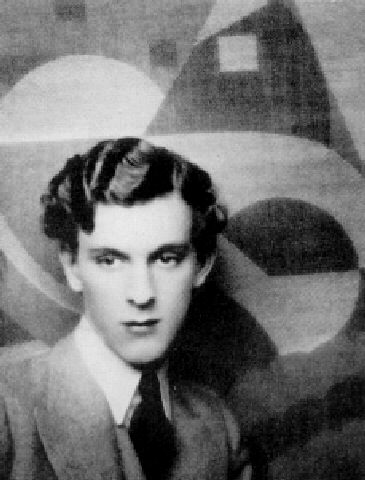
Stephen Tennant

Stephen Tennant born 21 April 1906 (d. 1987)

Stephen James Napier Tennant was a British aristocrat known for his decadent lifestyle. It is said, albeit apocryphally, that he spent most of his life in bed.

Born in England, the youngest son of a Scots peer, Lord Glenconner. His mother was the former Pamela Wyndham and a cousin of Lord Alfred Douglas (1870-1945), Oscar Wilde's lover. Tennant's eldest brother Edward 'Bim' Tennant was killed in WWI.

During the 1920s and 30s, Tennant was an important member - the 'Brightest', it is said - of the 'Bright Young Things'. His friends included Rex Whistler, Cecil Beaton, the Sitwells, Lady Diana Manners and the Mitford girls. He is widely considered to be the model for Cedric Hampton in Nancy Mitford's novel Love in a Cold Climate; one of the inspirations for Lord Sebastian Flyte in Waugh's Brideshead Revisited, and a model for the Hon. Miles Malpractice in some of his other novels.

When he was nineteen, Tennant became the lover of the poet Siegfried Sassoon. Prior to this he had proposed to a friend, the novelist Elizabeth Bowen, but had been rejected. (allegedly Tennant discussed plans with Bowen about bringing his Nanny with them on their honeymoon.) His relationship with Sassoon, however, was to be his most important: it lasted some four years before Tennant off-handedly put an abrupt end to it. Sassoon was reportedly depressed afterwards for 3 months, until he got into a short-lived and unhappy marriage.

For most of his life, Tennant tried to start or finish a novel - Lascar. It is popularly believed that he spent the last 17 years of his life in bed at his family manor at Wilsford, Wiltshire, which he had redecorated by Syrie Maugham. Though undoubtedly idle, he was not truly lethargic: he made several visits to the United States and Italy, and struck up many new friendships, despite his later reputation as a recluse. This became increasingly true only towards the last years of his life. Yet even then, his life was not uneventful: he became landlord to V S Naipaul who immortalised Tennant in his novel The Enigma of Arrival.

When Tennant died in 1987, he had far outlived most of his contemporaries.

'The Bright Young Things' at Wilsford: William Walton, Cecil Beaton, Hon Stephen Tennant, Rex Whistler, Georgia Sitwell, Zita Jungman and Teresa Jungman, 1927

Labels: , ,

Sunday, November 09, 2008

Anthony Asquith

Anthony Asquith born 9 November 1902 (d. 1968)

The Honourable Anthony Asquith was a respected English film director.

Anthony Asquith was born in London in 1902. His parents were Herbert Asquith (later Earl of Oxford and Asquith), who was British Prime Minister from 1909 to 1916, and the witty Margot Tennant Asquith, a highly visible figure in London literary and social circles. The gay eccentric Stephen Tennant was a cousin, and contemporary actress Helena Bonham Carter is his great-niece. Small, effeminate, and hook-nosed, Asquith was nicknamed 'Puffin' (or 'Puff') as a child, because he reminded his mother of a bird of that species. The name remained with him for life.

Asquith was educated at Balliol College, Oxford, where he was very much an aesthete and where he first became interested in film. In 1925, after graduating, he became a founding member of the Oxford Film Society and travelled to the United States to learn cinematic techniques from the Hollywood studios. His social connections gave him a rapid start in the fledgling British film industry; he co-directed his first film Shooting Stars (1927) at twenty-five.

Asquith's early films, however, did not bring him success, as they were deemed too 'arty' for the public's taste. His commercial breakthrough came with Pygmalion (co-directed with Leslie Howard, 1938), an adaptation of George Bernard Shaw's play. Soon thereafter, he embarked on a professional partnership with gay playwright Terence Rattigan, whose drawing-room dramas were then much in vogue.

Their collaboration began with an adaptation of Rattigan's hit comedy French without Tears (1939), and reached its high point with The Winslow Boy (1948) and The Browning Version (1951), the latter of which is memorable for Michael Redgrave's compelling portrayal of a teacher who has failed personally and professionally.

Other Asquith-Rattigan films include Quiet Wedding (1940), Uncensored (1942), Way to the Stars (1945), While the Sun Shines (1947), The Final Test (1953), The V.I.P.s (1963), and The Yellow Rolls-Royce (1965). In addition, Asquith also directed notable adaptations of Oscar Wilde's The Importance of Being Earnest (1952) and Shaw's The Doctor's Dilemma (1959) and The Millionairess (1960); war films such as We Dive at Dawn (1943) and Carrington, V.C. (1954); and psychological dramas such as Libel (1959).

Although his films are almost exclusively concerned with heterosexual subjects, some critics, particularly Stephen Bourne, argue that they are permeated with a gay sensibility.

Despite his privileged background, Asquith was a modest and unassuming man who was deeply concerned for those less powerful. For three decades he headed the British film technicians union and fought for workers' rights and government subsidies to the film industry. While many simply assumed his homosexuality, he was quite repressed in his personal life and apparently sublimated his desires into his films.

Anthony Asquith died in London after a long battle with cancer on February 20, 1968.

Labels: ,

Thursday, June 24, 2010

Rex Whistler

Rex Whistler born 24 June 1905 (d. 1944)

Rex Whistler, Reginald John 'Rex' Whistler. English Artist, designer and illustrator.

Rex Whistler was the son of Henry and Helen Frances Mary Whistler. He was sent to board at Haileybury in May 1919 where he began to show a precocious talent for art, providing set designs for play productions and giving away sketches to prefects in lieu of 'dates' (a punishment unique to Haileybury, similar to 'lines' but whereby offenders are required to write out long, set lists of historical dates).

After Haileybury the young Whistler was accepted at the Royal Academy but disliked the regime there and was 'sacked for incompetence'. He then proceeded to study at the Slade School of Art where he met The Honourable Stephen Tennant, soon to become one of his best friends and a model for some of the figures in his works. Through Tennant, he later met the poet Siegfried Sassoon and his wife Hester, to both of whom Whistler became very close.

Upon leaving the Slade he burst into a dazzling career as a professional artist. His work encompassed all areas of art and design. From West End theatre to book illustration (including works by Evelyn Waugh and Walter de la Mare, and perhaps most notably, for Gulliver's Travels) and mural and trompe l'oeil painting. Paintings at Port Lympne, Plas Newydd [detail below] and Dorneywood amongst others, show his outstanding talent in this genre.

During his time at Plas Newydd he may well have become the lover of the daughter of the 6th Marquess of Anglesey, the owner of the house who had commissioned him to undertake the decorative scheme. Whistler and Lady Caroline Paget are known to have become very close friends and he painted numerous portraits of her, including a startling nude. Whether this painting was actually posed for or whether it was how Rex imagined her naked is a matter of debate.


His most noted work during the early part of his career was for the Cafe at the Tate Gallery completed in 1927 when he was only 22. He was commissioned to produced posters and illustrations for Shell Petroleum and the Radio Times. He also made designs for Wedgwood china based on drawings he made of the Devon village of Clovelly. Whistler's elegance and wit ensured his success as a portrait artist among the fashionable and he painted many members of London society, including Edith Sitwell, Cecil Beaton and the other members of the set which he belonged to and which became known as the 'Bright Young Things'.

When war broke out, though he was 35, he was eager to join the army. He was commissioned into the Welsh Guards as Lieutenant 131651. His artistic talent, far from being a stumbling block to his military career, was greatly appreciated and he was able to find time to continue some of his work, including a notable self portrait in uniform now in the National Army Museum [pictured left]. In 1944 he was sent to France following the D-Day Landings.

In July he was with the 2nd (Armoured) Battalion in Normandy as the invasion force was poised to break out of the salient east of Caen. On a hot and stuffy 18 July his tank, after crossing a railway line, drove over some felled telegraph wires beside the railway, which became entangled in its tracks. He and the crew got out to free the tank from the wire when a German machine gunner opened fire on them, preventing them from getting back into their tank. Whistler dashed across an open space of 60 yards to instruct its commander to return the fire. As he climbed down from the tank a mortar bomb exploded beside him and killed him instantly, throwing him into the air. He was the first fatality suffered by the Battalion in the Normandy Campaign. The two free tanks of his troop carried out their dead commander's orders before returning to lay out his corpse beside a nearby hedge, after first having removed his personal belongings. Whistler's neck had been broken, but there was not a mark on his body. The troop was then immediately called away to act as infantry support. When that evening permission was obtained to locate and bury Rex Whistler, they found that this had already been done by an officer of the Green Jackets, a regiment in which Whistler's younger brother, Laurence (an acclaimed glass engraver and poet) was serving.

Later the body of Rex Whistler was moved to a grave in the Banneville-la-Campagne War Cemetery in Calvados, about two miles from the place where he was killed on his first day in action. His grave can still be found there today in the immaculately kept Military Cemetery.

Because he died relatively young and his art was more decorative than 'serious' and is far from fashionable now, there is little evidence either way on Rex Whistler's sexuality. However, he moved in very 'artistic' circles, never married and many of his closest friends certainly were gay - and most of his work is decidedly camp, draw your own conclusions.

Photograph of Rex Whistler by Cecil Beaton

Labels: , , , ,

Friday, January 14, 2011

Cecil Beaton

Cecil Beaton born 14 January 1904 (d. 1980)

Sir Cecil Walter Hardy Beaton was an English fashion and portrait photographer and a stage and costume designer for films and the theatre.

When Beaton was growing up his Nanny had a Kodak 3A Camera, a popular model which was renowned for being an ideal piece of equipment to learn on. Beaton's nanny began teaching him the basics of photography and developing film. He would often get his sisters and mother to sit for him. When he was sufficiently proficient, he would send the photos off to London society magazines, often writing under a pen name and ‘recommending’ the work of Beaton.

Schooled at Heath Mount School (where he was bullied by Evelyn Waugh) and St Cyprian's School, Eastbourne, he went on to Harrow and finally St John's College, Cambridge, which he left without a degree. At the end of his college career in 1925, he set up his own successful photography studio. One of his earliest clients and, later, best friends was Stephen Tennant; Beaton's photographs of Tennant and his circle are considered some of the best representations of the 'Bright Young Things' of the twenties and thirties.

He was already taking photographs for the British edition of Vogue in 1931 when George Hoyningen-Huene, who was a photographer for the French Vogue travelled to England with his new friend Horst. Horst himself would begin to work for French Vogue in November of that year. The exchange and cross pollination of ideas between this collegial circle of artists across the Channel and the Atlantic gave rise to the look of style and sophistication for which the 1930s are known.

Beaton is best known for his fashion photographs and society portraits. He worked as a staff photographer for Vanity Fair and Vogue in addition to photographing celebrities in Hollywood.

Beaton was never known as a highly skilled technical photographer, and instead focused on staging a compelling model or scene and looking for the perfect shutter-release moment.

Beaton often photographed the Royal Family for official publication. Queen Elizabeth, the Queen Mother was his favorite Royal sitter. Beaton took the famous wedding pictures of the Duke and Duchess of Windsor. During World War II, he worked for the British Ministry of Information, as a documentary photographer.

Beaton had a major influence on and relationship with two other leading lights in British photography, Angus McBean and David Bailey. McBean was arguably the best portrait photographer of his era - in the second part of McBean's career (post-war) his work is clearly heavily influenced by Beaton, though arguably McBean was technically far more proficient in his execution. Bailey was also enormously influenced by Beaton when they met whilst working for British Vogue in the early 60's.

After the war, Beaton tackled the Broadway stage, designing sets, costumes, and lighting for a 1946 revival of Lady Windermere's Fan, in which he also acted.

His most lauded achievement for the stage was the sets and costumes for Lerner and Loewe's My Fair Lady (1956), which led to two Lerner and Loewe film musicals, Gigi (1958) and My Fair Lady (1964), both of which earned Beaton the Academy Award for Costume Design.

His last work for Broadway was sets and costumes for Coco (1969) starring Katharine Hepburn.

In 1972, he received his knighthood, but suffered a stroke two years later. This hindered him from photographing for five years. He picked up the camera again for a short while in 1979, but died the following year.

Though primarily homosexual — the great love of his life was the wealthy art collector Peter Watson - he did have relationships with women. Beaton also claimed to have had an affair with the American actor Gary Cooper, who was a close friend of his for many years.

Labels: , , , ,

Wednesday, September 08, 2010

Siegfried Sassoon

Siegfried Sassoon born 8 September 1886 (d. 1967)

Siegfried Sassoon, CBE, MC was an English poet and author. He became known as a writer of satirical anti-war verse during World War I, but later won acclaim for his prose work.

Sassoon was born in a house named Weirleigh (which still stands) in the village of Matfield, Kent, to a Jewish father and a Protestant English mother. His father, Alfred, one of the wealthy Indian Baghdadi Jewish Sassoon merchant family, was disinherited for marrying outside the faith. His mother, Theresa, belonged to the Thornycroft family, sculptors responsible for many of the best-known statues in London. There was no German ancestry in Sassoon's family; he owed his unusual first name to his mother's predilection for the operas of Wagner.

Sassoon was educated at The New Beacon Preparatory School, Kent, Marlborough College in Wiltshire, and at Clare College, Cambridge, (of which he was made an honorary fellow in 1953) where he studied both law and history from 1905 to 1907. However, he dropped out of university without a degree, and spent the next few years hunting, playing cricket, and privately publishing a few volumes of not very highly acclaimed poetry. His income was just enough to prevent his having to seek work, but not enough to live extravagantly.

Sassoon, motivated by patriotism, joined the military just as the threat of WWI was realised, and was in service with the Sussex Yeomanry on the day the United Kingdom declared war (4 August 1914). He broke his arm badly in a riding accident and was put out of action before even leaving England; spending the spring of 1915 convalescing. At around this time, his younger brother Hamo was killed at Gallipoli; this hit Siegfried very hard. In May of that year, he joined the Royal Welch Fusiliers as a commissioned officer, and in November, he was sent to First Battalion in France. He was thus brought into contact with Robert Graves, and they became close friends. United by their poetic vocation, they often read and discussed one another's work. Though this did not have much perceptible influence on Graves's poetry, his views on what may be called 'gritty realism' profoundly affected Sassoon's concept of what constituted poetry. He soon became horrified by the realities of war, and the tone of his writing changed completely: where his early poems exhibit a Romantic dilettantish sweetness, his war poetry moves to an increasingly discordant music, intended to convey the ugly truths of the trenches to an audience hitherto lulled by patriotic propaganda. Details such as rotting corpses, mangled limbs, filth, cowardice and suicide are all trademarks of his work at this time, and this philosophy of 'no truth unfitting' had a significant effect on the movement towards Modernist poetry.

Sassoon's periods of duty on the Western Front were marked by recklessly brave actions, including the single-handed capture of a German trench in the Hindenburg Line. He often went out on night-raids and bombing patrols, and demonstrated ruthless efficiency as a company commander. Deepening depression at the horror and misery the soldiers were forced to endure produced in Sassoon a paradoxically manic courage, and he was nicknamed 'Mad Jack' by his men for his near-suicidal exploits. Despite having been decorated for bravery, he decided, in 1917, to make a stand against the conduct of the war.

Having thrown his Military Cross into the river Mersey at the end of a spell of convalescent leave, Sassoon declined to return to duty. Instead, encouraged by pacifist friends such as Bertrand Russell and Lady Ottoline Morrell, he sent a letter to his commanding officer titled A Soldier’s Declaration, which was forwarded to the press and read out in Parliament by a sympathetic MP.

Rather than court-martial Sassoon, the military authorities decided that he was unfit for service, and sent him to Craiglockhart War Hospital near Edinburgh, where he was officially treated for neurasthenia ('shell shock').

The novel, Regeneration, by Pat Barker, is a fictionalised account of this period in Sassoon's life, and was made into a film starring Jonathan Pryce as W H R Rivers, the psychiatrist responsible for Sassoon's 'recovery'. Rivers became a kind of surrogate father to the troubled young man, and his sudden death in 1922 was a major blow to Sassoon.

At Craiglockhart, Sassoon met Wilfred Owen, another poet who was eventually to exceed him in fame. It was thanks to Sassoon that Owen persevered in his ambition to write better poetry. A manuscript copy of Owen's Anthem for Doomed Youth, containing Sassoon's handwritten amendments, survives as testimony to the extent of his influence. To all intents and purposes, Sassoon became to Owen 'Keats and Christ and Elijah'; surviving documents demonstrate clearly the depth of Owen's love and admiration for him. Both men returned to active service in France, but Owen was killed in 1918.

Sassoon, having spent some time out of danger in Palestine, eventually returned to the Front, was almost immediately wounded again - by friendly fire, but this time in the head - and spent the remainder of the war in Britain. After the war, Sassoon was instrumental in bringing Owen's work to the attention of a wider audience. Their friendship is the subject of Stephen MacDonald's play, Not About Heroes.

The war had brought Sassoon into contact with men from less advantaged backgrounds, and he had developed Socialist sympathies. Having lived for a period at Oxford, where he spent more time visiting literary friends than studying, he dabbled briefly in the politics of the Labour movement, and in 1919 took up a post as literary editor of the socialist Daily Herald.
Sassoon later embarked on a lecture tour of the USA, as well as travelling in Europe and throughout Britain.

Meanwhile, he was beginning to practise his homosexuality more openly, embarking on an affair with the artist, Gabriel Atkin, who had been introduced by mutual friends. During his US tour, he met a young actor who treated him callously.

While in America, he had experimented with a novel. In 1928, he branched out into prose, with Memoirs of a Fox-Hunting Man, the anonymously-published first volume of a fictionalised autobiography, which was almost immediately accepted as a classic, bringing its author new fame as a humorous writer. Sassoon followed it with Memoirs of an Infantry Officer (1930) and Sherston's Progress (1936). In later years, he revisited his youth and early manhood with three volumes of genuine autobiography, which were also widely acclaimed. These were The Old Century, The Weald of Youth and Siegfried's Journey.

Sassoon, having matured greatly as a result of his military service, continued to seek emotional fulfilment, which he at first attempted to find in a succession of love affairs with men, including the actor Ivor Novello; Novello's former lover, the actor Glen Byam Shaw; German aristocrat Prince Philipp of Hesse; the writer Beverley Nichols; and Stephen Tennant. Only the last of these made a permanent impression, though Glen Byam Shaw remained his close friend throughout his life.

In December 1933, to many people's surprise, Sassoon married Hester Gatty, who was many years his junior; this led to the birth of a child, something which he had long craved. This child, their only child, George (1936-2006) became a noted scientist, linguist and author, and was adored by Siegfried, who wrote several poems addressed to him. However, the marriage broke down after WW2, Sassoon apparently unable to find a compromise between the solitude he enjoyed and the companionship he craved.

Separated from his wife in 1945, Sassoon lived in seclusion at Heytesbury in Wiltshire, although he maintained contact with a circle which included E M Forster and J R Ackerley. Towards the end of his long life, he was converted to Roman Catholicism, and was admitted to the faith at Downside Abbey, close to his home. He also paid regular visits to the nuns at Stanbrook Abbey, and the abbey press printed commemorative editions of some of his poems.

He died 7 days before his 81st birthday, and is buried at St Andrew's Church, Mells, Somerset, close to Ronald Knox, a Roman Catholic priest and writer whom he admired.

He remains an enigmatic figure in gay history: in his younger years homosexual but later, he lived comfortably as a conservative, religious, aristocratic heterosexual.

Siegfried Sassoon's only child, George Sassoon, died of cancer in 2006. George had three children, two of whom were killed in a car crash in 1996.

Labels: , , ,